About Poyraz Reef (Bodrum)
Poyraz Reef, known locally as Poyraz Bay, is a captivating dive site situated on the southeast side of Black Island, near Bodrum, Turkey. This site is accessible via a 40-50 minute boat ride and is celebrated for its clear, vibrant blue-turquoise waters, offering excellent visibility. The dive begins in a shallow, rocky area at around 3-5 meters, making it ideal for novice divers. As you venture further from the bay, the depth gradually increases, leading to a stunning underwater wall that extends down to 40 meters. At approximately 25 meters, divers encounter significant rock pillars providing shelter for various marine life. The topography transitions from shallow rocky formations to a dramatic wall and deeper reef sections. While the immediate bay offers abundant life, the deeper parts of the reef present crater-shaped rock formations and can reveal an old fishing net stretched across the rocks. Marine life here includes crabs, lobsters, groupers, jackfish, moray eels, octopuses, and lionfish. Divers might also spot starfish, sponges, barracuda, tuna, large groupers, and leerfish, especially in the broader reef areas. Poyraz Reef's diverse environment supports both Mediterranean species and offers potential for encounters with larger pelagics. This site caters to a wide range of dive levels, from discovery dives for beginners due to its shallow, gentle entry, to advanced and deep wall dives for experienced explorers. While currents are generally mild, divers should be mindful of potential mild currents, particularly on the return journey to the boat and at the surface. Optimal conditions and water temperatures are typically found from May to October, with summer temperatures ranging from 22-28°C, ensuring a comfortable and rewarding dive experience.
Highlights
Diverse rock formations and pillarsAbundant Mediterranean marine lifeUnderwater wall extending to 40mShallow areas for beginnersCrater-shaped reef formationsClear, vibrant blue-turquoise watersPotential for large pelagic sightings
Season calendar
Best months to dive here
Jan
Feb
Mar
Apr
May
Jun
Jul
Aug
Sep
Oct
Nov
Dec
Excellent
Good
Off-Season
Jun – Sep (Peak)
Warmest Mediterranean waters up to 27°C, visibility up to 40m, calmest seas. Perfect for all dive types.
May & Oct (Shoulder)
Pleasant conditions, fewer crowds. Water 20-22°C. Good visibility. Best value for money.
Nov – Apr (Winter)
Cold water (15-17°C), reduced visibility, rougher seas. Most dive centers close seasonally.
Dive site facts: Poyraz Reef (Bodrum)
- Depth
- Variable
- Current
- Mild
- Visibility
- 9–30 m
- Water temperature
- 18–28°C
- Entry
- Boat
- Level
- All levels
- Dive type
- Reef, wall, rock formations
- Region / port
- Bodrum
- Coordinates
- 37.05, 27.41
Conditions & Currents
Currents at Poyraz Reef are generally mild, making it suitable for a wide range of diver experience levels. While not typically a drift dive site, divers should still be mindful of gentle water movements, especially around deeper sections or prominent reef structures. Visibility here is consistently excellent, often reaching up to 30 meters, which is further enhanced by the generally calm conditions. Entry and exit procedures are typically straightforward from a dive boat, with no significant surge to contend with. Divers should always follow their guide's instructions for optimal positioning and to conserve air while navigating the reef.
Marine life & sighting chances

Mediterranean Moray Eel
common
Octopus
common
Loggerhead Sea Turtle
occasional
Groupers
occasional
Sea Bream
occasional
Colorful Sponges
common
Schools of Fish
common
Stingrays
rareDive profile & how the dive runs
Dives at Poyraz Reef typically begin with a boat entry, descending onto the vibrant reef plateaus. You can explore the varied topography, following the natural contours of the reef walls and intricate rock formations. Depth progression is often gradual, allowing for extended bottom times at various levels. Divers usually circumnavigate a section of the reef, observing marine life in crevices and along the slopes. The turn point is determined by air consumption and no-decompression limits, with the ascent initiated gradually. Safety stops are conducted in the shallows, often around 5 meters, before resurfacing at the designated pick-up point.
Underwater photography
Poyraz Reef's excellent visibility and diverse topography make it suitable for both wide-angle and macro photography. A wide-angle lens will capture the expansive reef walls, colorful sponges, and schools of fish. For macro subjects like the elusive octopus or moray eels hiding in crevices, a dedicated macro lens or close-up filters are highly recommended. Natural light is often sufficient in the shallower sections due to the clear water, but strobes will enhance color and detail, especially when exploring deeper areas or overhangs. Practice good buoyancy control to avoid disturbing the delicate marine environment and ensure sharp, well-composed shots.
Combine with nearby dive sites
- Black Island (Bodrum)
Known for clear waters and abundant marine life including colorful sponges and octopus.
- Aquarium Bay (Bodrum)
Aquarium Bay, situated close to Bodrum, is a celebrated dive destination in Turkey, renowned for its exceptionally clear waters and diverse…
- Baba Adası (Bodrum)
Baba Adası, or "Father Island," is a prominent dive site near Bodrum, Turkey, offering an enticing underwater landscape that blends natural…
Getting there & logistics
To reach Poyraz Reef, you typically fly into Milas-Bodrum Airport (BJV), which serves the Bodrum region. From the airport, a short transfer will take you to Bodrum town, where dive operators and liveaboards depart. Day trips to Poyraz Reef are common, often combined with other local Bodrum dive sites. Liveaboard itineraries in the Bodrum region can range from a few days to a week, allowing for exploration of multiple sites. No specific permits beyond standard diving certifications are usually required for recreational diving at this site, but always confirm with your chosen dive center.
Safety & environment
Diving at Poyraz Reef is generally safe due to its mild currents and excellent visibility. However, standard dive safety practices are paramount. Ensure you have appropriate dive insurance that covers emergency medical treatment and evacuation. The nearest recompression chamber is located in Izmir, which means evacuation in a dive emergency could be time-consuming. Always dive within your certified limits and follow your dive guide's instructions. Maintain good buoyancy to protect the reef and avoid contact with marine life. Be mindful of boat traffic, especially during surface intervals.
Who it suits, and who it doesn't
Suited for
- Beginner divers
- Underwater photographers
- Marine life observers
- Divers seeking calm conditions
- Divers interested in reef exploration
Less suited for
- Divers seeking strong drift dives
- Technical divers needing extreme depths
- Wreck diving enthusiasts
- Divers looking for pelagic encounters
FAQ
Poyraz Reef (Bodrum) FAQ
What kind of marine life can I expect to see at Poyraz Reef?
At Poyraz Reef, you can commonly encounter Mediterranean Moray Eels, various species of Octopus, and schools of local fish. Loggerhead Sea Turtles are occasionally sighted, gracefully swimming through the clear waters. The reef structures also host colorful sponges, adding to the visual diversity of the underwater landscape.
Is Poyraz Reef suitable for beginner divers?
Yes, Poyraz Reef is well-suited for beginner divers. The site typically experiences mild currents and boasts excellent visibility, providing a comfortable and safe environment for those new to diving. Its varied reef topography also offers plenty to explore without requiring advanced skills.
What are the water temperatures like at Poyraz Reef?
Water temperatures at Poyraz Reef vary seasonally, ranging from around 18°C in early spring to a warm 28°C in late summer. During the peak diving season from June to September, you can expect the water to be comfortably warm, often allowing for thinner wetsuits or even shorties.
How good is the visibility at Poyraz Reef?
Poyraz Reef is known for its crystal-clear Aegean waters, offering excellent visibility. Divers can typically expect visibility to range from 9 to 30 meters, particularly during the peak diving season. This superb clarity makes it an ideal location for underwater photography and enjoying the vibrant marine life.
Are there opportunities for underwater photography at Poyraz Reef?
Absolutely, Poyraz Reef offers fantastic opportunities for underwater photography. The combination of clear water, diverse marine life, and interesting reef formations provides a rich variety of subjects for both wide-angle and macro shots. Strobes are recommended to bring out the true colors of the underwater environment.
Why dive Poyraz Reef (Bodrum) from a liveaboard?
Poyraz Reef (Bodrum) is one of Turkey's signature dive sites. A liveaboard sleeps you on the water and puts you in the water for three to four guided dives per day, including dawn and night dives that day-boat operators rarely offer. You skip the daily commute back to port and reach quieter, less-crowded sites in the same region on a single trip.
Below are the liveaboards that include Poyraz Reef (Bodrum) on their Turkey itineraries.
Liveaboards diving Poyraz Reef (Bodrum)
These liveaboards may visit Poyraz Reef (Bodrum) on selected itineraries, the exact dive sites depend on departure, weather and conditions.
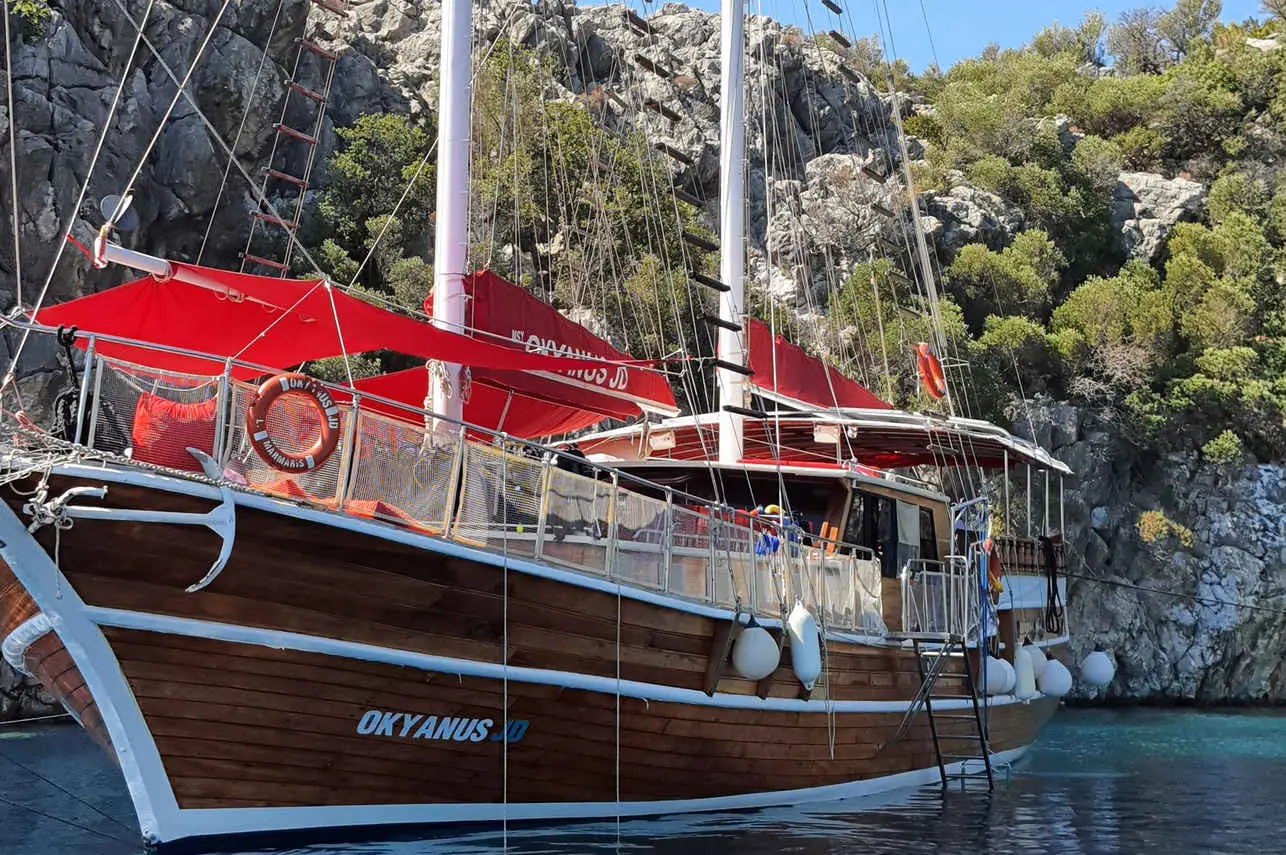
Okyanus JD
Turkey
12 guests24 m
Dive sites similar to Poyraz Reef (Bodrum)
Same character, same waters, six more sites divers love for the exact same reasons.Compare seasons, access and liveaboard routes, then pick the site that fits your trip best.
Abdi Reis is a highly regarded dive site situated near the Datça Peninsula in Turkey's Aegean Sea, specifically located within Abdi Reis Cove, near Yildiz Island.
- Suitable for
- Intermediate
- Current
- Moderate
- Access
- Liveaboard or dayboat
- Depth
- ≤ 33 m
- Theme
- Reef / Wall
© EsriMaxar, Earthstar, GIS
Adabanko Reef
Turkey
Adabanko Reef is an inviting dive site situated approximately two kilometers off the coast of Kuşadası in Turkey's Aegean Sea.
- Suitable for
- Beginner
- Current
- Moderate
- Access
- Liveaboard or dayboat
- Depth
- 5–40 m
- Theme
- Reef
© EsriMaxar, Earthstar, GIS
Adakule Cave
Turkey
Adakule Cave is a notable boat-access dive site located near Kuşadası, Turkey, offering an engaging experience centered around two distinct underwater caverns.
- Suitable for
- Beginner
- Current
- Mild
- Access
- Dayboat
- Depth
- 9–30 m
- Theme
- Cave & cavern
© EsriMaxar, Earthstar, GIS
Afkule Cave
Turkey
Afkule Cave, also referred to by some as Aladdin's Cave, is consistently ranked among the top dive sites in Turkey, particularly renowned for its cave diving opportunities.
- Suitable for
- Intermediate
- Current
- Moderate
- Access
- Liveaboard or dayboat
- Depth
- ≤ 50 m
- Theme
- Cave & cavern / Wall
© EsriMaxar, Earthstar, GIS
Afkule Monastery Reef
Turkey
Afkule Monastery Reef, prominently known as Afkule Wall, stands as a distinguished dive destination along Turkey's southwestern coast, close to Fethiye.
- Suitable for
- Intermediate
- Current
- Strong
- Access
- Liveaboard or dayboat
- Depth
- 6–40 m
- Theme
- Wall