About Musha wrecks
The Musha wrecks, prominently featuring the **Orchard Reefer**, offer a significant dive experience in Djibouti’s Gulf of Tadjoura. This impressive 135-meter cargo ship, which sank in 1975 following an engine room explosion, now rests on its port side at depths ranging from 10 to 28 meters near Moucha Island, approximately 9 kilometers from Djibouti City. Its size and accessible depth make it a world-class wreck diving destination. Underwater topography around the wrecks features the artificial reef created by the vessel itself, attracting a rich ecosystem. The ship’s hull is extensively covered with hard and soft corals, while internal structures provide shelter for various marine species. Divers can explore its ruptured deck, which leads to a wide crack in the hull, allowing for unique swim-through opportunities. While specific seasonality for the wreck's marine life isn't detailed, Djibouti's waters generally teem with pelagic and reef species. Expect to encounter schools of fish, including batfish, glassfish, and snappers, utilizing the wreck as their habitat. The overall region is known for a diversity of reef fish, pelagics, and even larger animals like whale sharks and manta rays during their season (October to February), though these are less specifically tied to the wrecks themselves. The practical dive experience here involves navigating through and around a substantial, intact wreck. Due to the generally warm water, wetsuit requirements are minimal (e.g., 3-5mm). The site is typically part of liveaboard itineraries or day trips from Djibouti City, offering excellent visibility and a chance to explore a piece of maritime history amidst vibrant marine life.
Highlights
135-meter cargo shipRuptured deck swim-throughHistoric shipwreck explorationMoucha Island proximityCoral-encrusted hullBatfish and snapper schools
Season calendar
Best months to dive here
Jan
Feb
Mar
Apr
May
Jun
Jul
Aug
Sep
Oct
Nov
Dec
Excellent
Good
Dive site facts: Musha wrecks
- Depth
- 10–28 m
- Typical dive
- 10–28 m, 50–60 min
- Current
- Mild to moderate
- Visibility
- 10–40 m
- Water temperature
- 24–29°C
- Entry
- Boat / backward roll
- Level
- Intermediate to advanced
- Dive type
- Wreck, reef
- Night dive
- Possible
- Region / port
- Gulf of Tadjoura, Djibouti
- Coordinates
- 11.7333° N, 43.1167° E
Conditions & Currents
Currents at the Musha wrecks, particularly around the Orchard Reefer, are generally manageable, allowing for detailed exploration of the vessel. However, conditions can vary, and divers should always be prepared for potential mild to moderate currents, especially on more exposed sections of the wreck or during tidal shifts. Descent should be controlled, and a good buddy system is crucial for maintaining proximity. Visibility around the wrecks is often excellent, typically ranging from 10 to 40 meters, but this can be influenced by plankton blooms that are more prevalent during whale shark season. Given the wreck's size and structure, precise buoyancy control is essential to avoid disturbing silt and to navigate safely through its openings, ensuring an enjoyable and respectful dive.
Marine life & sighting chances

Batfish
common
Glassfish
common
Snappers
common
Grey reef sharks
occasional
Nurse sharks
occasional
Whale sharks
October to February · occasional
Manta rays
October to February · occasional
Pelagic fish
common
Reef fish
commonDive profile & how the dive runs
Diving the Orchard Reefer often begins with a backward roll entry from the dive boat, ideally with a negative or rapid descent to the wreck to avoid strong surface currents. The typical route involves circling the vast 135-meter cargo ship, which lies on its port side, starting from the bow or midship. Divers generally follow the deck and hull, exploring the coral growth and marine life inhabiting the structure. A key highlight is navigating through the natural rupture in the deck and hull, which provides a unique swim-through at mid-depths. The dive progresses along the length of the ship, allowing ample time for observation of its internal structures and resident fish schools. The deepest parts are around 28 meters. Ascent usually occurs from the stern or a clear section of the hull, with a safety stop conducted above the wreck, utilizing a deployable surface marker buoy if there's any drift, before surfacing to meet the pick-up boat.
Underwater photography
The Musha wrecks, particularly the Orchard Reefer, offer excellent wide-angle photography opportunities due to its sheer size and dramatic structure. A wide-angle lens is ideal for capturing the ship's full expanse, its coral-encrusted hull, and the impressive swim-throughs. Good visibility allows for effective ambient light photography, but strobes are crucial to bring out the vibrant colors of the corals and schooling fish residing within the wreck. Be mindful of your buoyancy to avoid stirring up silt inside the wreck, which can quickly reduce visibility for both divers and photographers. Patience is key for capturing the resident batfish and snappers that often linger around the ship's features.
Combine with nearby dive sites
- Moucha North Point
Moucha North Point is a captivating dive site situated off the northern tip of Moucha Island in Djibouti, offering an exceptional showcase…
- Moucha Island Reef
Moucha Island Reef offers a diverse and protected underwater landscape in Djibouti, where the Red Sea meets the Gulf of Aden.
- Japanese Gardens
Known for macro life like nudibranchs
- Le Boutre
Another local wreck dive
- Salem Wreck
Another local wreck dive
- MV Priamos
A world-class wreck, also known as 'le Faon'
Getting there & logistics
Access to the Musha wrecks, including the Orchard Reefer, is primarily via liveaboard trips or day boats departing from Djibouti City’s Port de Pêche. International flights typically arrive at Djibouti-Ambouli International Airport (JIB). Liveaboards often combine wreck diving with other sites in the Gulf of Tadjoura, such as the whale shark areas or the Seven Brothers Islands, typically offering 7-night itineraries. Visitors to Djibouti will generally need an e-Visa, which is processed online and then converted to a hard copy upon arrival at the airport. There are no specific additional dive site fees mentioned for the Musha wrecks beyond the standard trip costs.
Safety & environment
For diving in Djibouti, including the Musha wrecks, comprehensive dive insurance covering emergency evacuation and recompression treatment is strongly recommended. While there is a recompression chamber in Djibouti, its operational status and capabilities should be verified prior to travel; evacuation to a more advanced facility in a neighboring country is a realistic consideration for serious incidents. Site-specific hazards at the Orchard Reefer include potential entanglement in loose wires or ropes within the wreck and sharp edges due to corrosion. Maintaining excellent buoyancy control is crucial to prevent injury and avoid disturbing the silt. Always dive with a qualified guide and adhere to depth limits appropriate for your certification and experience. Surface currents can be present, so carrying a surface marker buoy (SMB) is advisable for easier surface pick-up.
Who it suits — and who it doesn't
Suited for
- Advanced Open Water divers
- Wreck diving enthusiasts
- Divers seeking large marine structures
- Underwater photographers (wide-angle)
- Divers comfortable with mild currents
Less suited for
- Beginner divers without wreck experience
- Divers with poor buoyancy control
- Those prone to claustrophobia (for interior exploration)
- Divers uncomfortable with potential surface chop
FAQ
Musha wrecks FAQ
What is the main wreck at Musha wrecks?
The primary wreck at the Musha wrecks site is the Orchard Reefer. It is a substantial 135-meter long cargo ship that sank in 1975 after an engine room explosion. This vessel now rests on its port side and is a prominent feature for divers in the Gulf of Tadjoura.
What marine life can be seen on the Orchard Reefer?
The Orchard Reefer has become an artificial reef, attracting various marine life. Divers commonly encounter schools of batfish, glassfish, and snappers around its structure. While specific to the wreck, the general area also offers opportunities for larger pelagics and reef sharks.
What is the typical depth range for diving the Musha wrecks?
The Orchard Reefer wreck sits at depths ranging from 10 meters at its shallowest point to approximately 28 meters at its deepest sections. This depth profile makes it accessible for advanced open water divers, allowing for considerable bottom time and exploration.
Are there any swim-throughs on the wreck?
Yes, a notable feature of the Orchard Reefer is a natural rupture in its deck that extends through the hull. This creates a few-meter-wide crack, offering an exciting and unique swim-through experience for divers to navigate through the ship's structure.
How do currents affect diving the Musha wrecks?
While the currents at the Musha wrecks are generally considered mild to moderate, divers should be prepared for varying conditions. Stronger currents can occur, particularly on more exposed parts of the wreck or during tidal changes. A controlled descent and good buoyancy are essential.
Why dive Musha wrecks from a liveaboard?
Musha wrecks is one of Djibouti's signature dive sites. A liveaboard sleeps you on the water and puts you in the water for three to four guided dives per day, including dawn and night dives that day-boat operators rarely offer. You skip the daily commute back to port and reach quieter, less-crowded sites in the same region on a single trip.
Below are the liveaboards that include Musha wrecks on their Djibouti itineraries.
Liveaboards diving Musha wrecks
These liveaboards may visit Musha wrecks on selected itineraries — the exact dive sites depend on departure, weather and conditions.
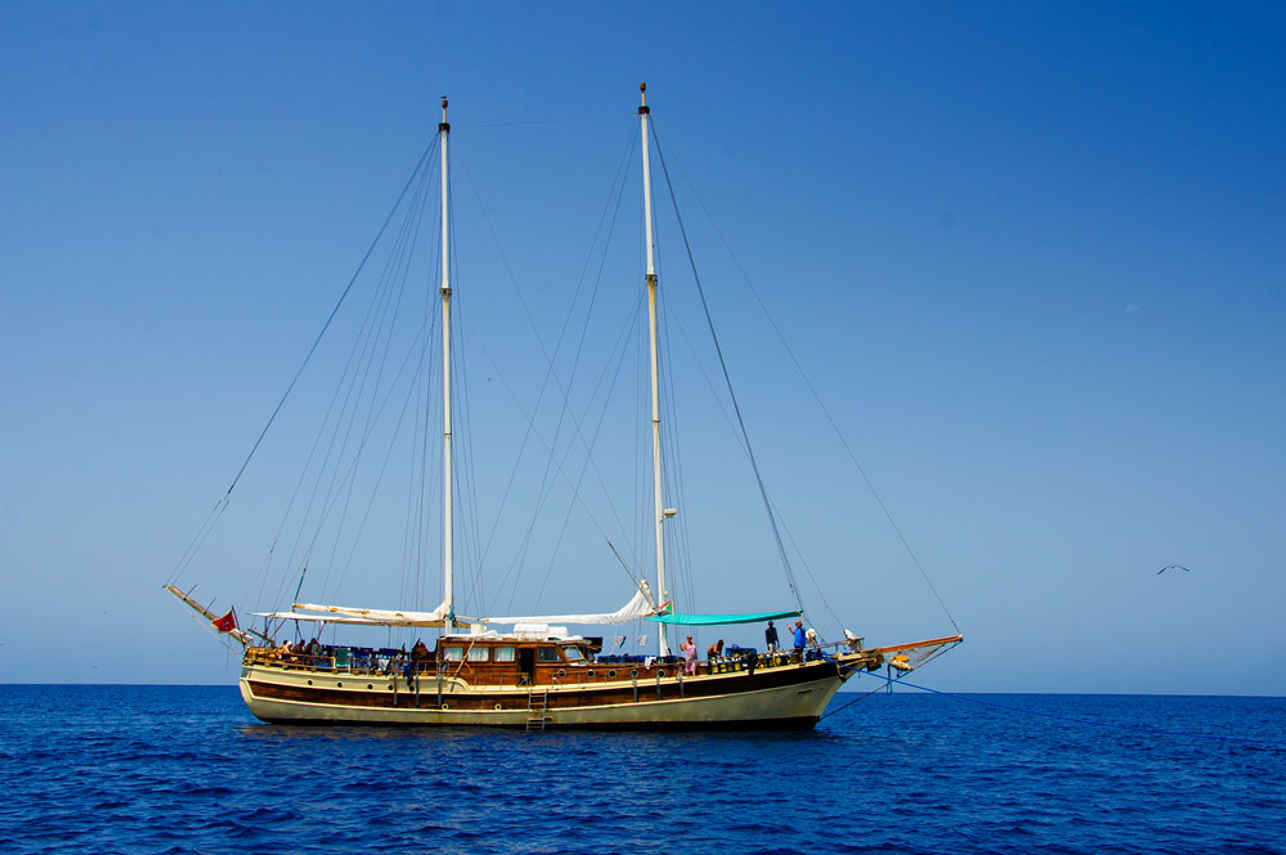
Elegante
Djibouti
14 guests25 m
$209/day
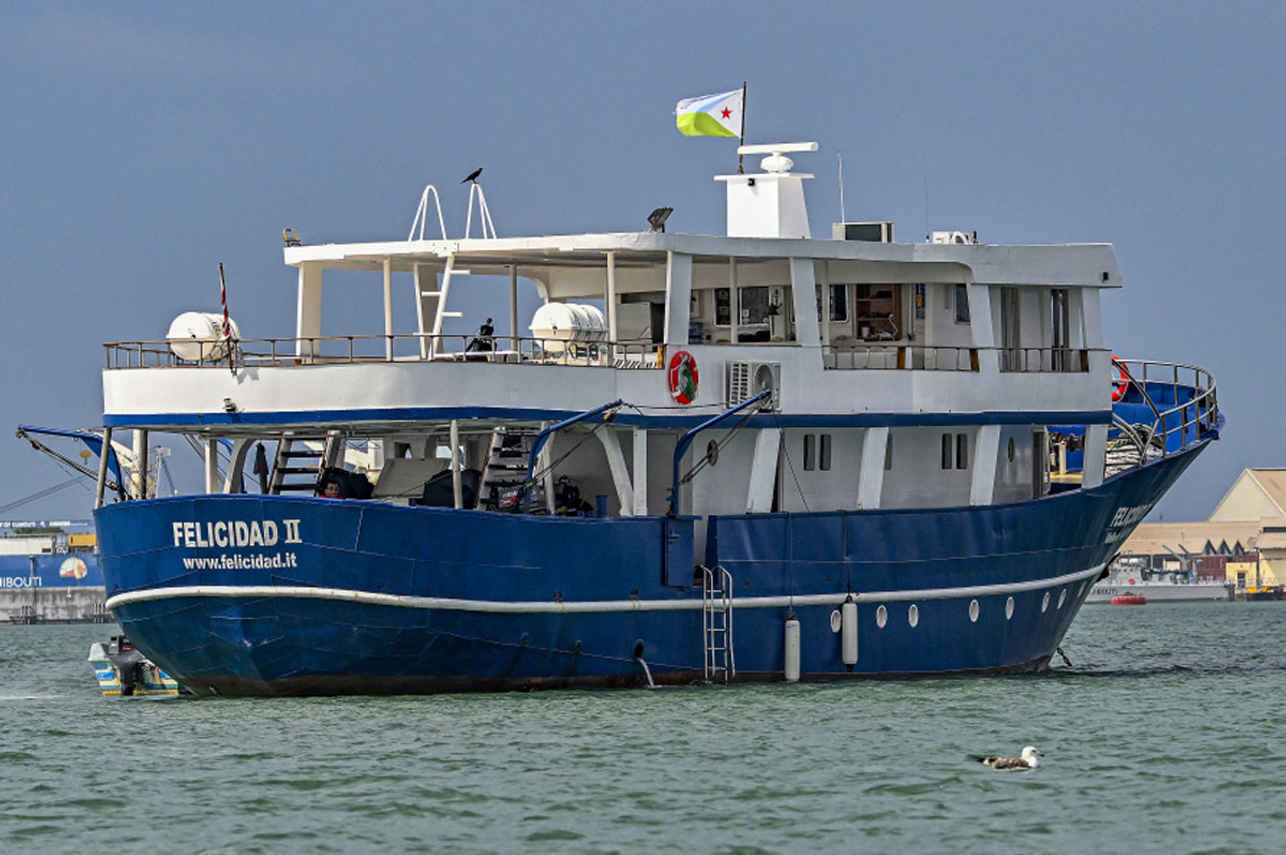
Felicidad II
Djibouti
18 guests30 m
$210/day
Dive sites similar to Musha wrecks
Same character, same waters — six more sites divers love for the exact same reasons.Compare seasons, access and liveaboard routes — then pick the site that fits your trip best.
© Esri — Maxar, Earthstar, GIS
Ghoubbet al Kharab
Djibouti
Ghoubbet al Kharab, also known as the Devil’s Goblet, is a deep bay connected to the Gulf of Tadjourah and the open ocean in Djibouti.
- Suitable for
- Advanced
- Current
- Strong
- Access
- Liveaboard only
- Depth
- 5–200 m
- Theme
- Drift / Reef
© Esri — Maxar, Earthstar, GIS
Moucha wrecks
Djibouti
The Moucha wrecks, including the notable Orchard Reefer and Le Fon, offer a distinctive dive experience within Djibouti's Gulf of Tadjoura, contrasting with the region's prevalent coral reefs.
- Suitable for
- Advanced
- Current
- Moderate
- Access
- Liveaboard or dayboat
- Depth
- 5–50 m
- Theme
- Wreck / Reef
Cathedral in Djibouti is primarily recognized as a world-class shark diving destination, distinct from the Philippines' Pescador Cathedral.
- Suitable for
- Intermediate
- Current
- Strong
- Access
- Liveaboard or dayboat
- Depth
- 12–30 m
- Theme
- Cave & cavern / Reef
© Esri — Maxar, Earthstar, GIS
Sable Blanc Reef
Djibouti
Sable Blanc Reef is a vibrant coral ecosystem located in Djibouti, nestled where the Red Sea meets the Gulf of Aden.
- Suitable for
- Intermediate
- Current
- Strong
- Access
- Shore / dayboat
- Depth
- 5–30 m
- Theme
- Drift / Reef
© Esri — Maxar, Earthstar, GIS
Cape Rouge
Djibouti
Cape Rouge is a notable dive site in Djibouti, known for its pristine underwater environment where the Red Sea meets the Indian Ocean.
- Suitable for
- Advanced
- Current
- Mild
- Access
- Liveaboard or dayboat
- Depth
- 15–40 m
- Theme
- Reef
© Esri — Maxar, Earthstar, GIS
La Vierge Rouge
Djibouti
La Vierge Rouge is situated in Djibouti, a unique diving destination where the Red Sea converges with the Indian Ocean.
- Suitable for
- Intermediate
- Current
- Moderate
- Access
- Liveaboard only
- Depth
- 15–40 m
- Theme
- Reef