About Manta Bowl
Manta Bowl is a renowned submerged seamount located in the Ticao Pass, off the northern coast of Ticao Island in Masbate, Philippines. This unique underwater formation rises dramatically from depths exceeding 200 meters, with its plateau crest typically found between 14 and 24 meters, and slopes extending beyond 50 meters. Its strategic position within a nutrient-rich strait creates a vibrant ecosystem that acts as a magnet for a diverse array of marine life, particularly large pelagics. The site is celebrated for its thriving cleaning stations, where numerous Reef Manta Rays (Mobula alfredi) and larger Giant Oceanic Manta Rays (Mobula birostris) are regularly serviced by cleaner wrasse species. Beyond the iconic mantas, divers frequently encounter other significant pelagic species, including Whale Sharks (Rhincodon typus), especially from November to June, and various sharks such as Thresher, Hammerhead, Whitetip Reef, and Blacktip Reef sharks. Diving conditions at Manta Bowl are characterized by strong tidal currents, often exceeding 3 knots, and frequent upwelling and downwelling, necessitating advanced drift diving techniques. Visibility can be excellent, sometimes surpassing 30 meters, while water temperatures consistently range from 26°C to 30°C. Due to these challenging conditions and the typical depth profiles, an Advanced Open Water certification is required, ensuring divers are prepared for the dynamic environment.
Highlights
World-renowned seamountManta ray cleaning stationsWhale shark encountersStrong currentsPelagic hotspotAdvanced drift diving
Season calendar
Best months to dive here
Jan
Feb
Mar
Apr
May
Jun
Jul
Aug
Sep
Oct
Nov
Dec
Excellent
Good
Off-Season
Dec – Apr (Dec–Apr)
Best diving conditions across most regions. Calm seas, excellent visibility. Tubbataha Reef accessible Mar–Jun only. Thresher sharks year-round at Malapascua.
May & Nov (May, Nov)
Weather shifts between seasons. Still excellent diving in many areas. Fewer crowds and lower prices. Some regions still offer perfect conditions.
Jun – Oct (Jun–Oct)
Typhoon season — mainly affects northern regions. Southern Visayas and Mindanao still offer good diving. Reduced visibility. Best prices and fewest crowds.
Dive site facts: Manta Bowl
- Depth
- 14–50 m+
- Typical dive
- 14–24 m
- Current
- Strong
- Visibility
- 10–30 m
- Water temperature
- 26–30°C
- Entry
- Negative entry drift
- Level
- Advanced Open Water
- Dive type
- Drift, pelagic, seamount
- Region / port
- Ticao Pass, Masbate
- Coordinates
- 12.6110° N, 123.7081° E
Conditions & Currents
Diving at Manta Bowl demands experience with strong currents, as tidal flows frequently exceed 3 knots, making negative-entry drift diving techniques mandatory. Upwelling and downwelling currents are common, adding to the unpredictable nature of the site's water movement. Divers are advised to carry a reef hook for stable observation at cleaning stations, minimizing impact on delicate corals. Visibility can range significantly, but often reaches over 30 meters, although plankton blooms can occasionally reduce clarity. The dynamic water conditions mean excellent buoyancy control and vigilant monitoring of no-decompression limits are crucial, particularly given the typical 22+ meter depth profile.
Marine life & sighting chances

Reef Manta Ray
Dec, Jan, Feb, Mar, Apr, May · common
Giant Oceanic Manta Ray
occasionalSicklefin Devil Ray
occasional
Whale Shark
Nov–Jun · occasional
Thresher Shark
occasional
Hammerhead Shark
occasional
Whitetip Reef Shark
occasional
Blacktip Reef Shark
occasional
Bigeye Trevally
common
Barracuda
occasional
Tuna
occasional
Dolphin
occasional
Sea Turtle
occasional
Wrasse (cleaner species)
commonDive profile & how the dive runs
Dives at Manta Bowl typically begin with a negative entry, immediately descending to the seamount's plateau, which crests between 14 and 24 meters. Divers often use reef hooks to secure themselves at cleaning stations, allowing for extended observation of manta rays without physical exertion against the strong currents. The dive progresses as a drift, following the seamount's contours and exploring slopes that can drop to 50 meters and beyond, scanning the blue for pelagic encounters. Due to the dynamic currents, the exact route is often dictated by the water flow. The dive usually concludes with a safety stop conducted in mid-water as the group drifts, with careful attention to gas consumption and no-decompression limits due to the depth and potential for longer bottom times.
Underwater photography
Manta Bowl is a prime location for wide-angle photography, capturing majestic manta rays and schooling pelagics against the clear blue. A wide-angle lens (e.g., 8-15mm or 10-17mm fisheye) is essential for capturing the scale of the mantas and the bustling cleaning stations. Due to potential depth and ambient light, external strobes are highly recommended to bring out colors and freeze motion. Patience is key at cleaning stations; position yourself calmly and avoid sudden movements to allow the mantas to approach. Be mindful of strong currents, which can make maintaining stable camera position challenging; a reef hook can be invaluable for steady shots. Focus on capturing interactions at cleaning stations, but also be ready for opportunistic shots of passing whale sharks, sharks, and schools of jacks.
Getting there & logistics
Manta Bowl is located in Ticao Pass, off Ticao Island in Masbate, Philippines. Access typically involves flying into Legazpi (DRP), which is approximately 55.5 km away. From Legazpi, travelers often transfer to Donsol before taking a boat to Ticao Island, with boat rides to Ticao Island Resort taking around 1.5 to 2 hours depending on sea conditions. Divers generally book liveaboard trips or stay at resorts on Ticao Island that specifically organize daily dives to Manta Bowl. Trips focusing on this region often combine Manta Bowl with whale shark interactions in Donsol (though the ethics of the latter are debated by some divers). Permitting is not typically required for Manta Bowl itself, as it sits outside a marine protected area.
Safety & environment
Diving at Manta Bowl requires an Advanced Open Water certification and experience with challenging conditions. Strong, unpredictable currents are the primary hazard, necessitating excellent buoyancy control and strict adherence to negative-entry drift diving protocols. Divers must diligently monitor their no-decompression limits, as depths and extended observation times can lead to decompression obligation. Adequate insurance covering dive accidents and potential recompression chamber treatment is highly recommended; the nearest recompression chamber locations should be confirmed prior to travel. Evacuation from this remote area can be complex and time-consuming, reinforcing the importance of proper planning and cautious diving practices. Always dive with a reputable operator and follow your guide's instructions precisely.
Who it suits, and who it doesn't
Suited for
- Advanced Open Water certified divers
- Experienced drift divers
- Pelagic animal enthusiasts
- Photographers seeking wide-angle opportunities
- Divers comfortable with strong currents
Less suited for
- Beginner divers
- Open Water certified divers without drift experience
- Divers uncomfortable with strong currents
- Those prone to seasickness in rough conditions
- Macro photography specialists
FAQ
Manta Bowl FAQ
What kind of marine life can I expect to see at Manta Bowl?
Manta Bowl is renowned for its large pelagic encounters. You can expect to see numerous Reef Manta Rays and Giant Oceanic Manta Rays, often at dedicated cleaning stations. Whale Sharks are common from November to June, and various sharks like Thresher, Hammerhead, Whitetip, and Blacktip Reef sharks also frequent the area. Large schools of Bigeye Trevally, barracudas, and tuna are also regularly spotted.
What is the best time of year to dive Manta Bowl?
Manta Bowl offers year-round manta ray sightings, making it a consistent destination for these majestic creatures. However, for those hoping to encounter whale sharks in addition to mantas, the period from November to June is considered optimal. August can be less favorable due to less predictable conditions, but the site remains generally accessible.
What is the required certification level for Manta Bowl?
Due to the challenging diving conditions, an Advanced Open Water (AOWD) certification is required to dive at Manta Bowl. Divers should be experienced in drift diving and possess excellent buoyancy control. The site's strong and sometimes unpredictable currents, along with depths often exceeding 22 meters, necessitate a higher level of dive proficiency.
Are there strong currents at Manta Bowl?
Yes, Manta Bowl is known for its strong and dynamic currents. Tidal currents can frequently exceed 3 knots, and both upwelling and downwelling are common. This makes negative-entry drift diving the standard technique for this site. Divers should be prepared for vigorous water movement and be proficient in managing their dive in these conditions.
How is Manta Bowl accessed, and what are the travel logistics?
Manta Bowl is located off Ticao Island. Most divers fly into Legazpi (DRP) and then transfer to Ticao Island, typically via a boat trip that takes 1.5 to 2 hours from Donsol. It's usually dived as part of a liveaboard itinerary or through dive resorts on Ticao Island that specifically organize trips to the site. It is not currently located within a marine protected area, so specific permits are generally not required.
Why dive Manta Bowl from a liveaboard?
Manta Bowl is one of Philippines's signature dive sites. A liveaboard sleeps you on the water and puts you in the water for three to four guided dives per day, including dawn and night dives that day-boat operators rarely offer. You skip the daily commute back to port and reach quieter, less-crowded sites in the same region on a single trip.
Below are the liveaboards that include Manta Bowl on their Philippines itineraries.
Liveaboards diving Manta Bowl
These liveaboards may visit Manta Bowl on selected itineraries, the exact dive sites depend on departure, weather and conditions.
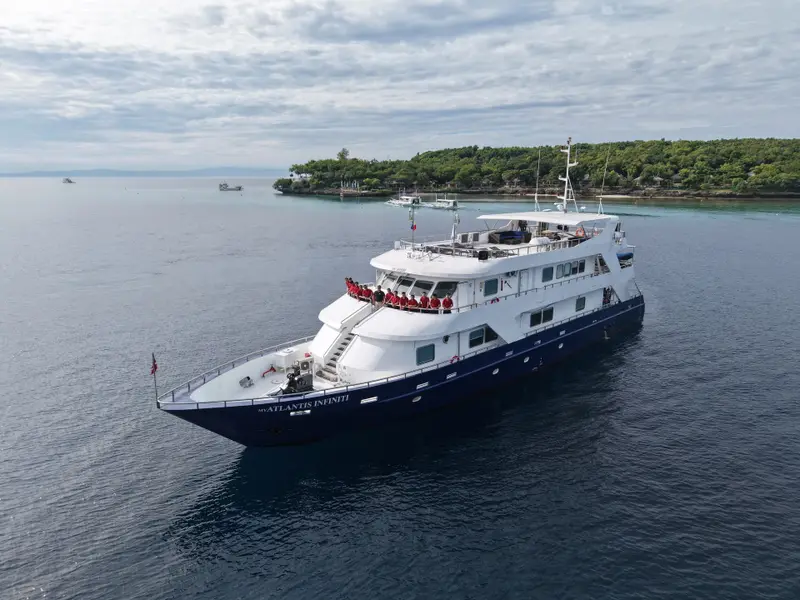
Infiniti
Philippines
25 guests39 m
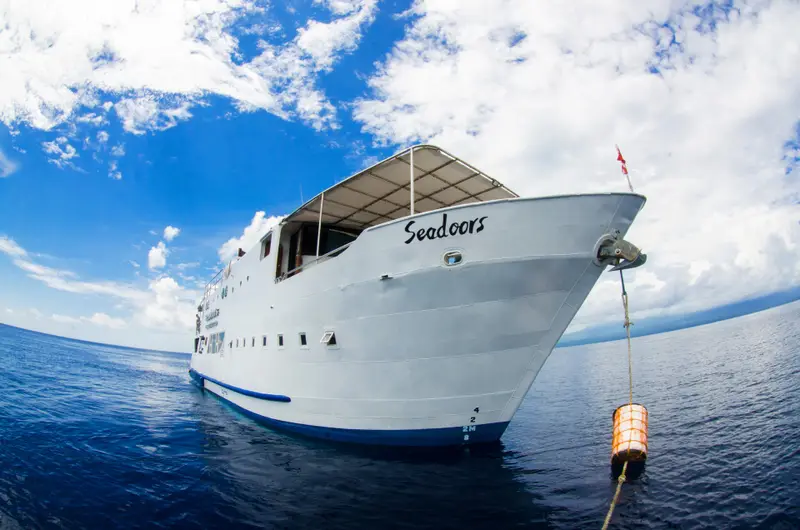
Seadoors
Philippines
16 guests25 m
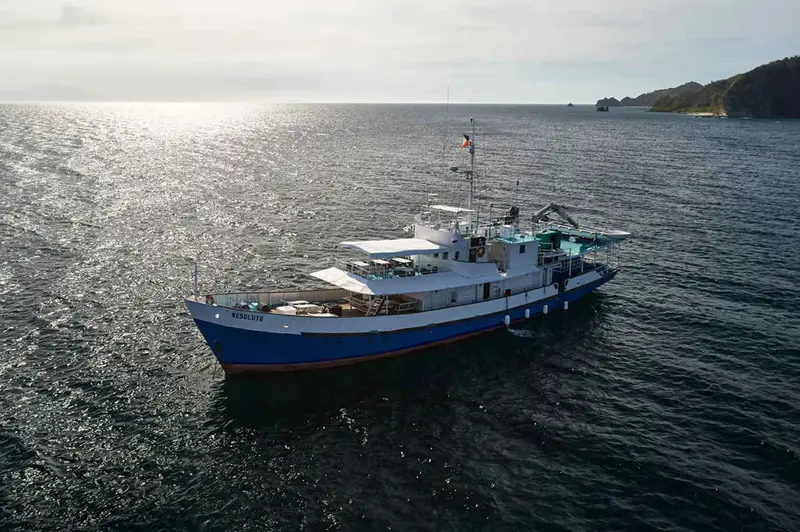
Resolute
Philippines
16 guests35 m
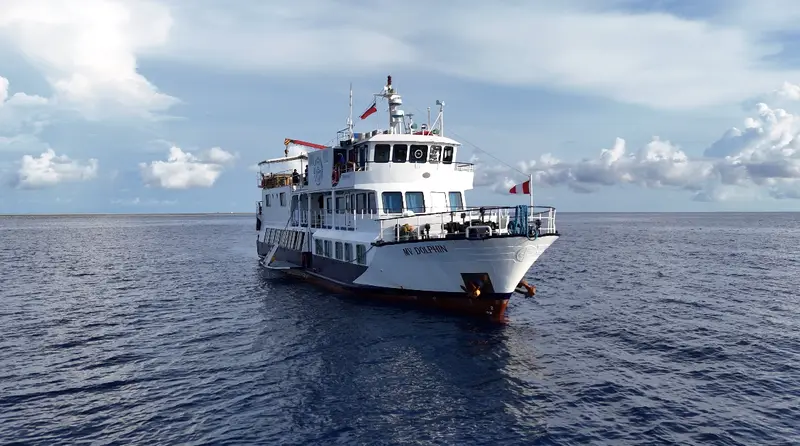
Dolphin
Philippines
18 guests31 m
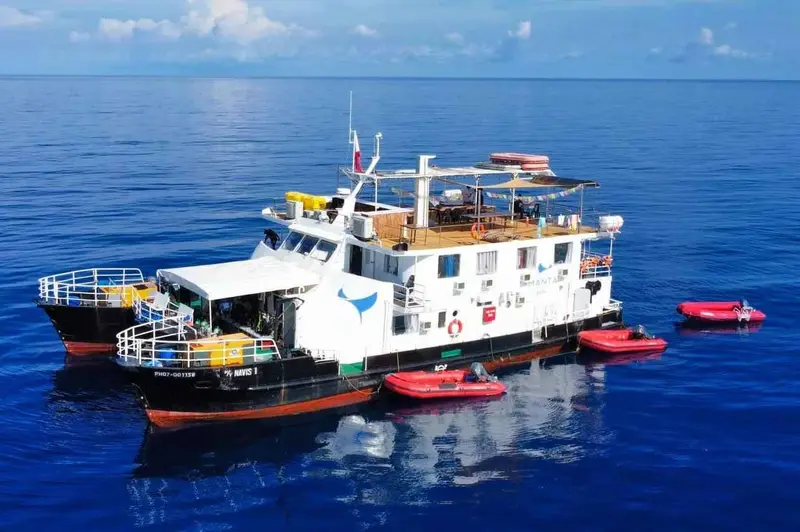
Navis 1
Philippines
22 guests23 m
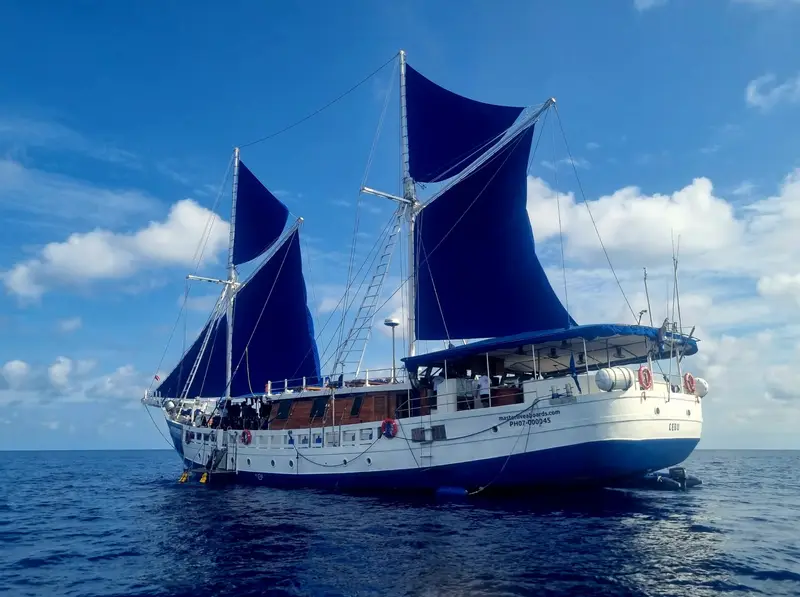
Philippine Siren
Philippines
16 guests
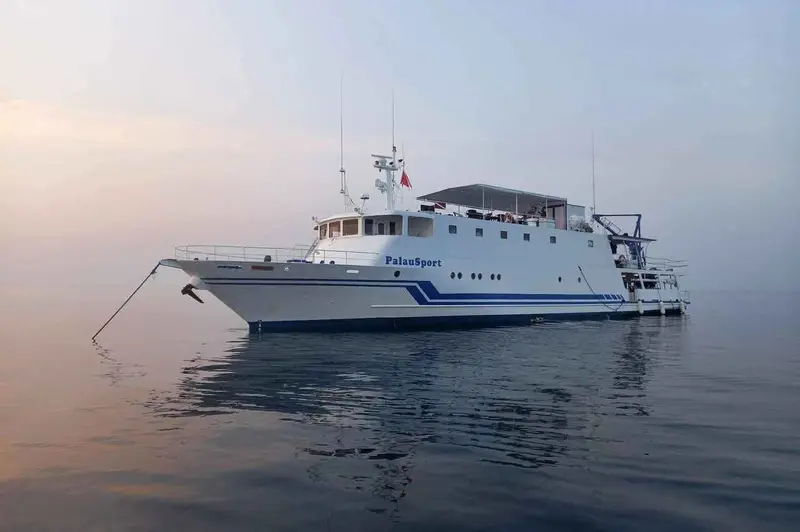
Palau Sport
Philippines
24 guests38 m

Philippines Aggressor
Philippines
26 guests43 m
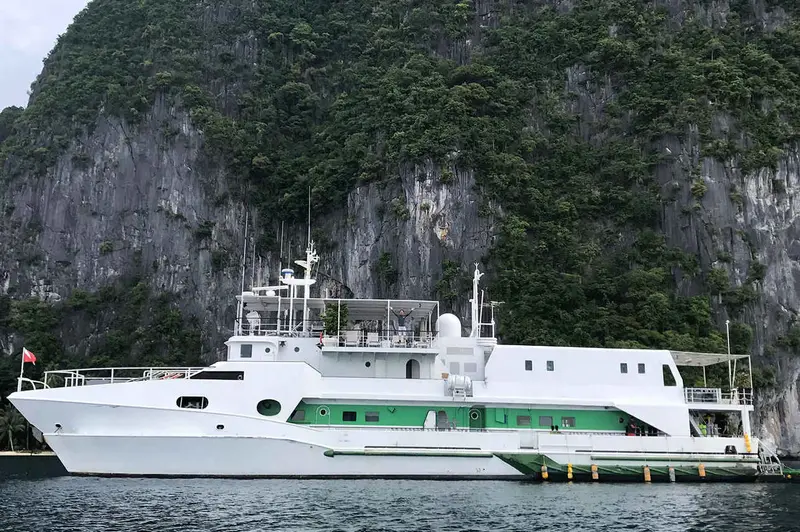
Stella Maris Explorer
Philippines
20 guests33 m
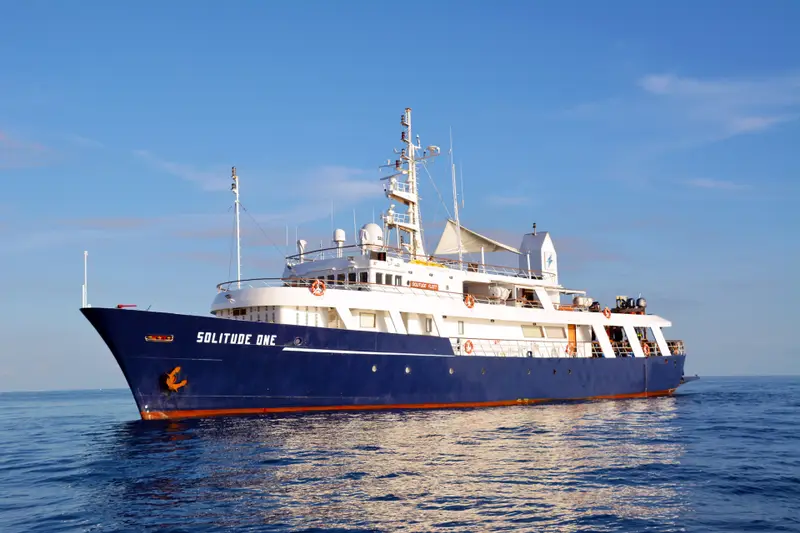
Solitude One
Philippines
24 guests52 m
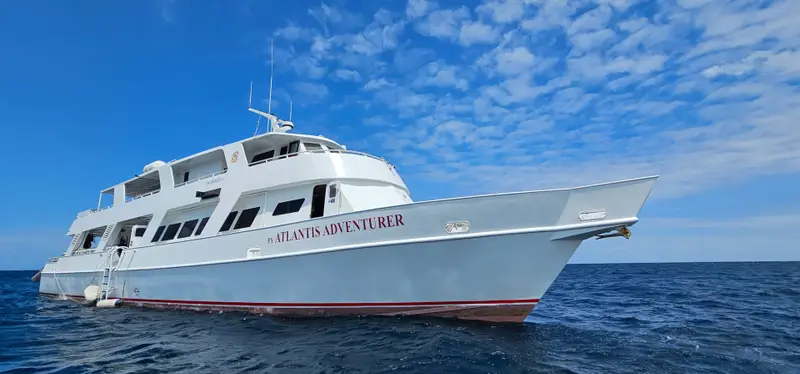
Atlantis Adventurer
Philippines
16 guests33 m
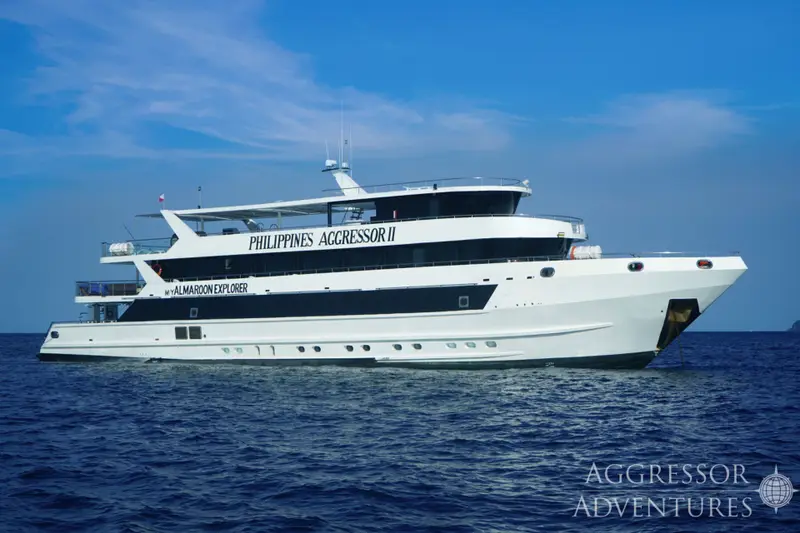
Philippines Aggressor II
Philippines
26 guests43 m
Dive sites similar to Manta Bowl
Same character, same waters, six more sites divers love for the exact same reasons.Compare seasons, access and liveaboard routes, then pick the site that fits your trip best.
Abila is a notable dive site located within the Alor Islands Marine Park, an area celebrated for its rich marine biodiversity due to its position in the Coral Triangle.
- Suitable for
- Beginner
- Current
- Mild
- Access
- Liveaboard only
- Depth
- —
- Theme
- Reef
© EsriMaxar, Earthstar, GIS
Adonara Channel
Alor
Adonara Channel stands as one of Alor's most iconic dive sites, celebrated for its dynamic currents and exceptionally rich biodiversity.
- Suitable for
- Advanced
- Current
- Strong
- Access
- Liveaboard or dayboat
- Depth
- 10–40 m
- Theme
- Drift / Wall
© EsriMaxar, Earthstar, GIS
Adonara Wall
Indonesia
Adonara is an Indonesian island dive site, renowned for its vibrant underwater topography characterized by submerged seamounts.
- Suitable for
- Intermediate
- Current
- Strong
- Access
- Liveaboard or dayboat
- Depth
- 5–35 m
- Theme
- Seamount / Wall
© EsriMaxar, Earthstar, GIS
Agnay Fish Sanctuary
Philippines
Agnay Fish Sanctuary is nestled in a sheltered bay near the village of Agnay in Romblon, a province celebrated for its rich marine biodiversity.
- Suitable for
- Beginner
- Current
- Mild
- Access
- Dayboat
- Depth
- 9–18 m
- Theme
- Reef
© EsriMaxar, Earthstar, GIS
Ai Island Reef
Banda Sea
Ai Island Reef, nestled within the Banda Sea, offers a remarkable diving experience characterized by its rich marine biodiversity and varied underwater topography.
- Suitable for
- Beginner
- Current
- Strong
- Access
- Liveaboard only
- Depth
- 3–30 m
- Theme
- Reef / Seamount
© EsriMaxar, Earthstar, GIS
Akitsushima
Philippines
The Akitsushima is a distinguished World War II Japanese seaplane tender, sunk in September 1944 during an American air raid in Coron Bay, Palawan.
- Suitable for
- Advanced
- Current
- Strong
- Access
- Dayboat
- Depth
- 22–38 m
- Theme
- Wreck