About Maa Kandu (Addu)
Maa Kandu, also known as Shark Point, is a prominent northern ocean channel within the Addu (Seenu) Atoll, stretching approximately 0.9 kilometers long and reaching depths of up to 30 meters. This site is distinguished by its sloping walls of fine sand interspersed with coral blocks, providing a unique topography compared to typical Maldivian reefs. Located within the Addu UNESCO Biosphere Reserve, Maa Kandu is a current-driven dive that attracts a rich diversity of marine life, making it a highlight for advanced divers seeking an exhilarating experience. The pelagic action here is exceptional, with aggregations of grey reef and whitetip reef sharks frequently sighted, living up to its 'Shark Point' moniker. Divers may also encounter scalloped hammerheads, great barracudas, and spotted eagle rays. Inside the channel, at depths between 16 and 20 meters, lies a crucial reef manta cleaning station that becomes particularly active during the morning’s incoming current. Beyond sharks and rays, Addu Atoll is known for year-round sightings of manta rays, turtles, and various other pelagic species. This channel dive is suited for experienced divers due to strong currents, which are a defining characteristic that attracts the large marine life. Entry often involves a drift, demanding good swimming abilities. The high visibility typical of Addu Atoll enhances the experience, allowing divers to clearly observe the abundant marine activity attracted by the current. It's a key site for those exploring the Deep South of the Maldives, offering intense and rewarding encounters with its majestic residents.
Highlights
Grey Reef SharksEagle RaysManta RaysBlack CoralNapoleon Wrasse
Season calendar
Best months to dive here
Jan
Feb
Mar
Apr
May
Jun
Jul
Aug
Sep
Oct
Nov
Dec
Good
Dive site facts: Maa Kandu (Addu)
- Depth
- 16–25 m
- Typical dive
- 16–21 m, 50–60 min
- Current
- Moderate to strong
- Visibility
- 15–30 m+
- Water temperature
- 27–31°C
- Entry
- Boat / negative entry
- Level
- Advanced Open Water, current experience helpful
- Dive type
- Drift, pelagic, manta cleaning station
- Night dive
- Not typical
- Region / port
- Addu Atoll, Maldives
- Coordinates
- -0.668, 73.055
Conditions & Currents
Maa Kandu experiences moderate to strong currents due to its channel location, which is crucial for attracting manta rays to the cleaning station. Divers should anticipate drift diving conditions and be proficient in current management, including the use of reef hooks. Entry typically involves a negative descent to reach the desired depth quickly and efficiently. Visibility remains excellent, often exceeding 30 meters, despite the currents, providing clear views of the abundant marine life. The currents also influence the plankton concentration, which, while reducing visibility slightly during certain seasons, directly correlates with increased manta activity.
Marine life & sighting chances

Reef Manta Ray
Year-round · common
Green Sea Turtle
Year-round · common
Hawksbill Turtle
Year-round · common
Grey Reef Shark
Year-round · common
Whitetip Reef Shark
Year-round · occasional
Eagle Ray
Year-round · common
Napoleon Wrasse
Year-round · occasional
Barracuda
Year-round · occasional
Spanish Mackerel
Year-round · common
Tuna
Year-round · occasional
Dolphin
Year-round · occasional
Snapper
Year-round · commonDive profile & how the dive runs
Dives at Maa Kandu typically begin with a negative entry from a liveaboard dhoni, descending quickly to around 16 meters. Divers follow the reef along their left, drifting with the incoming current. The main objective is to reach the manta cleaning station, which is found at approximately 21 meters, within about five minutes of drifting. Here, divers use reef hooks to secure themselves to a coral outcrop and observe the mantas as they arrive for cleaning. Mantas are frequently observed between 16 and 25 meters, often passing through the channel below at depths around 25 meters. After approximately 30 minutes or when reaching 70 bar, divers ascend, performing a safety stop while drifting with the current, often using an SMB, before surfacing.
Underwater photography
Maa Kandu offers excellent wide-angle opportunities, especially for capturing the numerous manta rays that visit the cleaning station. A wide-angle lens is essential to frame these large subjects effectively, often requiring strobes to bring out color and detail against the clear blue water. Due to the potential for strong currents, maintaining good buoyancy and stability is crucial for sharp images. Divers should position themselves carefully at the cleaning station using reef hooks to avoid damaging corals or disturbing the mantas. Natural light can be effective given the excellent visibility, but strobes are highly recommended for detailed shots and backlit subjects. Patience and readiness are key, as mantas can approach very closely, sometimes within arm's reach.
Combine with nearby dive sites
- British Loyalty Wreck (Addu)
Largest shipwreck in the Maldives, offering a historical dive experience.
- Villingili Kandu (Gaafu Alifu)
Known for channel diving and shark encounters in a neighboring atoll.
- Kooddoo Corner (Gaafu Alifu)
Another channel dive popular for pelagic species.
- Fuvahmulah Thresher Point
Renowned for thresher shark sightings, requiring more advanced diving skills.
- Tiger Zoo (Fuvahmulah)
Famous for tiger shark encounters, a significant pelagic dive.
Getting there & logistics
Access to Addu Atoll, including Maa Kandu, typically involves a domestic flight from Velana International Airport (MLE) in Malé to Gan International Airport (GAN) in Addu. Liveaboards commonly operate deep south itineraries that combine Addu, Fuvahmulah, and Huvadhoo atolls, with trips generally lasting 7 nights. Divers should note that domestic flights are usually not included in the liveaboard package. Upon arrival at Gan, liveaboard staff assist with transfers to the vessel. Liveaboards offer a comprehensive diving experience, covering multiple sites across the atolls, maximizing opportunities for diverse marine encounters.
Safety & environment
Diving in Maa Kandu requires a high level of situational awareness due to potentially strong currents, necessitating experience with drift diving and the proper use of reef hooks. Always ensure your gear is in excellent condition and that you have adequate gas planning for current dives. It is highly recommended to carry a surface marker buoy (SMB) for safety stops and to signal your position to the boat. Comprehensive dive insurance, covering medical emergencies and evacuation, is essential when diving in remote locations like the Maldives. The nearest recompression chamber is located in Malé, meaning evacuation for decompression sickness would require a domestic flight.
Who it suits — and who it doesn't
Suited for
- Experienced drift divers
- Manta ray enthusiasts
- Underwater photographers
- Divers seeking pelagic encounters
- Advanced Open Water certified divers
Less suited for
- Beginner divers without current experience
- Divers uncomfortable with strong currents
- Those new to drift diving techniques
- Divers seeking strictly macro subjects
- Individuals with less than 100 logged dives
FAQ
Maa Kandu (Addu) FAQ
What marine life can I expect to see at Maa Kandu?
Maa Kandu is primarily famous for its frequent sightings of reef manta rays, as it functions as a prominent cleaning station. You can also anticipate encountering green and hawksbill turtles, grey reef sharks, eagle rays, and large schools of various pelagic fish like Spanish mackerel and barracuda. The healthy coral ecosystems further support a rich diversity of smaller reef dwellers.
When is the best time to dive Maa Kandu for manta rays?
Manta rays are present in Addu Atoll, including Maa Kandu, year-round. However, for the most favorable diving conditions with excellent visibility and calm seas, the dry season from December to May is generally recommended. During this period, the currents are often optimal for manta activity at the cleaning station.
What kind of dive experience is required for Maa Kandu?
Maa Kandu is best suited for experienced divers holding at least an Advanced Open Water certification. Due to the presence of moderate to strong currents in the channel, proficiency in drift diving techniques and the proper use of a reef hook is highly beneficial. A minimum of 100 logged dives is often recommended for these deep south itineraries.
How is Maa Kandu typically accessed?
Divers typically access Maa Kandu as part of a liveaboard itinerary exploring the Deep South of the Maldives, often departing from or ending in Addu Atoll. This involves a domestic flight from Malé to Gan International Airport. Day trips from local resorts in Addu Atoll may also be available.
Are there other notable dive sites near Maa Kandu?
Yes, Addu Atoll itself offers over 30 dive sites, including the British Loyalty Wreck, the largest shipwreck in the Maldives. Liveaboard itineraries in the Deep South often combine Maa Kandu with famous sites in Fuvahmulah, such as Fuvahmulah Thresher Point and Tiger Zoo, known for their shark encounters.
Why dive Maa Kandu (Addu) from a liveaboard?
Maa Kandu (Addu) is one of Maldives's signature dive sites. A liveaboard sleeps you on the water and puts you in the water for three to four guided dives per day, including dawn and night dives that day-boat operators rarely offer. You skip the daily commute back to port and reach quieter, less-crowded sites in the same region on a single trip.
Below are the liveaboards that include Maa Kandu (Addu) on their Maldives itineraries.
Liveaboards diving Maa Kandu (Addu)
These liveaboards may visit Maa Kandu (Addu) on selected itineraries — the exact dive sites depend on departure, weather and conditions.
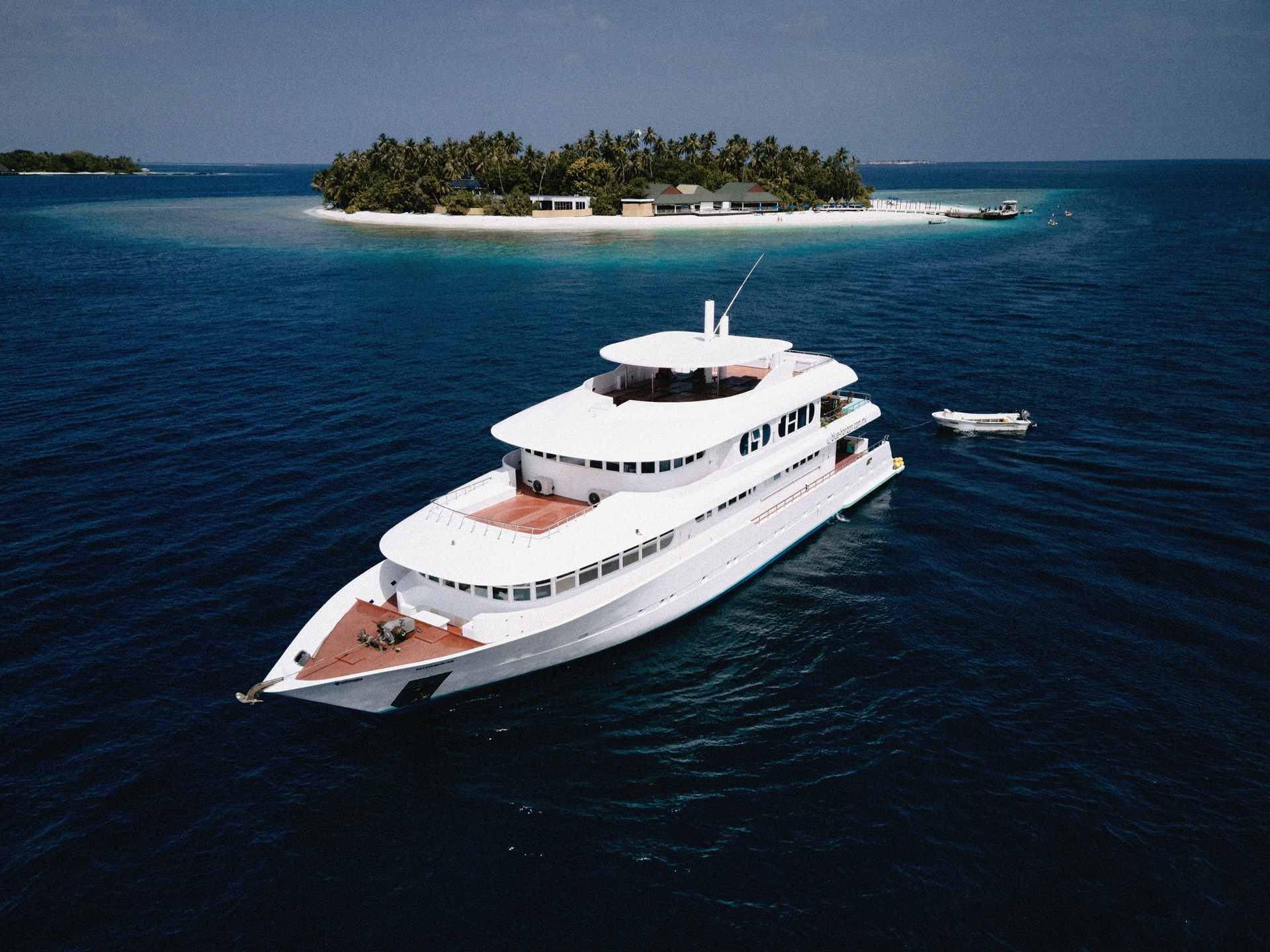
Horizon III
Maldives
25 guests
$204/day
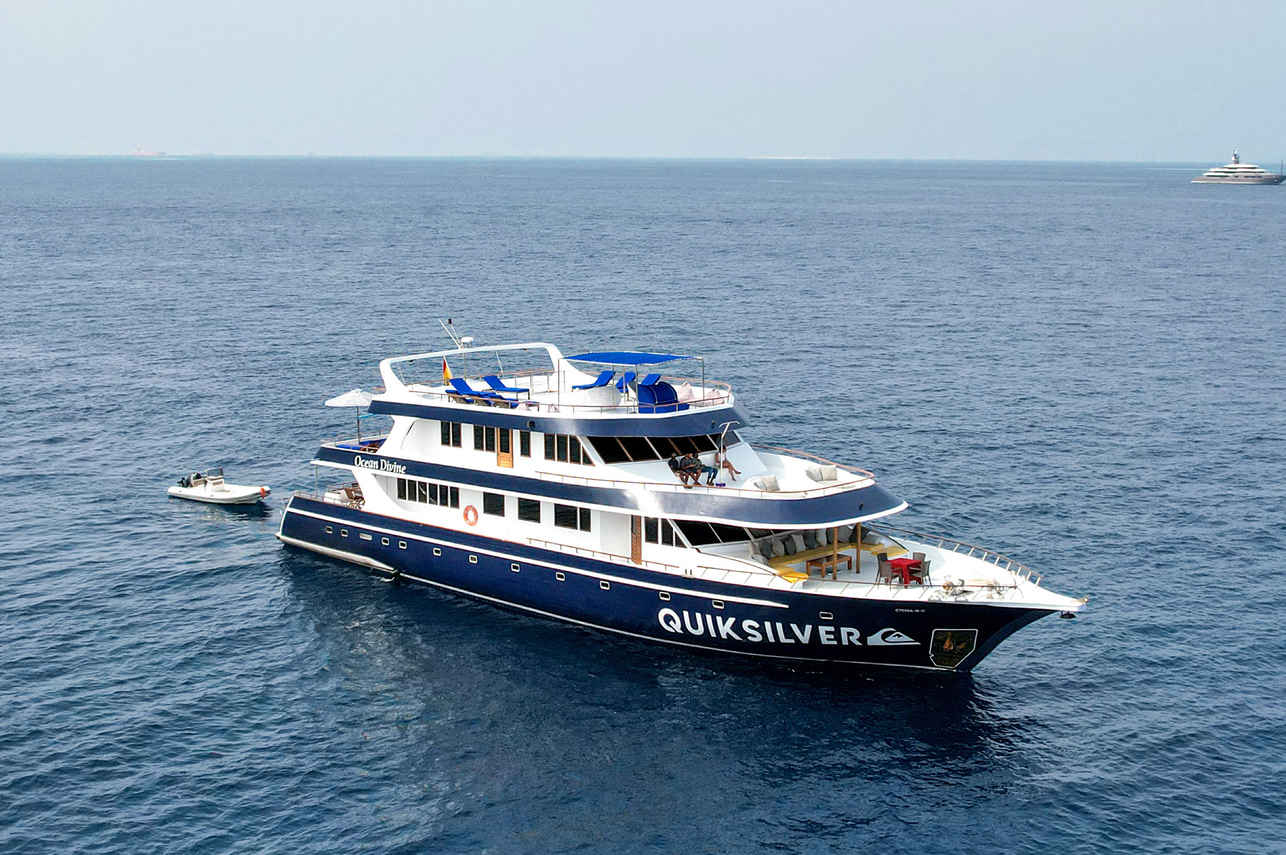
Ocean Divine
Maldives
16 guests33.528 m
$287/day
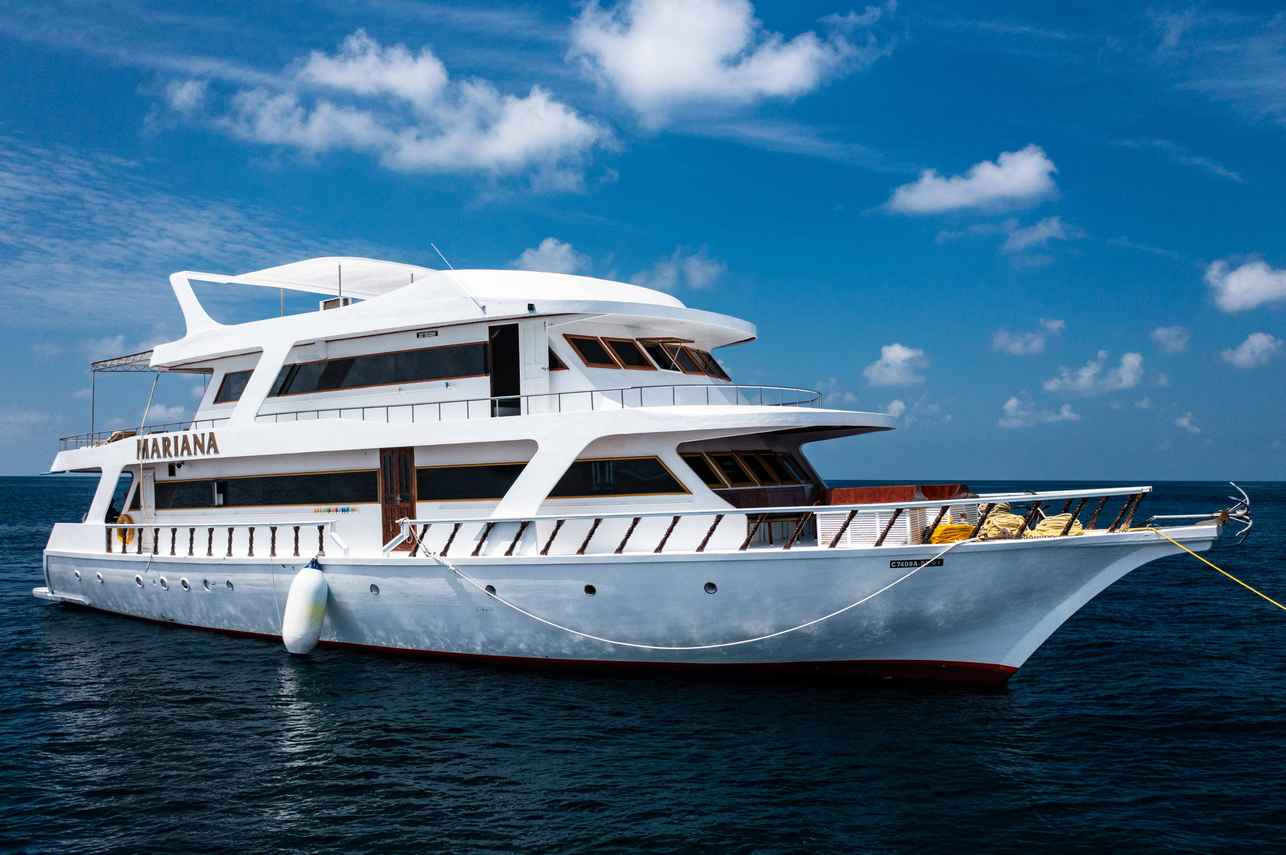
EcoPro Mariana
Maldives
16 guests30 m
$236/day
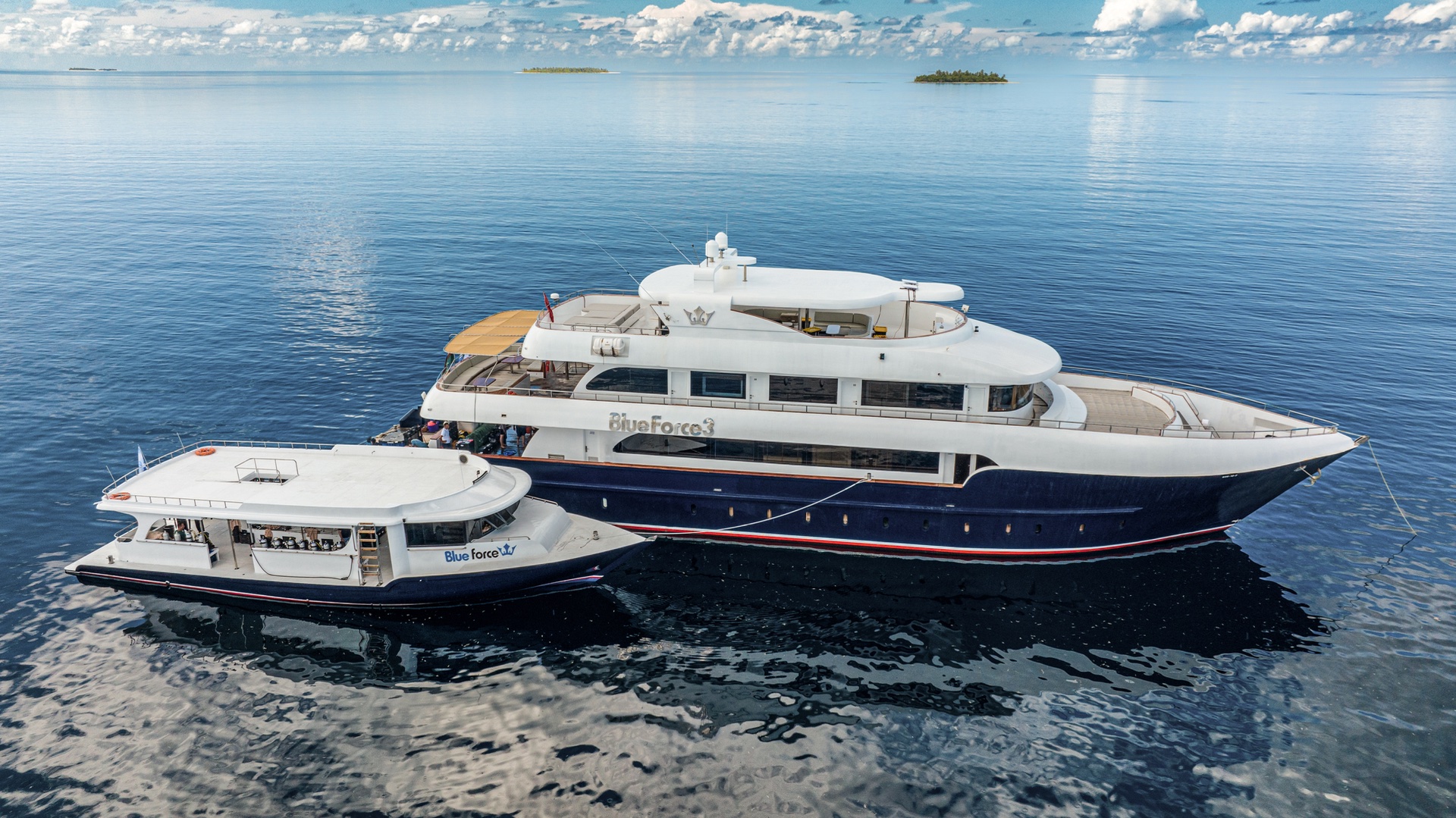
Maldives Blue Force 3
Maldives
26 guests42 m
$211/day
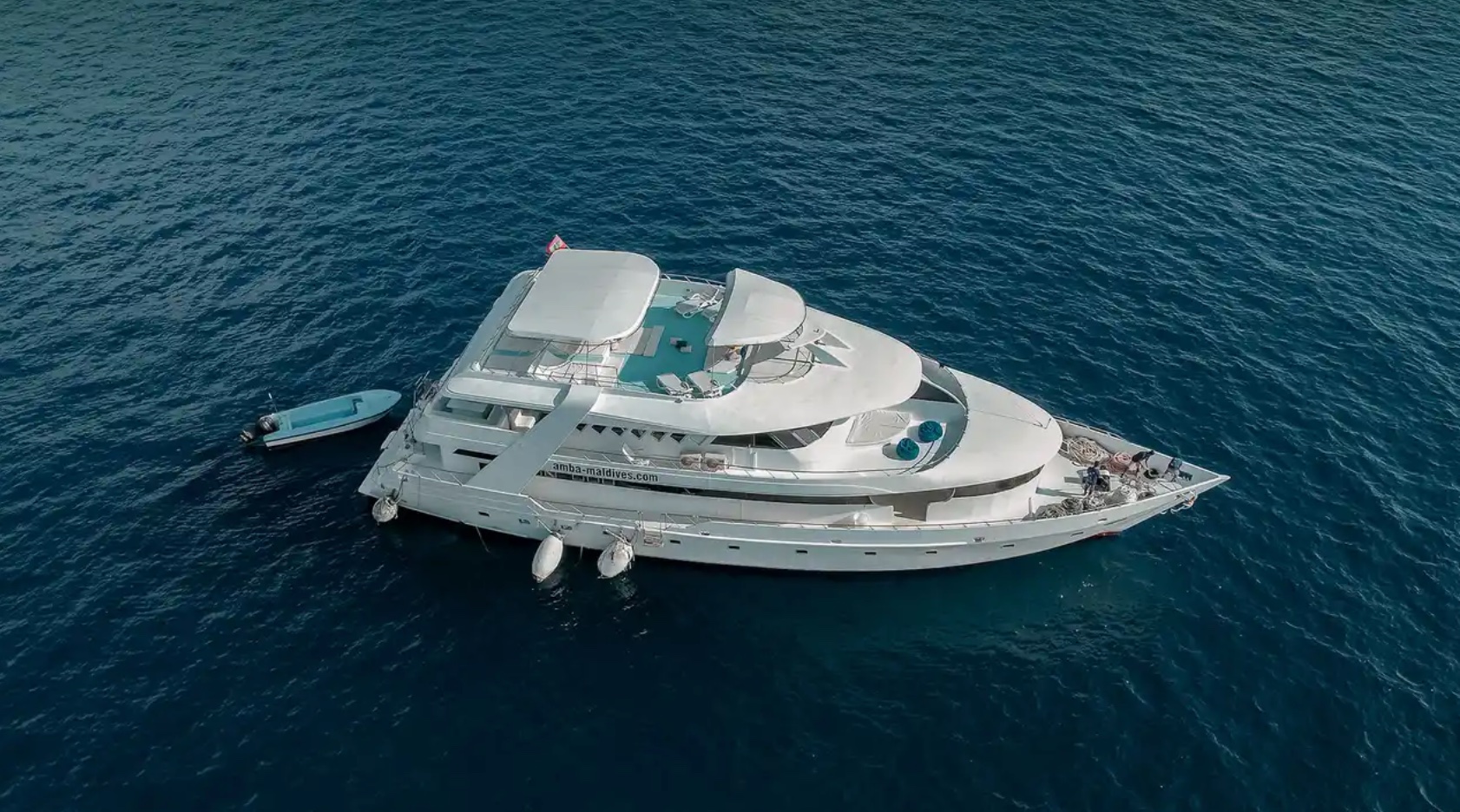
Amba
Maldives
20 guests
$178/day
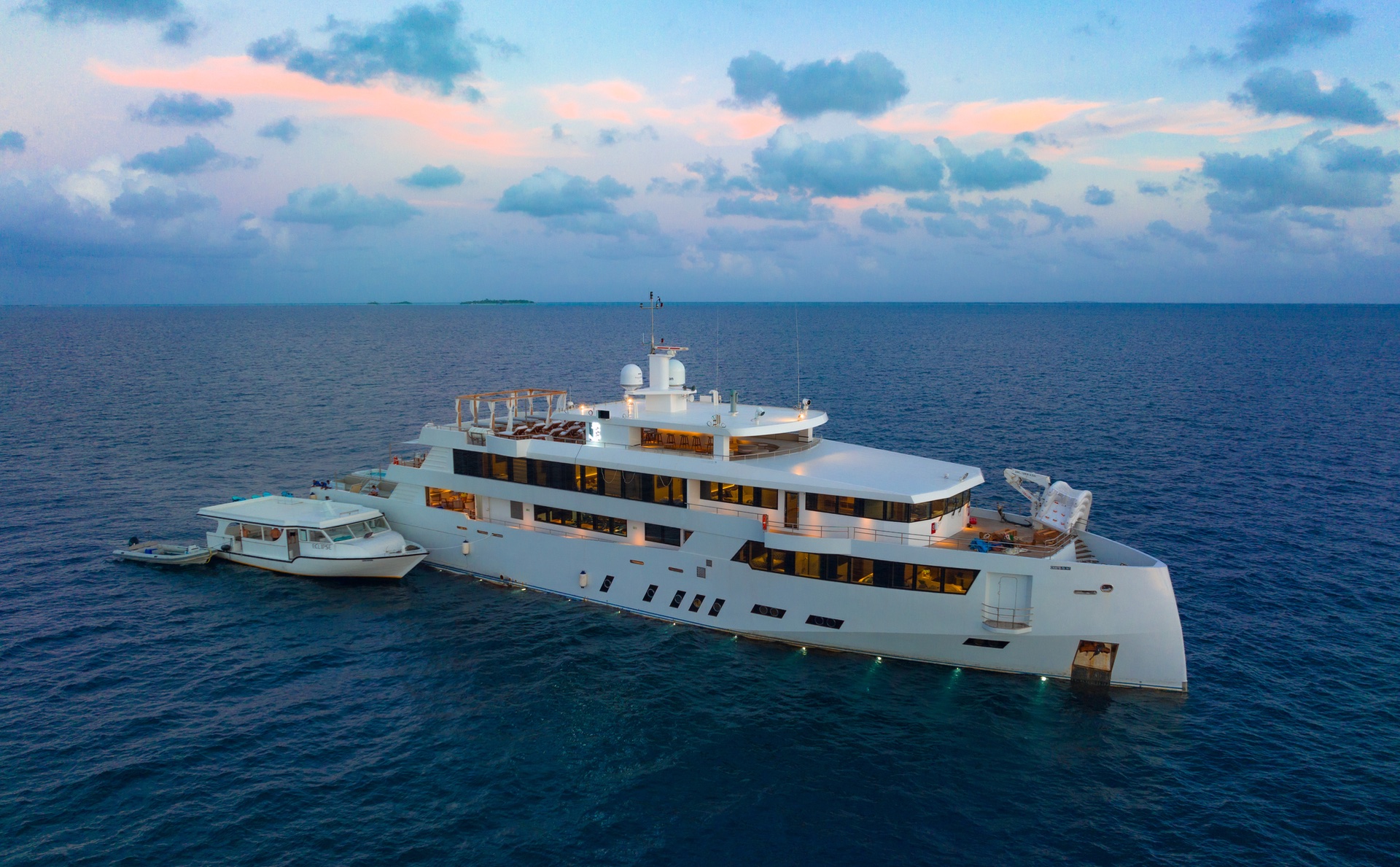
White Pearl
Maldives
26 guests
$375/day
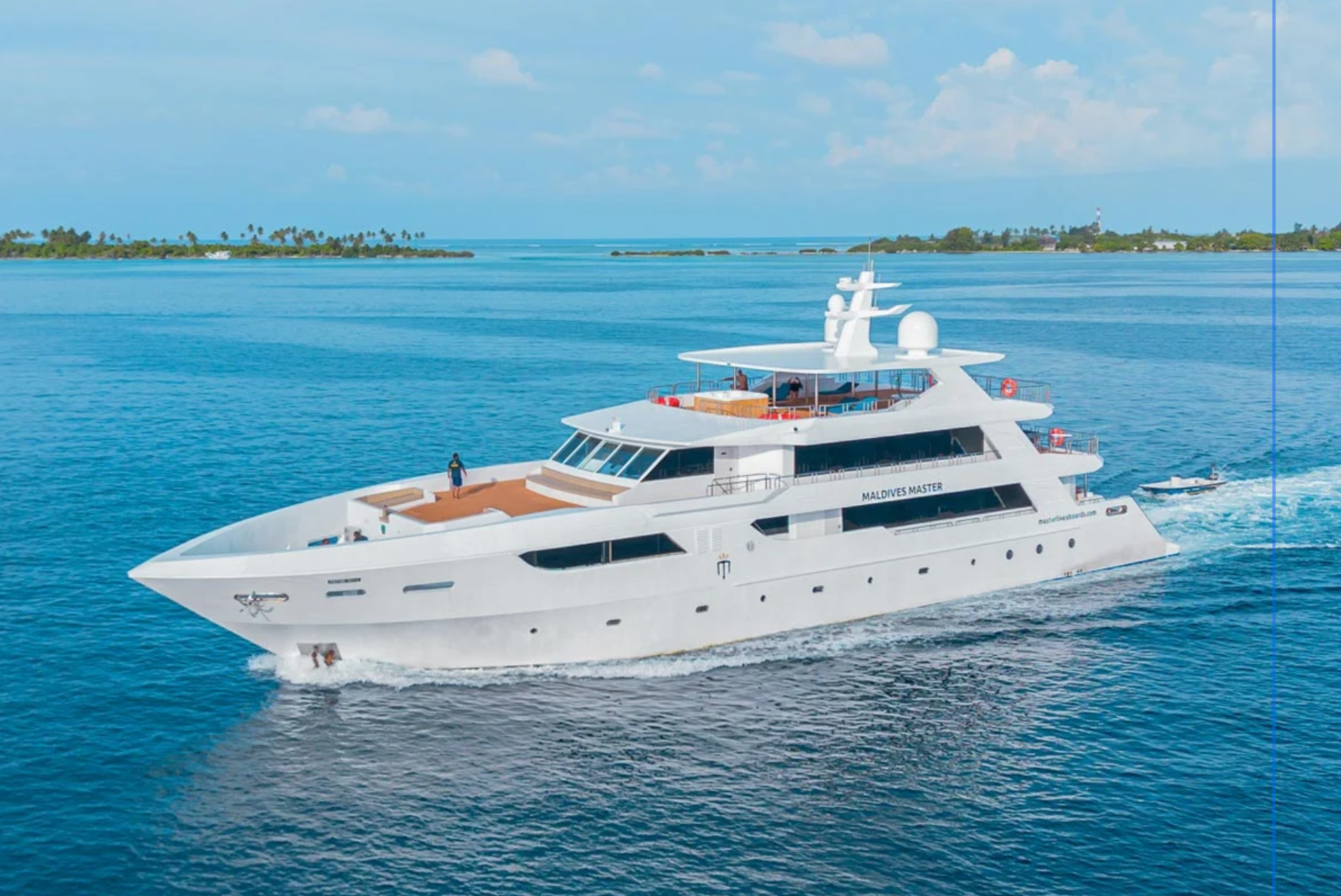
Maldives Master
Maldives
26 guests
$207/day
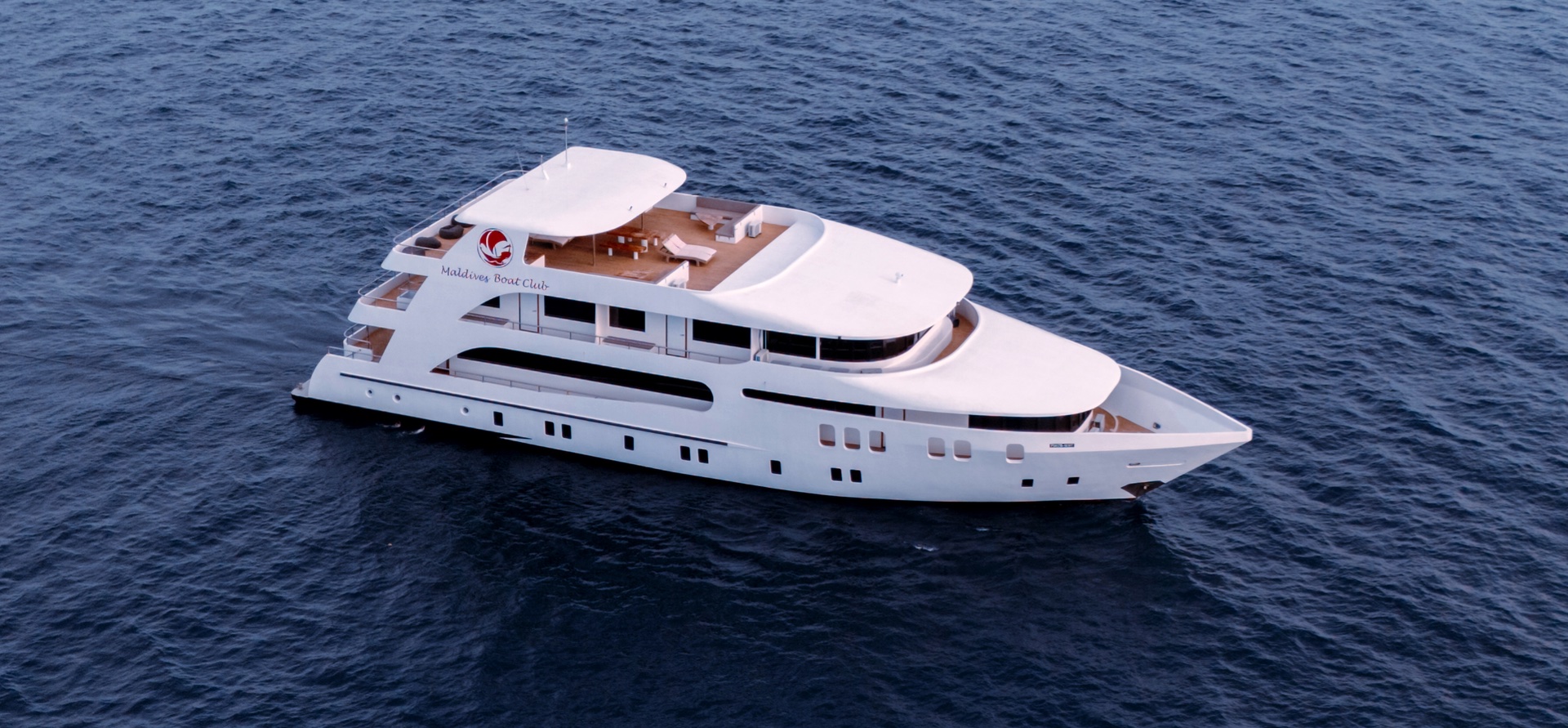
Adora
Maldives
22 guests
$297/day
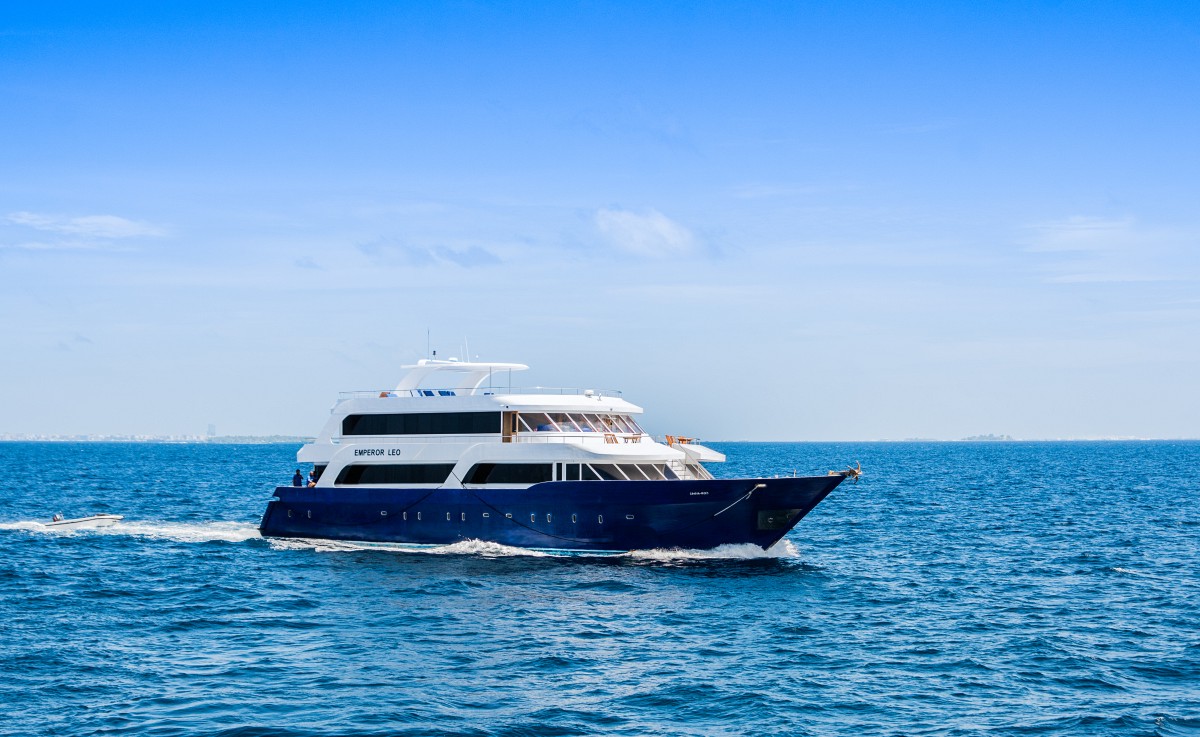
Emperor Leo
Maldives
24 guests35.1 m
$339/day
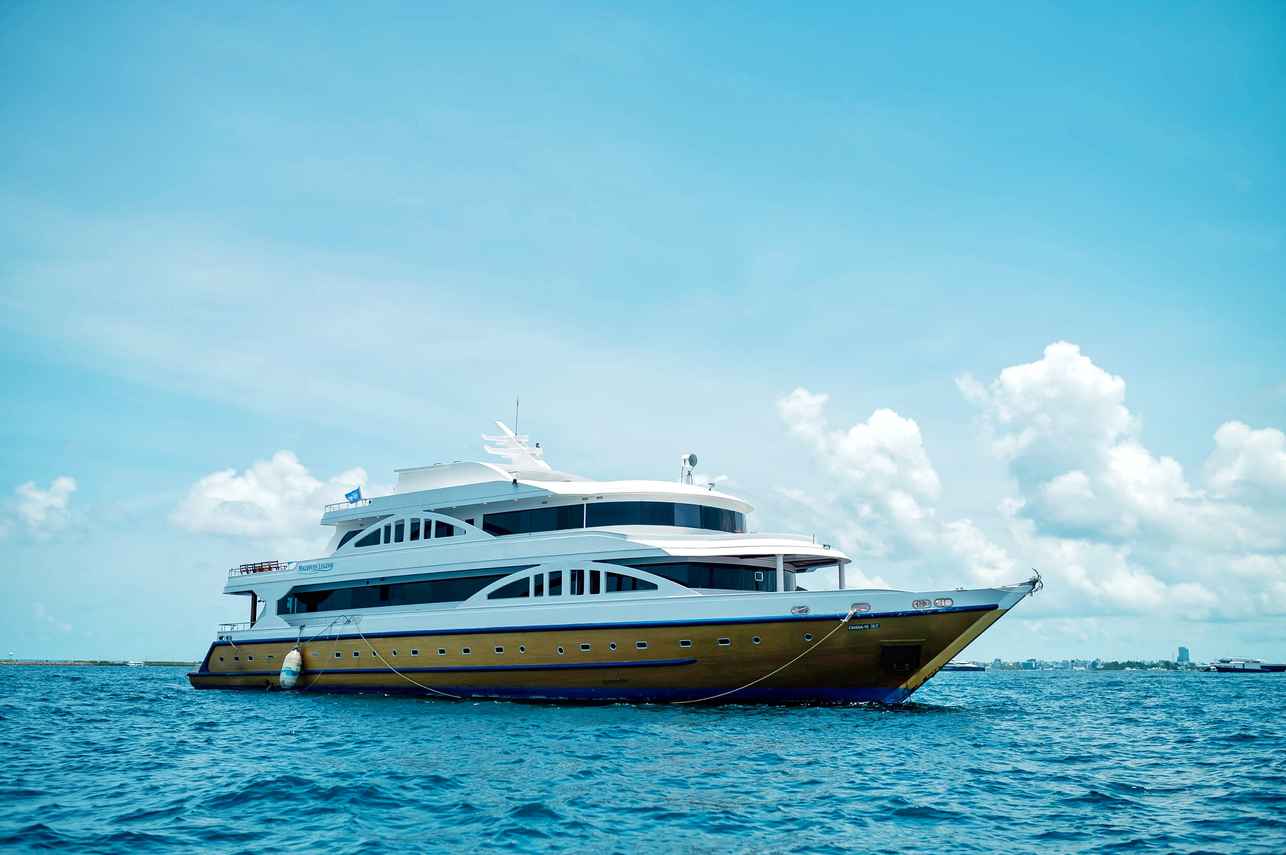
Maldives Legend Zen
Maldives
24 guests41 m
$316/day
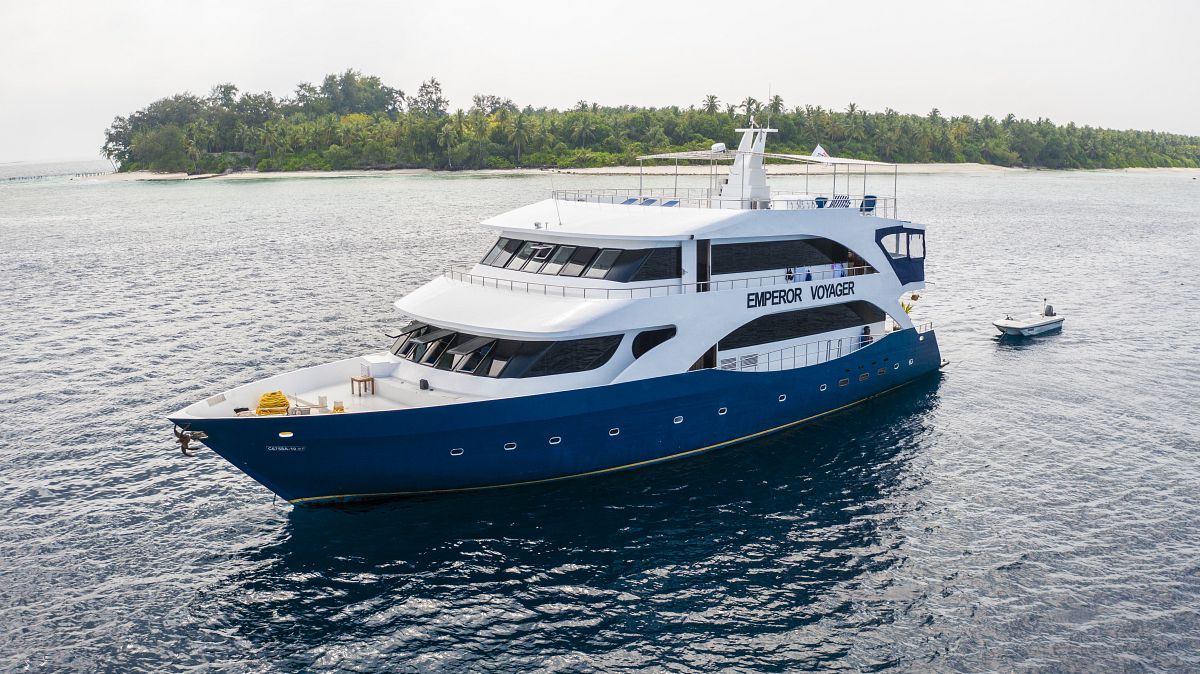
Emperor Voyager
Maldives
20 guests29.9 m
$332/day
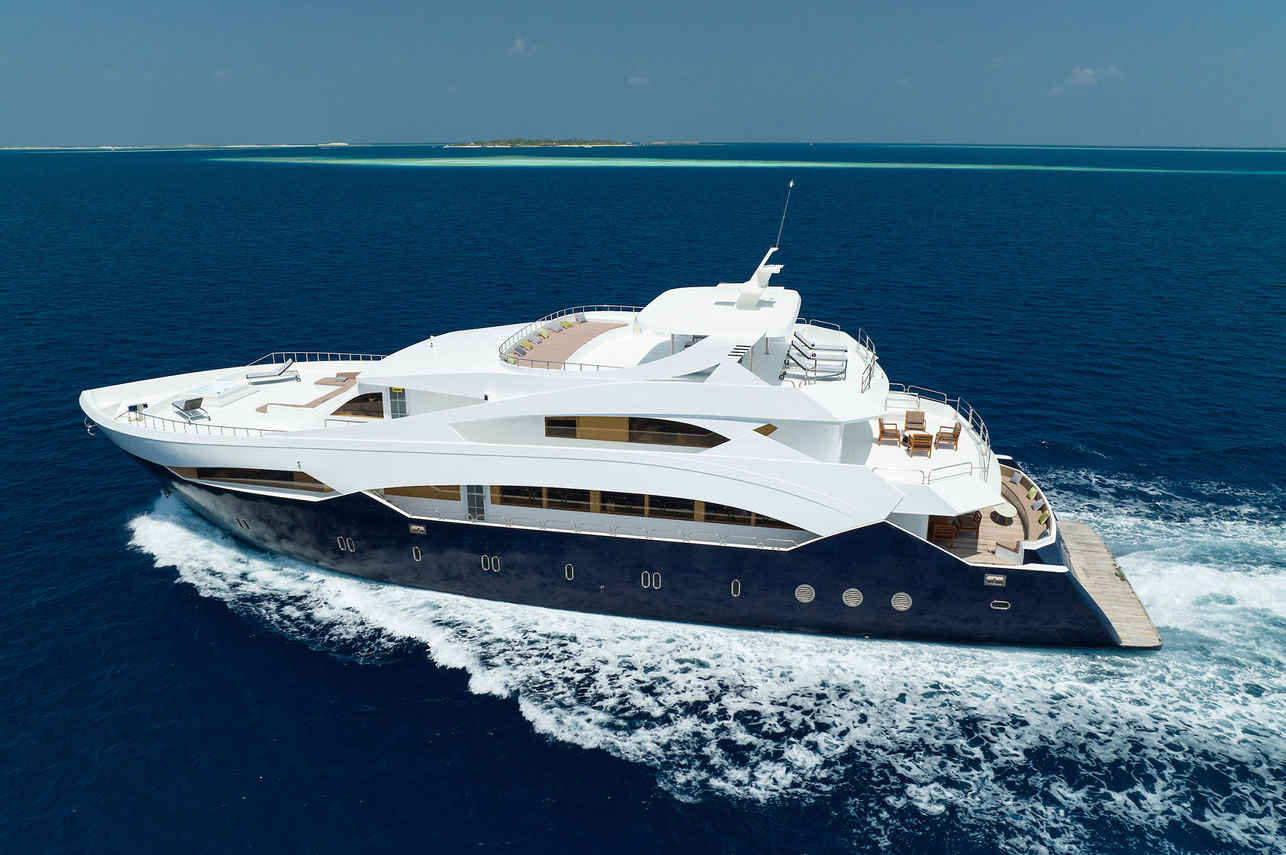
Felicity
Maldives
26 guests41 m
$229/day
Dive sites similar to Maa Kandu (Addu)
Same character, same waters — six more sites divers love for the exact same reasons.Compare seasons, access and liveaboard routes — then pick the site that fits your trip best.
© Esri — Maxar, Earthstar, GIS
Emas Thila (North Malé)
Maldives
Emas Thila is a renowned submerged reef pinnacle located in the South Ari Atoll, a protected Marine Protected Area in the Maldives.
- Suitable for
- Intermediate
- Current
- Strong
- Access
- Liveaboard or dayboat
- Depth
- 8–30 m
- Theme
- Cave & cavern / Pinnacle
© Esri — Maxar, Earthstar, GIS
Fushi Kandu (Lhaviyani)
Maldives
Fushi Kandu, located in the Lhaviyani Atoll, is an exciting channel dive site in the Maldives, offering some of the most dynamic drift diving experiences in the Indian Ocean.
- Suitable for
- Advanced
- Current
- Strong
- Access
- Liveaboard or dayboat
- Depth
- 15–35 m
- Theme
- Channel / Drift
© Esri — Maxar, Earthstar, GIS
Gan Corner (Addu Atoll)
Maldives
Gan Corner, locally known as Gan Kandu, is a prominent channel dive site nestled in the southwestern part of Addu (Seenu) Atoll, situated conveniently near the islands of Gan and Feydhoo.
- Suitable for
- Advanced
- Current
- Strong
- Access
- Liveaboard or dayboat
- Depth
- 5–40 m
- Theme
- Channel / Drift
© Esri — Maxar, Earthstar, GIS
Hithadhoo Corner (Addu)
Maldives
Hithadhoo Corner, situated in Addu Atoll, offers a unique opportunity for exceptional diving and snorkeling.
- Suitable for
- Advanced
- Current
- Moderate
- Access
- Liveaboard or dayboat
- Depth
- 3–30 m
- Theme
- Channel / Drift
© Esri — Maxar, Earthstar, GIS
Guraidhoo Corner
Maldives
Guraidhoo Corner, situated at the southern tip of Guraidhoo Island, stands as a marine protected area often celebrated for its exceptional fish diversity and photographic opportunities within the Maldives.
- Suitable for
- Advanced
- Current
- Ripping
- Access
- Liveaboard or dayboat
- Depth
- 5–35 m
- Theme
- Channel / Drift
© Esri — Maxar, Earthstar, GIS
Filitheyo Reef (Faafu)
Maldives
Filitheyo Reef, situated in the Faafu Atoll, offers an unspoiled underwater paradise, unique as the only tourist island in the atoll.
- Suitable for
- Beginner
- Current
- Strong
- Access
- Liveaboard or dayboat
- Depth
- 1–30 m
- Theme
- Reef / Wall