About Kurt Burnu Wolf's Point
Kurt Burnu Wolf's Point, located a short boat ride from Bodrum in Turkey's Muğla region, is a captivating dive site suitable for a wide range of diver experience levels. The area is renowned for its crystal-clear, blue-turquoise waters, offering excellent visibility for exploration. The site's topography is defined by dramatic rock formations that begin as shallow as 3 meters and extend down to depths of 35-40 meters, creating an intricate underwater landscape. Divers navigate across lush seagrass beds, rocky terrain, and occasional sandy patches, discovering a varied environment. Marine life encounters include scorpionfish and groupers, while unique historical elements like an ancient Phoenician ship's anchor at 15 meters add to the site's allure. A car wreck also contributes to the underwater scenery, making for a fascinating mix of natural beauty and human history. Diving here typically involves boat access, and while generally calm, divers should be prepared for potential reverse currents and mindful of boat traffic. This blend of natural beauty, historical artifacts, and diverse marine life provides a memorable experience for both new and seasoned divers.
Highlights
Stunning rock formationsAncient Phoenician anchorCar wreck discoveryDiverse seabed topographyScorpionfish and groupersClear blue-turquoise waters
Season calendar
Best months to dive here
Jan
Feb
Mar
Apr
May
Jun
Jul
Aug
Sep
Oct
Nov
Dec
Good
Dive site facts: Kurt Burnu Wolf's Point
- Depth
- 3–40 m
- Typical dive
- 3–15 m
- Current
- Occasional reverse currents
- Visibility
- Up to 14 m
- Water temperature
- 6.6°C (Jan)–27°C (Jul)
- Entry
- Boat
- Level
- Beginner to advanced
- Dive type
- Reef, rock formations, historical wreck
- Region / port
- Bodrum, Muğla
- Coordinates
- 36.9928° N, 27.3853° E
Conditions & Currents
Divers at Kurt Burnu Wolf's Point should be aware that reverse currents can occasionally occur, necessitating preparedness and awareness. While usually calm, strong currents have been noted in other sites around Bodrum, suggesting a need for vigilance in the region. Boat traffic is also a factor to consider in the area, requiring careful entry and exit procedures. Visibility, while generally very good, can reach up to 14 meters, allowing for clear views of the site's features. These conditions mean divers should maintain good buoyancy control and be attentive to their surroundings for a safe and enjoyable experience.
Marine life & sighting chances

Scorpionfish
occasional
Grouper
occasional
Moray eel
October · occasional
Starfish
occasional
Sea cucumber
occasionalWreckfish
occasionalSeagrass
common
Fragile corals
occasional
Mahi-mahi
rare
Jack
rareDive profile & how the dive runs
Access to Kurt Burnu Wolf's Point is exclusively by boat, typically a 15-minute journey from Bodrum. Upon arrival, divers descend into waters with rock formations starting at 3 meters and sloping gradually down to 35-40 meters. The main point of interest, including an ancient Phoenician anchor and a car wreck, is situated around the 15-meter mark. The dive progresses along the varied seabed, alternating between lush seagrass patches and rocky terrain. Divers should be mindful of potential reverse currents, especially when navigating around the formations. The dive typically involves exploring the rock faces for marine life and historical artifacts before ascending, with safety stops performed as standard practice near the boat at the end of the dive.
Underwater photography
Capturing the unique rock formations at Kurt Burnu Wolf's Point benefits from a wide-angle lens to encompass the vast underwater landscape, which extends from 3 to 40 meters. For the smaller inhabitants like scorpionfish or moray eels found among the rocks and seagrass, a macro lens would be ideal. Due to the clarity of the water and good visibility, natural light photography is often effective in shallower areas, but external strobes are recommended to bring out the vibrant colors of marine life and the subtle textures of the rock formations, especially when exploring deeper sections or the car wreck. Maintaining excellent buoyancy is crucial to avoid disturbing the seabed and fragile corals. Divers should be patient and respectful when approaching marine subjects for the best shots.
Combine with nearby dive sites
- TCG Pinar-1 (Wreck)
An artificial reef created by the sinking of a navy coastguard water carrier, with stern at 20m and descending to 30m.
- Bubble Cave
Located at 12 meters depth, this cave features wreckfish, tubeworms, and fragile corals, requiring a torch for full exploration.
- Big Reef
Considered a fascinating dive site in Bodrum, it starts at 7m and includes a wall dropping to 34m, rich in marine life.
- Poyraz Koyu
A site with a slope leading to a rocky reef at 16 meters, located on the back of Black Island.
- Aksona Bay
Named after a famous sponge hunter, this site starts at 3 meters and descends to 30-35 meters, suitable for advanced and open water divers.
Getting there & logistics
Kurt Burnu Wolf's Point is situated near Bodrum, in the Muğla region of Turkey. Divers typically access the site via day boats from Bodrum, with the journey lasting approximately 15 minutes. Bodrum is served by Milas-Bodrum Airport (BJV), which has good connections. Diving excursions to this site are often part of daily dive trips offered by local dive centers in Bodrum. The Muğla region is a popular tourist destination, offering a variety of accommodations and dive operators. While specific permits for this site are not mentioned, general park fees or marine protected area regulations may apply in broader Turkish diving contexts. Trip lengths vary, but day trips are common, allowing divers to experience the site and return to shore-based amenities.
Safety & environment
For diving in Turkey, including Kurt Burnu Wolf's Point, it is essential for divers to have comprehensive dive insurance that covers emergency medical treatment and evacuation. The nearest recompression chamber facilities would likely be located in larger medical centers in Bodrum or other major cities in the Muğla region. Evacuation in a serious emergency might involve boat transfer to shore followed by road transport to a medical facility. Site-specific hazards at Kurt Burnu Wolf's Point include potential reverse currents, requiring divers to be attentive and maintain good buoyancy control. Additionally, boat traffic in the area necessitates vigilance, especially during ascent and descent. Divers should adhere to dive guide instructions, dive within their certification limits, and properly plan their gas consumption.
Who it suits — and who it doesn't
Suited for
- Beginner divers seeking clear waters and varied topography
- Advanced divers interested in deeper exploration and historical artifacts
- Divers comfortable with boat access and potential mild currents
- Underwater photographers targeting wide-angle and macro subjects
- Those looking for a mix of natural reefs and artificial attractions
Less suited for
- Divers unwilling to navigate potential reverse currents
- Individuals expecting strong pelagic action
- Divers who prefer shore-entry only sites
- Those sensitive to boat traffic in busy areas
FAQ
Kurt Burnu Wolf's Point FAQ
What kind of marine life can I expect to see at Kurt Burnu Wolf's Point?
Divers exploring Kurt Burnu Wolf's Point frequently encounter scorpionfish and groupers among the rock formations and seagrass beds. Other notable sightings include moray eels, starfish, and sea cucumbers. The site also hosts wreckfish and various types of fragile corals, adding to the biodiversity you can observe during your dive.
Are there any wrecks or historical artifacts at Kurt Burnu Wolf's Point?
Yes, Kurt Burnu Wolf's Point is home to both historical artifacts and a modern wreck. Divers can find an ancient Phoenician ship's anchor resting at the 15-meter level, offering a glimpse into ancient maritime history. Additionally, a fascinating car wreck contributes to the site's unique underwater scenery, providing an interesting feature to explore.
What are the typical diving conditions like regarding depth and visibility?
The dive site offers a maximum depth of 40 meters, with prominent rock formations starting as shallow as 3 meters. Visibility is generally excellent, often reaching up to 14 meters, providing clear views of the underwater landscape. Water temperatures can range significantly throughout the year, from around 6.6°C in January to 27.0°C in July.
Is Kurt Burnu Wolf's Point suitable for beginner divers?
Absolutely, Kurt Burnu Wolf's Point is suitable for divers of all levels, including beginners. While the site does extend to deeper sections, there are plenty of interesting features and marine life to explore in shallower areas, particularly around the 15-meter mark. Beginners should still be aware of potential reverse currents and maintain good buoyancy control.
How do I get to Kurt Burnu Wolf's Point and what is the travel time?
Kurt Burnu Wolf's Point is accessible by boat from Bodrum, Turkey. The journey to the dive site typically takes a short 15 minutes by boat. Dive operators in Bodrum offer day trips to this and other nearby sites, making it convenient for divers staying in the area.
Why dive Kurt Burnu Wolf's Point from a liveaboard?
Kurt Burnu Wolf's Point is one of Turkey's signature dive sites. A liveaboard sleeps you on the water and puts you in the water for three to four guided dives per day, including dawn and night dives that day-boat operators rarely offer. You skip the daily commute back to port and reach quieter, less-crowded sites in the same region on a single trip.
Below are the liveaboards that include Kurt Burnu Wolf's Point on their Turkey itineraries.
Liveaboards diving Kurt Burnu Wolf's Point
These liveaboards may visit Kurt Burnu Wolf's Point on selected itineraries — the exact dive sites depend on departure, weather and conditions.
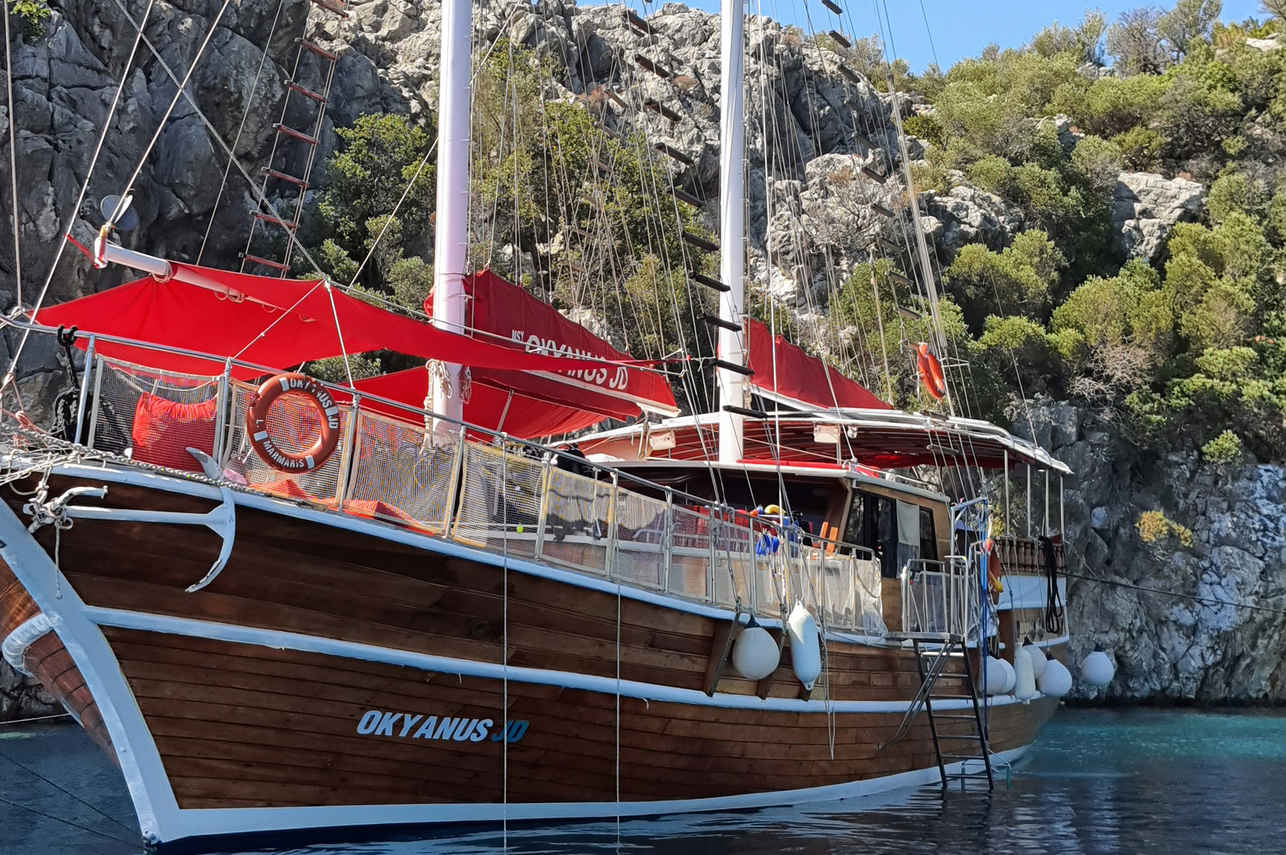
Okyanus JD
Turkey
12 guests24 m
$158/day
Dive sites similar to Kurt Burnu Wolf's Point
Same character, same waters — six more sites divers love for the exact same reasons.Compare seasons, access and liveaboard routes — then pick the site that fits your trip best.
© Esri — Maxar, Earthstar, GIS
Hidayet Koyu
Turkey
Hidayet Koyu is a well-known, sheltered bay located on the Kaş peninsula in Turkey, celebrated for its accessibility and vibrant marine ecosystem.
- Suitable for
- Beginner
- Current
- No current
- Access
- Liveaboard or dayboat
- Depth
- ≤ 32 m
- Theme
- Reef
© Esri — Maxar, Earthstar, GIS
Besmi Island
Turkey
Besmi Island, also known as Besmi Adası, is a challenging yet rewarding dive site located off Turkey's southwestern coast near Fethiye and southwest of Kaş.
- Suitable for
- Advanced
- Current
- Strong
- Access
- Dayboat
- Depth
- 4–60 m
- Theme
- Reef / Wall
© Esri — Maxar, Earthstar, GIS
Domuz Island
Turkey
Domuz Island, also known as Pig Island, is a celebrated dive destination nestled within the Göcek archipelago, part of Fethiye Bay.
- Suitable for
- Beginner
- Current
- Mild
- Access
- Dayboat
- Depth
- 5–15 m
- Theme
- Reef
© Esri — Maxar, Earthstar, GIS
Gökova Bay Canyon
Turkey
Gökova Bay Canyon is a renowned dive site in Turkey, celebrated for its unique underwater topography, which contrasts sharply with typical Mediterranean dive experiences.
- Suitable for
- Advanced
- Current
- Strong
- Access
- Liveaboard or dayboat
- Depth
- 15–35 m
- Theme
- Wall
© Esri — Maxar, Earthstar, GIS
Kızıl Island
Turkey
Kızıl Island, known locally as Kızılada, is a prominent dive site situated near Fethiye on Turkey's southwestern coast.
- Suitable for
- Intermediate
- Current
- Mild
- Access
- Dayboat
- Depth
- 8–40 m
- Theme
- Reef / Wall
© Esri — Maxar, Earthstar, GIS
Smugglers Bay
Turkey
Smugglers Bay, located near Bodrum in Turkey's Aegean Sea, is a beginner-friendly dive site renowned for its calm conditions and healthy marine environment.
- Suitable for
- Beginner
- Current
- Mild
- Access
- Dayboat
- Depth
- 3–35 m
- Theme
- Reef