About Kaş Tunnel
Kaş Tunnel, located off the coast of Kaş in Antalya, Turkey, offers a distinctive boat-access dive experience. This site is renowned for its prominent underwater tunnel, a natural formation that beckons advanced divers. The dive typically begins with a descent to approximately 20 meters, followed by a westward swim through a landscape characterized by intricate rock formations and canyons, leading to the tunnel entrance. The unique topography of the Kaş region, a hidden gem on Turkey's southwest coast, provides exceptional underwater visibility, often extending up to 40 meters. While the main attraction is the tunnel itself, the surrounding environment boasts a rich biodiversity. Divers can anticipate encountering various Mediterranean species, though the primary allure remains the geological features rather than abundant fish life. Optimal diving conditions for the Kaş Tunnel are usually found in the mornings when the sea is calm, mitigating surge and making the approach to the tunnel safer. This dive site is an excellent example of the historical and geological wonders that make Kaş a top-tier Mediterranean diving destination, suitable for those seeking a unique challenge and an appreciation for underwater architecture. While marine life is present, the focus here is truly on the geological marvel. Expect to navigate through narrow passages and an overhead environment, requiring good buoyancy control and advanced diving skills. The blend of natural beauty and the thrill of tunnel exploration makes it a highly sought-after dive.
Highlights
Underwater tunnel explorationDramatic rock formationsCanyon landscapeExceptional visibilityChallenging overhead environmentAncient amphorae fragments
Season calendar
Best months to dive here
Jan
Feb
Mar
Apr
May
Jun
Jul
Aug
Sep
Oct
Nov
Dec
Excellent
Good
Dive site facts: Kaş Tunnel
- Depth
- 20–28 m
- Typical dive
- 20–28 m, 40–50 min
- Current
- Mild to none (underwater), strong surge possible at entrance
- Visibility
- 18–40 m
- Water temperature
- 16–28°C
- Entry
- Boat / negative entry
- Level
- Advanced, overhead environment experience recommended
- Dive type
- Tunnel, cavern, historical
- Region / port
- Kaş, Antalya
- Coordinates
- 36.197, 29.63
Conditions & Currents
Currents at Kaş Tunnel are generally not a primary concern, as sources do not describe significant underwater current within the tunnel or approach. However, strong surge is a common factor, particularly at the tunnel entrance, and requires careful management. Divers must plan their entry and exit during calm morning windows to avoid challenging surface conditions and surge, which can make navigating the overhead environment difficult. Visibility remains excellent year-round, often reaching up to 40 meters, though thermoclines can be present, especially outside the peak summer months. Good buoyancy control is crucial, especially within the narrow passages, to prevent contact with the fragile formations. Boat traffic is managed by local dive operators, who typically schedule dives for optimal conditions.
Marine life & sighting chances

Loggerhead Turtle
occasional
Grouper
occasional
Moray Eel
occasional
Nudibranch
occasional
Barracuda
occasional

Octopus
occasional
Seahorse
June-October · rare
Stingray
occasional
Trumpetfish
occasional
Eagle Ray
occasionalDive profile & how the dive runs
Access to Kaş Tunnel is exclusively by boat, requiring a calm sea for safe entry. The dive commences with a controlled descent to approximately 20 meters, where you then proceed westward through a varied landscape of rock formations and canyons. The entrance to the tunnel is situated at about 20 meters, leading into an overhead environment. Divers navigate through the tunnel, maintaining precise buoyancy to avoid contact with the delicate walls and floor. The route involves exploring the intricate passages and seeking out any hidden alcoves. Maximum depths reported for the area around the tunnel can reach 28 meters. The turn point is determined by air consumption and the limits of an overhead environment dive plan. The safety stop is typically conducted at shallower depths near the tunnel exit or along the boat's anchor line, depending on current and surface conditions.
Underwater photography
Kaş Tunnel presents unique photographic challenges and rewards for advanced underwater photographers. A wide-angle lens is essential to capture the dramatic scale of the tunnel and canyon formations. For the internal tunnel shots, a powerful strobe or video light is crucial to illuminate the dark spaces and bring out the textures of the rock. Pay close attention to buoyancy to avoid disturbing silt or making contact with the fragile environment, which is paramount for both safety and clear shots. Given the overhead environment, it's vital to streamline your gear and minimize snagging hazards. Patience is key; wait for clear water and minimal surge to achieve the best compositions. Capturing ambient light filtering through cracks in the tunnel ceiling can also create stunning visual effects.
Combine with nearby dive sites
- Canyon Dive (Kaş)
A classic canyon and wreck dive, often combined with the Dimitri wreck.
- Lighthouse Reef (Kaş)
Accessible boat dive known for marine life and reef structures.
- Flying Fish
A deep wreck dive, suitable only for very experienced divers due to depth and currents.
- SAS Wreck (Kaş)
A popular wreck dive in the Kaş region.
- Pina Reef
A boat-access reef with turtles, pen shells, and a wall.
- Amphora Reef
Known for scattered ancient amphorae across the seabed.
Getting there & logistics
Kaş is situated on the southwest coast of Turkey, in the Antalya province. The most common access points are Antalya Airport (AYT) or Dalaman Airport (DLM), both approximately 2.5 to 3 hours' drive from Kaş. Divers typically stay in Kaş itself, which offers numerous dive centers for boat excursions. Dive trips to Kaş Tunnel are generally day trips, often combined with other local sites. There are no specific permits or fees mentioned for this particular dive site beyond standard dive tour costs. It's common for liveaboards or dive packages to include multiple days of diving around Kaş, exploring various reefs, wrecks, and geological formations like the tunnel. Transport to the dive site is always by boat from Kaş harbor, emphasizing the need for calm morning conditions.
Safety & environment
Diving the Kaş Tunnel demands adherence to strict safety protocols due to its overhead environment and potential for strong surge. Divers must be advanced certified and proficient in buoyancy control. Always dive with a reputable local operator who understands the site's unique conditions, especially the timing for calm morning windows. An emergency oxygen kit should be readily available on the dive boat, and all divers should carry personal signaling devices. The nearest recompression chamber is located in Antalya, approximately 2-3 hours away, necessitating robust dive planning and conservative profiles. Comprehensive dive insurance, including coverage for emergency evacuation and recompression treatment, is strongly recommended. Divers should strictly follow the dive briefing, never exceed their training limits, and prioritize buddy communication throughout the dive, especially within the tunnel.
Who it suits — and who it doesn't
Suited for
- Advanced divers seeking geological exploration
- Divers comfortable with overhead environments
- Photographers interested in unique rock formations
- Those who appreciate historical artifacts underwater
- Divers seeking excellent visibility
Less suited for
- Beginner divers
- Divers uncomfortable in enclosed spaces
- Divers without strong buoyancy control
- Those seeking abundant coral reefs
- Divers prone to seasickness (due to potential boat ride conditions)
FAQ
Kaş Tunnel FAQ
What kind of dive experience does Kaş Tunnel offer?
Kaş Tunnel provides a unique geological dive featuring an impressive underwater tunnel and canyon formations. It is primarily an exploration dive, focusing on the dramatic rock structures rather than dense marine life, though some species are present. Divers navigate through an overhead environment, requiring advanced skills and careful planning.
What are the typical conditions for diving Kaş Tunnel?
Visibility at Kaş Tunnel is generally excellent, often reaching 40 meters. Water temperatures vary from 16°C in winter to 28°C in summer. While strong underwater currents are not typical for this site, strong surge can be present at the tunnel entrance, making morning dives during calm conditions essential.
Is Kaş Tunnel suitable for all levels of divers?
No, Kaş Tunnel is recommended for advanced divers who are comfortable with overhead environments and possess excellent buoyancy control. The narrow passages and the nature of the tunnel require specific training and experience for a safe and enjoyable dive.
What marine life can be seen at Kaş Tunnel?
While the primary draw of Kaş Tunnel is its geology, divers may encounter species such as grouper, moray eels, nudibranchs, and occasional barracudas. Rarer sightings include loggerhead turtles, octopus, and seahorses, though the site is not known for a high density of fish.
How do I get to Kaş Tunnel for diving?
Kaş Tunnel is a boat-access dive site, reachable from Kaş harbor. Divers typically book trips with local dive centers in Kaş. The dive operators usually schedule excursions during the calm morning hours to ensure the best and safest conditions for entering the tunnel.
Are there any specific safety considerations for diving Kaş Tunnel?
Yes, due to the overhead environment and potential for surge, divers must be advanced certified and have experience with such conditions. It's crucial to dive with a professional guide, maintain constant buddy contact, and have appropriate dive insurance. Adhering to the dive briefing and practicing conservative dive profiles are essential.
Why dive Kaş Tunnel from a liveaboard?
Kaş Tunnel is one of Turkey's signature dive sites. A liveaboard sleeps you on the water and puts you in the water for three to four guided dives per day, including dawn and night dives that day-boat operators rarely offer. You skip the daily commute back to port and reach quieter, less-crowded sites in the same region on a single trip.
Below are the liveaboards that include Kaş Tunnel on their Turkey itineraries.
Liveaboards diving Kaş Tunnel
These liveaboards may visit Kaş Tunnel on selected itineraries — the exact dive sites depend on departure, weather and conditions.
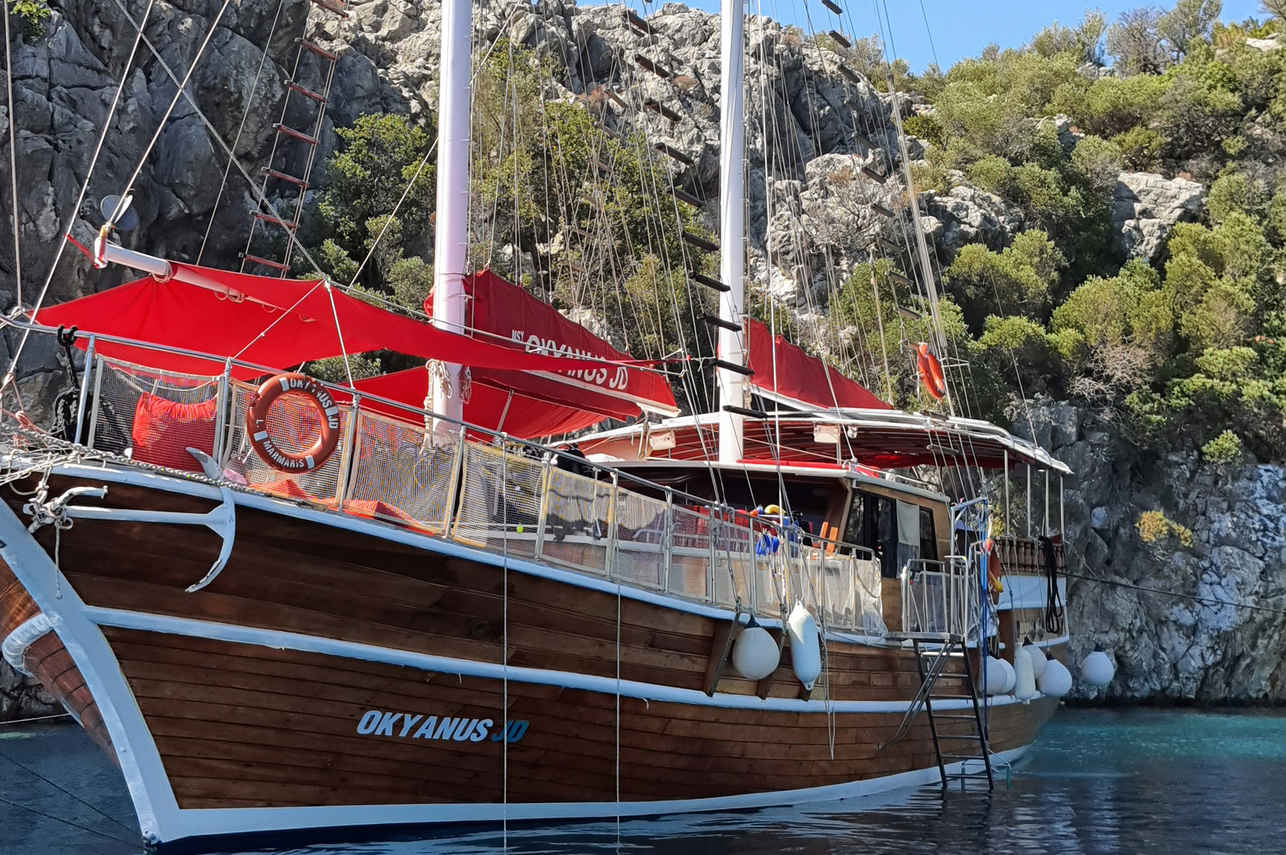
Okyanus JD
Turkey
12 guests24 m
$156/day
Dive sites similar to Kaş Tunnel
Same character, same waters — six more sites divers love for the exact same reasons.Compare seasons, access and liveaboard routes — then pick the site that fits your trip best.
Air Cave is a distinctive natural formation located along Turkey's Mediterranean Riviera, near Kemer.
- Suitable for
- Advanced
- Current
- Mild
- Access
- Dayboat
- Depth
- ≤ 12 m
- Theme
- Cave & cavern / Cavern
© Esri — Maxar, Earthstar, GIS
Rambo Cave
Turkey
Rambo Cave is a captivating coastal cavern located near Alanya in Antalya, Turkey.
- Suitable for
- Intermediate
- Current
- Moderate
- Access
- Liveaboard or dayboat
- Depth
- 3–15 m
- Theme
- Cave & cavern
© Esri — Maxar, Earthstar, GIS
The Mexican Hat Cold Water Cave is an intriguing dive site situated near Afkule, roughly 300 meters past the main Afkule cave complex, off the coast of Fethiye, Turkey.
- Suitable for
- Advanced
- Current
- Mild
- Access
- Dayboat
- Depth
- ≤ 30 m
- Theme
- Cave & cavern / Cavern
© Esri — Maxar, Earthstar, GIS
Phosphorous Cave
Turkey
Phosphorous Cave is a captivating underwater cavern located along Turkey's Mediterranean coast.
- Suitable for
- Advanced
- Current
- Moderate
- Access
- Liveaboard or dayboat
- Depth
- ≤ 30 m
- Theme
- Cave & cavern
© Esri — Maxar, Earthstar, GIS
Pirates Cave
Turkey
Pirates Cave is one of several distinctive dive sites located along the coastline of Alanya Castle in Turkey.
- Suitable for
- Intermediate
- Current
- Mild
- Access
- Dayboat
- Depth
- 3–30 m
- Theme
- Cave & cavern / Wall
© Esri — Maxar, Earthstar, GIS
Saint Efstathios Cave
Turkey
Saint Efstathios Cave is a historical dive site located directly beneath the Kaleiçi cliffs in Antalya, specifically towards Konyaaltı from Kaleiçi Port.
- Suitable for
- Intermediate
- Current
- No current
- Access
- Dayboat
- Depth
- ≤ 15 m
- Theme
- Cave & cavern / Reef