About Great White Wall
The Great White Wall, a world-renowned dive site in Fiji, is located within the Somosomo Strait, a narrow channel between Vanua Levu and Taveuni. This strait is pivotal to the region's exceptional marine life, as strong tidal currents funnel nutrient-rich water through it, creating ideal conditions for vibrant coral growth. The site earns its name from the dense coverage of white soft corals, specifically Dendronephthya, that blanket its depths, making it one of the top reef dives globally. Divers typically begin this experience by entering a lava tube, also described as a tubular cave or burrowed hole, starting around 12 to 15 meters. This natural formation, wide enough at 3 meters, is illuminated by numerous openings and hosts marine life like lionfish, squirrelfish, soldierfish, moray eels, and banded shrimps. Exiting the tube at approximately 23 to 25 meters, divers then encounter the majestic Great White Wall, which plunges to depths beyond 30 meters, reaching up to 60 meters. The wall is covered extensively by the iconic white soft corals, interspersed with colorful sponges, hard corals, and crinoids. Beyond the famed white corals, the site boasts a rich diversity of marine species. You can observe reef sharks, turtles, barracuda, tuna, dogtooth tuna, and Spanish mackerel, particularly in the deeper sections. Square-spot anthiases are prevalent against the white backdrop, and smaller creatures like scorpionfish, nudibranchs, mantis shrimp, and longnose hawkfish can be found along the wall. The visibility can vary, but generally offers a clear view of this spectacular underwater landscape. Due to strong, tide-dependent currents and the site's depths, the Great White Wall is considered an advanced dive. Timing is crucial; the site is best dived at low tide when the white soft corals extend their feeders, appearing brilliant and pearly. During other tidal conditions, the corals may retract and appear brownish. Dive operators schedule visits to align with optimal tidal windows to ensure the best viewing conditions and diver safety.
Highlights
Iconic white soft coral wallUnderwater lava tube entryAbundant square-spot anthiasesReef sharks and pelagic fishDiverse hard and soft coralsUnique current-fed ecosystem
Season calendar
Best months to dive here
Jan
Feb
Mar
Apr
May
Jun
Jul
Aug
Sep
Oct
Nov
Dec
Excellent
Good
Dive site facts: Great White Wall
- Depth
- 20–40 m
- Current
- Moderate to strong, tide-dependent
- Visibility
- 20–40 m
- Water temperature
- 25–29°C
- Entry
- Boat / Tender
- Level
- Advanced, current experience helpful
- Dive type
- Wall, drift, soft coral, pelagic, macro
- Night dive
- Possible, exhilarating
- Region / port
- Somosomo Strait, Rainbow Reef, Taveuni
- Coordinates
- -16.85, -179.8833
Conditions & Currents
The Great White Wall is characterized by strong, tide-dependent currents within the Somosomo Strait. Water funnels through this narrow passage with each tidal change, making precise timing essential for a successful dive. The site is optimally dived at low tide when currents are manageable, and the eponymous white soft corals are fully extended and feeding; at other times, currents can be significant, and corals may be retracted, impacting the visual experience and bottom time. Divers typically perform a negative entry to reach the lava tube that leads to the wall. Due to these strong currents, the site is recommended for Advanced Open Water certified divers. Visibility can be affected by the currents, but generally remains good. No thermoclines or significant boat traffic issues are reported, but divers must be mindful of their gas consumption and no-decompression limits due to the depth and potential for drift.
Marine life & sighting chances
Dendronephthya soft corals
commonGrey reef shark
occasionalWhite tip reef shark
occasionalBarracuda
occasionalManta ray
May to October · occasionalMoray eel
commonLobster
commonLionfish
commonNudibranch
commonCrinoid
commonAnthias
commonEmperor angelfish
commonPufferfish
commonScorpionfish
occasionalDive profile & how the dive runs
Divers typically begin their descent into a vertical lava tube that starts around 12 meters, with an exit point at approximately 20 meters, marking the beginning of the Great White Wall. This initial section is home to sea whips, soldierfish, and sweeper fish. The primary coral zone stretches from 25 to 40 meters, where the soft corals reach their maximum density and bloom during optimal tidal conditions. Explore overhangs, crevices, and small caves for moray eels, lobsters, and lionfish. Divers often experience a thrilling drift along the wall, observing the "underwater avalanche" of corals. The dive culminates with an ascent to a coral-covered plateau at 15 meters, which serves as an ideal location for a safety stop, often patrolled by reef sharks, trevally, octopus, and barracuda.
Underwater photography
The Great White Wall offers incredible wide-angle opportunities, particularly when the white soft corals are fully extended. Position a fellow diver in your frame for a sense of scale against the immense wall. During the dry season (May to October), clear visibility and strong sunlight enhance the fluorescent hues of the corals, making it ideal for capturing vibrant, wide-angle shots with strobes to add contrast and texture. Macro enthusiasts will find subjects among the wall dwellers like nudibranchs, crabs, and commensal shrimp. If diving during the wet season, consider bringing a macro lens to focus on the intricate details of smaller reef inhabitants. Ensure excellent buoyancy control to avoid contact with the delicate corals.
Combine with nearby dive sites
- Rainbow Reef
Home to the Great White Wall and other vibrant soft coral sites.
- Cabbage Patch
Known for extensive hard coral formations, shallow and suitable for all levels.
- Jerry's Jelly
A drift dive rich in soft corals and diverse fish species.
- Purple Wall
Another impressive wall dive featuring different soft coral colors.
- The Zoo
Features deep drop-offs and a chance to see pelagic fish.
- Fish Factory
Known for abundant fish life and potential pelagic encounters.
Getting there & logistics
Access to the Great White Wall typically originates from Taveuni, often described as a 15-minute boat ride from Vanua Levu or 40 minutes from Taveuni. Dive operators, like Salt Diver and Dive Academy, offer daily trips, usually involving two-tank dives. Pick-ups from resorts are common, followed by check-in and departure by 8:30 AM, returning around 1:30 PM. The pricing for a two-tank dive is around 300 FJD, excluding a 12.5% government tax. It's crucial to plan your dive to coincide with optimal tidal conditions, as the wall's spectacular 'bloom' is tide-specific, especially around neap tides. Liveaboards operating in Bligh Water and Namena Marine Reserve may also include the Somosomo Strait in their itineraries for experienced divers.
Safety & environment
Diving the Great White Wall requires careful attention to safety protocols due to its depth, potential for strong currents, and the presence of lava tubes. Experienced divers are recommended for this site, particularly those comfortable with drift diving and managing varying current strengths. Always dive with a computer and maintain awareness of your no-decompression limits, especially at depths exceeding 30 meters. It is highly advisable to carry a Surface Marker Buoy (SMB) for safety, especially during drift dives. Dive groups are typically small, limited to four divers per guide, ensuring close supervision. Dive accident insurance, such as DAN, is strongly recommended, covering emergency evacuations. While specific recompression chamber locations were not provided, Taveuni is a primary dive hub, implying access to emergency services.
Who it suits — and who it doesn't
Suited for
- Advanced Open Water divers with drift diving experience
- Underwater photographers seeking dramatic wide-angle opportunities
- Divers interested in unique soft coral formations and abundant reef fish
- Those who appreciate challenging dives with strong current potential
- Night divers looking for an exhilarating and unique experience
Less suited for
- Beginner divers or those uncomfortable with deep dives
- Divers without experience in moderate to strong currents
- Individuals with poor buoyancy control
- Those prone to narcosis at depth
- Divers seeking exclusively calm, shallow reef experiences
FAQ
Great White Wall FAQ
What is the Great White Wall and what makes it unique?
The Great White Wall is a renowned dive site in Fiji's Somosomo Strait, famous for its vertical reef completely covered in millions of white soft corals, primarily Dendronephthya. What makes it unique is the dramatic 'blooming' effect: during specific tidal flows, these filter-feeding corals expand, transforming the wall into an ethereal, snowy landscape, creating a visual spectacle unlike anywhere else.
When is the best time to dive the Great White Wall?
The optimal time to dive the Great White Wall is during specific tidal conditions, particularly an hour before low tide on a falling tide, which allows the soft corals to 'bloom' without overly strong currents. Neap tides are generally considered ideal for the most vibrant display. While diving is possible year-round, the clearest conditions typically occur during the cooler, dry season months from May to November.
What kind of marine life can I expect to see?
Beyond the incredible soft corals, the Great White Wall hosts a rich diversity of marine life. You can anticipate encounters with pelagic species like grey reef sharks, white tip reef sharks, barracudas, and occasionally manta rays. The wall's numerous crevices and overhangs conceal moray eels, lobsters, and lionfish, while colorful reef fish such as anthias, emperor angelfish, and pufferfish are abundant. Macro life including nudibranchs and crinoids can also be found.
Are there any specific entry requirements or recommended certifications?
Given the site's depth (20-40 meters), potential currents, and the presence of lava tubes, the Great White Wall is best suited for experienced divers. An Advanced Open Water Diver certification is recommended, along with experience in drift diving. It's crucial to have excellent buoyancy control and be comfortable with deeper dive profiles to fully enjoy and safely navigate this iconic site.
How do currents affect diving at the Great White Wall?
Currents are a defining feature of the Somosomo Strait and directly influence the Great White Wall. The strong tidal flows provide nutrients to the corals, causing them to expand and 'bloom.' While these currents are essential for the wall's vitality, they can be challenging for divers. Dive operators meticulously time dives to coincide with manageable current conditions, typically during the optimal phase of the falling tide, ensuring both diver safety and the best viewing of the blooming corals.
What are the water temperature and visibility like?
Water temperatures at the Great White Wall generally range from 25°C to 29°C year-round, with the coolest temperatures occurring from July to October. Visibility is often exceptional, frequently exceeding 40 meters. The clearest conditions are typically experienced during the dry season (May to October), making it an ideal time for wide-angle photography and enjoying the vastness of the wall.
Why dive Great White Wall from a liveaboard?
Great White Wall is one of Fiji's signature dive sites. A liveaboard sleeps you on the water and puts you in the water for three to four guided dives per day, including dawn and night dives that day-boat operators rarely offer. You skip the daily commute back to port and reach quieter, less-crowded sites in the same region on a single trip.
Below are the liveaboards that include Great White Wall on their Fiji itineraries.
Liveaboards diving Great White Wall
These liveaboards may visit Great White Wall on selected itineraries — the exact dive sites depend on departure, weather and conditions.
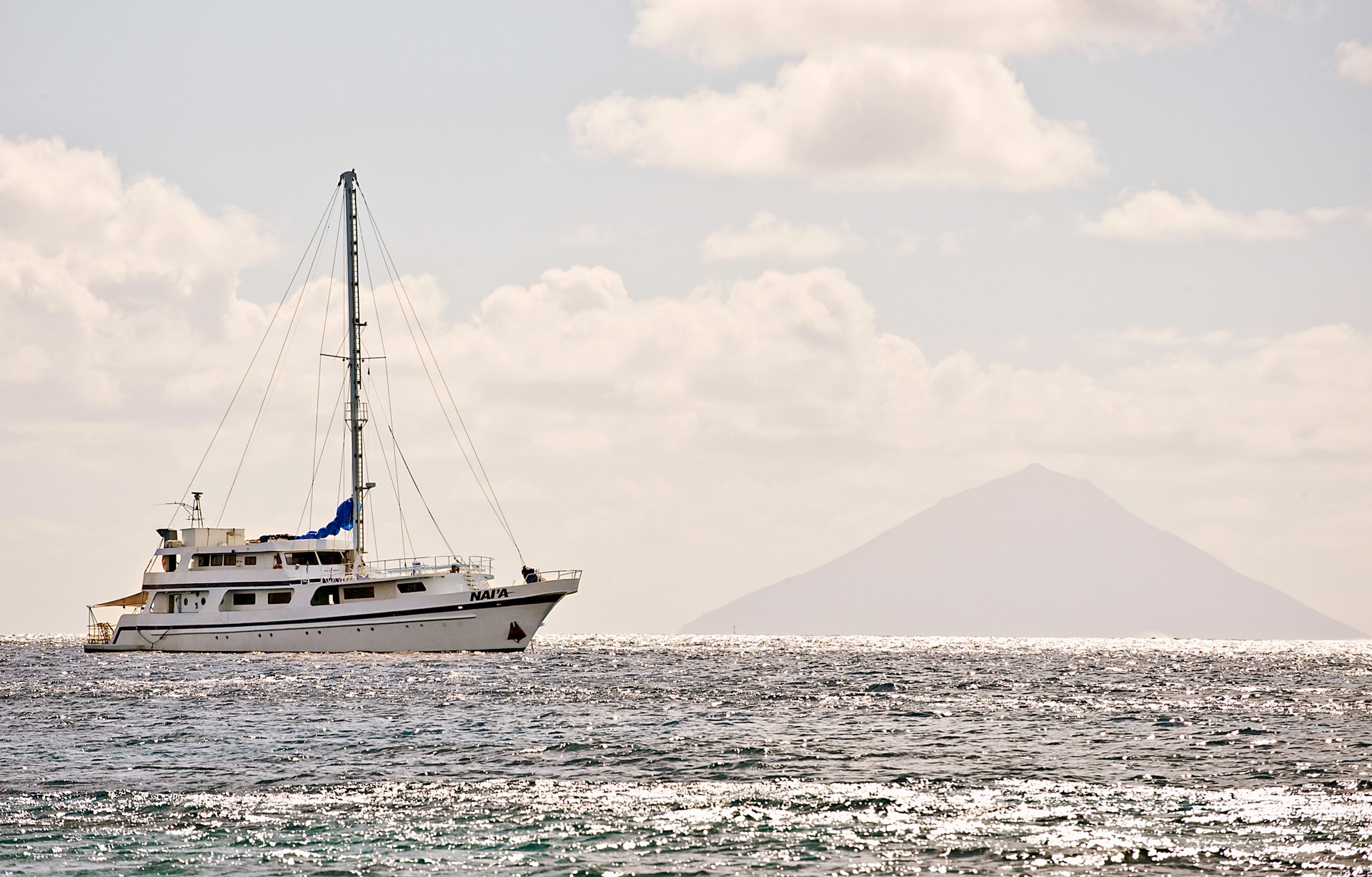
Nai'a
Fiji
16 guests36.576 m
$547/day
Dive sites similar to Great White Wall
Same character, same waters — six more sites divers love for the exact same reasons.Compare seasons, access and liveaboard routes — then pick the site that fits your trip best.
© Esri — Maxar, Earthstar, GIS
Namena Marine Reserve, nestled in Fiji's Koro Sea, is a crown jewel among the world's elite dive spots, consistently ranked as one of the best global destinations for scuba diving.
- Suitable for
- Advanced
- Current
- Moderate
- Access
- Liveaboard only
- Depth
- 5–40 m
- Theme
- Reef / Wall
© Esri — Maxar, Earthstar, GIS
Dream Maker
Fiji
Dream Maker is a captivating dive site situated on the main reef's point in Fiji, featuring a dynamic topography rich with numerous crevices and swim-throughs.
- Suitable for
- Intermediate
- Current
- Moderate
- Access
- Dayboat
- Depth
- 3–24 m
- Theme
- Reef / Wall
© Esri — Maxar, Earthstar, GIS
Three Brothers
Fiji
Three Brothers, also known as Terumbu Tiga, is a renowned dive site in Fiji, celebrated for its excellent visibility and rich biodiversity.
- Suitable for
- Advanced
- Current
- Mild
- Access
- Liveaboard only
- Depth
- 10–25 m
- Theme
- Reef / Wall
© Esri — Maxar, Earthstar, GIS
Breath Taker
Fiji
Breath Taker is a captivating reef wall dive located in Fiji's Bligh Waters, specifically on the Rakiraki side of Viti Levu.
- Suitable for
- Intermediate
- Current
- Strong
- Access
- Liveaboard or dayboat
- Depth
- 3–36 m
- Theme
- Reef / Wall
The Cathedral, located in Fiji's Beqa Lagoon, is world-renowned for its thrilling shark encounters.
- Suitable for
- Intermediate
- Current
- Strong
- Access
- Liveaboard or dayboat
- Depth
- 10–20 m
- Theme
- Wall