About Cousteau's Blue Hole
Cousteau's Blue Hole, located on Andros Island, is an inland blue hole known for its distinctive light effects created by sun rays entering its wide opening. This site is part of the extensive network of blue holes found throughout the Bahamas, particularly concentrated on Andros, often referred to as 'the holy grail of blue hole diving.' Blue holes are vertical underwater caves formed over millennia as rainwater dissolved limestone, offering a glimpse into ancient cave systems. The site features interconnected chambers and passages, making it a captivating site for exploration. While the main shaft is accessible for advanced divers, horizontal tunnels extending from it require technical cave diving certification. The entrance is a hole in the ground, approximately 20 feet above the water, necessitating a giant stride entry. Below the surface, divers may encounter a hydrogen sulfide layer before reaching clearer depths, along with a halocline where fresh and saltwater mix, creating a shimmering visual effect. Diving in inland blue holes like Cousteau's is protected from wave action, offering consistent conditions. Water clarity can vary; surface layers might be murky from decaying vegetation, but deeper sections are typically crystal clear, with visibility potentially exceeding 200 feet in some Bahamian blue holes. Water temperatures remain warm year-round, generally between 24-29°C (75-84°F). Cousteau's Blue Hole offers a distinct challenge and reward for divers seeking unique subterranean exploration, requiring careful attention to equalization during rapid descents. Its remote and pristine nature adds to the adventure, making it a truly remarkable dive experience.
Highlights
Unique light effectsInterconnected chambersTechnical cave diving accessGiant stride entryHalocline effectsRemote, pristine locationVertical shaft exploration
Season calendar
Best months to dive here
Jan
Feb
Mar
Apr
May
Jun
Jul
Aug
Sep
Oct
Nov
Dec
Excellent
Good
Dive site facts: Cousteau's Blue Hole
- Depth
- Variable, multiple chambers
- Typical dive
- Variable based on certification, typically 30-60 min
- Current
- None
- Visibility
- Variable, clear at depth (up to 200 ft in blue holes generally)
- Water temperature
- 24–29°C (75–84°F)
- Entry
- Giant stride from ledge (20 ft above water)
- Level
- Advanced to Technical Cave Certified
- Dive type
- Blue Hole, Cave
- Night dive
- Possible (with appropriate certification and guide)
- Region / port
- Andros Island
- Coordinates
- 24.9617° N, 77.2931° W
Conditions & Currents
As an inland blue hole, Cousteau's Blue Hole is largely unaffected by ocean currents, tides, or surge, providing a stable diving environment within its depths. However, the vertical shaft design necessitates frequent equalization due to rapid pressure changes during descent. Water clarity varies; surface layers might appear murky due to decaying vegetation, while deeper sections typically offer crystal-clear conditions with visibility potentially exceeding 200 feet in the wider Bahamian blue hole context. There are generally no strong thermoclines, though a slight temperature difference of 2-3°F might be noticed between surface and deeper water. Divers will experience a halocline, a shimmering effect where freshwater meets saltwater. Due to the overhead environment and potential depth, this site requires advanced diving skills and diligent gas management.
Marine life & sighting chances

Barracuda
occasional

Cubera snapper
occasionalDog snapper
occasional


Green sea turtle
rare
Hawksbill turtle
rareDive profile & how the dive runs
Entry into Cousteau's Blue Hole involves a distinctive giant stride from a ledge positioned approximately 20 feet above the water. Upon entry, divers descend into the main shaft, initially passing through any surface murkiness and potentially a layer of hydrogen sulfide. Further descent will lead through a halocline where freshwater and saltwater mix, creating a shimmering visual effect. The dive typically involves exploring the wide opening and any interconnected chambers that branch off. For those with appropriate technical cave certification, horizontal tunnels extend deeper into the system. The route allows for an appreciation of the unique lighting effects as sunlight penetrates the opening. Depth progression is strictly governed by certification and gas limits, with deeper sections requiring technical training. The turn point is determined by gas reserves, no-decompression limits, and diver comfort within the overhead environment. Safety stops are conducted in the open-water section of the blue hole near the surface, allowing for decompression in the calmer upper layers before exiting the water.
Underwater photography
Capturing the unique ambiance of Cousteau's Blue Hole requires careful consideration of its varied light conditions. Wide-angle lenses are ideal for documenting the striking light beams that penetrate the main shaft and for framing the vastness of the chambers. Due to potential murkiness in the upper layers and the significant depth, powerful strobes or video lights are essential to illuminate subjects and restore natural colors in deeper, darker sections. Be prepared for macro opportunities around the entry and exit points, or for details within the chambers. Buoyancy control is paramount to avoid disturbing the fragile environment and silting up the visibility, which could ruin shots. Respect the natural environment and maintain safe distances from any marine life or geological formations.
Combine with nearby dive sites
- Over the Wall
Iconic wall dive along the Tongue of the Ocean
- King Kong Blue Hole
Another spectacular blue hole north of Fresh Creek
- Guardian Blue Hole
Guardian Blue Hole is an impressive vertical underwater cave located on Andros Island, an area famously nicknamed "the holy grail of blue…
- Cracked Coral Head
Cracked Coral Head is a notable dive site located in the Exuma Cays of the Bahamas, renowned for its diverse underwater topography and rich…
- Sharks Alley
Sharks Alley, located off the coast of Grand Bahama, is a premier destination for shark diving, providing exhilarating encounters with…
Getting there & logistics
Cousteau's Blue Hole is accessed by dive operations on Andros Island. Divers typically fly into Nassau (Lynden Pindling International Airport, NAS) and then take a connecting domestic flight to one of Andros's airports, such as Andros Town Airport (ASD). Reaching the site, especially from Central Andros, may involve light aircraft travel and local ground transport, emphasizing its remote nature. Dive packages from lodges, like Small Hope Bay Lodge, often include daily boat trips to various sites and can arrange specialized trips to blue holes. Trips usually range from 3 to 7 days, combining blue hole exploration with wall and reef diving. There are generally no specific dive permits required for blue holes, but local operators will include any applicable fees in their packages.
Safety & environment
Diving Cousteau's Blue Hole demands a high level of diver proficiency due to its overhead environment and depth, requiring advanced open water certification and often specialized cave diving certifications for exploring deeper tunnels. The nearest recompression chamber is located in Nassau, necessitating immediate evacuation plans in case of a decompression illness incident. Divers must carry adequate dive insurance covering hyperbaric treatment and emergency evacuation. Site-specific hazards include the potential for rapid pressure changes during descent, which requires careful equalization, and the overhead environment, which mandates redundant air sources and proper line-laying techniques for cave-certified divers. Maintaining excellent buoyancy control is crucial to prevent silting and preserve visibility for all divers. Always dive with a qualified guide experienced in blue hole environments.
Who it suits — and who it doesn't
Suited for
- Advanced divers comfortable with deep diving
- Technical cave divers
- Divers seeking unique geological formations
- Underwater photographers looking for dramatic lighting
- Experienced divers wanting stable, current-free environments
Less suited for
- Beginner divers or those without deep dive experience
- Divers uncomfortable in overhead environments
- Divers prone to claustrophobia
- Those who prefer shallow, open reef dives
- Divers without proper certification for cave or technical diving
FAQ
Cousteau's Blue Hole FAQ
What certification is needed to dive Cousteau's Blue Hole?
Advanced Open Water certification is the minimum requirement for recreational exploration of the main shaft. However, to venture into the horizontal tunnels and more complex sections, technical cave diving certification is mandatory. Operators will typically require a logbook demonstrating deep diving experience.
How deep can recreational divers go in Cousteau's Blue Hole?
Recreational divers with Advanced Open Water certification typically explore the upper reaches and main shaft, usually within a range of 100-130 feet (30-40 meters). Deeper exploration into the extensive tunnel systems is reserved for technical divers with appropriate training and equipment. The total depth potential extends much further, similar to other blue holes on Andros.
What makes the visibility in Cousteau's Blue Hole so varied?
Visibility in Cousteau's Blue Hole can be highly variable. Surface layers might appear murky due to decaying vegetation and organic matter. However, below these layers and particularly at deeper sections, the water becomes crystal clear, often exceeding 200 feet (60 meters) visibility, a common characteristic of Bahamian blue holes.
Are there strong currents inside Cousteau's Blue Hole?
No, Cousteau's Blue Hole is an inland blue hole and is largely protected from ocean currents, tides, or surge. This provides a very stable and calm diving environment within its depths, allowing for focused exploration without fighting against external water movement. However, the vertical nature of the dive requires careful attention to equalization.
What kind of marine life can I expect to see in Cousteau's Blue Hole?
While blue holes are primarily geological formations, you might encounter some marine life, especially around the entrance and upper sections. Barracuda, various snapper species like cubera and dog snapper, and occasionally Caribbean reef sharks have been sighted. Larger pelagic species and sea turtles are rare due to its inland location.
What is the 'giant stride' entry like at Cousteau's Blue Hole?
The entry method for Cousteau's Blue Hole is a distinctive giant stride from a ledge approximately 20 feet (6 meters) above the water. This provides an immediate and dramatic start to the dive. Divers should be comfortable with heights and executing a proper giant stride, as it is the primary way to enter the blue hole.
Why dive Cousteau's Blue Hole from a liveaboard?
Cousteau's Blue Hole is one of Bahamas's signature dive sites. A liveaboard sleeps you on the water and puts you in the water for three to four guided dives per day, including dawn and night dives that day-boat operators rarely offer. You skip the daily commute back to port and reach quieter, less-crowded sites in the same region on a single trip.
Below are the liveaboards that include Cousteau's Blue Hole on their Bahamas itineraries.
Liveaboards diving Cousteau's Blue Hole
These liveaboards may visit Cousteau's Blue Hole on selected itineraries — the exact dive sites depend on departure, weather and conditions.
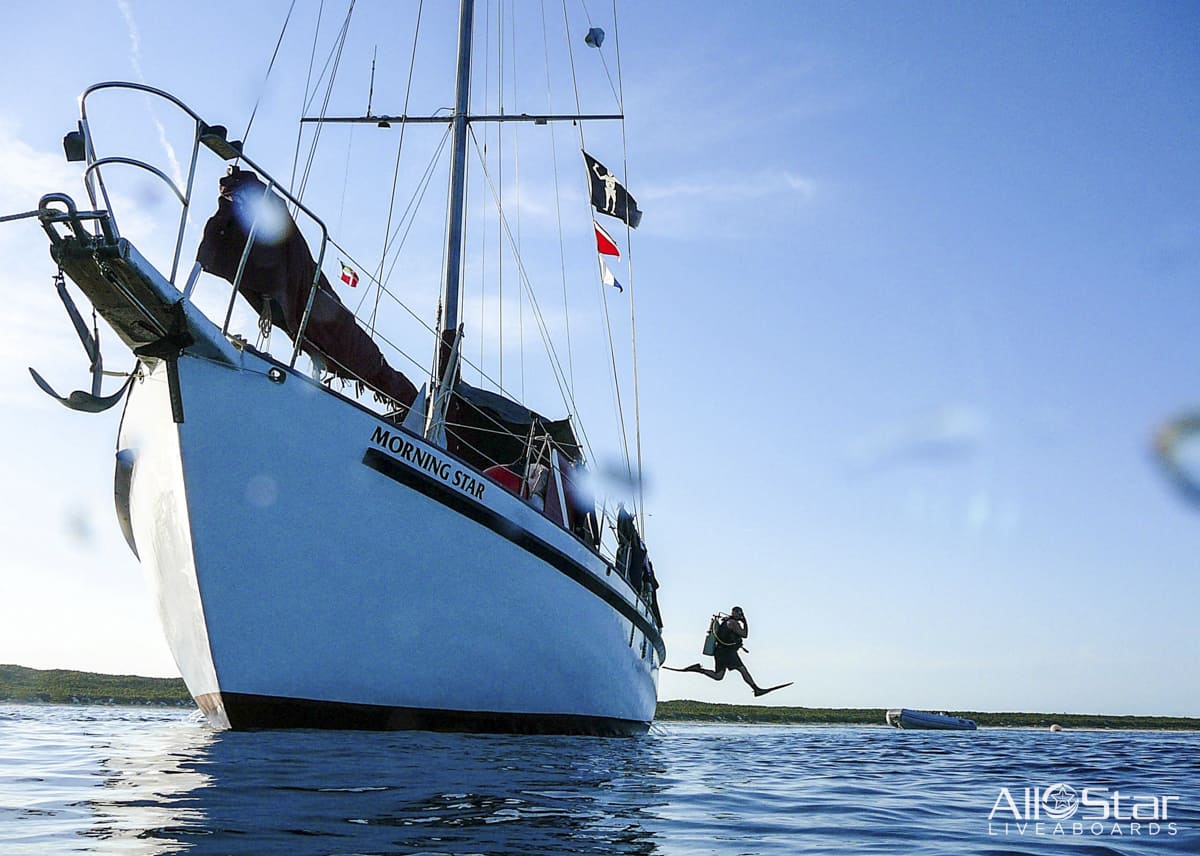
All Star Blackbeards Morning Star
Bahamas
24 guests19.81 m
$156/day
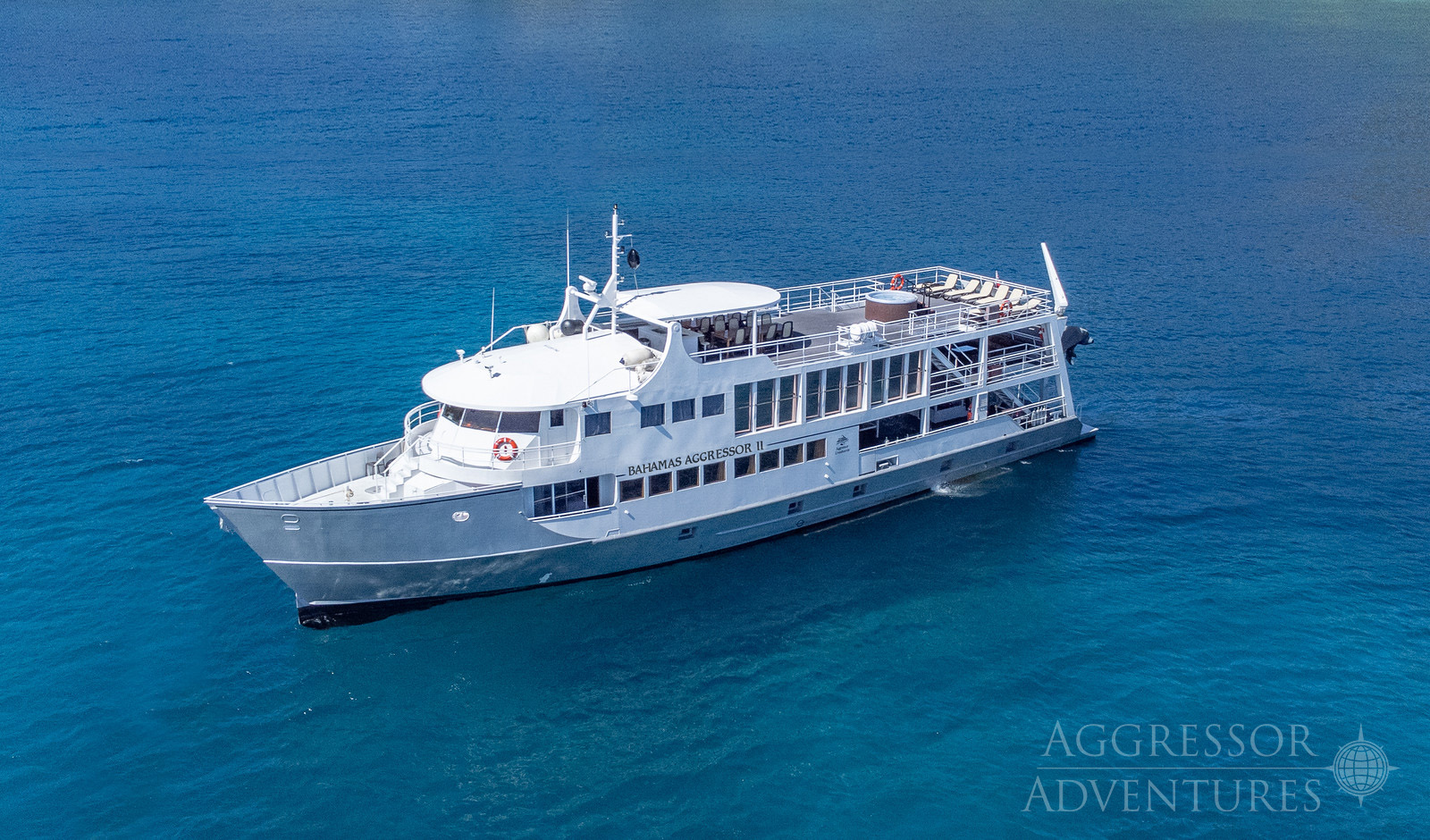
Bahamas Aggressor II
Bahamas
20 guests33.5 m
$312/day
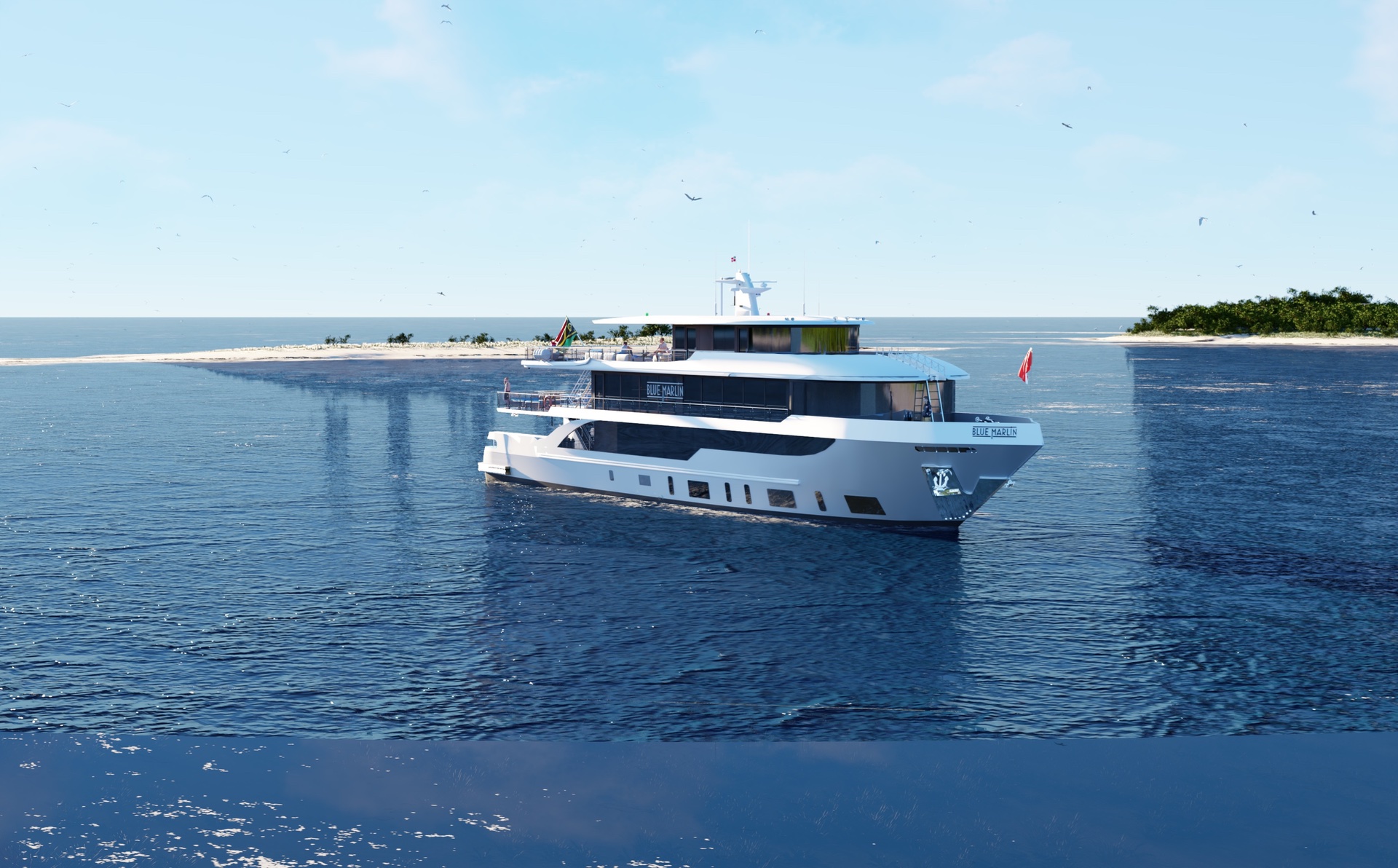
Blue Marlin
Bahamas
26 guests42 m
$318/day
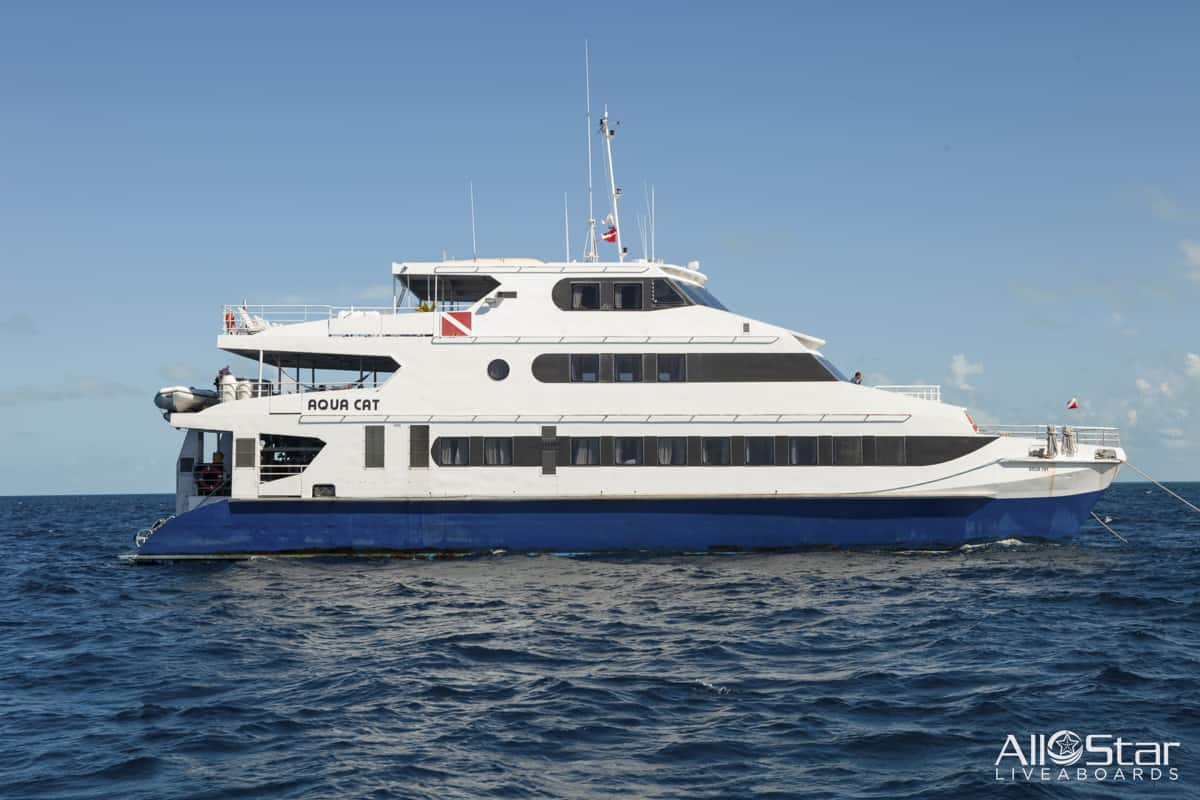
All Star Aqua Cat
Bahamas
30 guests31.09 m
$312/day
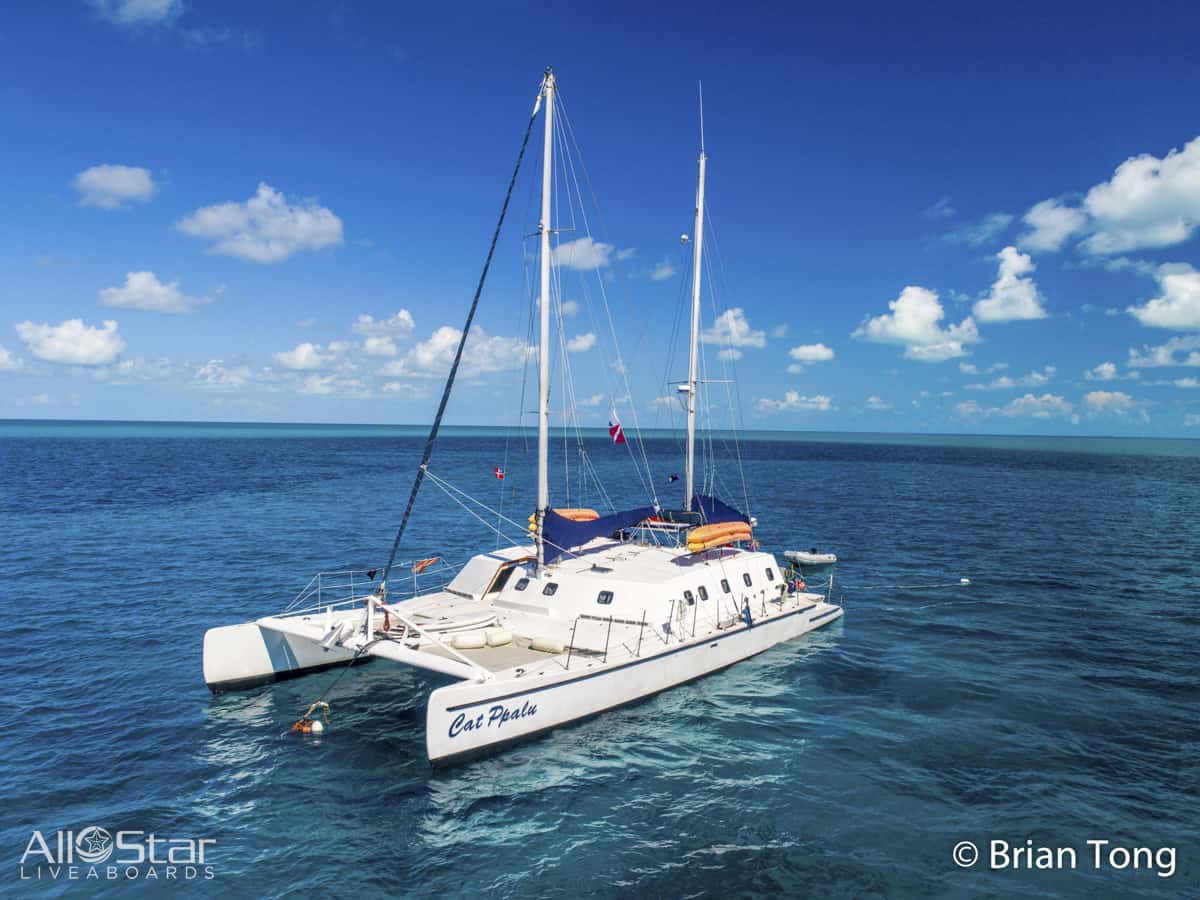
All Star Cat Ppalu
Bahamas
12 guests20 m
$237/day
Dive sites similar to Cousteau's Blue Hole
Same character, same waters — six more sites divers love for the exact same reasons.Compare seasons, access and liveaboard routes — then pick the site that fits your trip best.
© Esri — Maxar, Earthstar, GIS
Silver Caves
Belize
Silver Caves offers a distinctive diving experience within the Lighthouse Reef Atoll, one of Belize's healthiest reef systems.
- Suitable for
- Advanced
- Current
- Mild
- Access
- Liveaboard only
- Depth
- 18–28 m
- Theme
- Reef / Cave & cavern
Cozumel's western coast features a dramatic reef shelf that plunges thousands of feet into the ocean.
- Suitable for
- Intermediate
- Current
- Mild
- Access
- Liveaboard or dayboat
- Depth
- 15–27 m
- Theme
- Reef
© Esri — Maxar, Earthstar, GIS
North Wall
Cayman Islands
The North Wall of Grand Cayman stands as one of the most celebrated and visually striking dive regions, stretching along the island's northern coastline.
- Suitable for
- Advanced
- Current
- Mild
- Access
- Liveaboard or dayboat
- Depth
- 50–100 m
- Theme
- Reef
© Esri — Maxar, Earthstar, GIS
Lighthouse Reef
Cayman Islands
Lighthouse Reef, situated near the West End dock of Cayman Brac, provides a distinctive shallow reef diving experience.
- Suitable for
- Beginner
- Current
- Strong
- Access
- Shore / dayboat
- Depth
- 10–25 m
- Theme
- Reef
© Esri — Maxar, Earthstar, GIS
Long Caye Ridge
Belize
Long Caye Ridge is a highly-rated dive site situated within Belize's Lighthouse Reef Atoll, an area renowned for its pristine conditions due to its distance from the mainland.
- Suitable for
- Intermediate
- Current
- No current
- Access
- Liveaboard only
- Depth
- 21–21 m
- Theme
- Reef
Roatán, part of the Bay Islands of Honduras, offers a diverse underwater landscape situated along the Mesoamerican Barrier Reef System, which is the second largest barrier reef globally.
- Suitable for
- Intermediate
- Current
- Moderate
- Access
- Liveaboard or dayboat
- Depth
- 9–40 m
- Theme
- Reef