About Big Tunnels
Big Tunnels is a prominent dive site located on the West Side of Grand Cayman, specifically south of Northwest Point and near Orange Canyon, forming part of the extensive western wall system. This site is renowned for its impressive coral-formed swim-throughs and deep canyons that cut through the reef structure, eventually opening out over the dramatic drop-off into the deeper ocean. It offers a unique topographical experience, allowing divers to navigate through intricate underwater passages. The site's depth profile typically ranges from the reef edge at 15–18 meters (50–60 feet) down to an average of 16 meters (53 feet), with a maximum recorded depth of 26 meters (85 feet). This range makes it accessible for various certification levels, while still providing ample opportunity for exploration along the wall face. The terrain is characterized by the "big tunnels" themselves, along with expansive coral formations and a rich reef ecosystem. Marine life at Big Tunnels is varied and includes a strong presence of angelfish, such as gray and queen angelfish, along with yellow stingrays, banded butterflyfish, and various groupers like Nassau and tiger groupers. The site's location on the wall means it attracts both reef dwellers and occasional pelagic visitors. Visibility is generally good, often exceeding 24 meters (80 feet), contributing to excellent viewing conditions for the site's inhabitants and structures. Diving Big Tunnels typically involves an entry to explore the reef top and upper wall face, with the main attraction being the extensive swim-through systems. Divers navigate these coral tunnels and canyons, observing the diverse marine life within and around the structures. It's an ideal site for divers looking for interesting topography and a chance to observe a healthy Caribbean reef ecosystem, though some sections of the tunnels might be dead ends, requiring careful navigation.
Highlights
Dramatic coral swim-throughsDeep canyonsWest Side wall divingAbundant angelfishYellow stingray encountersVarious grouper species
Season calendar
Best months to dive here
Jan
Feb
Mar
Apr
May
Jun
Jul
Aug
Sep
Oct
Nov
Dec
Excellent
Good
Dive site facts: Big Tunnels
- Depth
- 15–26 m
- Typical dive
- 16 m, 50 min
- Current
- Mild to moderate
- Visibility
- 18–30 m
- Water temperature
- 26–30°C
- Entry
- Boat
- Level
- Open Water Diver, Advanced experience helpful
- Dive type
- Wall, swim-throughs, reef
- Region / port
- Grand Cayman, West Side
- Coordinates
- 19.3974° N, 81.4015° W
Conditions & Currents
Currents at Big Tunnels, like many sites on Grand Cayman's West Side, are generally mild, especially when compared to sites with larger tidal ranges. The Cayman Islands experience a small tidal range, which translates to minimal current fluctuations, creating stable and calm diving conditions for much of the year. While conditions are often tranquil, occasional moderate currents can occur, particularly when diving on the wall itself. Visibility typically remains excellent, ranging from 18 to 30 meters (60 to 100 feet), though it can be affected by high winds and particulate in the water. Divers should always be mindful of local conditions, which are assessed daily by dive operators, ensuring a safe and enjoyable dive experience.
Marine life & sighting chances

Gray Angelfish
common
Queen Angelfish
common
Yellow Stingray
common
Banded Butterflyfish
common
Nassau Grouper
common
Tiger Grouper
common
Turtle
occasional
Crab
common
Schooling fish
common
Deep Water Fan
common
Massive barrel sponges
commonDive profile & how the dive runs
Dives at Big Tunnels typically commence from a boat, often positioned near the reef edge on Grand Cayman's West Side. Divers descend to the reef top, which starts around 15 to 18 meters (50 to 60 feet), before navigating towards the site's distinctive coral swim-throughs and canyons. The dive progresses through these intricate formations, exploring the reef structure and observing the diverse marine life found within the tunnels and along their edges. Divers will typically reach an average depth of 16 meters (53 feet) during the exploration, with a maximum depth of 26 meters (85 feet) on the deeper parts of the wall. Some tunnels may lead to dead ends, requiring divers to turn around and exit the way they entered. The turn point is usually dictated by air consumption or bottom time, with the final safety stop conducted in the shallower reef areas, typically between 5 to 7 meters (15 to 20 feet) before ascending back to the boat.
Underwater photography
Big Tunnels offers excellent opportunities for wide-angle photography due to its expansive coral formations, dramatic swim-throughs, and blue-water backdrops. A wide-angle lens is ideal for capturing the grandeur of the tunnels and the structural beauty of the reef. Pay attention to lighting within the swim-throughs, as natural light can create striking effects. For macro subjects like banded butterflyfish or details of angelfish, a macro lens can also be rewarding. When photographing within the tunnels, good buoyancy control is crucial to avoid stirring up sediment, which can quickly degrade visibility. External strobes are highly recommended to bring out the vibrant colors of corals and marine life, especially in deeper or shaded areas. Be mindful of particulate in the water, which can be accentuated by strong lights, requiring careful strobe positioning to minimize backscatter.
Combine with nearby dive sites
Getting there & logistics
Grand Cayman is easily accessible via Owen Roberts International Airport (GCM), with numerous direct flights. Dive trips to Big Tunnels typically depart from various marinas on the West Side of Grand Cayman, which is known for its calm conditions and short boat rides to dive sites. The West Side is particularly convenient for accessing Big Tunnels and many other popular wall dives. Most dive operators offer daily two-tank dive trips, with Big Tunnels often included as part of an itinerary focusing on the western wall. Trip lengths vary, but a typical liveaboard might visit the site, or it can be part of a resort-based dive package. There are no specific permits or fees required directly for diving Big Tunnels, as costs are usually integrated into dive operator packages.
Safety & environment
For dive safety in the Cayman Islands, the nearest recompression chamber is located at the Health Services Authority in George Town, Grand Cayman. Emergency medical evacuation would typically involve local ambulance services and transfer to this facility or, in extreme cases, international air ambulance. Comprehensive dive insurance, including coverage for recompression treatment and emergency evacuation, is highly recommended for all divers. At Big Tunnels, site-specific hazards include navigating the coral swim-throughs, which may have tight spaces or dead ends, requiring excellent buoyancy control and situational awareness to prevent entanglement or disorientation. Divers should always follow their dive guide's instructions, maintain proper buddy procedures, and monitor depth and air consumption, especially during tunnel penetration. All dives should be conducted within no-decompression limits, and proper safety stops are mandatory.
Who it suits — and who it doesn't
Suited for
- Open Water divers comfortable with mild currents
- Divers interested in exploring coral swim-throughs
- Underwater photographers seeking dramatic reefscapes
- Divers who enjoy diverse reef fish and macro life
- Divers seeking easy access to wall diving
Less suited for
- Absolute beginners lacking buoyancy control for confined spaces
- Divers prone to claustrophobia in swim-throughs
- Those uninterested in reef topography
- Divers requiring strong pelagic action exclusively
FAQ
Big Tunnels FAQ
What kind of topography can I expect at Big Tunnels?
Big Tunnels is renowned for its unique underwater topography, featuring impressive coral-formed swim-through systems and deep canyons. These formations cut through the reef structure, eventually opening out onto the dramatic drop-off of the West Wall, creating an intricate maze for divers to explore.
Is Big Tunnels suitable for beginner divers?
Big Tunnels can be suitable for Open Water divers, especially those comfortable with good buoyancy control due to the swim-throughs. The reef top and upper wall are accessible, but some areas may experience moderate currents, making it more comfortable for divers with some experience.
What marine life is commonly seen at Big Tunnels?
Divers at Big Tunnels frequently encounter a variety of reef fish, including gray and queen angelfish, banded butterflyfish, and different grouper species like Nassau and tiger groupers. Yellow stingrays are also a common sight, often found resting on the sandy bottom near the reef structures.
How deep is Big Tunnels and what is the typical dive profile?
The dive site ranges in depth from approximately 15 meters (50 feet) at the reef top to a maximum recorded depth of 26 meters (85 feet). A typical dive lasts around 50 minutes, with an average depth of 16 meters (53 feet), focusing on exploring the intricate swim-throughs and canyons before a safety stop in shallower areas.
What are the water conditions like at Big Tunnels?
Water temperatures at Big Tunnels are consistently warm, ranging from 26–30°C (78–86°F) year-round. Visibility is generally excellent, often between 18 and 30 meters (60–100 feet), providing clear views of the site's unique formations and marine inhabitants. Currents are typically mild, making for a relaxed dive experience.
Why dive Big Tunnels from a liveaboard?
Big Tunnels is one of Cayman Islands's signature dive sites. A liveaboard sleeps you on the water and puts you in the water for three to four guided dives per day, including dawn and night dives that day-boat operators rarely offer. You skip the daily commute back to port and reach quieter, less-crowded sites in the same region on a single trip.
Below are the liveaboards that include Big Tunnels on their Cayman Islands itineraries.
Liveaboards diving Big Tunnels
These liveaboards may visit Big Tunnels on selected itineraries — the exact dive sites depend on departure, weather and conditions.
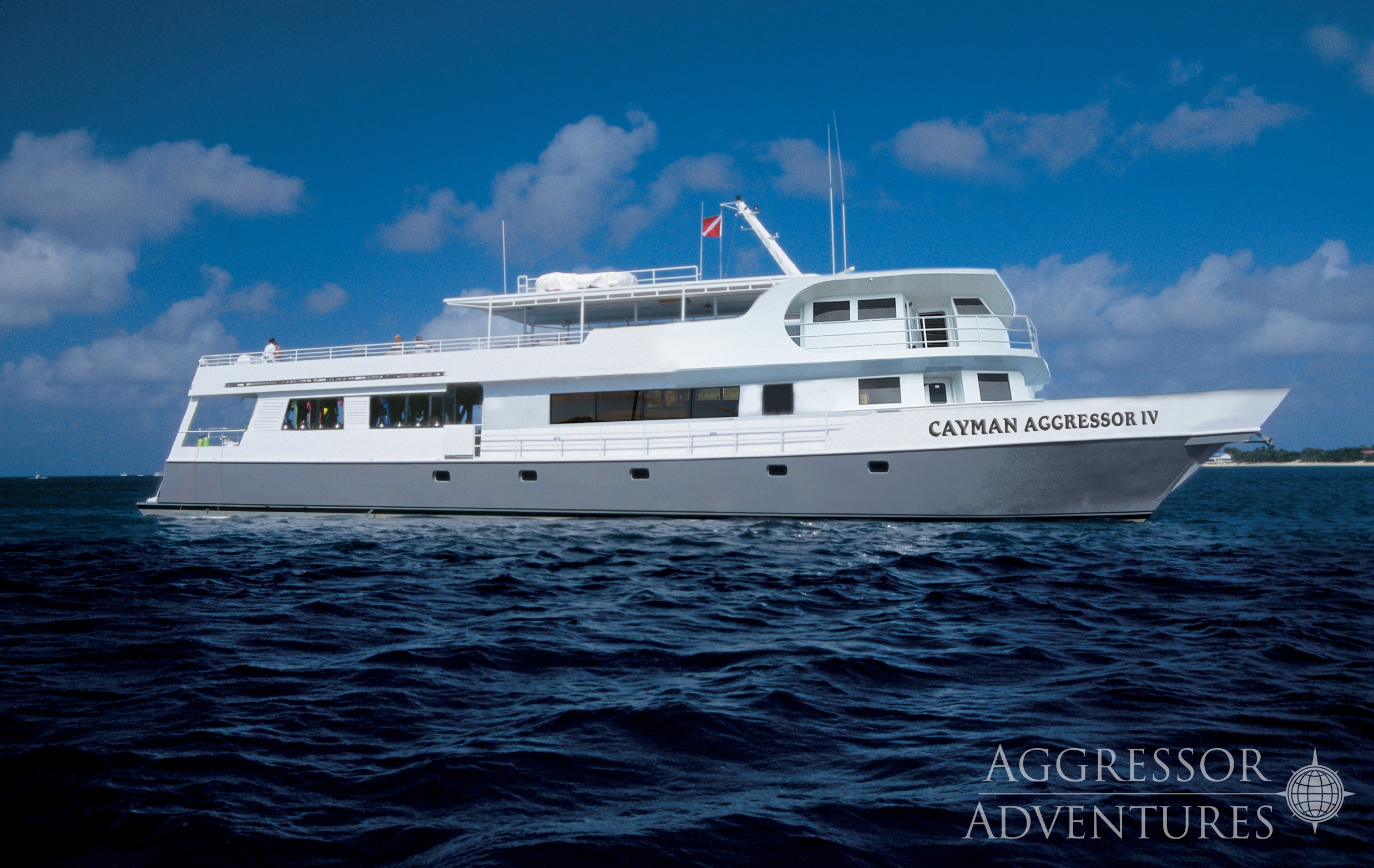
Cayman Aggressor IV
Cayman Islands
18 guests32.9 m
$328/day
Dive sites similar to Big Tunnels
Same character, same waters — six more sites divers love for the exact same reasons.Compare seasons, access and liveaboard routes — then pick the site that fits your trip best.
© Esri — Maxar, Earthstar, GIS
Silver Caves
Belize
Silver Caves offers a distinctive diving experience within the Lighthouse Reef Atoll, one of Belize's healthiest reef systems.
- Suitable for
- Advanced
- Current
- Mild
- Access
- Liveaboard only
- Depth
- 18–28 m
- Theme
- Reef / Cave & cavern
Cozumel's western coast features a dramatic reef shelf that plunges thousands of feet into the ocean.
- Suitable for
- Intermediate
- Current
- Mild
- Access
- Liveaboard or dayboat
- Depth
- 15–27 m
- Theme
- Reef
© Esri — Maxar, Earthstar, GIS
North Wall
Cayman Islands
The North Wall of Grand Cayman stands as one of the most celebrated and visually striking dive regions, stretching along the island's northern coastline.
- Suitable for
- Advanced
- Current
- Mild
- Access
- Liveaboard or dayboat
- Depth
- 50–100 m
- Theme
- Reef
© Esri — Maxar, Earthstar, GIS
Lighthouse Reef
Cayman Islands
Lighthouse Reef, situated near the West End dock of Cayman Brac, provides a distinctive shallow reef diving experience.
- Suitable for
- Beginner
- Current
- Strong
- Access
- Shore / dayboat
- Depth
- 10–25 m
- Theme
- Reef
© Esri — Maxar, Earthstar, GIS
Long Caye Ridge
Belize
Long Caye Ridge is a highly-rated dive site situated within Belize's Lighthouse Reef Atoll, an area renowned for its pristine conditions due to its distance from the mainland.
- Suitable for
- Intermediate
- Current
- No current
- Access
- Liveaboard only
- Depth
- 21–21 m
- Theme
- Reef
Roatán, part of the Bay Islands of Honduras, offers a diverse underwater landscape situated along the Mesoamerican Barrier Reef System, which is the second largest barrier reef globally.
- Suitable for
- Intermediate
- Current
- Moderate
- Access
- Liveaboard or dayboat
- Depth
- 9–40 m
- Theme
- Reef