
Premium diving and leisure on Adora with inclusive nitrox, ocean-view suites with personal terraces, and exotic sandbank discoveries.
- Free Internet Connectivity
- Upper-Level Observation Decks
- Roomy Interior Common Areas
4.8(30 reviews)

Free dive insuranceincluded with every bookingNorthern Maldives itineraries range from Baa and Raa to longer crossings through Noonu, Shaviyani and Haa Alifu. Fleet traffic drops as boats move away from Malé, while reefs, channels and manta sites become the focus.
Hanifaru Bay is the headline during the southwest monsoon, when plankton can draw large manta aggregations. It is a protected snorkelling zone rather than a scuba site, so strong routes combine a permitted Hanifaru visit with nearby cleaning stations and reef dives.
Baa is the best-known northern atoll, but the regional circuit extends through Raa and Lhaviyani and, on expedition sailings, into Noonu, Shaviyani and Haa Alifu. The farther north a boat travels, the more likely it is to use a domestic flight and finish in a different harbour.
Hanifaru Bay is governed by special biosphere-reserve rules. Entry numbers are controlled, scuba is prohibited and visits depend on permits plus active sightings. It should therefore be treated as a possible snorkelling highlight within a wider diving itinerary, not as a guaranteed manta dive.
Choose the route that fits your experience and dream encounters — each region has its own season, character and story.
Baa, Raa, Lhaviyani and the far north trade busy central routes for seasonal manta feeding and quieter reefs.

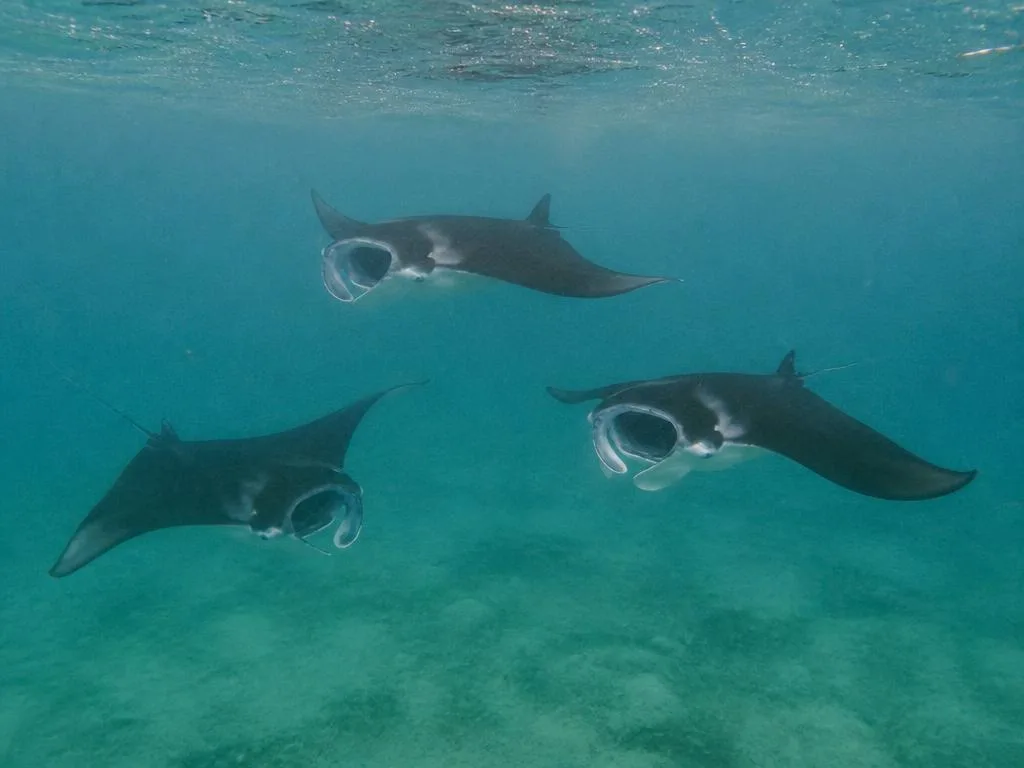
Seasonal manta feeding aggregations are among the Indian Ocean's great spectacles; the protected bay is visited by snorkelling only. Plankton and lunar conditions can draw feeding mantas into the shallow bay, where encounters are managed from the surface. Snorkellers float at the surface while mantas feed below, often passing within arm's reach in a tightly regulated group.
Hanifaru Bay is a protected snorkelling-only feeding area during the southwest monsoon.

Baa and Raa provide genuine scuba encounters at cleaning sites outside Hanifaru's tightly regulated snorkel zone. Moving away from the central circuit reduces fleet density, particularly on longer one-way expeditions beyond Baa and Raa. These sites also attract reef manta rays outside the peak Hanifaru window, giving the route year-round manta potential.
Nearby cleaning stations provide the scuba component of northern manta routes.

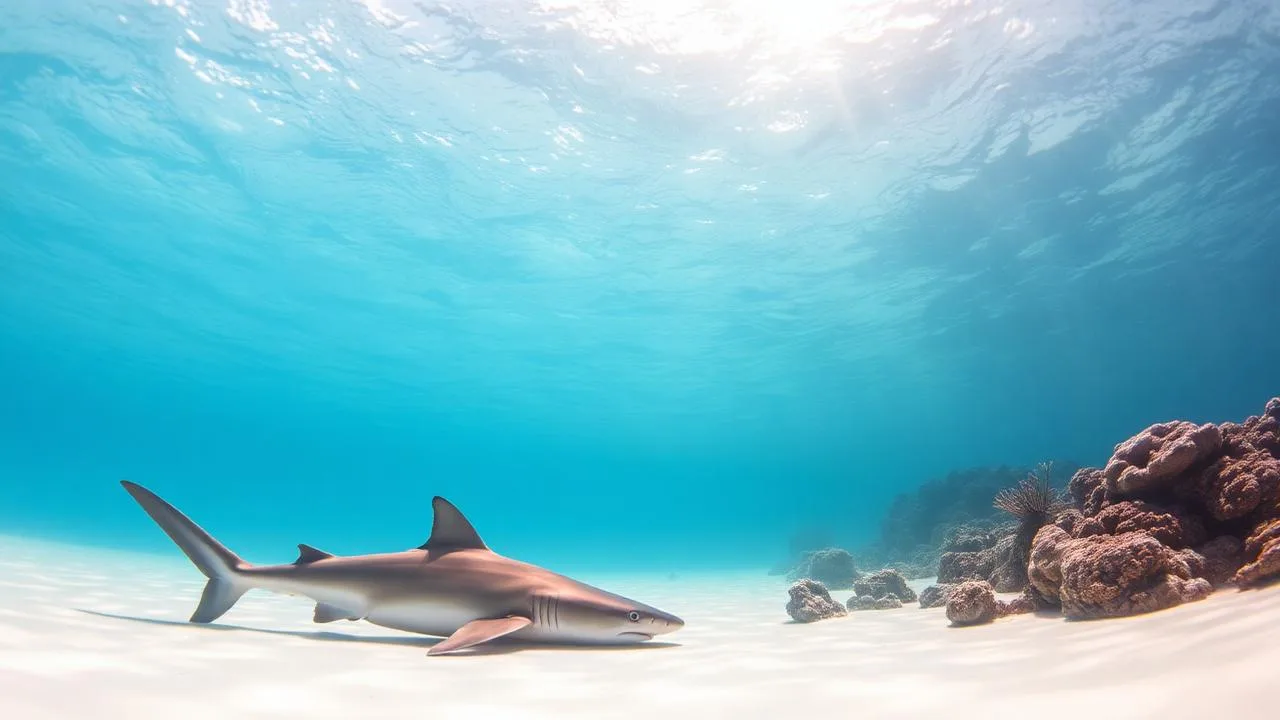
Lower liveaboard density beyond the central circuit creates more space around hard-coral gardens, channels and outer reefs. Cleaning stations around Baa and neighbouring atolls provide the scuba alternative when Hanifaru is closed or inactive. Longer routes may cross channels where eagle rays, turtles and reef sharks replace the central circuit's crowds.
Northern atolls include quiet outer reefs and resilient hard-coral gardens.

One-way itineraries can connect several distinct atolls and reveal a more remote side of the Maldives. Multi-atoll routes reveal changing channels, lagoon pinnacles and outer reefs instead of repeating one resort area. One-way itineraries can start in Malé and finish in Hanimaadhoo, or vice versa, revealing atolls most liveaboards never reach.
Longer one-way routes connect remote atolls beyond the standard Malé circuit.
Choose the Northern Atolls Maldives itinerary that matches your experience, season and wildlife priorities. Route names can look similar while covering different ports, sites and sea conditions, so compare the actual daily programme rather than the headline alone.
Hanifaru Bay snorkelling when permitted, Baa cleaning stations and quieter Raa reefs
snorkel regulations at Hanifaru and current on dive sites
June–October; aggregation timing depends on plankton, tide and lunar phase
Noonu, Shaviyani and Haa Alifu channels, outer reefs and low-traffic northern passages
remote crossings, channel current and one-way domestic-flight logistics
December–April for the established dry-season expedition window
Lhaviyani's Shipyard wrecks, Noonu channels and the quieter reefs of Shaviyani
current at channel mouths and longer crossings between remote atolls
December–April; visibility follows current entering each atoll
Manta cleaning stations, Baa and Raa thilas, Lhaviyani channels and Shipyard wrecks
one-way crossings and current on channels and pinnacles
June–October for mantas; dry season for clearer channel itineraries
Operator rules vary, but the practical guidance below helps you choose a route you can enjoy safely.
| Route | Certification | Logged dives | Conditions | Gear |
|---|---|---|---|---|
| Baa & Raa manta route | Advanced Open Water recommended | 30+ recommended | Shallow bay snorkelling and reefs at 10–25 m, 5–20 m visibility in plankton season, moderate current | DSMB; nitrox recommended where available |
| Far North expedition | Advanced Open Water recommended | 30+ recommended | Remote channels at 15–30 m, 20–30 m visibility in dry season, strong tidal flow at kandu mouths | DSMB; nitrox recommended where available |
| Lhaviyani, Noonu & Shaviyani | Advanced Open Water recommended | 30+ recommended | Channel mouths and wrecks at 15–30 m, 15–30 m visibility, current entering each atoll with the tide | DSMB; nitrox recommended where available |
| Baa, Raa & Lhaviyani crossing | Advanced Open Water recommended | 30+ recommended | Mixed thilas, channels and wrecks, 10–30 m visibility, current on pinnacles and longer crossings between atolls | DSMB; nitrox recommended where available |
Domestic sectors and Hanifaru access are separate moving parts. Leave enough time at Malé, follow local baggage limits and book for the quality of the full route rather than one hoped-for aggregation. The operator's published minimum, check-dive assessment and safety rules always take precedence.
These are the sites that define a Northern Atolls Maldives liveaboard itinerary. Compare their topography, conditions and location against the daily programme rather than assuming every regional cruise visits the same places.
Northern Maldives planning splits into two distinct seasons: southwest-monsoon manta routes around Baa and Raa, and drier winter expeditions through Lhaviyani, Noonu, Shaviyani and Haa Alifu. The best month therefore depends on the route, not only the weather.
Jan–Mar
28–29 °CDrier weather and clearer eastern water favour far-north channel and reef expeditions. This is not the principal Hanifaru feeding season, but shark dives and quiet reefs can be excellent.
Apr–Jun
29–30 °CThe monsoon transition brings warmer water and increasing plankton. Manta activity begins building around Baa, though Hanifaru access still depends on active sightings and park control.
Jul–Sep
28–29 °CPeak Hanifaru season combines plankton-rich water with wetter and windier weather. The bay is snorkelling-only, and entry is controlled by permits, guide ratios and conditions.
Oct–Dec
28–29 °CManta feeding activity tapers as the monsoon changes. One-way northern expeditions return, with improving visibility and broader access to channels and outer reefs.
Hanifaru aggregations depend on plankton, tide, moon and ranger decisions, so no itinerary can guarantee entry or animal numbers. Baa-focused boats use nearby manta cleaning stations as scuba alternatives, while far-north routes follow a different seasonal logic and often require domestic flights.
Plan a Northern Atolls Maldives liveaboard around the encounters that matter most to you. The bars show stronger historical windows, not promises, and the location line explains where each animal is normally sought.
Peak bars show historically stronger encounter windows; shoulder months can still produce excellent dives, while wild-animal encounters are never guaranteed.
Northern routes use Malé plus domestic airports across Baa and the far north. Many voyages are one-way, making the flight sector and the precise start and finish atolls part of the itinerary.
Dharavandhoo (DRV)
The principal airport for Baa Atoll and Hanifaru-season routes. Boats or dhonis meet scheduled domestic flights for the short transfer into the atoll.
Ifuru (IFU)
A useful Raa Atoll gateway on selected Baa–Raa–Lhaviyani crossings. Service frequency and baggage limits should be checked before international flights are ticketed.
Hanimaadhoo (HAQ)
The far-north airport for Haa Dhaalu and Haa Alifu expeditions. It is commonly used at one end of longer repositioning routes.
Malé / Hulhumalé
The international gateway and start or finish for longer northbound crossings. A domestic connection may be on a separate booking from the liveaboard.
Domestic baggage allowances can be lower than international allowances, and excess dive equipment is charged locally. Hanifaru access also depends on park permission, weather and active sightings; arrive with enough connection time and verify whether the domestic flight is included, arranged or self-booked.
Sail beyond the busier atolls towards quieter reefs, manta-rich waters and the remote horizons of the north. Compare current departures and discover how close your Hanifaru-inspired adventure could be.

Northern Atolls Maldives liveaboards
Domestic flights and one-way logistics can make northern routes costlier than central loops.
A cabin, meals, tanks, weights, guides and the scheduled dives are normally included; exact inclusions vary by boat.
Budget separately for flights, transfers, marine-park or port fees, nitrox, rental gear, gratuities and any required hotel nights.
Prices move with season, cabin type, trip length and remaining availability. Open a departure for the final operator breakdown.
The calendar below shows how liveaboard prices shift month by month, so you can see exactly when your money goes furthest. We want every diver to get the best possible value, which is why we highlight the seasons that balance great conditions with the fairest rates.
$177–$375
per day liveaboard
Prices reflect typical costs for mid-range to premium options. Budget alternatives may be available.
Compare Northern Atolls Maldives with its country overview and other strong liveaboard regions.
Explore our expedition vessels and find your perfect trip to Northern Atolls & Hanifaru Bay