About The Ramparts of Coronados island
The Ramparts of Coronados Island, located in Mexican waters just over 17-20 miles south of San Diego, offers an exhilarating wall dive experience characterized by spectacular granite cliffs and rich marine biodiversity. This site is part of the larger Los Coronados Islands chain, which lies approximately 8 miles off the Baja California coast, acting as a crucial wildlife refuge. Diving here involves following an underwater ridge that descends to about 90 feet, revealing walls that drop beyond 100 feet. The topography features numerous caves and caverns, often decorated with black coral and sea fans. This deep-water environment transitions into fields of exquisite purple hydrocoral, presenting a visual spectacle against the rugged rock formations. Key marine life includes the playful California sea lions, various sharks, and large schools of pelagic fish. The strong currents in the open ocean waters here contribute to a vibrant ecosystem, supporting abundant sessile invertebrates such as sponges and large golden gorgonians. Divers can anticipate close encounters with curious sea lion pups, particularly during the late fall and winter months. Due to the depth and potential for strong currents, this site is recommended for experienced divers comfortable with open ocean conditions. Access is exclusively by boat, typically from San Diego, and requires adherence to Mexican regulations including valid passports for all visitors. The challenging conditions are rewarded with breathtaking natural beauty both above and below the surface.
Highlights
Dramatic granite wall divesAbundant purple hydrocoral fieldsPlayful California sea lionsLush golden gorgoniansRich semi-tropical Pacific speciesCaves and caverns with black coral
Season calendar
Best months to dive here
Jan
Feb
Mar
Apr
May
Jun
Jul
Aug
Sep
Oct
Nov
Dec
Excellent
Good
Dive site facts: The Ramparts of Coronados island
- Depth
- 5–30 m
- Typical dive
- Deeper dives, duration variable
- Current
- Strong, potentially treacherous
- Visibility
- 30-100 ft (9-30 m)
- Water temperature
- 52-60°F (11-15°C)
- Entry
- Live drop from boat
- Level
- Advanced divers only
- Dive type
- Wall, Reef, Drift
- Region / port
- Los Coronados Islands, Mexico
- Coordinates
- 32°25’57.34″N 117°17’40.34″W
Conditions & Currents
The Ramparts is known for potentially treacherous currents, particularly in the open ocean south of the "Keyhole" site. These currents can be formidable and southerly, often described as a 'headwind' when swimming northward. The presence of strong currents necessitates experienced divers, proficient boat captains, and the use of signaling devices, with live drops often preferred over anchoring. Surge is also a factor due to the shallow site depths, requiring excellent buoyancy control to navigate. Visibility can range from 30 to 100 feet, averaging around 50 feet, but can fluctuate based on conditions. The currents are strong enough to cause gorgonians to vibrate, indicating significant water movement. Divers should plan for demanding swims and be prepared to pull themselves along the steep canyon walls in some sections.
Dive profile & how the dive runs
Your dive begins with a live drop from the boat due to challenging currents, followed by a descent along a prominent underwater ridge. The initial depth ranges from 15 to 60 feet, allowing for exploration of the upper wall sections and interaction with sea lions. You will then follow the ridge southward and deeper, reaching approximately 90 feet, where you'll cross a crevice to discover fields of purple hydrocoral. The dive progresses along a spectacular granite wall that drops beyond 100 feet, revealing caves and caverns adorned with black coral and sea fans. Navigation often requires swimming against currents, sometimes necessitating hand-over-hand movement along the wall. The turn point is determined by air consumption and bottom time, considering the strenuous return against the current. The ascent and safety stop are carefully managed, often using lines attached to a buoy for non-scooter divers, accounting for potential drift and strong water movement.
Underwater photography
Wide-angle photography is ideal for capturing the expansive granite walls, schooling fish, and playful sea lion encounters. A fisheye or wide-angle lens will best convey the grandeur of the purple hydrocoral fields and golden gorgonians. Given the potential for deeper dives and cooler water, good lighting is essential; consider strobes to bring out the vibrant colors of the hydrocoral and other sessile life. For sea lion interactions, patience is key; find a stable position along the wall and allow the curious pups to approach. Maintain excellent buoyancy to avoid stirring up sediment and preserve the clear visibility, especially when navigating around delicate corals and sponges on the wall. A strong video light can be beneficial for highlighting details in shaded areas or deeper sections of the wall.
Combine with nearby dive sites
- Lobster Shack
A premier sea lion dive site on North Island, suitable for open water divers.
- Keyhole
A rocky arch known for an exciting swim-through during high tide.
- Middle Grounds
A site located between the islands, offering diverse marine life.
Getting there & logistics
Access to The Ramparts of Coronados Island is exclusively via boat, typically as a full-day trip departing from San Diego, California. The journey to the Coronado Islands takes approximately 90 minutes. All visitors must possess a valid passport, as the islands are in Mexican waters; a driver's license is not sufficient under current US immigration laws. Commercial dive charters usually handle Mexican permits and fees, which are included in the trip price. Liveaboards operating in the region may also include this site as part of broader itineraries. It is recommended to book trips in advance, especially during peak sea lion season. There are no ashore visits permitted as the islands are a Mexican wildlife refuge. The nearest major international airport is San Diego International Airport (SAN).
Safety & environment
Diving The Ramparts requires careful adherence to safety protocols due to strong currents and potential depths. Divers must be experienced, proficient in current diving techniques, and carry appropriate signaling devices such as surface marker buoys. Good buoyancy control is critical given the surge in shallower areas. It is imperative to dive with an experienced boat captain familiar with the local conditions and capable of executing live drops and pickups. The nearest recompression chamber would be in San Diego, California, highlighting the importance of comprehensive dive accident insurance that covers international travel and evacuation. Always dive within your training limits and ensure your gear is well-maintained and suitable for colder, demanding conditions, including a 7mm wetsuit or drysuit, hood, booties, and gloves. Be mindful of marine life, particularly interacting respectfully with sea lions.
Who it suits, and who it doesn't
Suited for
- Experienced divers comfortable with strong currents
- Advanced Open Water certified divers
- Underwater photographers seeking dramatic scenery
- Divers interested in big animal encounters, especially sea lions
- Those who appreciate wall and drift diving
Less suited for
- Beginner divers or those new to current diving
- Divers prone to seasickness on open ocean crossings
- Individuals seeking macro photography opportunities
- Those preferring warm, calm, shallow reef environments
- Divers with limited buoyancy control
FAQ
The Ramparts of Coronados island FAQ
What is the primary marine life attraction at The Ramparts?
The Ramparts is renowned for its vibrant fields of purple hydrocoral and the frequent, playful interactions with California sea lions. Divers also encounter large schools of blacksmith and señorita fish, along with abundant golden gorgonians and various semi-tropical Pacific species like octopuses, moray eels, and occasional pelagics.
How challenging are the currents at this dive site?
Currents at The Ramparts can be quite strong and treacherous, particularly in the open ocean sections. They are often southerly, requiring strenuous swimming or pulling along the wall during certain parts of the dive. This necessitates excellent buoyancy control and makes the site suitable only for experienced divers and those comfortable with demanding conditions.
Do I need a passport to dive at The Ramparts of Coronados Island?
Yes, a valid passport is required for all individuals diving at The Ramparts. The dive site is located in Mexican waters, and while you won't pass through a physical border checkpoint, Mexican regulations require a passport for entry and exit, even for day trips from San Diego.
What kind of visibility can I expect when diving here?
Visibility at The Ramparts is generally good, ranging from 30 to 100 feet (9 to 30 meters), with an average around 50 feet. However, like any open ocean site, visibility can be variable and may be affected by ocean conditions, currents, and surge.
Is The Ramparts suitable for beginner divers?
No, The Ramparts is not suitable for beginner divers. It is classified as an advanced dive due to its deeper profiles, potential for strong and treacherous currents, and the need for excellent buoyancy control in surge. Divers should have significant experience in open ocean and current diving.
What gear is recommended for diving at The Ramparts?
Due to the cooler water temperatures, which typically range from 52-60°F (11-15°C), a 7mm wetsuit or a drysuit is strongly recommended. Essential gear also includes a hood, booties, and gloves for thermal protection. Additionally, all divers should carry signaling devices such as an SMB for safety in open water conditions.
Why dive The Ramparts of Coronados island from a liveaboard?
The Ramparts of Coronados island is one of Mexico's signature dive sites. A liveaboard sleeps you on the water and typically offers several guided dives per day (the exact number depends on the vessel and itinerary), including dawn and night dives that day-boat operators rarely offer. You skip the daily commute back to port and reach quieter, less-crowded sites in the same region on a single trip.
Liveaboards diving The Ramparts of Coronados island
These liveaboards may visit The Ramparts of Coronados island on selected itineraries, the exact dive sites depend on departure, weather and conditions.
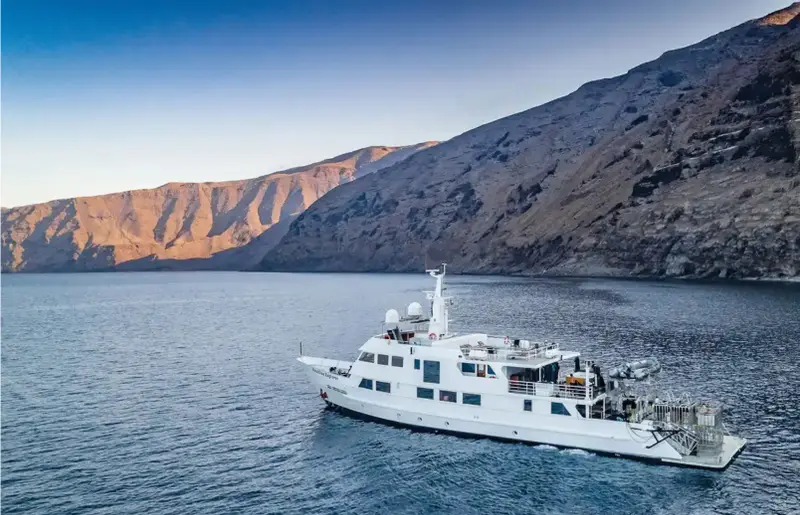
Nautilus Explorer
Mexico
25 guests45 m
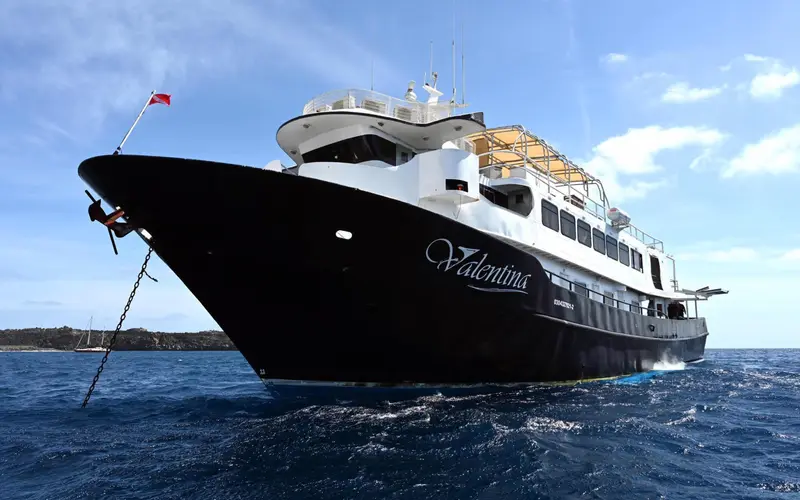
Valentina
Mexico
20 guests38 m
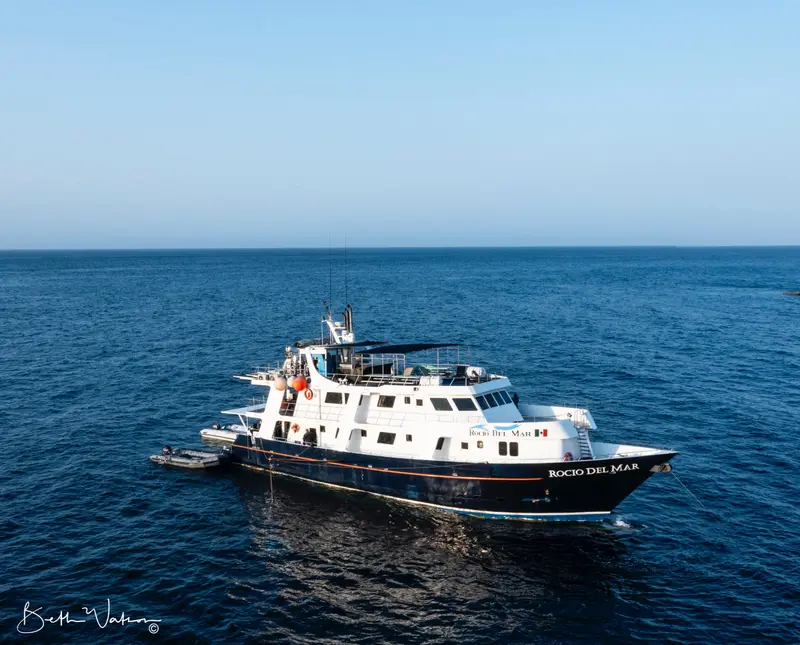
Rocio del Mar
Mexico
20 guests34 m
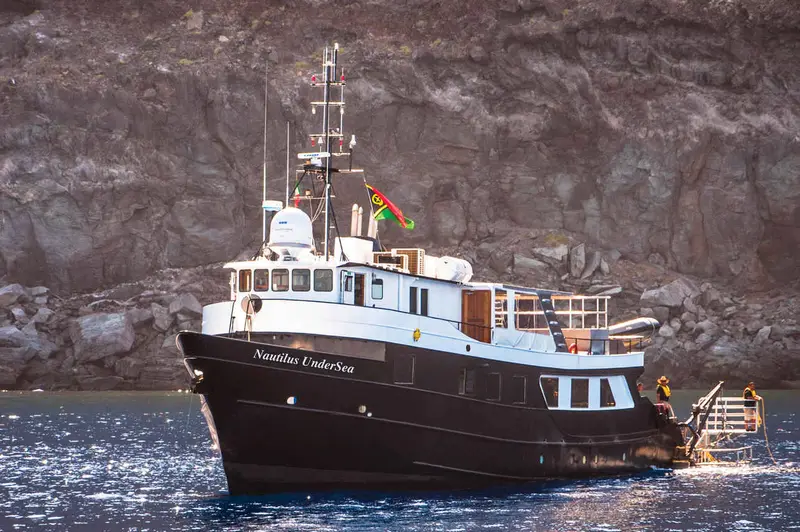
Nautilus Under Sea
Mexico
19 guests32 m
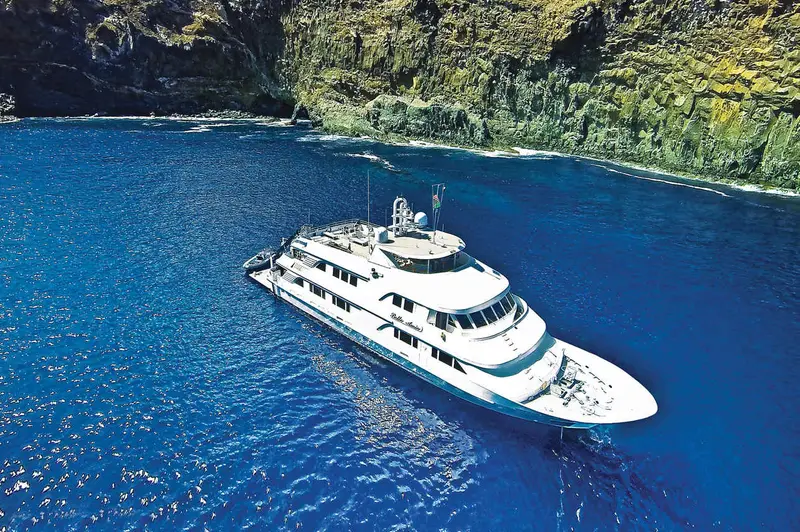
Nautilus Belle Amie
Mexico
32 guests45 m
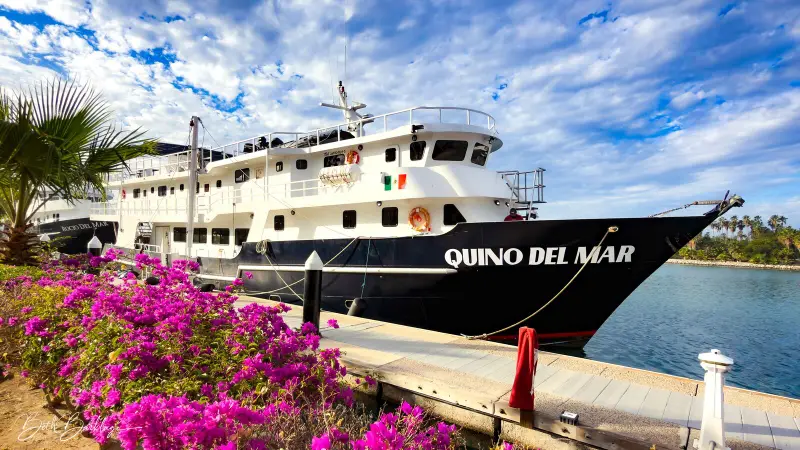
Quino del Mar
Mexico
20 guests36 m
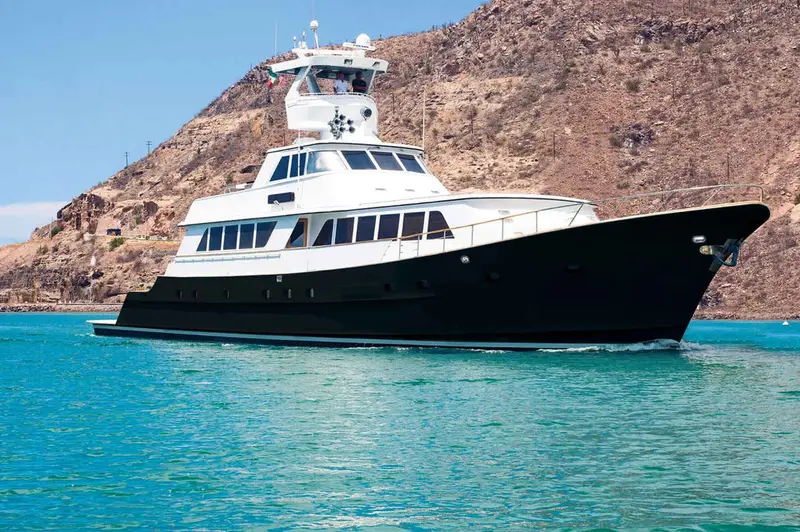
Nautilus Gallant Lady
Mexico
12 guests35 m
Dive sites similar to The Ramparts of Coronados island
Same character, same waters, six more sites divers love for the exact same reasons.Compare seasons, access and liveaboard routes, then pick the site that fits your trip best.
© EsriMaxar, Earthstar, GIS
Bartolomé Island
Galápagos
Bartolomé Island in the Galápagos archipelago is a distinctive dive site, known for its iconic Pinnacle Rock and accessible from Santa Cruz.
- Suitable for
- Beginner
- Current
- Strong
- Access
- Liveaboard only
- Depth
- 5–18 m
- Theme
- Drift / Reef
© EsriMaxar, Earthstar, GIS
Beagle Rocks
Galápagos
Beagle Rocks is a captivating dive site situated off Santiago Island in the central Galápagos Archipelago, renowned for its dramatic underwater topography.
- Suitable for
- Beginner
- Current
- Strong
- Access
- Liveaboard only
- Depth
- 10–30 m
- Theme
- Reef / Wall
© EsriMaxar, Earthstar, GIS
Cabo Marshall
Galápagos
Cabo Marshall, also known as Cape Marshall, is a renowned dive site located off the northeastern coast of Isabela Island in the Galápagos, often referred to by divers as "Manta…
- Suitable for
- Advanced
- Current
- Moderate
- Access
- Liveaboard only
- Depth
- 12–40 m
- Theme
- Drift / Wall
© EsriMaxar, Earthstar, GIS
Cabo San Lucas
Mexico
Cabo San Lucas, situated at the southern tip of Mexico's Baja California Peninsula, offers a surprisingly rich underwater environment despite its popular tourism.
- Suitable for
- Beginner
- Current
- Mild
- Access
- Dayboat
- Depth
- 8–40 m
- Theme
- Reef / Wall
© EsriMaxar, Earthstar, GIS
Canal Itabaca
Galápagos
Canal Itabaca is a significant marine channel located between Santa Cruz Island and Baltra Island in the Galápagos, primarily serving as a transit point and often the departure…
- Suitable for
- Beginner
- Current
- Strong
- Access
- Liveaboard only
- Depth
- 5–20 m
- Theme
- Channel / Drift