About Ted's Point
Ted's Point, located on Utila's south side in the Bay Islands of Honduras, offers a dynamic dive experience within the Mesoamerican Barrier Reef System. The site features a varied topography, starting with a sandy bottom at approximately 18 meters, which transitions into an east-sloping wall. This wall reaches depths of over 30 meters, while the western side remains shallower, around 18 meters. A prominent artificial reef at Ted's Point is a deliberately sunken sailboat. Its owner, finding it stripped after leaving the island, opted to transform it into a habitat for marine life, adding an intriguing man-made element to the natural reef. Marine life at Ted's Point includes a diverse array of species. Divers can observe brown garden eels swaying from the sandy bottom, various sponges, tunicates, and young brain corals adorning the reef. Encounters with free-swimming moray eels, permits, and groupers are common. Yellowhead jawfish often peek from their burrows, and Southern Stargazers can be found camouflaged in the sand. Night dives here unveil a unique biological phenomenon known locally as a "string of pearls," where tiny bioluminescent beads of light flash through the water column, creating a memorable spectacle. These nocturnal excursions also increase the chances of spotting octopuses as they emerge to hunt. Ted's Point is accessible via boat, typical for diving in Utila, as shore diving options are limited. The site is generally suitable for experienced divers, as suggested by some reports of dive masters allowing divers independence underwater after navigation instructions. While specific current information is not extensively detailed for this site, the varied topography and wall sections suggest potential for different current conditions. The presence of a sandy bottom and wall makes it a versatile dive, appealing to those interested in both macro life and wider reef explorations.
Highlights
Eagle ray sightingsDramatic wall dropRed and orange spongesPossible hammerheads
Season calendar
Best months to dive here
Jan
Feb
Mar
Apr
May
Jun
Jul
Aug
Sep
Oct
Nov
Dec
Excellent
Good
Dive site facts: Ted's Point
- Depth
- 18–30 m
- Current
- Mild to moderate surge
- Visibility
- 30 m
- Water temperature
- 24–29°C
- Entry
- Boat access
- Level
- All levels (buoyancy control important)
- Dive type
- Reef, wall, macro, wide-angle
- Region / port
- Utila, Honduras
- Coordinates
- 16.078, -86.865
Conditions & Currents
Ted's Point is situated on an open reef point and can be quite dynamic, with moderate surge often present along the wall edge. Currents are generally mild, but divers should be prepared for potential movement, especially on the exposed point. Visibility typically ranges up to 30 meters, though it can be influenced by weather conditions. Entry is usually via boat, and buoyancy control is critical to avoid contact with sharp corals, particularly when navigating surge. The site is suitable for divers comfortable with these conditions, and gas planning should account for the dynamic environment.
Marine life & sighting chances

Barracuda
occasional
Grouper
common
Jackfish
occasional
Moray Eel
common
Snapper
occasional
Stingrays
occasional
Sweetlips
occasional
Grunts
occasional
Yellowhead Jawfish
common
Garden Eel
occasional
Permit
occasional
Stargazers
occasionalDive profile & how the dive runs
Diving at Ted's Point typically begins with a boat entry onto a sandy bottom at approximately 18 meters. From here, you can explore the gently sloping wall that descends further, reaching depths beyond 30 meters towards the east. The dive usually progresses along the wall, observing the vibrant coral heads and marine life. The western side of the site offers shallower exploration, maintaining depths around 18 meters, which is ideal for less experienced divers or for extending bottom time. The turn point is determined by air consumption or planned dive time, after which you'll gradually ascend along the reef, with the safety stop conducted in the shallower reef areas, usually around 5 meters, before a surface interval.
Underwater photography
Ted's Point offers excellent opportunities for both wide-angle and macro photography. For wide-angle shots, consider a fisheye or a wide-angle zoom to capture the expansive reef, the sloping wall, and large schools of fish. Visibility up to 30 meters provides ample light penetration for vibrant reefscapes. For macro enthusiasts, a 100mm macro lens will be ideal for focusing on the diverse smaller inhabitants like garden eels, jawfish, and various colorful invertebrates hidden among the corals. Pay attention to buoyancy, especially in areas with moderate surge, to maintain stability and avoid disturbing the delicate reef. External strobes are highly recommended to bring out the true colors of the corals and marine life, combating color absorption at depth.
Combine with nearby dive sites
- Jack Neil Point
Jack Neil Point is a popular dive site situated on the south side of Utila, Honduras, offering a distinctive underwater experience suitable…
- Mary's Place
Mary's Place is a legendary dive site situated on the southeast side of Roatán, Honduras, renowned for its dramatic topography.
- El Aguila Wreck
El Aguila, meaning "The Eagle," is widely regarded as Roatan's premier wreck dive.
- Half Moon Bay Wall
Half Moon Bay Wall is a celebrated dive site located directly off the beach in West End, making it exceptionally accessible for all divers.
Getting there & logistics
Access to Ted's Point is exclusively by boat, typically as part of a guided boat dive trip or a liveaboard itinerary originating from Utila or Roatan. Divers usually fly into Juan Manuel Gálvez International Airport (RTB) in Roatan, then connect to Utila via a smaller flight or ferry. Alternatively, La Ceiba's Golosón International Airport (LCE) provides access to ferries to Utila. Liveaboard trips often combine Utila sites like Ted's Point with others in the Bay Islands, offering multi-day diving experiences. Day trips from Utila dive centers are also a common way to visit. No specific permits beyond standard dive certifications are typically required for this site, as it's a standard guided reef dive.
Safety & environment
Safety at Ted's Point requires awareness of boat traffic and maintaining excellent buoyancy control to prevent contact with sharp corals. Moderate surge can be encountered along the point and wall, necessitating preparedness for dynamic water movement. It is crucial to follow the instructions of your dive guide and adhere to local marine area regulations. While Roatan has recompression chambers, evacuation from Utila can be complex and may require air transport, underscoring the importance of comprehensive dive insurance that covers medical emergencies and evacuation. Always dive within your certified limits and be mindful of your depth and no-decompression limits.
Who it suits — and who it doesn't
Suited for
- All levels of certified divers
- Photographers (macro and wide-angle)
- Divers seeking vibrant reef ecosystems
- Those comfortable with moderate surge
- Divers interested in diverse marine life
Less suited for
- Beginners without good buoyancy control
- Divers uncomfortable with dynamic water conditions
- Individuals prone to seasickness (due to potential for surge)
- Snorkelers outside of calm, shallow edge areas
- Those expecting technical or deep wreck dives
FAQ
Ted's Point FAQ
What is the typical depth range at Ted's Point?
The dive site features a sandy bottom starting around 18 meters (60 feet). An eastern wall drops beyond 30 meters (100 feet), while the western side remains shallower, maintaining depths around 18 meters, offering varied options for divers.
What kind of marine life can I expect to see?
Ted's Point is home to an exceptional variety of aquatic life. Divers frequently encounter barracuda, groupers, moray eels, snappers, and occasionally stingrays and jackfish. Macro life includes yellowhead jawfish and garden eels.
Are there strong currents at Ted's Point?
The site generally experiences mild currents, but divers should be prepared for moderate surge along the exposed point and wall edge. This dynamic environment adds to the experience but requires good buoyancy control.
Is Ted's Point suitable for beginner divers?
Yes, Ted's Point is considered suitable for all levels, particularly due to its varied topography that includes shallower sections. However, beginner divers should have good buoyancy control and be comfortable with potentially moderate surge to fully enjoy the site safely.
What is the best time of year to dive Ted's Point?
The months from March to August generally offer the best diving conditions, with warm water temperatures and excellent visibility often exceeding 30 meters (100 feet). While diving is possible year-round, these months provide the most favorable experience.
Why dive Ted's Point from a liveaboard?
Ted's Point is one of Honduras's signature dive sites. A liveaboard sleeps you on the water and puts you in the water for three to four guided dives per day, including dawn and night dives that day-boat operators rarely offer. You skip the daily commute back to port and reach quieter, less-crowded sites in the same region on a single trip.
Below are the liveaboards that include Ted's Point on their Honduras itineraries.
Liveaboards diving Ted's Point
These liveaboards may visit Ted's Point on selected itineraries — the exact dive sites depend on departure, weather and conditions.
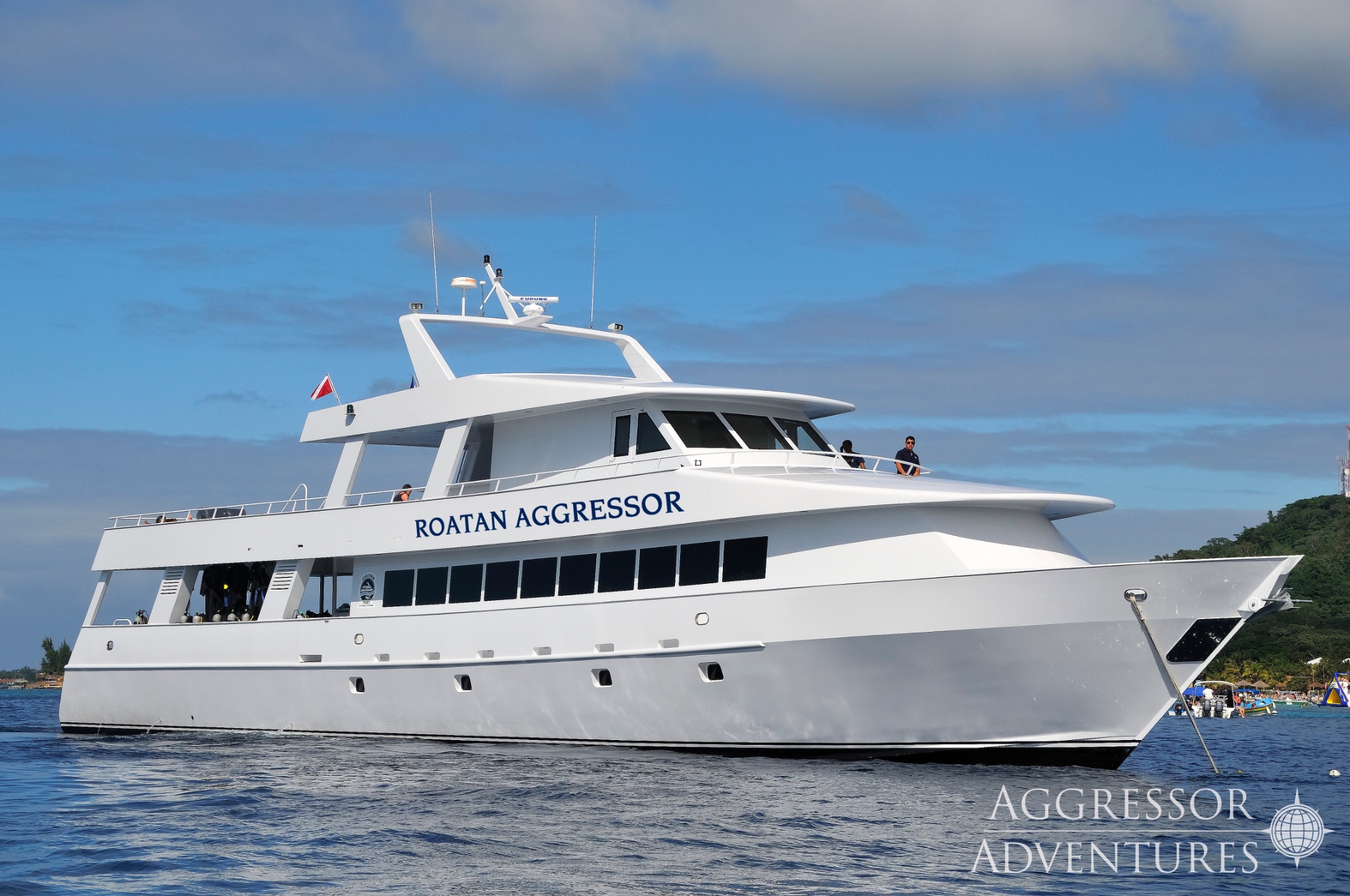
Roatan Aggressor
Honduras
18 guests31.1 m
$309/day
Dive sites similar to Ted's Point
Same character, same waters — six more sites divers love for the exact same reasons.Compare seasons, access and liveaboard routes — then pick the site that fits your trip best.
© Esri — Maxar, Earthstar, GIS
Satoshi’s Grave
Honduras
Satoshi’s Grave is a distinctive wreck site located on the southern shore of Roatan, specifically the Wreck of Mr. Bud.
- Suitable for
- Beginner
- Current
- Moderate
- Access
- Liveaboard or dayboat
- Depth
- 18–18 m
- Theme
- Wreck / Reef
© Esri — Maxar, Earthstar, GIS
Addie's Garden
Honduras
Addie's Garden is one of 350 dive and snorkel sites located around Roatan, Honduras, within the Mesoamerican Barrier Reef System.
- Suitable for
- Intermediate
- Current
- Moderate
- Access
- Liveaboard or dayboat
- Depth
- 5–30 m
- Theme
- Reef
© Esri — Maxar, Earthstar, GIS
Blackish Point
Honduras
Blackish Point is a captivating shore-drift wall dive located on the north side of Utila, offering a unique blend of volcanic rock formations, soft corals, and an intricate network of caves, overhangs, and crevices.
- Suitable for
- Intermediate
- Current
- Mild
- Access
- Shore / dayboat
- Depth
- 11–27 m
- Theme
- Cave & cavern / Drift
© Esri — Maxar, Earthstar, GIS
Marie's Kitchen
Honduras
Marie's Kitchen is a distinguished dive site located in Roatan, Honduras, forming a crucial part of the Mesoamerican Barrier Reef System, which stands as the world's second-largest coral reef.
- Suitable for
- Intermediate
- Current
- Moderate
- Access
- Liveaboard or dayboat
- Depth
- 5–30 m
- Theme
- Reef
© Esri — Maxar, Earthstar, GIS
Butcher's Bank
Honduras
Butcher's Bank is a celebrated dive site in Roatan, Honduras, widely regarded as one of the island's most enjoyable locations, particularly for novice divers.
- Suitable for
- Beginner
- Current
- Mild
- Access
- Dayboat
- Depth
- 12–18 m
- Theme
- Reef
© Esri — Maxar, Earthstar, GIS
Black Coral Wall
Honduras
Black Coral Wall is a captivating dive site situated off the coast of Utila, Honduras, characterized by its extensive formations of black coral.
- Suitable for
- Intermediate
- Current
- Moderate
- Access
- Liveaboard only
- Depth
- ≤ 50 m
- Theme
- Wall