About Palm Point
Palm Point is a notable dive site located off Manuk Island, an isolated and uninhabited volcanic outpost within the Banda Sea, approximately 100 miles southeast of the main Banda Islands in Indonesia. This remote location, part of the Ring of Fire, contributes to a largely pristine marine ecosystem, primarily accessed via liveaboard. The site's significance lies in its potential for pelagic encounters, particularly with hammerhead sharks and mobula rays. The underwater topography at Palm Point features steep drop-offs and sloping reefs. Divers can explore these structures, which are adorned with abundant soft corals and large sea fans. Geothermal activity, a characteristic of the region, also plays a role in attracting specific marine life. While Palm Point is known for sightings of hammerhead sharks and mobula rays in the blue, it also shares Manuk Island's reputation for significant numbers of banded sea kraits, which are often encountered on the reef. Schooling trevally and barracuda are also present, occasionally exhibiting cooperative hunting behaviors with the sea snakes. Visibility typically ranges from 15 to 40 meters, often averaging around 30 meters. Due to its remote nature and the potential for strong currents, diving at Palm Point is best undertaken by liveaboard. Divers should possess good buoyancy control and drift diving experience to safely navigate the varying conditions and appreciate the site's rich biodiversity.
Highlights
Hammerhead shark sightingsMobula ray encountersAbundant banded sea kraitsPristine coral ridgesSteep drop-offsSchooling trevally
Season calendar
Best months to dive here
Jan
Feb
Mar
Apr
May
Jun
Jul
Aug
Sep
Oct
Nov
Dec
Excellent
Good
Off-Season
Sep – Nov (Sep–Nov)
Calmest seas and best visibility (25–30m). Hammerhead shark schools at their largest. Whale shark sightings increase. All liveaboard operators running Banda Sea expeditions.
Mar – May & Aug (Mar–May, Aug)
Transitional weather with generally good conditions. Visibility 18–25m. Fewer boats operating but still excellent diving.
Jun – Jul & Dec – Feb (Dec–Feb, Jun–Jul)
Monsoon brings rough seas, strong currents, and reduced visibility. Most operators do not run Banda Sea trips. Not recommended for diving.
Dive site facts: Palm Point
- Depth
- 5–40 m
- Current
- Moderate
- Entry
- Liveaboard only
- Level
- Advanced
- Dive type
- Wall, Reef
- Region / port
- Banda Sea
- Coordinates
- 5.5517° S, 129.1303° E
Conditions & Currents
Currents at Palm Point can range from mild to strong, varying significantly depending on the specific location and depth, especially along deeper channels and outer reef slopes. These currents are vital for nutrient delivery, sustaining the abundant marine life, including large pelagics. Divers should be prepared for varying conditions and have proficient buoyancy control, as well as experience with drift diving, to safely navigate the site and its high density of sea snakes and corals. Typical visibility is excellent, ranging from 15 to 40 meters and frequently reaching 30 meters, as there is no significant river runoff to affect clarity. Entry is typically via liveaboard tender, sometimes requiring a negative entry, and a reef hook may be beneficial in stronger currents. Given these conditions, an advanced certification level is recommended for divers at Palm Point.
Why dive Palm Point from a liveaboard?
Palm Point is one of Banda Sea's signature dive sites. A liveaboard sleeps you on the water and puts you in the water for three to four guided dives per day, including dawn and night dives that day-boat operators rarely offer. You skip the daily commute back to port and reach quieter, less-crowded sites in the same region on a single trip.
Below are the liveaboards that include Palm Point on their Banda Sea itineraries.
Liveaboards diving Palm Point
These liveaboards may visit Palm Point on selected itineraries, the exact dive sites depend on departure, weather and conditions.
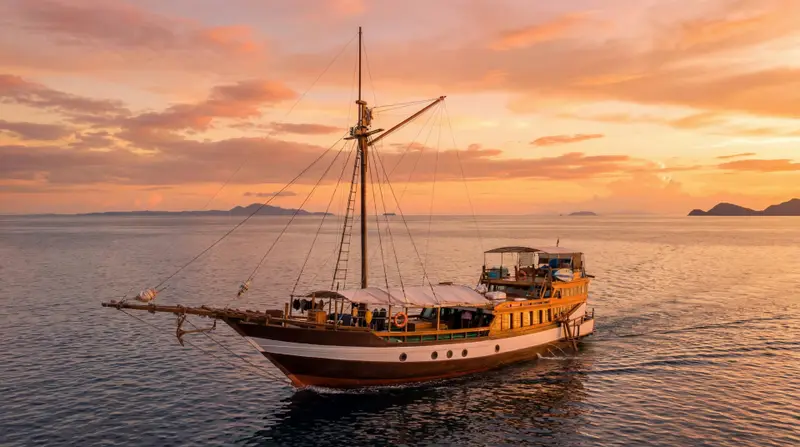
Wellenreng
Indonesia
9 guests25 m
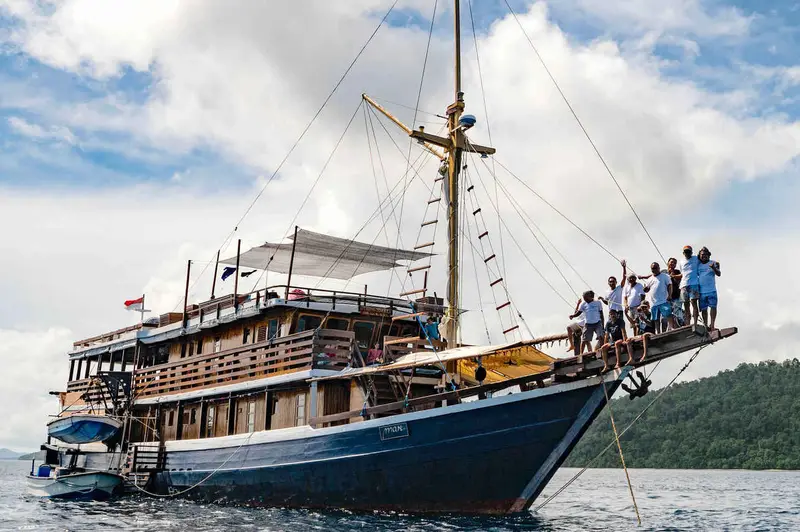
Mari
Indonesia
14 guests32 m
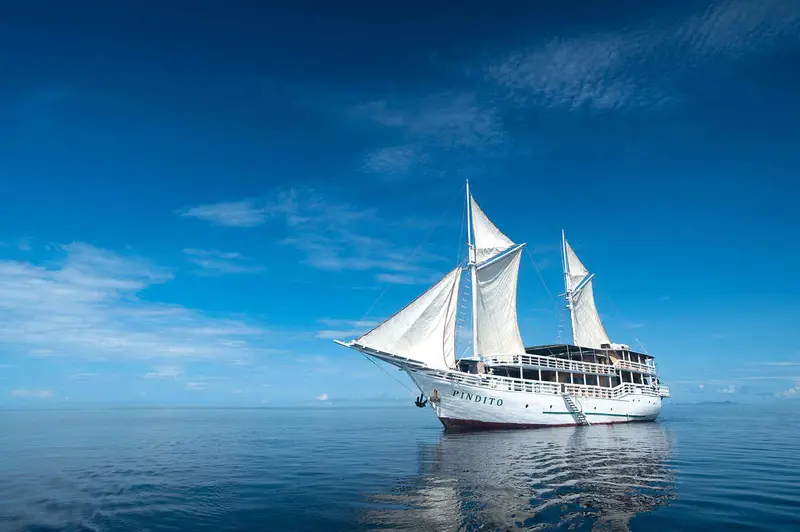
Pindito
Indonesia
16 guests38 m
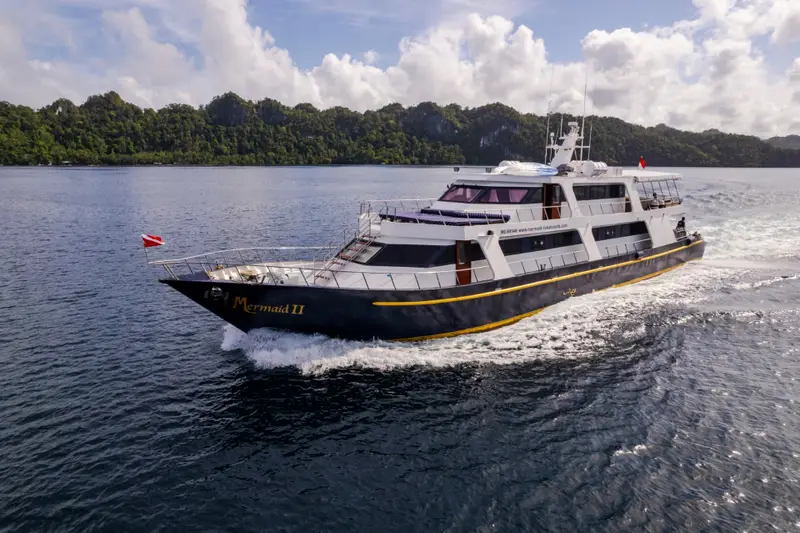
Mermaid II
Komodo, Indonesia
18 guests
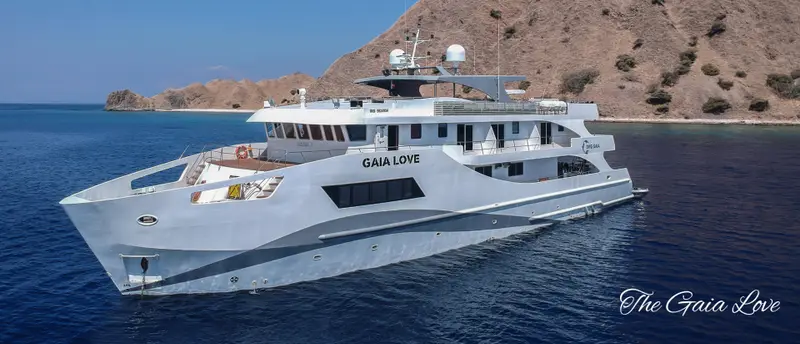
Gaia Love
Alor
20 guests
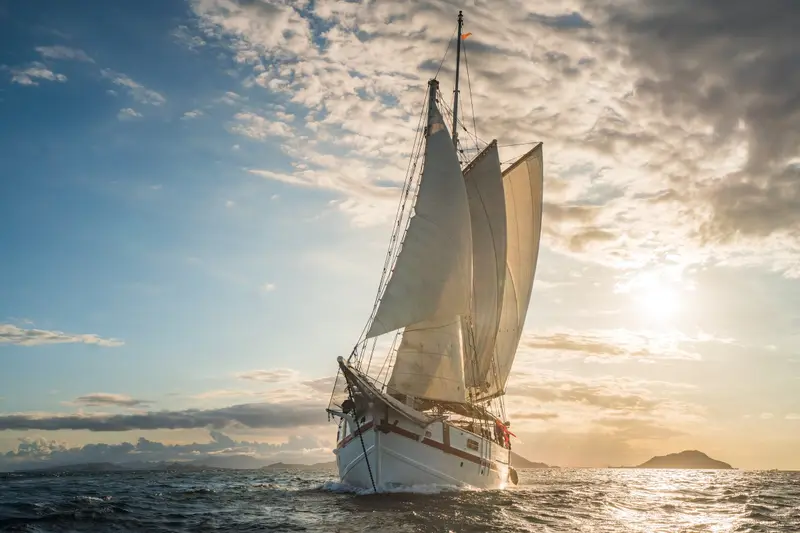
Emperor Raja Laut
Raja Ampat, Indonesia
12 guests31 m
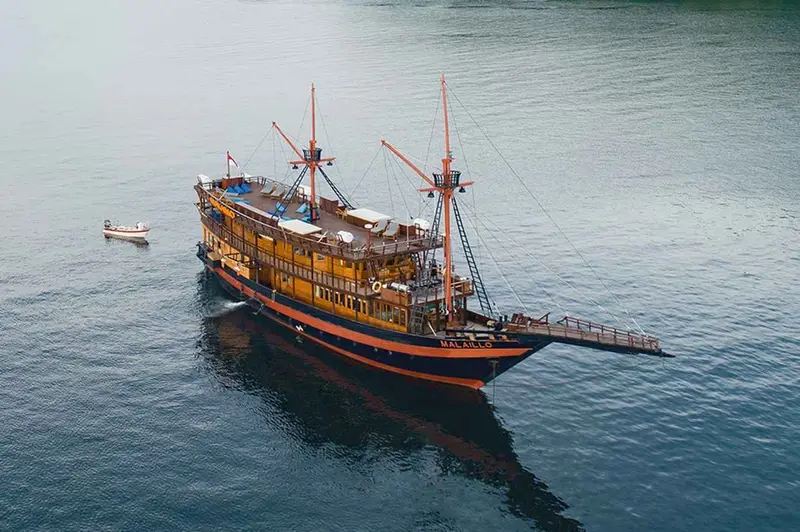
Malaillo
Indonesia
14 guests46 m
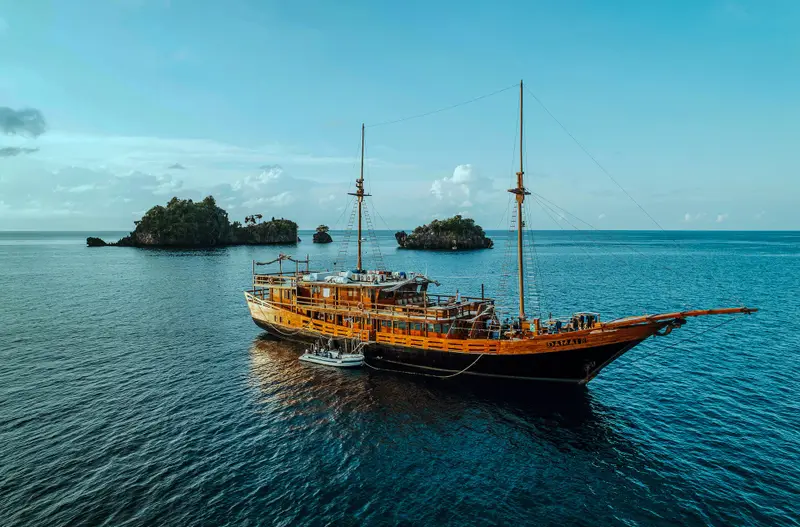
Damai II
Komodo, Indonesia
14 guests

DUNE Aurora
Indonesia
18 guests
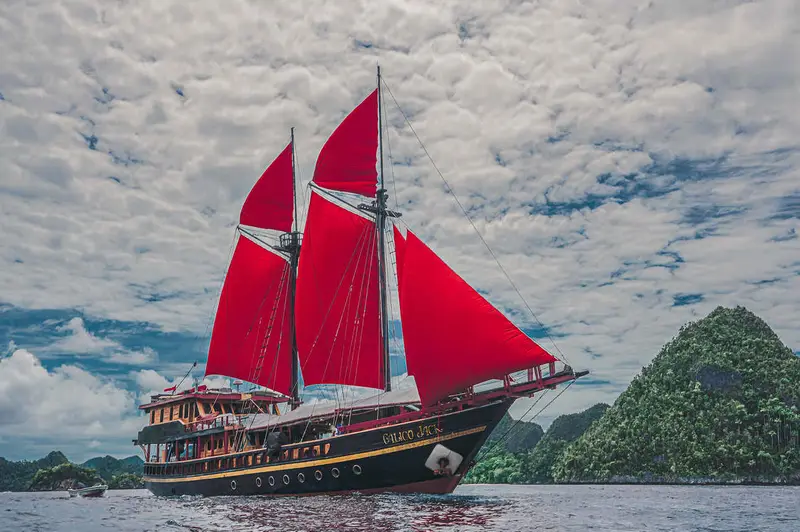
Calico Jack
Indonesia
10 guests30 m
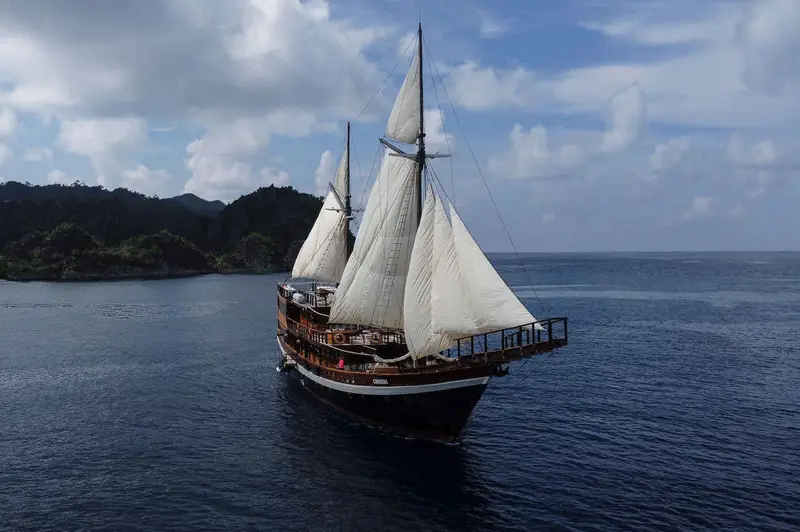
Coralia
Indonesia
16 guests48 m
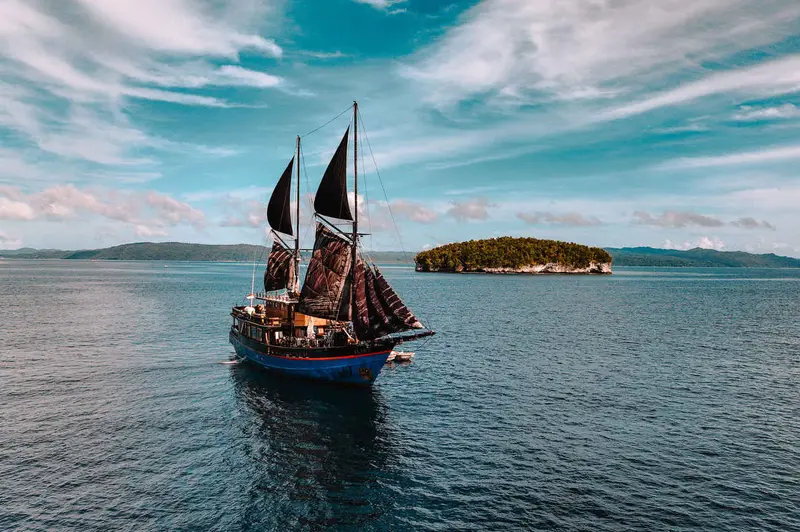
Ilike
Indonesia
16 guests40 m
Dive sites similar to Palm Point
Same character, same waters, six more sites divers love for the exact same reasons.Compare seasons, access and liveaboard routes, then pick the site that fits your trip best.
Abila is a notable dive site located within the Alor Islands Marine Park, an area celebrated for its rich marine biodiversity due to its position in the Coral Triangle.
- Suitable for
- Beginner
- Current
- Mild
- Access
- Liveaboard only
- Depth
- —
- Theme
- Reef
© EsriMaxar, Earthstar, GIS
Adonara Channel
Alor
Adonara Channel stands as one of Alor's most iconic dive sites, celebrated for its dynamic currents and exceptionally rich biodiversity.
- Suitable for
- Advanced
- Current
- Strong
- Access
- Liveaboard or dayboat
- Depth
- 10–40 m
- Theme
- Drift / Wall
© EsriMaxar, Earthstar, GIS
Adonara Wall
Indonesia
Adonara is an Indonesian island dive site, renowned for its vibrant underwater topography characterized by submerged seamounts.
- Suitable for
- Intermediate
- Current
- Strong
- Access
- Liveaboard or dayboat
- Depth
- 5–35 m
- Theme
- Seamount / Wall
© EsriMaxar, Earthstar, GIS
Agnay Fish Sanctuary
Philippines
Agnay Fish Sanctuary is nestled in a sheltered bay near the village of Agnay in Romblon, a province celebrated for its rich marine biodiversity.
- Suitable for
- Beginner
- Current
- Mild
- Access
- Dayboat
- Depth
- 9–18 m
- Theme
- Reef
© EsriMaxar, Earthstar, GIS
Ai Island Reef
Banda Sea
Ai Island Reef, nestled within the Banda Sea, offers a remarkable diving experience characterized by its rich marine biodiversity and varied underwater topography.
- Suitable for
- Beginner
- Current
- Strong
- Access
- Liveaboard only
- Depth
- 3–30 m
- Theme
- Reef / Seamount
© EsriMaxar, Earthstar, GIS
Akitsushima
Philippines
The Akitsushima is a distinguished World War II Japanese seaplane tender, sunk in September 1944 during an American air raid in Coron Bay, Palawan.
- Suitable for
- Advanced
- Current
- Strong
- Access
- Dayboat
- Depth
- 22–38 m
- Theme
- Wreck