About Tunnels bay
Tunnels Bay, also known as Small Reef/Three Tunnels, offers a distinctive underwater landscape just two miles from Fethiye harbor in Turkey. This site is renowned for its network of submerged tunnels and an extensive wall that plunges to over 40 meters, creating a captivating journey through marine geology. Divers can navigate a series of natural cavities and extended passages, contrasting shallow reef areas with deeper structural elements. The topography includes a reef sloping gradually from the shallows of Aziz Aga bay, leading to a prominent wall. Depths increase as you move westward, reaching the main wall structure where several distinct tunnels are found. These passages guide divers through natural rock formations, providing an engaging experience suitable for exploring. While marine life is generally less abundant than in tropical seas, observant divers may encounter groupers, moray eels, and stingrays on the sandy bottom. The site's complex formations also provide shelter for a variety of smaller species, enhancing the exploratory nature of the dive. Conditions are often excellent, with optimal visibility and comfortable water temperatures from June to October. Diving at Tunnels Bay typically begins in the shallows before progressing to deeper sections, where the tunnels and wall offer varied exploration. The site combines elements of reef diving with cavern exploration, making it a multifaceted underwater adventure that appeals to divers interested in unique geological features and diverse depth profiles.
Highlights
Three distinct natural tunnelsExtensive deep wallDramatic geological formationsSloping reef topographyCavern and reef explorationPotential stingray sightingsClose to Fethiye harbor
Season calendar
Best months to dive here
Jan
Feb
Mar
Apr
May
Jun
Jul
Aug
Sep
Oct
Nov
Dec
Excellent
Good
Dive site facts: Tunnels bay
- Depth
- 5–40 m
- Current
- Mild (implied)
- Visibility
- Up to 30 m
- Water temperature
- 18–30 °C
- Entry
- Boat
- Level
- Intermediate
- Dive type
- Cavern, Reef, Wall
- Region / port
- Fethiye, Turkey
- Coordinates
- 36.5974° N, 29.0280° E
Conditions & Currents
Current information for Tunnels Bay is not explicitly detailed in the provided sources, however, excellent dive conditions during peak season suggest generally settled waters. Divers should anticipate that navigation through intricate tunnels and along walls requires good buoyancy control to avoid contact with formations. Visibility generally remains excellent during periods of settled weather, which is crucial for safety and enjoyment when exploring confined passages. The presence of calm sea states during the best diving months implies minimal surge, contributing to a comfortable diving experience. Divers should always be attentive to boat briefings for any site-specific current advisories or entry/exit protocols, especially given the site's proximity to a harbor.
Marine life & sighting chances


Dive profile & how the dive runs
Dives at Tunnels Bay typically commence in the shallows near Aziz Aga bay, where a reef gradually slopes downwards. Divers then proceed westwards, following the reef as it gives way to a prominent wall, with depths increasing from around 12-15 meters. The main attraction involves navigating through a series of natural tunnels at various depths. One tunnel measures 7-8 meters long with an entrance around 30 meters, while an inverted V-shaped tunnel extends about 10-12 meters. Two additional shorter tunnels are found at shallower depths, around 17-19 meters. Beyond these passages, the deep wall continues, featuring two narrow cavities at approximately 35 meters that are suitable for single-person entry. The safety stop is usually conducted in the shallower sections of the reef or along the wall, depending on remaining bottom time and air consumption.
Underwater photography
Tunnels Bay offers excellent opportunities for wide-angle and macro photography, especially given its distinct geological features and the potential for observing specific marine life. A wide-angle lens is ideal for capturing the grandeur of the submerged tunnels, the extensive wall, and the overall underwater architecture, allowing you to show the scale of the environment. For the narrower cavities and swim-throughs, careful buoyancy control is essential to avoid stirring up sediment and to maintain a clear shot. Macro enthusiasts can focus on the diverse smaller species, such as nudibranchs and invertebrates, found clinging to the walls and within crevices. Utilizing strobes will enhance color and detail, particularly in deeper sections and within the tunnels where natural light diminishes. Be mindful of subject etiquette, especially when photographing shy creatures like moray eels or stingrays, giving them ample space and avoiding disruptive behavior.
Combine with nearby dive sites
Getting there & logistics
Tunnels Bay is situated just two miles from Fethiye harbor, making it easily accessible via boat trips from Fethiye. Fethiye, located on Turkey's southern coast, is a popular hub for diving, with numerous high-quality dive centers available. Divers typically arrive in the region by flying into Dalaman Airport (DLM), which is the nearest international airport to Fethiye. From Dalaman, transfers to Fethiye are readily available. Dive trips to Tunnels Bay are usually day excursions from Fethiye, often combined with other local sites. The main diving season stretches from April to November, with comfortable water temperatures and excellent visibility throughout. Costs for two-dive boat trips in the region typically range from $70-120 USD.
Safety & environment
While diving in Turkey is generally well-regulated, adherence to established safety protocols is paramount at Tunnels Bay. The nearest recompression chamber would typically be located in a major medical center, likely in a larger city like Antalya, requiring land or air evacuation in an emergency. Divers should ensure they have comprehensive dive insurance covering medical emergencies and evacuation. Site-specific hazards at Tunnels Bay include navigating narrow tunnels and cavities, which demand excellent buoyancy control and awareness of overhead environments. Divers should avoid venturing into passages that exceed their training or comfort level. Always dive with a reputable, registered dive center whose boats meet high safety standards, and pay close attention to the pre-dive briefing for specific entry, exit, and emergency procedures.
Who it suits — and who it doesn't
Suited for
- Experienced open water divers comfortable with caverns
- Divers interested in unique geological formations
- Underwater photographers seeking architectural subjects
- Divers looking for diverse depth profiles and wall dives
- Explorers seeking natural swim-throughs
Less suited for
- Brand new open water divers without cavern experience
- Divers uncomfortable with confined spaces
- Those primarily seeking abundant tropical marine life
- Divers with poor buoyancy control
- Individuals prone to claustrophobia
FAQ
Tunnels bay FAQ
What kind of dive site is Tunnels Bay?
Tunnels Bay, also known as Small Reef/Three Tunnels, is a unique dive site featuring a series of natural underwater tunnels, an extensive wall, and diverse geological formations. It combines elements of reef diving with cavern exploration, offering an engaging experience for divers.
Where is Tunnels Bay located?
Tunnels Bay is located approximately two miles from Fethiye harbor in Turkey. Its proximity to Fethiye makes it easily accessible for dive excursions departing from the town, which is a popular diving hub on Turkey's southern coast.
What is the maximum depth at Tunnels Bay?
The dive site at Tunnels Bay features an impressive wall that plunges to over 40 meters. While shallower sections and tunnels are found at various depths, the overall profile extends to this maximum, catering to divers with appropriate certifications.
What marine life can be seen at Tunnels Bay?
While not as abundant as tropical reefs, Tunnels Bay offers sightings of Mediterranean marine life. Divers may encounter groupers, moray eels, octopuses, and nudibranchs. Observant divers also have a chance to spot stingrays on the sandy bottom.
When is the best time to dive Tunnels Bay?
The optimal time to dive Tunnels Bay is from June to October. During these months, the region experiences excellent visibility, comfortable water temperatures ranging from 26°C to 30°C, and generally calm sea conditions, enhancing the overall dive experience.
Are there actual tunnels to swim through?
Yes, Tunnels Bay is named for its series of natural swim-throughs. These include a 7-8 meter long tunnel at 30 meters, an inverted V-shaped tunnel of 10-12 meters, and two shorter tunnels between 17-19 meters, offering varied penetration experiences for divers.
Why dive Tunnels bay from a liveaboard?
Tunnels bay is one of Turkey's signature dive sites. A liveaboard sleeps you on the water and puts you in the water for three to four guided dives per day, including dawn and night dives that day-boat operators rarely offer. You skip the daily commute back to port and reach quieter, less-crowded sites in the same region on a single trip.
Below are the liveaboards that include Tunnels bay on their Turkey itineraries.
Liveaboards diving Tunnels bay
These liveaboards may visit Tunnels bay on selected itineraries — the exact dive sites depend on departure, weather and conditions.
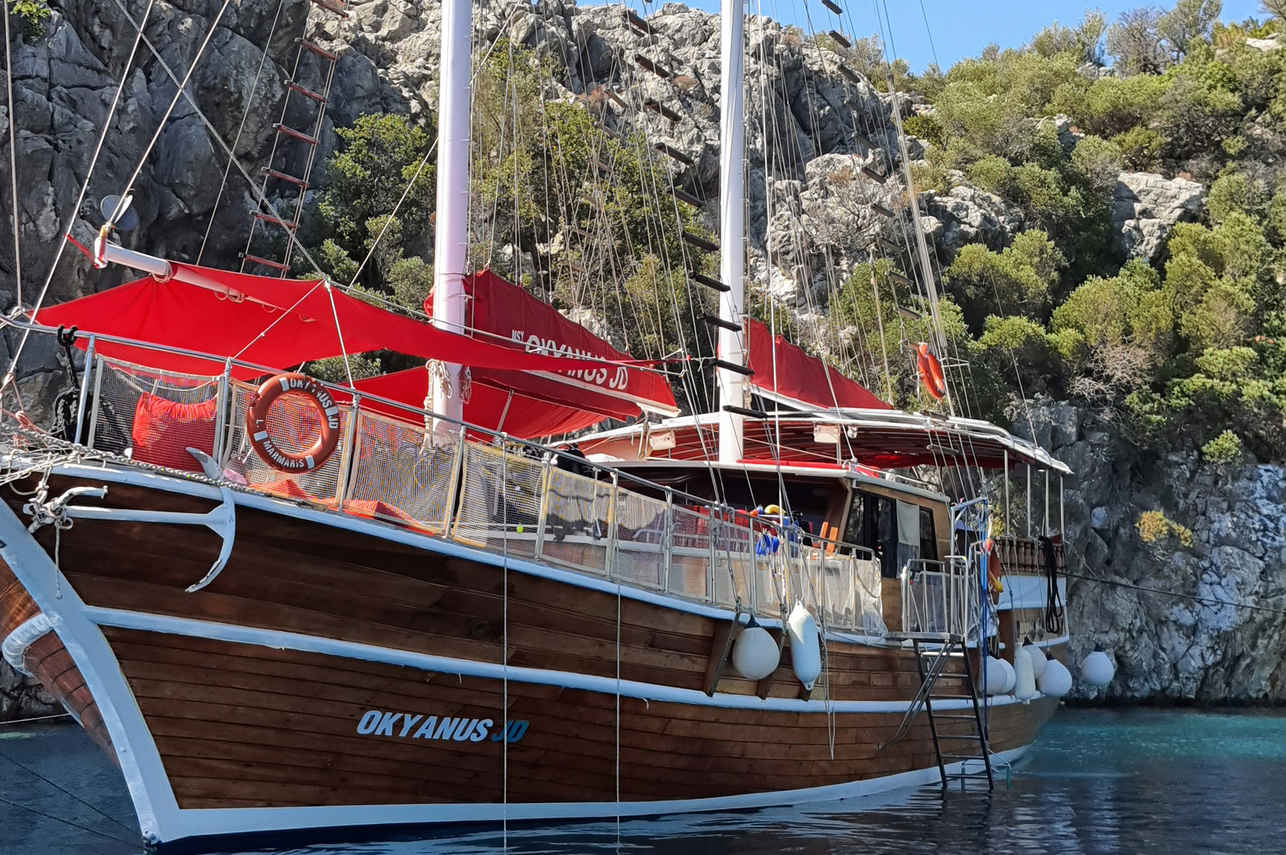
Okyanus JD
Turkey
12 guests24 m
$158/day
Dive sites similar to Tunnels bay
Same character, same waters — six more sites divers love for the exact same reasons.Compare seasons, access and liveaboard routes — then pick the site that fits your trip best.
© Esri — Maxar, Earthstar, GIS
Besmi Island
Turkey
Besmi Island, also known as Besmi Adası, is a challenging yet rewarding dive site located off Turkey's southwestern coast near Fethiye and southwest of Kaş.
- Suitable for
- Advanced
- Current
- Strong
- Access
- Dayboat
- Depth
- 4–60 m
- Theme
- Reef / Wall
© Esri — Maxar, Earthstar, GIS
Gökova Bay Canyon
Turkey
Gökova Bay Canyon is a renowned dive site in Turkey, celebrated for its unique underwater topography, which contrasts sharply with typical Mediterranean dive experiences.
- Suitable for
- Advanced
- Current
- Strong
- Access
- Liveaboard or dayboat
- Depth
- 15–35 m
- Theme
- Wall
© Esri — Maxar, Earthstar, GIS
Kızıl Island
Turkey
Kızıl Island, known locally as Kızılada, is a prominent dive site situated near Fethiye on Turkey's southwestern coast.
- Suitable for
- Intermediate
- Current
- Mild
- Access
- Dayboat
- Depth
- 8–40 m
- Theme
- Reef / Wall
© Esri — Maxar, Earthstar, GIS
Rambo Cave
Turkey
Rambo Cave is a captivating coastal cavern located near Alanya in Antalya, Turkey.
- Suitable for
- Intermediate
- Current
- Moderate
- Access
- Liveaboard or dayboat
- Depth
- 3–15 m
- Theme
- Cave & cavern
© Esri — Maxar, Earthstar, GIS
The Mexican Hat Cold Water Cave is an intriguing dive site situated near Afkule, roughly 300 meters past the main Afkule cave complex, off the coast of Fethiye, Turkey.
- Suitable for
- Advanced
- Current
- Mild
- Access
- Dayboat
- Depth
- ≤ 30 m
- Theme
- Cave & cavern / Cavern