About Rhounda Khomaytou
Rhounda Khomaytou is a prominent dive site within the volcanic chain of the Seven Brothers Islands, also known as the Sawabi Islands, located in the Bab El Mandab strait at the southern entrance to the Red Sea. This region, where the Red Sea meets the Indian Ocean, is renowned for its adventurous diving, featuring unique underwater landscapes and substantial pelagic encounters. The site is characterized by impressive drop-offs, which plunge into deeper waters. These dramatic walls are often enveloped by clouds of colorful reef fish and serve as a highway for large schools of jacks and barracuda. The general topography includes thriving coral gardens and coral-encrusted walls, typical of the Seven Brothers archipelago. Marine life here is abundant and diverse, benefiting from the nutrient-rich waters. Whale sharks are known to pass through, particularly during the October to February season, alongside other pelagics and large schools of reef fish. The healthy coral ecosystems support a vibrant array of species year-round. Diving at Rhounda Khomaytou often involves drift diving due to the strong currents prevalent in the Seven Brothers region. These tidal shifts bring in significant volumes of water, influencing visibility and requiring advanced dive planning. Divers can expect dynamic conditions that offer thrilling encounters with large marine animals.
Highlights
Dizzying drop-offsMassive shoals of jacksBarracuda schoolsPassing pelagic speciesWhale shark encountersSeven Brothers Islands locationStrong currents
Season calendar
Best months to dive here
Jan
Feb
Mar
Apr
May
Jun
Jul
Aug
Sep
Oct
Nov
Dec
Good
Dive site facts: Rhounda Khomaytou
- Depth
- 15–40 m+
- Current
- Strong
- Visibility
- 10–35 m+
- Water temperature
- 24–33°C
- Entry
- Liveaboard / Tender
- Level
- Intermediate to Advanced
- Dive type
- Wall, drift, pelagic
- Region / port
- Seven Brothers Islands
- Coordinates
- 12.4433° N, 43.3442° E
Conditions & Currents
The Seven Brothers Islands, including Rhounda Khomaytou, are known for stronger currents. These currents result from massive tidal shifts occurring twice daily, forcing incredible volumes of water across the reefs and rocky plateaus. Divers should anticipate dynamic conditions, requiring experience with drift diving techniques. Entry procedures, descent timing, and buoyancy control are crucial to navigate the flow effectively. While the currents can reduce visibility at times, they are also responsible for attracting large marine animals and nourishing the vibrant ecosystem. Boat tracking and pick-up procedures must be thoroughly understood for safety during these exhilarating dives.
Marine life & sighting chances

Whale shark
October to February · occasional
Jack
common
Barracuda
common
Reef fish
common
Manta ray
October to February · occasional
Pilot whale
occasional
Dolphin
occasional
Grey reef shark
occasional
Nurse shark
occasional
Marine turtle
Year round · occasional
Tiger shark
rare
Beaked whale
rareDive profile & how the dive runs
Diving at Rhounda Khomaytou typically involves a liveaboard excursion to the Seven Brothers Islands, often necessitating a tender for entry. Due to strong currents, this is generally a drift dive, meaning divers enter and allow the current to carry them along the site's extensive drop-offs and walls. Descent should be swift and controlled to avoid being swept past the intended starting point. The route follows the contours of the reef, keeping the wall to one side, exploring the dense schools of jacks and barracuda, and scanning the blue for pelagic encounters. Depth progression will vary but often involves deeper sections along the drop-off, gradually ascending as the dive progresses. The turn point is determined by air consumption and bottom time rather than a fixed location. Safety stops are often conducted in the blue while ascending, with the liveaboard or tender following the divers and retrieving them once they surface, sometimes quite a distance from the entry point.
Underwater photography
For photography at Rhounda Khomaytou, wide-angle lenses are essential to capture the expansive drop-offs, massive schools of jacks and barracuda, and potential whale shark encounters. Strobe lighting will help bring out the vibrant colors of reef fish and corals on the walls. Due to strong currents, maintaining excellent buoyancy control is paramount to avoid collisions and keep your camera stable. Be mindful of subject etiquette, especially with large pelagics like whale sharks; maintain a respectful distance and avoid flash photography directly at them to minimize disturbance. Situational awareness is key, as currents can change, and you'll want to be ready for fast-moving subjects.
Combine with nearby dive sites
Getting there & logistics
Access to Rhounda Khomaytou and the Seven Brothers Islands is primarily via liveaboard trips departing from Djibouti City. Travelers typically fly into Djibouti-Ambouli International Airport (JIB). Liveaboard itineraries to the Seven Brothers generally run from January to May, though diving in Djibouti is possible year-round, with the peak season for whale sharks and favorable conditions from October to February. Trips are often 7-10 days, combining the Seven Brothers with other prominent Djibouti dive areas like the Gulf of Tadjoura. There are no specific park fees mentioned for this site, but liveaboard costs cover permits and all diving activities.
Safety & environment
Diving at Rhounda Khomaytou, especially within the Seven Brothers Islands, requires preparedness for strong currents. All divers should have experience with drift diving and excellent buoyancy control. Comprehensive dive insurance, including coverage for emergency evacuation and recompression, is highly recommended. The nearest recompression chamber is likely in Djibouti City, but evacuation from the remote Seven Brothers Islands could be challenging and time-consuming. Always follow the dive brief carefully, stay with your buddy, and be proficient in deploying a surface marker buoy. Given the potential for deeper dives and strong currents, advanced certifications are advisable, and maintaining adequate gas reserves is critical.
Who it suits — and who it doesn't
Suited for
- Experienced drift divers
- Divers seeking large pelagic encounters
- Photographers with wide-angle setups
- Adventure seekers
- Divers comfortable with dynamic conditions
Less suited for
- Novice divers
- Divers without current experience
- Those prone to seasickness
- Divers uncomfortable with potential lower visibility
- Divers seeking only macro subjects
FAQ
Rhounda Khomaytou FAQ
What kind of marine life can I expect to see at Rhounda Khomaytou?
Rhounda Khomaytou is known for large pelagic species and schooling fish. You can expect to encounter massive shoals of jacks and barracuda, and it's a site where passing pelagics, including whale sharks, are frequently sighted during the right season. The vibrant drop-offs also host a diverse array of colorful reef fish.
Are the currents strong at Rhounda Khomaytou?
Yes, Rhounda Khomaytou and the Seven Brothers Islands region are characterized by strong currents. These are caused by significant tidal shifts that push large volumes of water across the reefs. Divers should be experienced in drift diving and possess excellent buoyancy control to safely enjoy this site.
When is the best time to dive Rhounda Khomaytou for whale sharks?
The prime season for encountering whale sharks at Rhounda Khomaytou is from October to February. This period also generally offers the best water temperatures and visibility, enhancing the overall dive experience. Liveaboard trips to the Seven Brothers typically run from January to May, also offering good conditions.
What dive experience level is required for Rhounda Khomaytou?
Due to the strong currents and potential for deeper dives along the drop-offs, Rhounda Khomaytou is best suited for intermediate to advanced divers. Experience with drift diving is highly recommended to ensure safety and enjoyment at this dynamic site. Novice divers may find the conditions challenging.
What are the nearby dive sites to Rhounda Khomaytou?
Rhounda Khomaytou is located within the Seven Brothers Islands, which offer several other notable dive sites. Nearby, you can explore the well-preserved shipwreck of La Dame Blanche at 25 meters, or visit the Japanese Gardens, which are renowned for spotting macro creatures like nudibranchs.
Why dive Rhounda Khomaytou from a liveaboard?
Rhounda Khomaytou is one of Djibouti's signature dive sites. A liveaboard sleeps you on the water and puts you in the water for three to four guided dives per day, including dawn and night dives that day-boat operators rarely offer. You skip the daily commute back to port and reach quieter, less-crowded sites in the same region on a single trip.
Below are the liveaboards that include Rhounda Khomaytou on their Djibouti itineraries.
Liveaboards diving Rhounda Khomaytou
These liveaboards may visit Rhounda Khomaytou on selected itineraries — the exact dive sites depend on departure, weather and conditions.
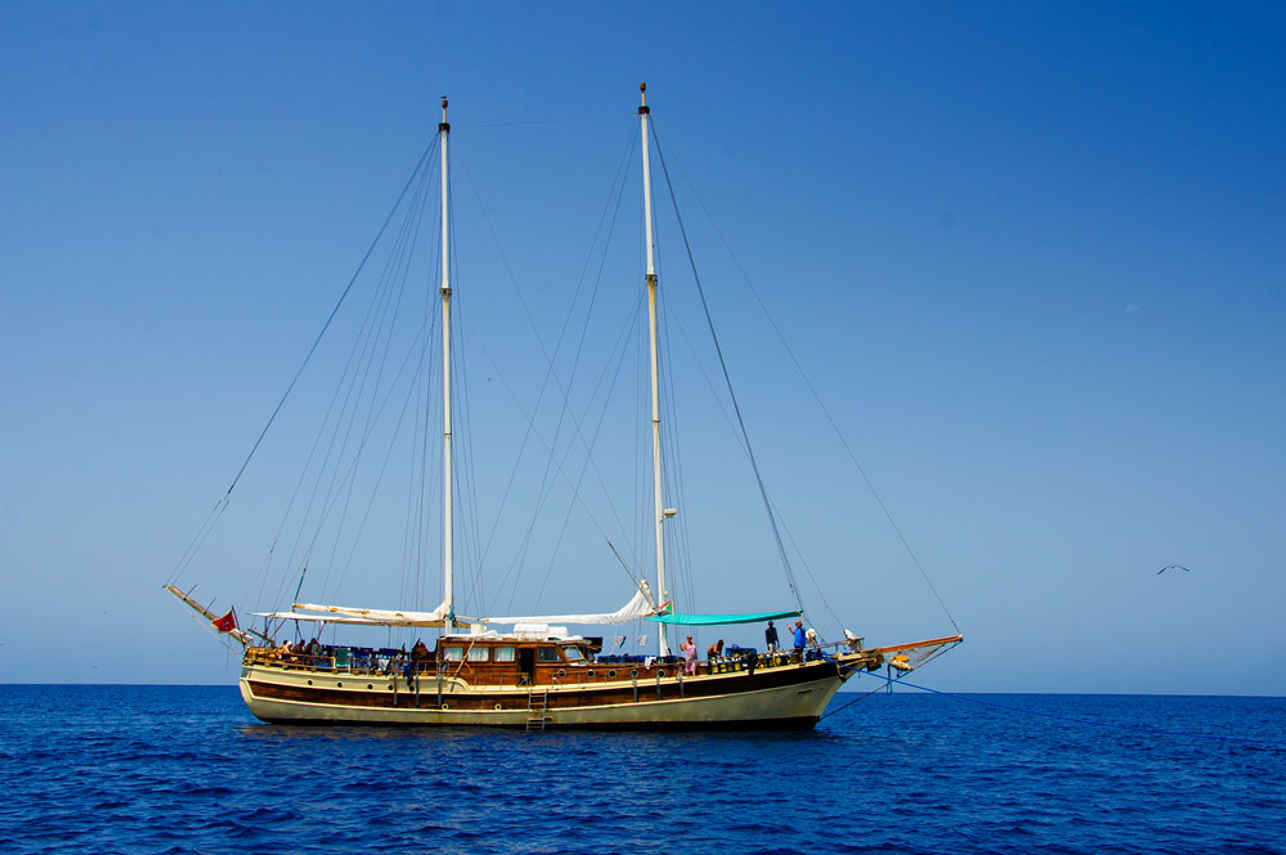
Elegante
Djibouti
14 guests25 m
$209/day
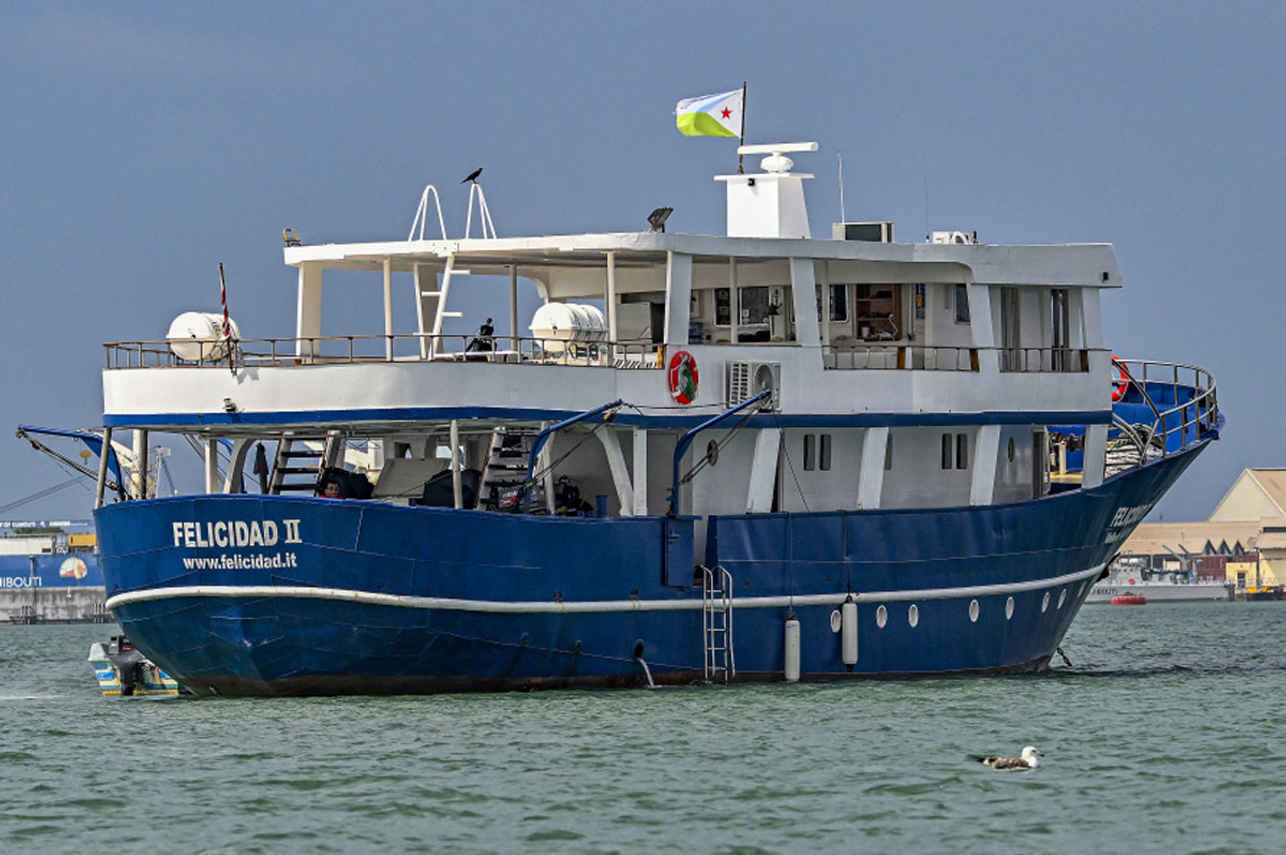
Felicidad II
Djibouti
18 guests30 m
$188/day
Dive sites similar to Rhounda Khomaytou
Same character, same waters — six more sites divers love for the exact same reasons.Compare seasons, access and liveaboard routes — then pick the site that fits your trip best.
© Esri — Maxar, Earthstar, GIS
Ghoubbet al Kharab
Djibouti
Ghoubbet al Kharab, also known as the Devil’s Goblet, is a deep bay connected to the Gulf of Tadjourah and the open ocean in Djibouti.
- Suitable for
- Advanced
- Current
- Strong
- Access
- Liveaboard only
- Depth
- 5–200 m
- Theme
- Drift / Reef
© Esri — Maxar, Earthstar, GIS
Moucha wrecks
Djibouti
The Moucha wrecks, including the notable Orchard Reefer and Le Fon, offer a distinctive dive experience within Djibouti's Gulf of Tadjoura, contrasting with the region's prevalent coral reefs.
- Suitable for
- Advanced
- Current
- Moderate
- Access
- Liveaboard or dayboat
- Depth
- 5–50 m
- Theme
- Wreck / Reef
© Esri — Maxar, Earthstar, GIS
Sable Blanc Reef
Djibouti
Sable Blanc Reef is a vibrant coral ecosystem located in Djibouti, nestled where the Red Sea meets the Gulf of Aden.
- Suitable for
- Intermediate
- Current
- Strong
- Access
- Shore / dayboat
- Depth
- 5–30 m
- Theme
- Drift / Reef
© Esri — Maxar, Earthstar, GIS
Cape Rouge
Djibouti
Cape Rouge is a notable dive site in Djibouti, known for its pristine underwater environment where the Red Sea meets the Indian Ocean.
- Suitable for
- Advanced
- Current
- Mild
- Access
- Liveaboard or dayboat
- Depth
- 15–40 m
- Theme
- Reef
© Esri — Maxar, Earthstar, GIS
La Vierge Rouge
Djibouti
La Vierge Rouge is situated in Djibouti, a unique diving destination where the Red Sea converges with the Indian Ocean.
- Suitable for
- Intermediate
- Current
- Moderate
- Access
- Liveaboard only
- Depth
- 15–40 m
- Theme
- Reef
© Esri — Maxar, Earthstar, GIS
Le Sec Aux Boutres
Djibouti
Le Sec Aux Boutres is a distinguished dive site located near Arta, Djibouti, celebrated for its rich marine biodiversity and stunning underwater scenery.
- Suitable for
- Intermediate
- Current
- Mild
- Access
- Dayboat
- Depth
- 10–30 m
- Theme
- Reef