About Pacific Gas
The `Pacific Gas` wreck is a prominent dive site within Bootless Bay, situated approximately 20 kilometers southeast of Port Moresby, the capital of Papua New Guinea. This former liquefied gas tanker now rests as one of the region's most storied underwater attractions. The site is a key feature of the diverse dive offerings in Bootless Bay, which boasts over 29 vibrant dive sites, including other compelling wrecks like the `MV New Marine` at Horseshoe Reef. The topography of the dive site revolves around the tanker's structure, providing various entry points into its different sections. While specific depths for the `Pacific Gas` itself aren't detailed in the sources, other wrecks in the area like `MV New Marine` are accessible, suggesting a range that accommodates varied diving levels. Divers can explore the ship's exterior, which is typically adorned with marine growth, and penetrate certain accessible compartments, encountering the historical remnants of its past life. Marine life at the `Pacific Gas` and in Bootless Bay generally includes both macro critters and larger reef sharks, thriving amidst the artificial reef created by the wreck. The bay is known for its biodiversity. The best time for diving in the Port Moresby area, including Bootless Bay, is typically from November to early December, offering ideal conditions for exploration and marine encounters. Access to the `Pacific Gas` is conveniently arranged through local dive operations such as Pro Dive PNG and Loloata Island Resort. These operators provide day trips to the site, allowing divers to experience this historical wreck and the rich marine environment of Bootless Bay. The site is part of a wider region recognized for its varied diving, from coral gardens to deep walls and other historic wrecks.
Highlights
Historic liquefied gas tanker wreckPart of Bootless Bay's diverse sitesAccessible from Port MoresbyMacro critters and reef sharksUnderwater photography opportunitiesUnique wreck diving experience
Season calendar
Best months to dive here
Jan
Feb
Mar
Apr
May
Jun
Jul
Aug
Sep
Oct
Nov
Dec
Good
Dive site facts: Pacific Gas
- Current
- Moderate
- Water temperature
- 25–30°C
- Entry
- Boat from shore operations
- Level
- Intermediate
- Dive type
- Wreck, macro
- Night dive
- Possible (via Loloata Resort)
- Region / port
- Bootless Bay, Port Moresby
- Coordinates
- 9.5181° S, 147.2804° E
Conditions & Currents
While specific current details for the `Pacific Gas` are not explicitly stated, Bootless Bay generally offers varied conditions suitable for different diver levels. The area around Port Moresby is accessible year-round, though the best conditions for diving are observed from November to early December when the sea is usually calm. During the dry season, from early June to early October, southeast trade winds can make the sea quite choppy, although visibility generally remains good. Conversely, the wet season, from late December to early April, often brings calmer seas but with declining visibility. Divers should always confirm local conditions with operators as currents can vary, particularly around wreck structures which can create localized flow. Entry and exit are typically boat-based, facilitated by dive operations from resorts like Loloata Island.
Dive profile & how the dive runs
Diving the `Pacific Gas` wreck typically begins with a boat entry from a local dive operator, such as Loloata Island Resort, which operates on a planned schedule to various moored sites within Bootless Bay. The initial descent will bring you towards the wreck of the liquefied gas tanker. Divers usually spend time exploring the exterior of the `Pacific Gas`, observing the marine growth that has colonized its surfaces and identifying any resident fish populations. The dive often progresses to allow for careful penetration into accessible sections of the wreck, offering a unique perspective on its internal structures. Depth progression will follow the contours of the wreck, with divers moving around and through different parts of the vessel. The turn point for the dive is determined by gas consumption and no-decompression limits, after which divers will begin their ascent along the wreck, or a nearby reef, ensuring a gradual return to shallower depths. Safety stops are conducted in the open water above or adjacent to the wreck, typically at 5 meters, before surfacing to the dive boat for exit.
Underwater photography
The `Pacific Gas` wreck offers excellent opportunities for both wide-angle and macro photography. For capturing the full scale of the tanker and its ambient environment, a wide-angle lens is recommended. Consider bringing external strobes to illuminate the darker sections of the wreck and bring out the true colors of marine growth and schooling fish. When focusing on the macro life that inhabits the wreck, such as various critters, a macro lens will be essential. Buoyancy control is paramount to avoid disturbing the silty bottom within the wreck and to protect the fragile marine life. Divers should exercise caution and respect the historical significance of the wreck, avoiding any contact with its structure or inhabitants. Natural light can be effective on the exterior, but artificial lighting greatly enhances shots, especially within penetrable areas.
Combine with nearby dive sites
Getting there & logistics
Access to the `Pacific Gas` dive site is primarily through Port Moresby, Papua New Guinea's capital. Divers typically fly into Jacksons International Airport (POM), which has direct connections from cities like Singapore, Australia, Hong Kong, Bali, and Japan. From Port Moresby, local dive operators such as Pro Dive PNG or Loloata Island Resort provide day trips to the dive sites in Bootless Bay, which is approximately 20 kilometers southeast of the city. Loloata Island Resort, for instance, operates purpose-built dive boats that reach over 30 moored sites, including the `Pacific Gas`, within 10 to 30 minutes of the resort. Trip durations can vary, from single day trips to multi-day resort packages. There are no specific park fees mentioned for Bootless Bay, but a small fee of two Kina per dive is charged by Loloata towards the maintenance of the Port Moresby hyperbaric facility.
Safety & environment
For diving the `Pacific Gas`, it is highly recommended to have comprehensive dive insurance, such as from DAN (Divers Alert Network), due to the potential costs of medical treatment in a remote location. A hyperbaric facility is available in Port Moresby, less than 30 minutes from Loloata Island Resort, and a nominal fee per dive contributes to its maintenance. Evacuation reality in Papua New Guinea can be challenging due to limited infrastructure, making robust insurance coverage crucial for covering potential air evacuation costs. Site-specific hazards for wreck diving include potential entanglement, sharp edges, and reduced visibility due to silt. Divers should adhere strictly to no-decompression limits, carry appropriate safety equipment like a dive computer and surface marker buoy, and always dive with a reputable operator. For wreck penetrations, proper training and equipment are essential.
Who it suits — and who it doesn't
Suited for
- Experienced divers interested in wreck exploration
- Underwater photographers seeking unique subjects
- Divers comfortable with boat-based diving operations
- Those who appreciate historical dive sites
- Divers looking for macro marine life
Less suited for
- Beginner divers without wreck experience
- Divers prone to claustrophobia in enclosed spaces
- Individuals uncomfortable with potential remote medical access
- Those who prefer purely coral reef environments
FAQ
Pacific Gas FAQ
Where is the `Pacific Gas` wreck located?
The `Pacific Gas` wreck is found in Bootless Bay, which is situated approximately 20 kilometers southeast of Papua New Guinea's capital city, Port Moresby. This location makes it easily accessible for day trips from Port Moresby-based dive operators and resorts.
What type of dive is the `Pacific Gas`?
This is primarily a wreck dive, exploring the remains of a former liquefied gas tanker. The site is known for its historical interest and the artificial reef it has created, attracting various marine life. It also offers opportunities for macro photography.
What kind of marine life can be seen at the `Pacific Gas`?
The `Pacific Gas` wreck attracts a variety of marine inhabitants, including numerous macro critters that find shelter and food on its surfaces. Divers may also encounter reef sharks in the surrounding waters of Bootless Bay, adding to the excitement of the dive.
When is the best time to dive the `Pacific Gas`?
The optimal period for diving the `Pacific Gas` and other sites in the Port Moresby area is from November to early December. During these months, conditions typically feature calm seas and excellent visibility, enhancing the diving experience significantly.
Are there other dive sites near the `Pacific Gas`?
Yes, Bootless Bay offers a wealth of diving opportunities, with over 29 dive sites. Another notable wreck nearby is the `MV New Marine`, located at Horseshoe Reef. The area is rich in diverse marine topography and other historical wrecks.
What kind of gear is recommended for diving the `Pacific Gas`?
For diving the `Pacific Gas`, a 3mm wetsuit or thicker is recommended, especially during cooler months (August/September) when water temperatures can drop to 25°C. Divers should also consider bringing a Lycra skin to protect against sun and minor stings, especially in warmer months (March/April) when temperatures reach 30°C.
Why dive Pacific Gas from a liveaboard?
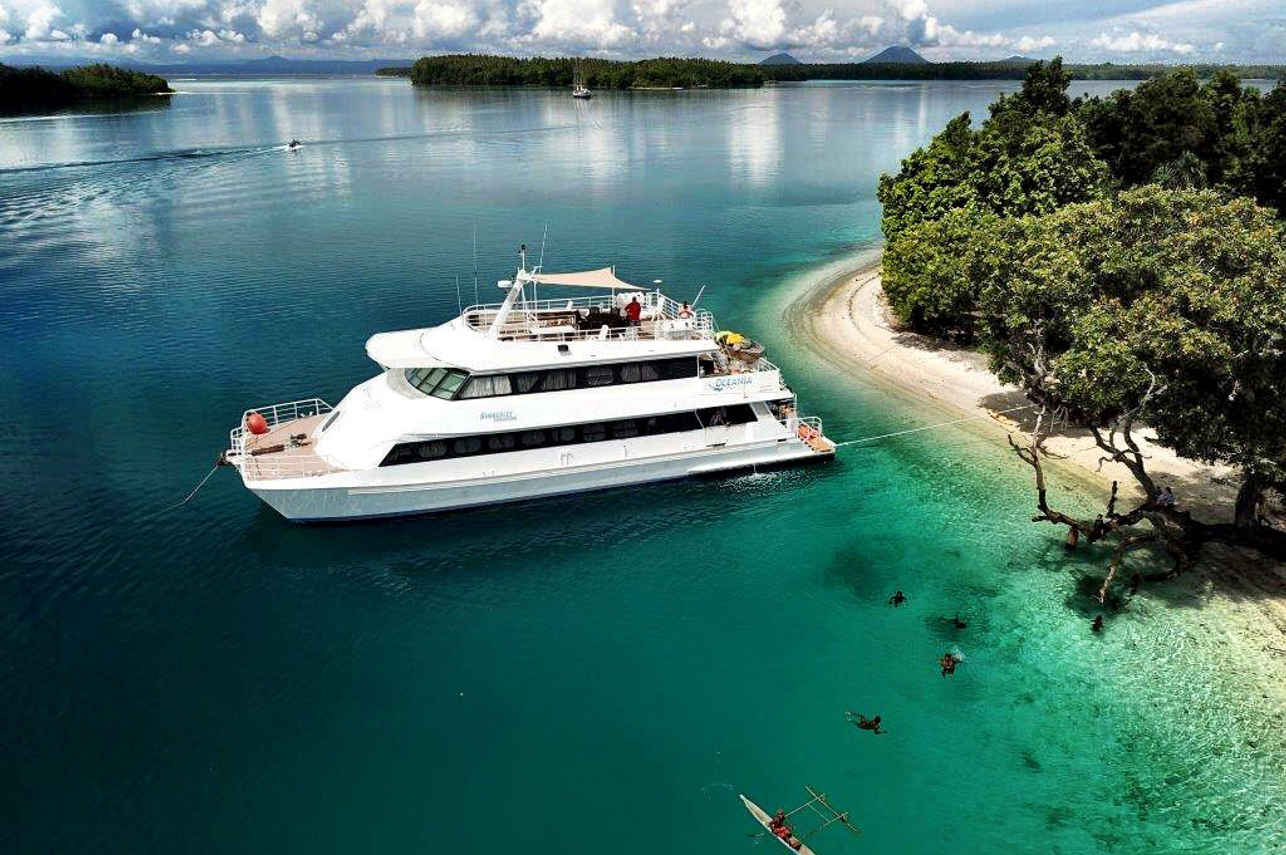
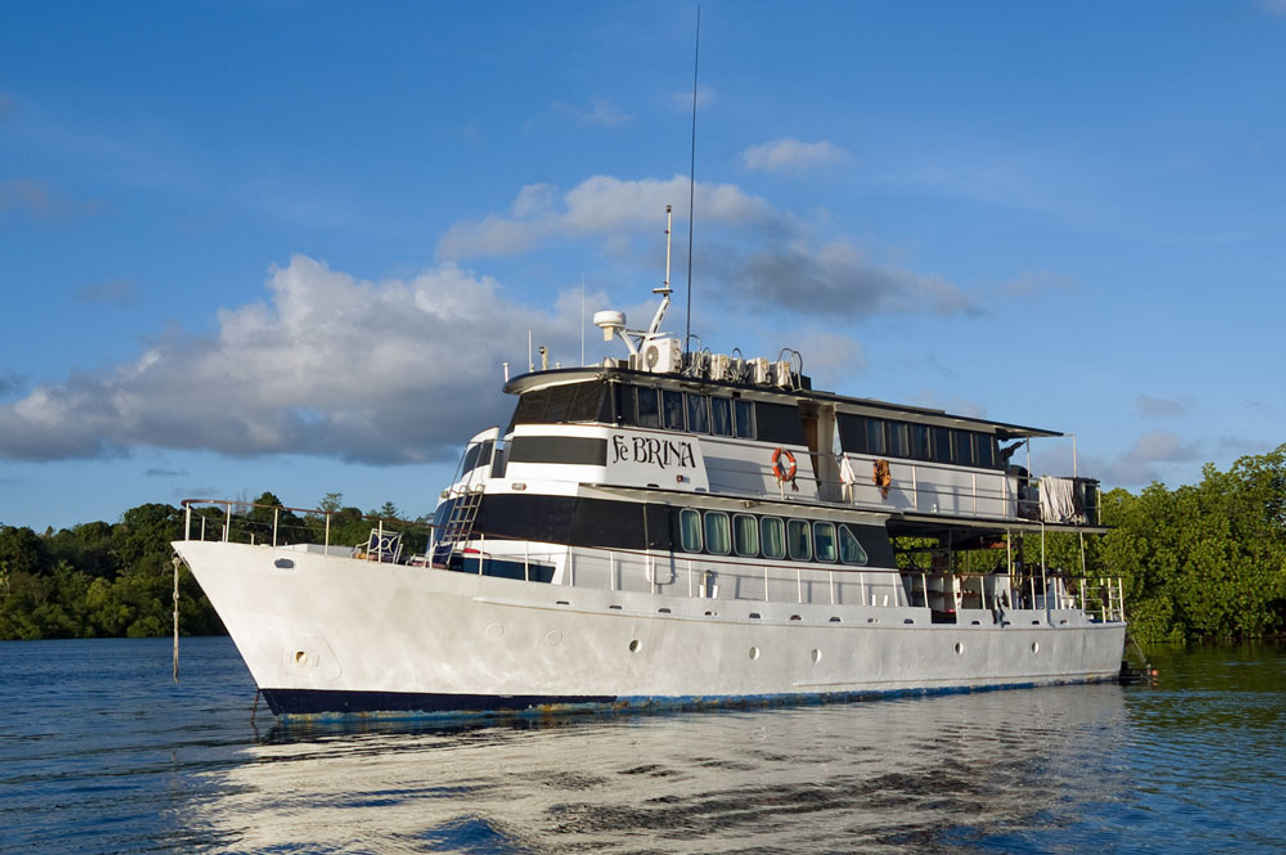
Pacific Gas is one of Papua New Guinea's signature dive sites. A liveaboard sleeps you on the water and puts you in the water for three to four guided dives per day, including dawn and night dives that day-boat operators rarely offer. You skip the daily commute back to port and reach quieter, less-crowded sites in the same region on a single trip.
Below are the liveaboards that include Pacific Gas on their Papua New Guinea itineraries.
Liveaboards diving Pacific Gas
These liveaboards may visit Pacific Gas on selected itineraries — the exact dive sites depend on departure, weather and conditions.
Dive sites similar to Pacific Gas
Same character, same waters — six more sites divers love for the exact same reasons.Compare seasons, access and liveaboard routes — then pick the site that fits your trip best.
© Esri — Maxar, Earthstar, GIS
George's Wreck
Papua New Guinea
George's Wreck is a renowned dive site near Rabaul in Papua New Guinea, famous for its historical significance as a Japanese minelayer that reportedly ran aground after an Allied attack.
- Suitable for
- Advanced
- Current
- Moderate
- Access
- Liveaboard only
- Depth
- 12–60 m
- Theme
- Wreck / Reef
© Esri — Maxar, Earthstar, GIS
Tufi Fjords
Papua New Guinea
Tufi Fjords, nestled on Cape Nelson along Papua New Guinea's northeast coast, offers a unique diving experience in a stunning, tropical fjord-like landscape.
- Suitable for
- Intermediate
- Current
- Strong
- Access
- Liveaboard only
- Depth
- 5–200 m
- Theme
- Muck diving / Reef
© Esri — Maxar, Earthstar, GIS
Henry Leith
Papua New Guinea
The Henry Leith is a compelling wreck dive situated off Madang, Papua New Guinea, specifically on the western side of Wongat Island within the sheltered Madang Lagoon.
- Suitable for
- Intermediate
- Current
- Mild
- Access
- Dayboat
- Depth
- 10–20 m
- Theme
- Wreck / Reef
© Esri — Maxar, Earthstar, GIS
Echuca Patch
Papua New Guinea
Echuca Patch is a prominent patch reef located just outside Kavieng, Papua New Guinea, specifically positioned on the Pacific Ocean side of Kavieng's northern tip, near the mouth of the harbor.
- Suitable for
- Advanced
- Current
- Moderate
- Access
- Liveaboard only
- Depth
- 15–35 m
- Theme
- Reef / Wreck
© Esri — Maxar, Earthstar, GIS
Rapopo Wreck
Papua New Guinea
Rapopo Wreck is a compelling dive site located near Rabaul in Papua New Guinea's East New Britain province.
- Suitable for
- Intermediate
- Current
- Moderate
- Access
- Liveaboard only
- Depth
- 12–23 m
- Theme
- Wreck / Reef
© Esri — Maxar, Earthstar, GIS
Stubborn Hellion
Papua New Guinea
The Stubborn Hellion is a well-documented American B25 Bomber wreck from WWII, located in Papua New Guinea's New Ireland Province.
- Suitable for
- Intermediate
- Current
- Moderate
- Access
- Liveaboard or dayboat
- Depth
- ≤ 12 m
- Theme
- Wreck