About Josie’s Reef
Josie’s Reef is a notable dive site located in Kimbe Bay, Papua New Guinea. This area, known for its exceptional biodiversity and pristine coral formations, is a major highlight along New Britain's northern coast. Kimbe Bay itself is a definitive biodiversity hotspot, home to over two-thirds of all Indo-Pacific fish species, making Josie's Reef a prime example of the rich marine ecosystems found here. The reef features dramatic topography, including lush coral gardens and walls. It is characterized by an incredibly dense concentration of sponges, sea-whips, and diverse coral species. A particularly striking feature of Josie’s Reef is a giant sea-fan, reportedly larger than a bus, adding to the site's unique visual appeal. The dive offers exploration across a depth range, from relatively shallow areas down to 30 meters, revealing different habitats and marine communities. The marine life at Josie's Reef is abundant and varied, reflecting Kimbe Bay's status as a critical ecosystem. Divers can expect to encounter a myriad of tropical fish and invertebrate life, thriving amongst the vibrant coral and sponge cover. While specific seasonality for species at Josie's Reef isn't detailed, Kimbe Bay generally offers consistent marine life throughout the year due to its stable conditions. Access to Josie's Reef is typically managed through dive excursions from land-based resorts, such as Walindi Plantation Resort, which operates daily trips to explore the bay's reefs. It is suitable for Open Water certified divers and above, offering a rich experience for various skill levels without requiring advanced certifications for general exploration. This allows a broad range of divers to appreciate its unique underwater landscape.
Highlights
Giant sea-fan larger than a busDense forest of sponges and sea-whipsVibrant coral formationsRich invertebrate lifeKimbe Bay's high biodiversity
Season calendar
Best months to dive here
Jan
Feb
Mar
Apr
May
Jun
Jul
Aug
Sep
Oct
Nov
Dec
Excellent
Good
Off-Season
May – Oct
Dry season with best visibility up to 30m. Calmer seas ideal for liveaboard expeditions.
Nov – Dec
Transition with increasing plankton attracting pelagics. Still good diving conditions.
Jan – Apr
Wet season with reduced visibility. Some areas remain excellent. Fewer boats and lower prices.
Dive site facts: Josie’s Reef
- Depth
- 10–30 m
- Current
- Moderate
- Entry
- Liveaboard only
- Level
- Beginner
- Dive type
- Reef, Reef
- Region / port
- Papua New Guinea
- Coordinates
- 5.4673° S, 150.1555° E
Conditions & Currents
Moderate currents can run here, so plan drift entries and stay close to the group. Dive profiles here run between roughly 10 and 30 metres, so plan your gas and no-decompression limits around the deeper part of the site. It is usually briefed as a dive for beginner divers. The site is reached by liveaboard, so entries are run from the tender or straight off the back deck. Tide, wind and season all shift the picture from day to day, so the crew's briefing on the boat always overrides any general description.
Why dive Josie’s Reef from a liveaboard?
Josie’s Reef is one of Papua New Guinea's signature dive sites. A liveaboard sleeps you on the water and puts you in the water for three to four guided dives per day, including dawn and night dives that day-boat operators rarely offer. You skip the daily commute back to port and reach quieter, less-crowded sites in the same region on a single trip.
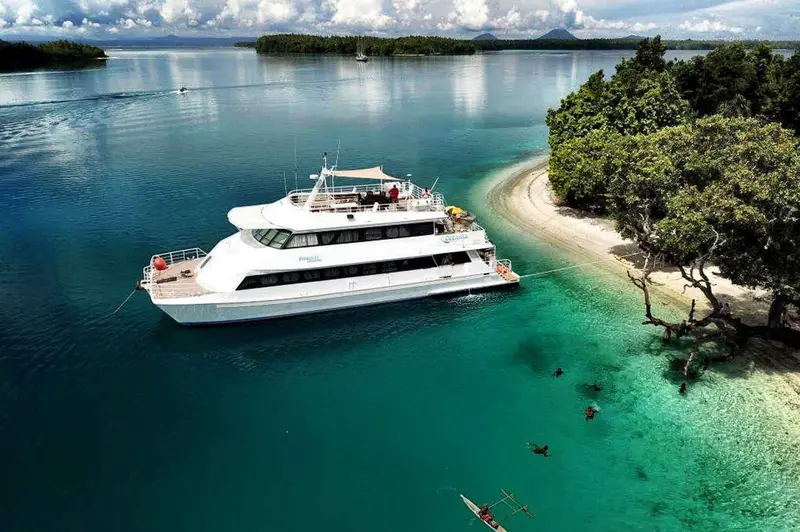
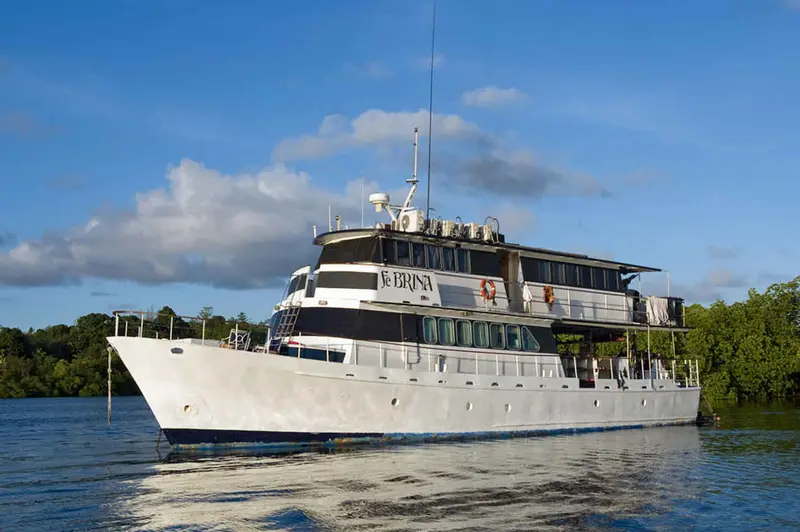
Below are the liveaboards that include Josie’s Reef on their Papua New Guinea itineraries.
Liveaboards diving Josie’s Reef
These liveaboards may visit Josie’s Reef on selected itineraries, the exact dive sites depend on departure, weather and conditions.
Dive sites similar to Josie’s Reef
Same character, same waters, six more sites divers love for the exact same reasons.Compare seasons, access and liveaboard routes, then pick the site that fits your trip best.
Abila is a notable dive site located within the Alor Islands Marine Park, an area celebrated for its rich marine biodiversity due to its position in the Coral Triangle.
- Suitable for
- Beginner
- Current
- Mild
- Access
- Liveaboard only
- Depth
- —
- Theme
- Reef
© EsriMaxar, Earthstar, GIS
Adonara Channel
Alor
Adonara Channel stands as one of Alor's most iconic dive sites, celebrated for its dynamic currents and exceptionally rich biodiversity.
- Suitable for
- Advanced
- Current
- Strong
- Access
- Liveaboard or dayboat
- Depth
- 10–40 m
- Theme
- Drift / Wall
© EsriMaxar, Earthstar, GIS
Adonara Wall
Indonesia
Adonara is an Indonesian island dive site, renowned for its vibrant underwater topography characterized by submerged seamounts.
- Suitable for
- Intermediate
- Current
- Strong
- Access
- Liveaboard or dayboat
- Depth
- 5–35 m
- Theme
- Seamount / Wall
© EsriMaxar, Earthstar, GIS
Agnay Fish Sanctuary
Philippines
Agnay Fish Sanctuary is nestled in a sheltered bay near the village of Agnay in Romblon, a province celebrated for its rich marine biodiversity.
- Suitable for
- Beginner
- Current
- Mild
- Access
- Dayboat
- Depth
- 9–18 m
- Theme
- Reef
© EsriMaxar, Earthstar, GIS
Ai Island Reef
Banda Sea
Ai Island Reef, nestled within the Banda Sea, offers a remarkable diving experience characterized by its rich marine biodiversity and varied underwater topography.
- Suitable for
- Beginner
- Current
- Strong
- Access
- Liveaboard only
- Depth
- 3–30 m
- Theme
- Reef / Seamount
© EsriMaxar, Earthstar, GIS
Akitsushima
Philippines
The Akitsushima is a distinguished World War II Japanese seaplane tender, sunk in September 1944 during an American air raid in Coron Bay, Palawan.
- Suitable for
- Advanced
- Current
- Strong
- Access
- Dayboat
- Depth
- 22–38 m
- Theme
- Wreck