About Coral Corner
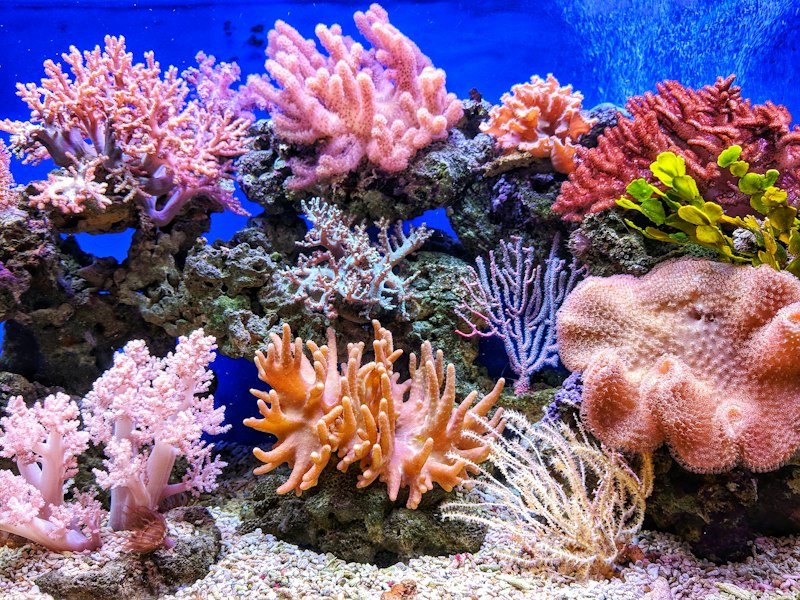
Coral Corner is a distinguished dive site nestled within the Vatu-i-Ra Passage, a region renowned for its breathtaking soft coral displays and abundant marine life. This site is particularly celebrated for its profusion of vibrant corals, forming an underwater landscape that reburns the retinas with its intense colors and healthy growth. The topography features a prominent pinnacle that serves as a focal point for much of the site's beauty, adorned with a stunning variety of hard and soft corals. The Vatu-i-Ra Passage benefits from brisk currents that bring nutrient-rich waters, fueling the spectacular coral gardens and attracting a diverse array of fish life. Divers can expect to encounter large schools of fish, barracuda, and reef sharks, with the site sometimes experiencing a feeding frenzy of queenfish. The dive experience at Coral Corner is dynamic, offering both vibrant reef scenes and opportunities for pelagic sightings in the blue. While diving is possible year-round in Fiji, the dry season from May to October typically offers the best conditions for Coral Corner, with improved visibility and more predictable currents. These months showcase the corals in their full bloom and intensify the chromatic explosion that has earned Fiji its reputation as the "Soft Coral Capital of the World." Exploring Coral Corner typically involves boat dives, often as part of a liveaboard itinerary through the Bligh Waters, allowing divers to immerse themselves in this rich ecosystem. The site promises a captivating dive for those seeking healthy coral ecosystems and diverse marine encounters.
Highlights
Profusion of gorgeous coralsSpectacular pinnacle at 27mSchooling fish encountersDynamic currents, vibrant lifeHealthy hard and soft coralsOccasional pelagic sightings
Season calendar
Best months to dive here
Jan
Feb
Mar
Apr
May
Jun
Jul
Aug
Sep
Oct
Nov
Dec
Excellent
Good
Off-Season
May – Oct
Dry season with best visibility up to 35m. Cooler water brings manta rays. Peak soft coral season.
Apr & Nov
Transition months with good conditions. Fewer tourists and competitive liveaboard rates.
Dec – Mar
Wet season with higher rainfall and reduced visibility. Warmer water. Cyclone season possible.
Dive site facts: Coral Corner
- Depth
- 5–30 m
- Typical dive
- 15–27 m, 45–60 min
- Current
- Moderate to strong
- Visibility
- 20–40 m
- Water temperature
- 25–29°C
- Entry
- Tender / back-roll entry
- Level
- Advanced Open Water, current experience recommended
- Dive type
- Coral reef, wall, drift
- Night dive
- Possible (check with operator)
- Region / port
- Vatu-i-Ra Passage / Bligh Waters
- Coordinates
- -16.8, 177.3833
Conditions & Currents
Currents at Coral Corner can range from mild to strong, driven by the tidal exchanges within the Vatu-i-Ra Passage. These brisk currents are essential for bringing in the nutrients that sustain the site's prolific soft corals and attract schooling fish, making for dynamic dives. Divers should anticipate drift conditions and possess solid buoyancy control and experience in current diving. Entry is typically a back-roll from a tender, with exit requiring careful boat maneuvering to pick up divers down-current. Visibility can be exceptional, peaking in the dry season, but plankton blooms during warmer months can reduce clarity while attracting filter feeders. No significant thermoclines or surge are typically reported for this site, but boat traffic from liveaboards is common.
Marine life & sighting chances
Soft corals
Year-round, best May–Oct · common
Hard corals
Year-round · common
Fairy basslets
Year-round · common
Jacks
Year-round · occasional
Dogtooth tuna
Year-round · occasional
Fusiliers
Year-round · common
Barracuda
Year-round · occasional
Reef sharks
Year-round · occasional
Queenfish
Year-round · occasional
Sea fans
Year-round · common
Crinoids
Year-round · commonWhip corals
Year-round · commonDive profile & how the dive runs
Dives at Coral Corner typically begin with a back-roll entry from a tender, often into an area with moderate current. The initial descent targets the vibrant pinnacle, where the most profuse coral growth is found, starting around 15 meters and extending to depths of 27 meters or more. Divers will navigate around the pinnacle, allowing the current to carry them along its richly decorated walls, observing the dense concentrations of soft and hard corals. The route generally follows the reef structure, exploring ledges and overhangs where smaller reef fish congregate. As the dive progresses, attention shifts to the blue for potential sightings of schooling fish and pelagics. The turn point is usually dictated by air consumption and bottom time, with an ascent along the reef toward shallower areas for a gradual safety stop in the vibrant coral gardens, before signaling the tender for pickup down-current.
Underwater photography
Coral Corner is a paradise for wide-angle photographers due to its spectacular soft coral displays and schooling fish. During the dry season (May-Oct), clear visibility and strong sunlight amplify the fluorescent hues of the corals; consider using dual strobes to enhance color and depth in your shots. A wide-angle lens is essential to capture the expansive reefscapes and the full glory of the pinnacle. For closer encounters with smaller reef fish amidst the corals, a macro lens can be rewarding, especially for capturing detailed shots of the intricate coral polyps. Buoyancy control is paramount, particularly in currents, to avoid damaging the delicate corals. Be mindful of your fin kicks and maintain a respectful distance from marine life.
Combine with nearby dive sites
- Mellow Yellow Reef
Another site in the Vatu-i-Ra Passage known for its spectacular soft corals and pelagic action.
- Maytag
A site famous for its tempestuous currents and large baitballs of queenfish.
- E6
A seamount in Bligh Water, offering diverse marine life and pelagic sightings.
- Namena Marine Reserve
A protected area accessible by liveaboard, offering pristine reefs and abundant biodiversity.
Getting there & logistics
Access to Coral Corner is primarily via liveaboards operating in the Bligh Water region, which typically depart from ports like Lautoka or Suva. Divers usually fly into Nadi International Airport (NAN), Fiji's main gateway, and then transfer to their liveaboard. Trip lengths for these itineraries often range from 7 to 10 days, allowing for comprehensive exploration of multiple dive sites in the Vatu-i-Ra Passage and surrounding areas. While specific fees for Coral Corner are usually included in liveaboard packages, divers should expect to pay marine park fees for protected areas like Namena, if included in their itinerary. It's advisable to factor in a buffer day for arrival in Nadi due to potential domestic flight delays or transfer complexities.
Safety & environment
Diving at Coral Corner, with its potential for moderate to strong currents, requires divers to have good physical fitness, experience with drift diving, and excellent buoyancy control. Always dive with a surface marker buoy (SMB) for easier retrieval by the tender boat. Divers Alert Network (DAN) insurance or equivalent comprehensive dive insurance is highly recommended, as emergency medical services and recompression chambers are limited to major population centers, such as Suva. Evacuation from remote dive sites to a medical facility can be time-consuming and expensive. Follow your dive guide's instructions closely, especially regarding entry and exit procedures, and maintain adequate air supply for current conditions. Ensure all gear is in excellent working order.
Who it suits, and who it doesn't
Suited for
- Advanced Open Water divers with current experience
- Underwater photographers seeking vibrant reefscapes
- Divers interested in diverse soft coral ecosystems
- Liveaboard enthusiasts
- Those who enjoy dynamic drift dives
Less suited for
- Beginner divers without current experience
- Divers uncomfortable with strong currents
- Individuals prone to seasickness on liveaboards
- Those preferring calm, current-free environments
- Divers with limited buoyancy control skills
FAQ
Coral Corner FAQ
What kind of coral can I expect to see at Coral Corner?
Coral Corner lives up to its name with an extraordinary abundance of both hard and soft corals. The site is particularly famous for its profusion of colorful soft corals, which are sustained by the nutrient-rich currents of the Vatu-i-Ra Passage, creating a stunning visual display. You will encounter vibrant sea fans, crinoids, and whip corals, alongside diverse hard coral formations.
Are there strong currents at Coral Corner?
Yes, Coral Corner can experience moderate to strong currents. These currents are a key feature of the site, as they bring in nutrients that support the thriving coral gardens and attract large schools of fish. Divers should be comfortable with drift diving and possess good buoyancy control to fully enjoy the experience.
What marine life can be seen besides corals?
Beyond its spectacular corals, Coral Corner is home to a rich array of marine life. You can expect to see large schools of fusiliers, fairy basslets, jacks, and dogtooth tuna. Occasional sightings of barracuda and reef sharks add to the excitement. The site sometimes features queenfish frenzies, creating a dynamic underwater spectacle.
Is Coral Corner suitable for beginner divers?
Coral Corner is generally recommended for Advanced Open Water divers with prior experience in current diving. The presence of moderate to strong currents and the depth of the pinnacle make it less suitable for beginners or those not yet comfortable with drift conditions. Excellent buoyancy control is essential to navigate the site safely and avoid damaging the delicate corals.
How is Coral Corner typically accessed?
This dive site is predominantly accessed via liveaboard trips that explore Fiji's Bligh Waters and Vatu-i-Ra Passage. Liveaboards provide the best way to reach this somewhat remote location and combine it with other renowned sites in the region. Divers usually board their liveaboard from major ports after flying into Nadi International Airport.
When is the best time of year to dive Coral Corner for optimal visibility?
The best time for optimal visibility at Coral Corner is during Fiji's dry season, which runs from May to October. During these months, the waters are typically clearer, often exceeding 30 meters of visibility, and the currents are generally more predictable, enhancing the diving experience and allowing for excellent wide-angle photography of the vibrant coral reefs.
Why dive Coral Corner from a liveaboard?
Coral Corner is one of Fiji's signature dive sites. A liveaboard sleeps you on the water and puts you in the water for three to four guided dives per day, including dawn and night dives that day-boat operators rarely offer. You skip the daily commute back to port and reach quieter, less-crowded sites in the same region on a single trip.
Below are the liveaboards that include Coral Corner on their Fiji itineraries.
Liveaboards diving Coral Corner
These liveaboards may visit Coral Corner on selected itineraries, the exact dive sites depend on departure, weather and conditions.

Nai'a
Fiji
16 guests37 m
Dive sites similar to Coral Corner
Same character, same waters, six more sites divers love for the exact same reasons.Compare seasons, access and liveaboard routes, then pick the site that fits your trip best.
© EsriMaxar, Earthstar, GIS
Agincourt Reef
Australia
Agincourt Reef sits on the outer edge of the Great Barrier Reef, roughly 60–72 km off Port Douglas in Far North Queensland, at the southern end of the true ribbon reefs that run…
- Suitable for
- Beginner
- Current
- Moderate
- Access
- Dayboat
- Depth
- 2–20 m
- Theme
- Reef / Wall
Ahe Atoll, a remote and authentic destination in French Polynesia, offers a dive experience deeply intertwined with its local pearl farming community.
- Suitable for
- Advanced
- Current
- Strong
- Access
- Liveaboard or dayboat
- Depth
- 5–22 m
- Theme
- Channel / Drift
© EsriMaxar, Earthstar, GIS
Alacrity Shoal
Fiji
Alacrity Shoal is a premier dive site in Fiji, renowned for its spectacular drift diving opportunities and rich marine biodiversity.
- Suitable for
- Advanced
- Current
- Strong
- Access
- Liveaboard or dayboat
- Depth
- 12–40 m
- Theme
- Drift / Seamount
Alibaba is a renowned drift dive located within the Garuae Pass in northern Fakarava, a UNESCO Biosphere Reserve in the Tuamotu Archipelago.
- Suitable for
- Intermediate
- Current
- Strong
- Access
- Liveaboard only
- Depth
- 5–30 m
- Theme
- Reef
© EsriMaxar, Earthstar, GIS
Aliko Reef
Micronesia
Aliko Reef is a prominent dive site within Yap, Micronesia, characterized by a captivating underwater topography that blends a mini-wall with an expansive coral plateau.
- Suitable for
- Intermediate
- Current
- Mild
- Access
- Dayboat
- Depth
- 6–15 m
- Theme
- Reef / Wall
© EsriMaxar, Earthstar, GIS
Amity Point
Australia
Amity Point is a popular shore diving destination located at the northwestern tip of North Stradbroke Island, within the protected waters of Moreton Bay.
- Suitable for
- Beginner
- Current
- Moderate
- Access
- Shore / dayboat
- Depth
- 5–15 m
- Theme
- Reef