About USS Merrimac Wreck
The USS Merrimac, a former coal ship, holds a significant place in naval history as a blockship from the 1898 Spanish-American War. Deliberately sunk to obstruct the entrance to Santiago de Cuba Bay, this 98-meter long vessel now lies at depths ranging from 19 to 23 meters. Its mid-channel location within the bay means divers can experience moderate to strong currents, offering a dynamic dive for those with experience. The wreck is part of the "Underwater Archaeological Park Naval Battle of Santiago de Cuba," a designated National Monument, preserving the material evidence of the conflict alongside thriving marine ecosystems. Over a century underwater, the Merrimac has transformed into a vibrant artificial reef. Its iron structures, artillery sites, and propulsion system components are now intertwined with sessile fauna and marine flora, creating a unique symbiotic environment. This site not only provides an exceptional opportunity to explore a historical artifact but also to witness the natural process of reef formation and the diverse species that call it home. Despite its historical context, the Merrimac is now a living marine citadel, attracting both history enthusiasts and marine life observers. Diving the Merrimac is typically done from Punta Gorda, a short boat ride away. While initial visibility near the surface can be affected by boat traffic, it significantly improves as you descend past 5 meters, offering clear views of the wreck and its inhabitants. The site requires careful dive planning due to the currents, making it best suited for divers who are comfortable with such conditions. It's a privilege to explore this exceptional witness to a pivotal moment in universal history, now a treasure of underwater cultural heritage.
Highlights
1898 Spanish-American War blockshipUnderwater Archaeological ParkHistorical naval artifactArtificial reef ecosystemDiverse marine life on wreckDynamic current conditionsDepths 19-23 metersShort boat ride from Punta Gorda
Season calendar
Best months to dive here
Jan
Feb
Mar
Apr
May
Jun
Jul
Aug
Sep
Oct
Nov
Dec
Good
Dive site facts: USS Merrimac Wreck
- Depth
- 19–23 m
- Current
- Moderate to strong
- Visibility
- 10–15 m (below 5 m depth)
- Water temperature
- 25–30 °C
- Entry
- Boat / negative entry
- Level
- Experienced divers
- Dive type
- Wreck, historical
- Region / port
- Santiago de Cuba
- Coordinates
- 19.965, -75.855
Conditions & Currents
The USS Merrimac is situated mid-channel within the entrance to Santiago de Cuba Bay, which means it is regularly exposed to moderate to strong currents. These currents can fluctuate, requiring divers to be experienced and maintain good buoyancy control throughout the dive. Entry and exit strategies are typically managed by the dive boat, often involving a negative entry to reach the wreck quickly, minimizing surface drift in potentially busy waters. Visibility can be limited to 10-15 meters due to harbor boat traffic in the initial 5 meters of descent, but it generally clears up significantly below that depth, offering good views of the wreck. Divers should be prepared for varying current strengths and plan their gas consumption accordingly, as navigating against a strong current can deplete air faster. A dive briefing will emphasize current awareness and safe navigation around the wrec
Marine life & sighting chances

Moray eels
occasional
Snappers
occasional
Groupers
occasional
Barracudas
occasional
Nurse sharks
rare
Eagle rays
rare
Tarpons
rare
Sponges
common
Gorgonians
common
Coral species
commonDive profile & how the dive runs
Diving the USS Merrimac typically begins with a short boat ride from Punta Gorda. Upon arrival at the dive site, a negative entry is often employed to quickly descend past the initial 5 meters, where visibility can be lower due to harbor activity. Divers will follow a descent line directly to the wreck, which rests at varying depths from 19 meters at the bow to 23 meters at the stern. The dive generally involves circumnavigating the 98-meter-long vessel, exploring its exterior features, including the intact structures and any remaining artillery. Due to potential currents, it is advisable to plan the dive to start against the current and drift back towards the boat, allowing for an easier return. Turnaround points are usually based on air consumption, with a planned safety stop at 5 meters. Ascent is made along the descent line or a dedicated safety stop line, maintaining awareness of boat traffic above.
Underwater photography
The USS Merrimac wreck offers excellent opportunities for underwater photography, particularly for wide-angle shots to capture the full scale of the 98-meter vessel and its historical context. Its designation as an archaeological park, coupled with the dense marine growth, creates compelling subjects. Given the potential for moderate to strong currents, stable buoyancy and positioning are crucial for sharp images; consider using strobes to bring out the vibrant colors of corals and fish that have colonized the wreck. Macro photography can also be rewarding, focusing on the smaller marine life, such as nudibranchs or crabs, that inhabit the wreck's nooks and crannies. Pay attention to the initial visibility issues in the top 5 meters due to boat traffic; plan your shots for deeper sections where the water clears. Be mindful of ethical photography practices, avoiding disturbance to marine life or historical artifacts.
Combine with nearby dive sites
Getting there & logistics
Access to the USS Merrimac is primarily through dive operators based in Santiago de Cuba, with departures from Punta Gorda, just a 5-minute boat ride from the dive site. Most international flights arrive at José Martí International Airport (HAV) in Havana, requiring a connecting domestic flight or a longer overland journey to Santiago de Cuba. Alternatively, Antonio Maceo Airport (SCU) in Santiago de Cuba offers direct international connections from some Caribbean and Latin American cities. Diving the Merrimac is often part of a multi-day dive package focusing on the historical wrecks of the Santiago de Cuba region. There are no specific park fees mentioned for diving this site, but dive operator costs will include boat fees and guide services. Given the wreck's location and currents, it is best visited with an experienced local guide.
Safety & environment
Diving the USS Merrimac requires adherence to strict safety protocols due to the currents in the channel and its wreck diving nature. Divers must carry appropriate dive insurance that covers emergency medical treatment and evacuation, as recompression chambers in Cuba can be limited and evacuation to another country might be necessary in severe cases. The nearest recompression chamber is in Havana, several hours away, highlighting the importance of preventative safety. Site-specific hazards include strong currents, potential entanglement risks from loose lines or debris on the wreck, and limited visibility in the upper water column due to boat traffic. It is crucial to follow the dive guide's instructions, maintain excellent buoyancy, and avoid penetration of the wreck unless specifically trained and equipped for such dives. Always dive with a buddy and ensure all equipment is in good working order.
Who it suits — and who it doesn't
Suited for
- Experienced open water divers
- Wreck diving enthusiasts
- History buffs
- Underwater photographers
- Divers comfortable with currents
Less suited for
- Beginner divers
- Divers without current experience
- Those prone to seasickness
- Divers seeking pristine coral reefs
- Individuals without appropriate wreck training for penetration
FAQ
USS Merrimac Wreck FAQ
What is the historical significance of the USS Merrimac?
The USS Merrimac was a coal ship deliberately sunk in 1898 during the Spanish-American War as a blockship at the entrance to Santiago de Cuba Bay. Its mission was to trap the Spanish fleet inside, playing a pivotal role in the naval battle that ended Spanish colonial rule in America. The wreck is now part of an Underwater Archaeological Park, recognized as a National Monument.
What kind of marine life can be seen on the USS Merrimac wreck?
Over a century underwater, the Merrimac has transformed into a vibrant artificial reef. Divers can observe a variety of marine life, including sponges, gorgonians, and various coral species that have colonized the wreck. Fish like moray eels, snappers, groupers, and barracudas are occasionally spotted, with rarer sightings of nurse sharks and eagle rays.
Are there strong currents at the USS Merrimac dive site?
Yes, due to its mid-channel location at the entrance to Santiago de Cuba Bay, the USS Merrimac can experience moderate to strong currents. Divers should be experienced and comfortable with drift diving or navigating in current. The dive guide will provide a briefing on current conditions and the best approach for the dive.
What is the typical depth and visibility for diving the Merrimac?
The USS Merrimac wreck rests at depths ranging from 19 meters at the bow to 23 meters at the stern. Visibility in the immediate vicinity of the wreck typically ranges from 10 to 15 meters, though it can be poorer in the top 5 meters due to boat traffic in the harbor. The water generally clears up significantly once below the initial surface layer.
Is wreck penetration allowed on the USS Merrimac?
The USS Merrimac is an historical wreck site, and while its exterior is extensively explored, penetration is generally not encouraged or permitted for recreational divers. The wreck is a complex structure, and for safety, any interior exploration requires specialized wreck diving training and equipment, which is typically beyond recreational limits. Divers should always follow their guide's instructions regarding penetration.
Why dive USS Merrimac Wreck from a liveaboard?
USS Merrimac Wreck is one of Cuba's signature dive sites. A liveaboard sleeps you on the water and puts you in the water for three to four guided dives per day, including dawn and night dives that day-boat operators rarely offer. You skip the daily commute back to port and reach quieter, less-crowded sites in the same region on a single trip.
Below are the liveaboards that include USS Merrimac Wreck on their Cuba itineraries.
Liveaboards diving USS Merrimac Wreck
These liveaboards may visit USS Merrimac Wreck on selected itineraries — the exact dive sites depend on departure, weather and conditions.
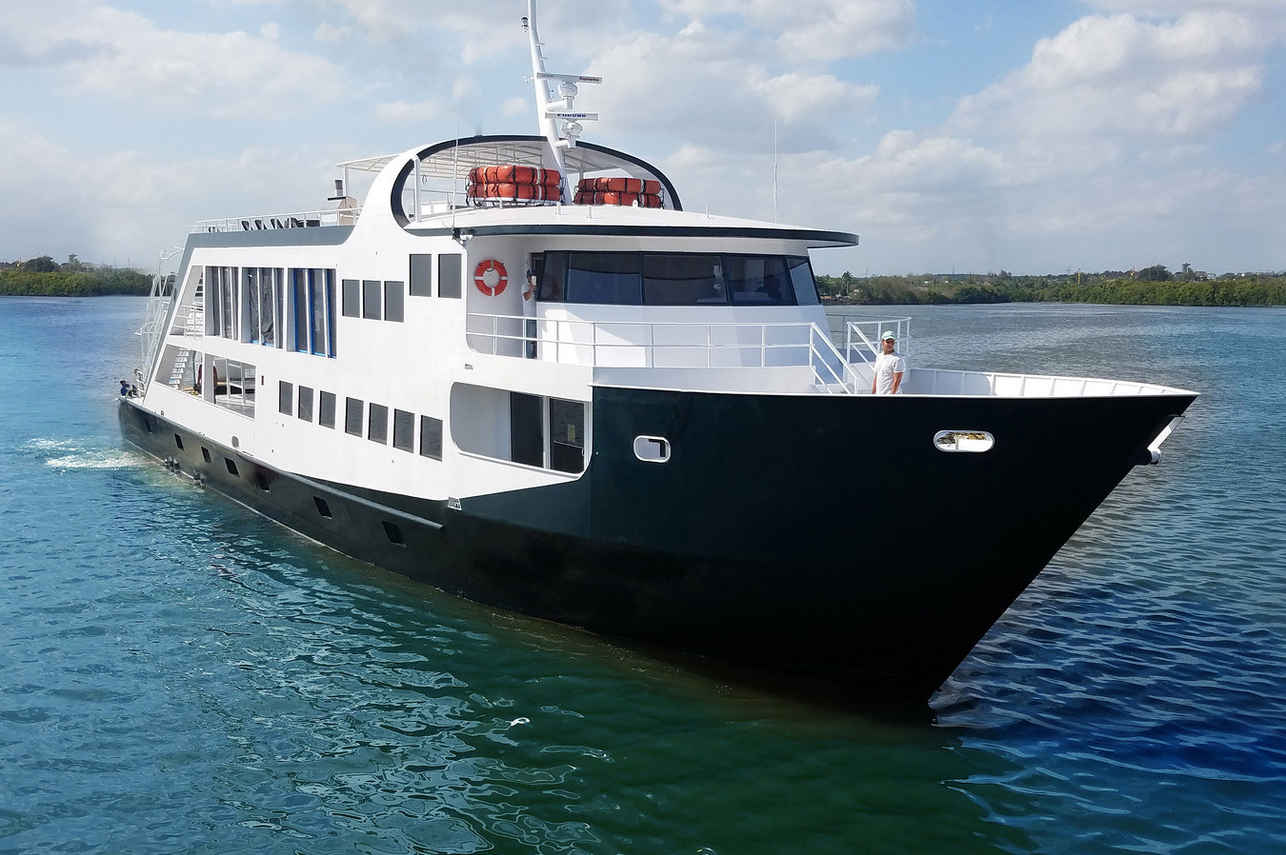
Jardines Avalon Fleet
Cuba
20 guests35.05 m
$494/day
Dive sites similar to USS Merrimac Wreck
Same character, same waters — six more sites divers love for the exact same reasons.Compare seasons, access and liveaboard routes — then pick the site that fits your trip best.
© Esri — Maxar, Earthstar, GIS
Silver Caves
Belize
Silver Caves offers a distinctive diving experience within the Lighthouse Reef Atoll, one of Belize's healthiest reef systems.
- Suitable for
- Advanced
- Current
- Mild
- Access
- Liveaboard only
- Depth
- 18–28 m
- Theme
- Reef / Cave & cavern
Cozumel's western coast features a dramatic reef shelf that plunges thousands of feet into the ocean.
- Suitable for
- Intermediate
- Current
- Mild
- Access
- Liveaboard or dayboat
- Depth
- 15–27 m
- Theme
- Reef
© Esri — Maxar, Earthstar, GIS
North Wall
Cayman Islands
The North Wall of Grand Cayman stands as one of the most celebrated and visually striking dive regions, stretching along the island's northern coastline.
- Suitable for
- Advanced
- Current
- Mild
- Access
- Liveaboard or dayboat
- Depth
- 50–100 m
- Theme
- Reef
© Esri — Maxar, Earthstar, GIS
Lighthouse Reef
Cayman Islands
Lighthouse Reef, situated near the West End dock of Cayman Brac, provides a distinctive shallow reef diving experience.
- Suitable for
- Beginner
- Current
- Strong
- Access
- Shore / dayboat
- Depth
- 10–25 m
- Theme
- Reef
© Esri — Maxar, Earthstar, GIS
Long Caye Ridge
Belize
Long Caye Ridge is a highly-rated dive site situated within Belize's Lighthouse Reef Atoll, an area renowned for its pristine conditions due to its distance from the mainland.
- Suitable for
- Intermediate
- Current
- No current
- Access
- Liveaboard only
- Depth
- 21–21 m
- Theme
- Reef
Roatán, part of the Bay Islands of Honduras, offers a diverse underwater landscape situated along the Mesoamerican Barrier Reef System, which is the second largest barrier reef globally.
- Suitable for
- Intermediate
- Current
- Moderate
- Access
- Liveaboard or dayboat
- Depth
- 9–40 m
- Theme
- Reef