About La Muela
La Muela, often referred to as 'Molar Tooth', is a distinctive rock formation emerging from Refugio Bay on the northern side of Angel Island within Mexico's Sea of Cortez. This site serves as an excellent introduction to the region's underwater environment, often utilized for initial check-out dives for liveaboard guests. Its shallow depths make it accessible and enjoyable for a wide range of divers. The topography around La Muela consists of a rocky bottom providing diverse habitats. While primarily known for its shallow check-out opportunities, the surrounding areas of Angel Island feature walls covered in gorgonians and hydroids, alongside numerous rock outcroppings, bays, and coves. The site is a microcosm of the rich biodiversity found in this part of the Sea of Cortez. Marine life here includes a variety of macro subjects such as bluespotted jawfish, which inhabit burrows in the rocky substrate, and several species of stingrays. Fine spotted moray eels are also commonly sighted. The broader Angel Island area is frequented by California sea lions, and pelagic species like whale sharks, sperm whales, pilot whales, dolphins, manta, and mobula rays can be encountered seasonally. Diving La Muela typically involves boat access, often from a liveaboard exploring the Midriff Islands. The conditions are generally calm, making it a comfortable dive. It’s an ideal spot to adjust gear and buoyancy while observing the thriving marine community in relatively shallow, protected waters.
Highlights
Refugio Bay rock formationShallow check-out diveBluespotted jawfishVariety of stingraysFine spotted moray eelsCalifornia sea lion encountersDiverse rocky reefMidriff Islands access
Best Season
The optimal time to dive La Muela and the surrounding Angel Island area is from July through early October. During these months, liveaboard trips operate, and whale sharks are commonly seen from late July through September. Warm water temperatures and generally calm conditions enhance the diving experience.
Dive site facts: La Muela
- Depth
- Shallow, suitable for check-out dives
- Current
- Mild
- Entry
- Skiff / Tender
- Level
- Beginner
- Dive type
- Reef, macro, marine life
- Region / port
- Sea of Cortez, Mexico
- Coordinates
- 21.7047° N, 80.4396° W
Conditions & Currents
Conditions at La Muela are typically serene, making it suitable for check-out dives and less experienced divers. The site is located within Refugio Bay, a protected anchorage at the northern end of Angel Island, which generally shields it from strong ocean currents. While the broader Sea of Cortez can experience varying current strengths, this specific bay usually offers calm waters. Visibility is often excellent, especially during the summer and fall months, enhancing the viewing of macro life and reef inhabitants. Entry is typically from a skiff or tender, allowing divers to easily access the site's shallow rocky bottom without significant current challenges.
Marine life & sighting chances

Bluespotted jawfish
common
Stingrays
common
Fine spotted moray eel
common
California sea lion
July-September · common
Whale shark
Late July-September · occasional
Gorgonians
common
Hydroids
common
Bullseye electric ray
occasional
Seahorses
rare
Barracuda
occasional
Manta ray
June-September · occasional
Mobula ray
May-July · occasionalDive profile & how the dive runs
A dive at La Muela typically begins with a skiff transfer from a liveaboard, followed by a straightforward entry into Refugio Bay's calm waters. The dive proceeds along the rocky bottom surrounding the La Muela rock formation, focusing on shallow depths ideal for buoyancy checks and gear adjustments. Divers explore the burrows and crevices for macro life such as bluespotted jawfish and fine spotted moray eels, while observing various stingrays on the substrate. The route is generally relaxed, allowing ample time for observation of the diverse reef ecosystem. The dive concludes with a gradual ascent from the shallow depths, followed by a safety stop. Exit is typically back to the waiting skiff.
Underwater photography
La Muela is well-suited for macro photography, especially with its resident bluespotted jawfish often found peeking from their burrows. A macro lens will capture intricate details of these shy subjects, as well as the various stingrays and moray eels encountered. Wide-angle photography can also be effective if California sea lions are present, capturing their playful interactions against the rocky reef backdrop. Natural light is often sufficient in the shallow, clear waters, but external strobes or video lights will enhance color and detail, particularly in shaded areas or for macro subjects. Practice good buoyancy to avoid disturbing the fragile habitats.
Getting there & logistics
Access to La Muela is typically part of a liveaboard itinerary exploring the Midriff Islands of the Sea of Cortez. Trips commonly run from Saturday to Saturday, including multiple days of diving. Passengers often embark from Puerto Peñasco, Mexico, after transferring from Phoenix Sky Harbor International Airport in Arizona. These liveaboard expeditions provide a comprehensive diving experience, combining La Muela's introductory dives with explorations of other sites along Angel Island, offering opportunities for both reef diving and encounters with pelagic species like whale sharks and sea lions.
Safety & environment
While La Muela is a relatively shallow and calm dive site, general dive safety protocols apply. Divers should ensure their equipment is in good working order, perform buddy checks, and maintain conservative dive profiles. The nearest recompression chamber would be in larger population centers like La Paz or Puerto Peñasco, requiring significant evacuation time in an emergency. Therefore, comprehensive dive insurance covering medical emergencies and evacuation is crucial. Divers should be mindful of their surroundings, particularly when sea lions are present, to observe without disturbing. All liveaboards will have trained dive masters to lead dives and assist divers, ensuring safe conduct throughout the trip.
Who it suits — and who it doesn't
Suited for
- Newly certified divers
- Divers needing a check-out dive
- Macro photography enthusiasts
- Divers seeking calm, shallow conditions
- Marine life observers
Less suited for
- Divers seeking strong current drift dives
- Those primarily interested in very deep wreck exploration
- Divers looking for extreme adrenaline dives
FAQ
La Muela FAQ
What kind of marine life can I expect to see at La Muela?
At La Muela, you can commonly observe bluespotted jawfish peeking from their burrows in the rocky substrate, along with several species of stingrays resting on the bottom. Fine spotted moray eels are also frequent inhabitants of the site. If you're fortunate, you might encounter playful California sea lions in the wider Refugio Bay area.
Is La Muela suitable for beginner divers?
Yes, La Muela is an excellent site for beginner divers and often serves as a check-out dive location for liveaboard trips. Its shallow depths and typically calm conditions within Refugio Bay provide a comfortable and safe environment for practicing skills and enjoying the marine life without the challenge of strong currents or complex topography.
How do divers access La Muela?
La Muela is primarily accessed by skiff or tender from a liveaboard boat. The site is located in the Sea of Cortez, off Angel Island, which is part of multi-day dive expeditions. Divers usually board their liveaboard in ports like Puerto Peñasco, and from there, small boats transport them to the dive site.
Are there opportunities for unique animal encounters near La Muela?
Yes, the broader Angel Island region and the Sea of Cortez offer many unique encounters. While La Muela itself is known for its reef life, during specific seasons you can snorkel with whale sharks, or dive with large pelagic species such as manta rays, mobula rays, and even various whale species like pilot whales or sperm whales as part of a liveaboard itinerary.
What are the typical conditions like at La Muela?
La Muela typically features calm water conditions due to its location in the protected Refugio Bay. Visibility is often very good, allowing clear views of the rocky bottom and its inhabitants. Water temperatures vary seasonally but are generally warm during the peak diving months from July through October, making for comfortable dives.
Why dive La Muela from a liveaboard?
La Muela is one of Cuba's signature dive sites. A liveaboard sleeps you on the water and puts you in the water for three to four guided dives per day, including dawn and night dives that day-boat operators rarely offer. You skip the daily commute back to port and reach quieter, less-crowded sites in the same region on a single trip.
Below are the liveaboards that include La Muela on their Cuba itineraries.
Liveaboards diving La Muela
These liveaboards may visit La Muela on selected itineraries — the exact dive sites depend on departure, weather and conditions.
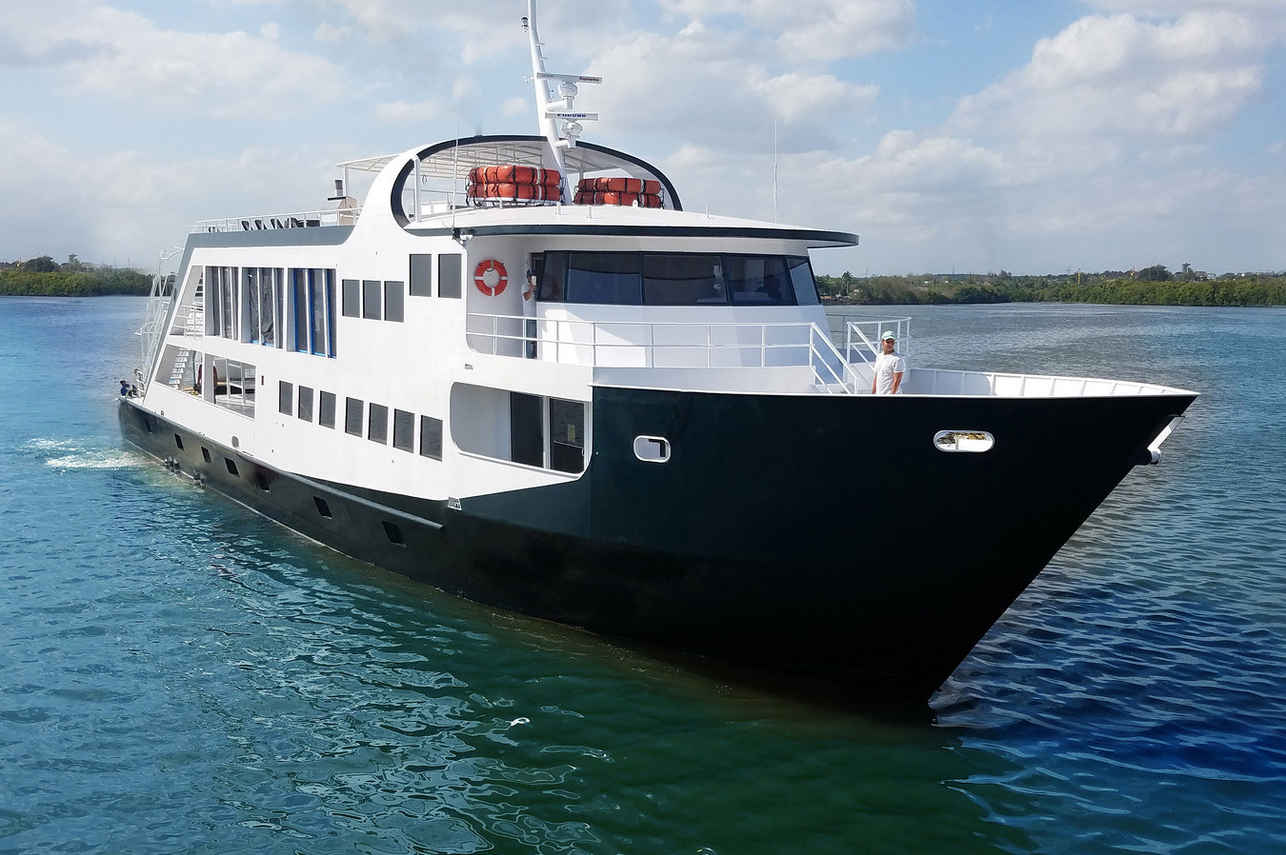
Jardines Avalon Fleet
Cuba
20 guests35.05 m
$494/day
Dive sites similar to La Muela
Same character, same waters — six more sites divers love for the exact same reasons.Compare seasons, access and liveaboard routes — then pick the site that fits your trip best.
© Esri — Maxar, Earthstar, GIS
El Almirante
Cuba
El Almirante is an advanced dive site located off the shores of Maria la Gorda, on Cuba's Guanahacabibes Peninsula.
- Suitable for
- Advanced
- Current
- Moderate
- Access
- Dayboat
- Depth
- 27–30 m
- Theme
- Wall / Reef
La Patana is a prominent dive site within the protected marine park of Jardines de la Reina, a vast archipelago stretching 150 kilometers off Cuba's southern coast.
- Suitable for
- Intermediate
- Current
- Mild
- Access
- Liveaboard only
- Depth
- 15–30 m
- Theme
- Reef / Wall
© Esri — Maxar, Earthstar, GIS
Arrecife Somero
Cuba
Arrecife Somero, located near Key Sigua within the UNESCO-recognized Zapata Swamp biosphere reserve, presents a unique reef crest forming a horseshoe shape.
- Suitable for
- Beginner
- Current
- Mild
- Access
- Liveaboard only
- Depth
- 2–5 m
- Theme
- Reef
© Esri — Maxar, Earthstar, GIS
Puente Escondido
Cuba
Puente Escondido is a notable dive site nestled within the Jardines de la Reina marine park, an expansive and highly protected area off Cuba's southern coast.
- Suitable for
- Beginner
- Current
- Mild
- Access
- Liveaboard only
- Depth
- ≤ 18 m
- Theme
- Reef
La Corona is a captivating dive site situated within the expansive 35-kilometer barrier reef off Playa Santa Lucía in Cuba's Camagüey province.
- Suitable for
- Beginner
- Current
- Mild
- Access
- Dayboat
- Depth
- 5–40 m
- Theme
- Reef / Wall
© Esri — Maxar, Earthstar, GIS
Cueva del Negro
Cuba
Cueva del Negro is a notable dive site located near Cayo Largo, an island off Cuba's southern coast, known for its extensive underwater features.
- Suitable for
- Intermediate
- Current
- No current
- Access
- Liveaboard or dayboat
- Depth
- 8–8 m
- Theme
- Reef