About Filipe's Reef
Filipe's Reef is a dive site located within the renowned Naiqoro Passage, a prominent feature of Fiji's expansive Great Astrolabe Reef in the Kadavu region. This area is celebrated for its dynamic channel diving, offering divers a vibrant experience within a robust marine ecosystem. The passage is characterized by dramatic walls and gently sloping reefs, all richly adorned with prolific soft coral growth. These nutrient-rich waters contribute to the stunning visual appeal of the reef, creating an underwater landscape filled with diverse life. The topography facilitates thrilling drift dives, allowing divers to navigate effortlessly through the channel while observing the bustling environment. Depths at Naiqoro Passage, where Filipe's Reef is situated, typically range from 15 to 30 meters. Marine encounters are abundant year-round, with common sightings of grey reef sharks, barracuda, and various reef species. During the dry season from May to October, visibility often peaks, enhancing views of the soft corals and schooling fish, while the wet season (November to April) can attract larger filter feeders like manta rays due to increased plankton. The site is primarily dived as a drift, leveraging the strong currents that define the passage, offering both exhilarating drifts and opportunities to explore more sheltered areas. Typically, a dive here lasts approximately 45 minutes, reaching depths of around 30 meters. Divers generally enter by boat, often performing a negative entry to manage the currents effectively, and the dive is considered suitable for intermediate to advanced skill levels due to the prevailing conditions.
Highlights
Sheltered from wind and swellsSpectacular lettuce coral patchAbundant macro photography subjectsGhost pipefish sightingsCalm, protected dive conditionsVibrant colorful marine life
Best Season
The best time to dive Filipe's Reef, similar to the broader Kadavu region, is from May to October. During these dry season months, visibility typically peaks up to 35 meters, and cooler waters can attract larger pelagics, enhancing the overall experience.
Dive site facts: Filipe's Reef
- Depth
- 12–30 m
- Current
- Mild to none
- Entry
- Boat
- Level
- Beginner
- Dive type
- Reef, macro, coral garden
- Region / port
- Kadavu, Fiji
- Coordinates
- -17.5338, 115.641
Conditions & Currents
Filipe's Reef is specifically noted for being sheltered from wind and swells, suggesting it experiences significantly milder conditions than the often strong currents found in other parts of Naiqoro Passage. While the surrounding passage can have moderate to strong currents, divers at Filipe's Reef can expect a calmer environment, making it a reliable option even when adverse weather affects other sites. Entry is typically by boat, and the gentle conditions allow for a more leisurely descent and exploration. Surface current or surge is likely minimal given its sheltered nature. Visibility, while generally excellent in the Kadavu region, might still be influenced by plankton blooms during warmer, wetter months, potentially affecting macro photography conditions. Divers should still pay attention to briefings for any subtle current changes.
Marine life & sighting chances


Dive profile & how the dive runs
A dive at Filipe's Reef typically begins with a boat drop, allowing divers to descend into its sheltered waters. The primary feature, a magnificent patch of lettuce coral, is found at approximately 12 meters, serving as a focal point for exploration. Divers can spend time meticulously examining this coral formation and the surrounding reef for macro life, including ghost pipefish and other small, colorful creatures. The dive is generally characterized by calm conditions, enabling a relaxed pace. Since it's described as a sheltered spot, the dive profile likely involves exploring the reef structure rather than a drift. Ascents are gradual, with safety stops conducted in clear, shallow areas before surfacing for boat pickup.
Underwater photography
Filipe's Reef is an exceptional location for macro photography due to its abundance of small, colorful marine life and the notable presence of ghost pipefish. Divers should bring a macro lens to capture the intricate details of critters nestled within the lettuce coral and other reef structures. A snoot can be particularly effective for isolating subjects and highlighting their vibrant colors against the reef. Good buoyancy control is crucial to avoid disturbing delicate corals and to allow for stable shooting. Given the calm conditions, photographers have ample opportunity for patient composition, and the sheltered nature means less concern about strong currents impacting stability. Consider bringing a focus light for better visibility in shaded crevices.
Combine with nearby dive sites
- Purple Wall
One of five excellent dives in Naiqoro Passageway, an adrenaline-pumping drift.
- Japanese Garden
Another great dive in Naiqoro Passage, known for sea fans and fish.
- Manta Reef
Primarily a feeding area for oceanic manta rays, with cleaning stations.
- Golden Arches
A series of coral bommies featuring a massive archway with golden soft corals.
- Caesar’s Rocks
A site with 10 coral bommies, tunnels, and overhangs covered in soft corals.
- Koro Gardens
Although not explicitly linked by a source, this site is in the same region (Kadavu) and commonly visited by liveaboards operating in the area.
Getting there & logistics
Filipe's Reef is located in the Kadavu region of Fiji, an area generally accessed by short plane trips (approximately 30 minutes) from Fiji's international airport in Suva. Many dive sites in Kadavu can be reached by day boats from the island, but liveaboards offer the best way to explore the more remote sites of the Great Astrolabe Reef, which includes Naiqoro Passage where Filipe's Reef is found. Liveaboard trips in this region vary in length, typically ranging from 7 to 10 days, combining various channel dives, outer barrier reef sites, and sheltered spots like Filipe's Reef. Divers should confirm specific itinerary details with their chosen liveaboard or dive operator.
Safety & environment
For diving in the Kadavu region, including Filipe's Reef, general safety precautions apply. Divers should ensure they have comprehensive dive insurance covering medical emergencies and evacuation, as the nearest recompression chamber is located in Suva, on Viti Levu, requiring air evacuation in serious cases. While Filipe's Reef is sheltered and calmer, it is still part of the broader Naiqoro Passage, which can experience dynamic currents, so always heed dive guide instructions. Maintain excellent buoyancy control to protect the delicate corals, especially the renowned lettuce coral. Stay hydrated, plan dives within no-decompression limits, and monitor air consumption carefully. Always dive with a buddy and carry an audible and visual signaling device.
Who it suits — and who it doesn't
Suited for
- Macro photography enthusiasts
- Divers seeking calm, sheltered conditions
- Divers interested in unique coral formations
- Beginner and intermediate divers looking for a relaxed experience
- Divers who enjoy meticulous reef exploration
Less suited for
- Divers seeking strong current drift dives
- Divers exclusively focused on large pelagic encounters
- Those uninterested in macro life
- Divers seeking deep, challenging wall dives
FAQ
Filipe's Reef FAQ
What makes Filipe's Reef a special dive site?
Filipe's Reef stands out for its calm, sheltered conditions, making it an excellent alternative when other sites are affected by strong winds or swells. Its most distinctive feature is a spectacular patch of lettuce coral found at 12 meters, creating a vibrant focal point for the dive. This site also boasts rich macro life, including elusive ghost pipefish, which appeals to underwater photographers.
Is Filipe's Reef suitable for beginner divers?
Yes, Filipe's Reef is well-suited for beginner and intermediate divers due to its sheltered location and calm conditions. Unlike other sites in the Naiqoro Passage that feature strong currents, Filipe's Reef offers a more relaxed environment for exploration. Divers can take their time to observe the corals and marine life without the challenge of significant current.
What kind of marine life can I expect to see at Filipe's Reef?
The reef is particularly rich in macro life, making it a favorite for divers interested in smaller creatures. You can expect to find ghost pipefish, along with a variety of other colorful and unique invertebrates and small reef fish. The prominent lettuce coral patch also serves as a habitat for many fascinating smaller organisms, adding to the site's biodiversity.
How deep is Filipe's Reef, and what is the main attraction?
The main attraction at Filipe's Reef is an amazing patch of lettuce coral, which is situated at a depth of 12 meters. While the exact maximum depth of the site isn't specified, this shallower depth makes the coral easily accessible for divers of various experience levels. The overall topography of the area, as part of Naiqoro Passage, can include deeper sections, but the primary highlight is in the mid-range.
How is Filipe's Reef typically accessed?
Filipe's Reef is generally accessed by boat, as it is part of the Great Astrolabe Reef system surrounding Kadavu. Divers typically visit this site as part of a liveaboard itinerary exploring the Kadavu region, or via day boats from resorts on Kadavu Island. Its sheltered nature makes it a reliable option regardless of the prevailing weather conditions, ensuring a pleasant diving experience.
Why dive Filipe's Reef from a liveaboard?
Filipe's Reef is one of Fiji's signature dive sites. A liveaboard sleeps you on the water and puts you in the water for three to four guided dives per day, including dawn and night dives that day-boat operators rarely offer. You skip the daily commute back to port and reach quieter, less-crowded sites in the same region on a single trip.
Below are the liveaboards that include Filipe's Reef on their Fiji itineraries.
Liveaboards diving Filipe's Reef
These liveaboards may visit Filipe's Reef on selected itineraries — the exact dive sites depend on departure, weather and conditions.
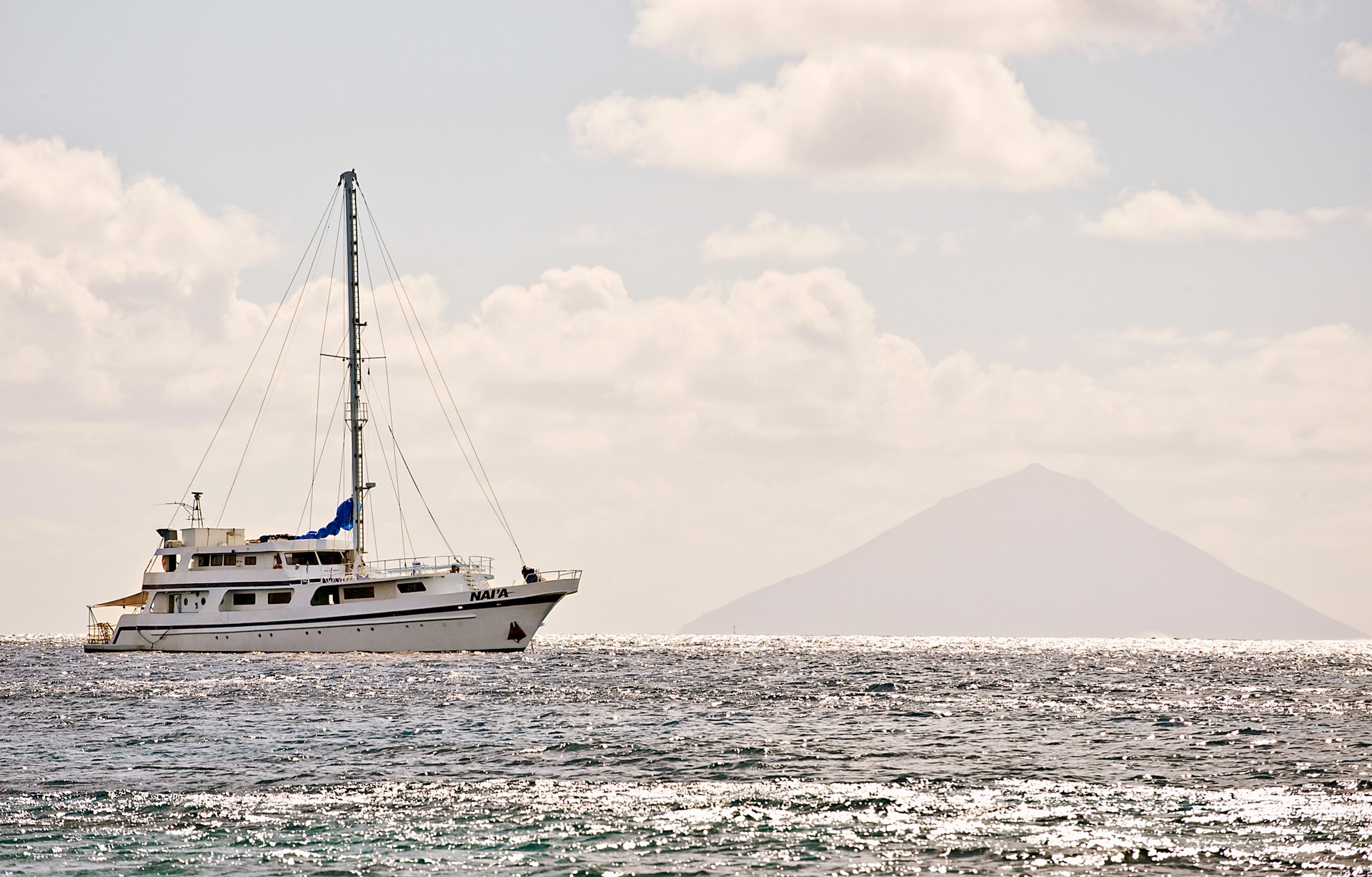
Nai'a
Fiji
16 guests36.576 m
$547/day
Dive sites similar to Filipe's Reef
Same character, same waters — six more sites divers love for the exact same reasons.Compare seasons, access and liveaboard routes — then pick the site that fits your trip best.
© Esri — Maxar, Earthstar, GIS
Jim's Alley
Fiji
Jim's Alley is a renowned soft coral garden located off Gau Island in Fiji's Koro Sea, forming part of a multi-stop diving itinerary in the region.
- Suitable for
- Beginner
- Current
- Mild
- Access
- Liveaboard only
- Depth
- ≤ 21 m
- Theme
- Reef
© Esri — Maxar, Earthstar, GIS
Sam's Point
Fiji
Sam's Point is one of the celebrated patch reefs found within the Somosomo Strait, a narrow channel between Vanua Levu and Taveuni in Fiji.
- Suitable for
- Advanced
- Current
- Strong
- Access
- Dayboat
- Depth
- 8–27 m
- Theme
- Reef / Drift
© Esri — Maxar, Earthstar, GIS
Rainbow's End
Fiji
Rainbow's End is a top dive site located in the Somosomo Strait, a channel separating Taveuni and Vanua Levu islands, known as the 'Soft Coral Capital of the World'.
- Suitable for
- Intermediate
- Current
- Moderate
- Access
- Liveaboard or dayboat
- Depth
- 10–30 m
- Theme
- Reef / Drift
© Esri — Maxar, Earthstar, GIS
Wilkes Passage
Fiji
Wilkes Passage is a dive site located within the Malolo Barrier Reef in Fiji's Mamanuca Group, southwest of Nadi on Viti Levu.
- Suitable for
- Intermediate
- Current
- Moderate
- Access
- Dayboat
- Depth
- 15–20 m
- Theme
- Reef / Drift
© Esri — Maxar, Earthstar, GIS
Makogai Island
Fiji
Makogai Island, located in Fiji's Lomaiviti Group and visible from Wakaya Island, is home to a significant marine sanctuary.
- Suitable for
- Intermediate
- Current
- Moderate
- Access
- Liveaboard only
- Depth
- 3–18 m
- Theme
- Reef
© Esri — Maxar, Earthstar, GIS
Namena Marine Reserve, nestled in Fiji's Koro Sea, is a crown jewel among the world's elite dive spots, consistently ranked as one of the best global destinations for scuba diving.
- Suitable for
- Advanced
- Current
- Moderate
- Access
- Liveaboard only
- Depth
- 5–40 m
- Theme
- Reef / Wall