About Cocklebiddy Cave
Cocklebiddy Cave, situated beneath the vast, arid Nullarbor Plain in Western Australia, represents one of the world's most significant and extensive water-filled cave systems. It holds the distinction of being Australia's longest underwater cave, featuring a remarkable six-kilometer main tunnel. This site is far from any major settlement, requiring divers to undertake long overland journeys, often with dedicated logistical support, which contributes to its allure and sense of isolation. The initial entry involves a dramatic descent into a water-filled pool, leading to immense passages that feel more like submerged highways than typical cave constrictions. The cave features a series of sumps, occasionally interrupted by dry rockpiles that necessitate hauling gear to the next water body, allowing for even deeper exploration. Depths within Cocklebiddy Cave range from 10 meters to over 100 meters, though much of the primary diving occurs between 20 and 40 meters. The passages are characterized by pale limestone walls, sometimes smooth, sometimes intricately sculpted by ancient water flows. The sheer scale and length of the system often require the use of underwater scooters and staged cylinders for gas management. Expedition teams have mapped over six kilometers, with ongoing efforts to discover new sections. The cave environment is marked by absolute silence, broken only by the sound of a regulator, and exceptionally clear water with visibility often extending as far as a torchlight allows. This pristine clarity has been recognized globally as some of the clearest water anywhere. While no specific marine life is mentioned, the profound geological formations and vastness are the primary attractions. Diving Cocklebiddy is an advanced and highly demanding technical penetration dive, strictly requiring specific cave certification, redundant systems, and meticulous safety planning. The remote location means no second chances, emphasizing critical preparation. Gas management is complex, with multiple stage bottles potentially needed, and trimix might be used for deeper sections to manage narcosis. The experience requires a high level of training, experience, and psychological resilience.
Highlights
World-record cave penetrationToad Hall chamberNullarbor Plain geologyExtreme underwater distancesTechnical cave diving challengesSubterranean exploration history
Best Season
The sources do not provide specific optimal months for diving Cocklebiddy Cave due to its highly specialized nature and remote, stable underground environment. However, considering the extreme surface temperatures on the Nullarbor Plain, cooler months might be preferred for surface logistics.
Dive site facts: Cocklebiddy Cave
- Depth
- 10–122 m
- Current
- None to mild (internal flow)
- Visibility
- Excellent (if undisturbed)
- Entry
- Cave entrance lake
- Level
- Expert
- Dive type
- Cave, technical, exploration
- Night dive
- N/A (always dark inside cave)
- Region / port
- Nullarbor Plain, Western Australia
- Coordinates
- -32.043, 126.093
Conditions & Currents
As an inland cave system, Cocklebiddy Cave does not experience typical ocean currents or tides. However, flow dynamics within such extensive subterranean passages can be present, although sources do not detail specific current strengths. The primary challenge in this overhead environment relates to maintaining pristine visibility by preventing silt-outs, which can drastically reduce sightlines to zero. Divers must employ highly refined propulsion techniques, such as frog kicks or modified flutter kicks, to minimize disturbance of the fine sediment on the cave floor. Given the confined and complex nature of the cave, careful buoyancy control is paramount to avoid contact with the bottom or ceiling, ensuring a clear path for all team members.
Dive profile & how the dive runs
A dive into Cocklebiddy Cave is an extensive penetration requiring meticulous planning. Divers typically begin from an entrance lake, laying a primary guideline from open water into the cave. The route involves traversing long submerged passages, with the initial objective often being the 'Toad Hall' chamber, located approximately 4 kilometers from the entrance. This journey requires careful gas management using the rule of thirds, ensuring adequate reserves for exit and emergencies. Divers navigate by following the guideline, utilizing directional markers, and avoiding contact with the delicate cave environment to prevent silt-outs. Beyond 'Toad Hall', the cave continues with further sumps, pushing penetration distances even further. The dive often culminates in a return journey of several hours, sometimes totaling an 8-kilometer round trip, with decompression stops planned according to depth and bottom time. All divers must be full cave certified and adhere to team protocols.
Underwater photography
Photographing within Cocklebiddy Cave demands specialized equipment and advanced cave diving skills. Wide-angle lenses are essential for capturing the immense scale of chambers like 'Toad Hall' and the sweeping passages. Remote strobes or video lights are necessary to illuminate the vast, completely dark environment. Due to the fine silt, divers must possess exceptional buoyancy control and propulsion techniques (e.g., frog kick) to avoid stirring up sediment, which can instantly ruin visibility and photographic opportunities. Subject-wise, the focus is on the geological formations, the scale of the passages, and the occasional dry chambers. Capturing fellow cave divers in this extreme environment also provides a strong narrative element, emphasizing the challenge and exploration. Planning lighting setups in advance is crucial for effective imagery.
Getting there & logistics
Accessing Cocklebiddy Cave is an expedition in itself, located deep within the remote Nullarbor Plain between Western Australia and South Australia. There are no nearby airports or established departure ports for this site; instead, divers must arrange overland travel to the cave entrance. The closest major towns are hundreds of kilometers away, requiring significant logistical planning for supplies, equipment transport, and accommodation in the harsh desert environment. Expeditions are typically organized over several days to weeks, given the travel time and the extensive dive profiles involved. Permits for cave diving in this protected and sensitive environment are mandatory and must be obtained well in advance, often requiring proof of advanced certifications and experience. Due to its extreme nature, Cocklebiddy is not combined with other recreational dive sites but rather serves as a standalone, highly specialized expedition.
Safety & environment
Diving in Cocklebiddy Cave presents significant and unique hazards, demanding the highest level of training and preparation. The nearest recompression chamber or advanced medical facility is hundreds of kilometers away, making emergency evacuation a complex and time-consuming process. All divers must carry comprehensive technical diving insurance that explicitly covers cave diving and potential evacuation costs. Critical site-specific hazards include extreme penetration distances (up to 4 km to 'Toad Hall', 8 km round trip), complex navigation in a completely dark overhead environment, and the risk of zero-visibility silt-outs from improper finning. The remote location also means self-sufficiency is paramount, with no immediate external support. Strict adherence to gas management rules (rule of thirds or more conservative), robust team protocols, pre-dive planning, and emergency procedures are non-negotiable for survival. Full cave certification from reputable agencies (NSS-CDS, NACD, TDI, GUE) is an absolute minimum requirement.
Who it suits — and who it doesn't
Suited for
- Full Cave certified divers
- Experienced technical divers
- Explorers seeking extreme challenges
- Divers with advanced buoyancy control
- Those comfortable with remote expeditions
Less suited for
- Open Water certified divers
- Cavern or Intro to Cave divers
- Recreational divers seeking easy access
- Divers without extensive overhead environment training
- Those unprepared for remote, self-sufficient expeditions
FAQ
Cocklebiddy Cave FAQ
What is 'Toad Hall' in Cocklebiddy Cave?
'Toad Hall' is a massive dry rock chamber discovered in 1982 within Cocklebiddy Cave after a nearly 4-kilometer underwater swim. It is ten meters high and two hundred and fifty meters long, representing a significant landmark in Australian cave exploration and a testament to the cave's vastness.
What kind of certification is required to dive Cocklebiddy Cave?
Diving Cocklebiddy Cave requires a 'Full Cave Diver' certification from a recognized agency such as NSS-CDS, NACD, TDI, or GUE. This level of training ensures divers have the necessary skills for complex navigation, extended penetrations, and emergency management in extreme overhead environments.
How long does a typical dive into Cocklebiddy Cave last?
A dive into Cocklebiddy Cave, particularly one aiming for 'Toad Hall', is a multi-hour commitment. The round trip can be approximately 8 kilometers underwater, often requiring 14 hours for the full expedition from entry to exit. This includes extensive bottom time, gas switches, and decompression obligations.
What are the main safety concerns when diving Cocklebiddy Cave?
The primary safety concerns include the extreme penetration distances, the remote location with limited emergency services, and the absolute reliance on self-sufficiency and team protocols. Risks such as silt-outs, equipment failure far from the entrance, and the physiological demands of long, complex dives necessitate meticulous planning, conservative gas management, and comprehensive technical diving insurance.
Can recreational divers visit Cocklebiddy Cave?
No, Cocklebiddy Cave is strictly unsuitable for recreational divers. Its status as an advanced, extreme overhead environment requires specialized training far beyond open water or even cavern diving. Only highly experienced and fully certified cave divers with appropriate technical equipment should attempt to dive here.
Why dive Cocklebiddy Cave from a liveaboard?
Cocklebiddy Cave is one of Australia's signature dive sites. A liveaboard sleeps you on the water and puts you in the water for three to four guided dives per day, including dawn and night dives that day-boat operators rarely offer. You skip the daily commute back to port and reach quieter, less-crowded sites in the same region on a single trip.
Below are the liveaboards that include Cocklebiddy Cave on their Australia itineraries.
Liveaboards diving Cocklebiddy Cave
These liveaboards may visit Cocklebiddy Cave on selected itineraries — the exact dive sites depend on departure, weather and conditions.
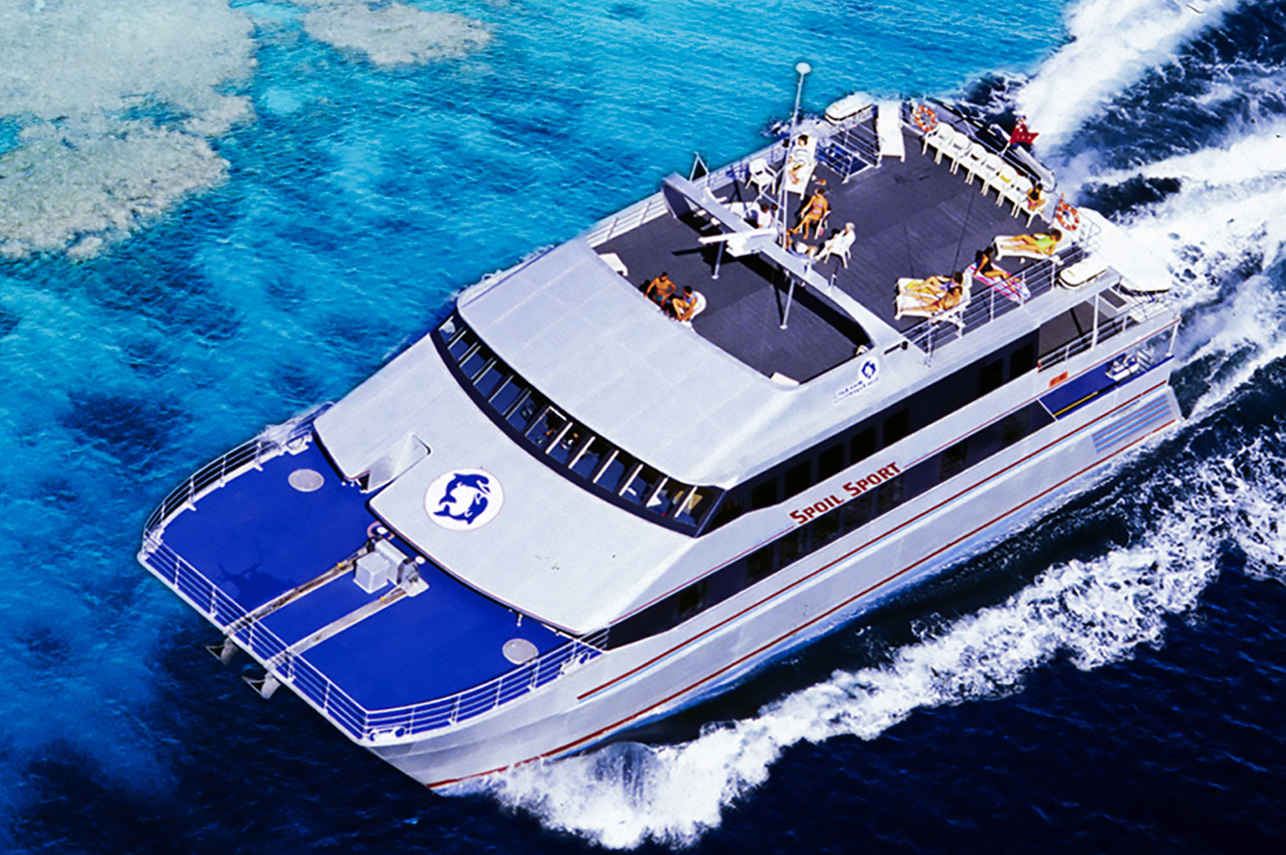
Spoilsport
Australia
28 guests30 m
$409/day
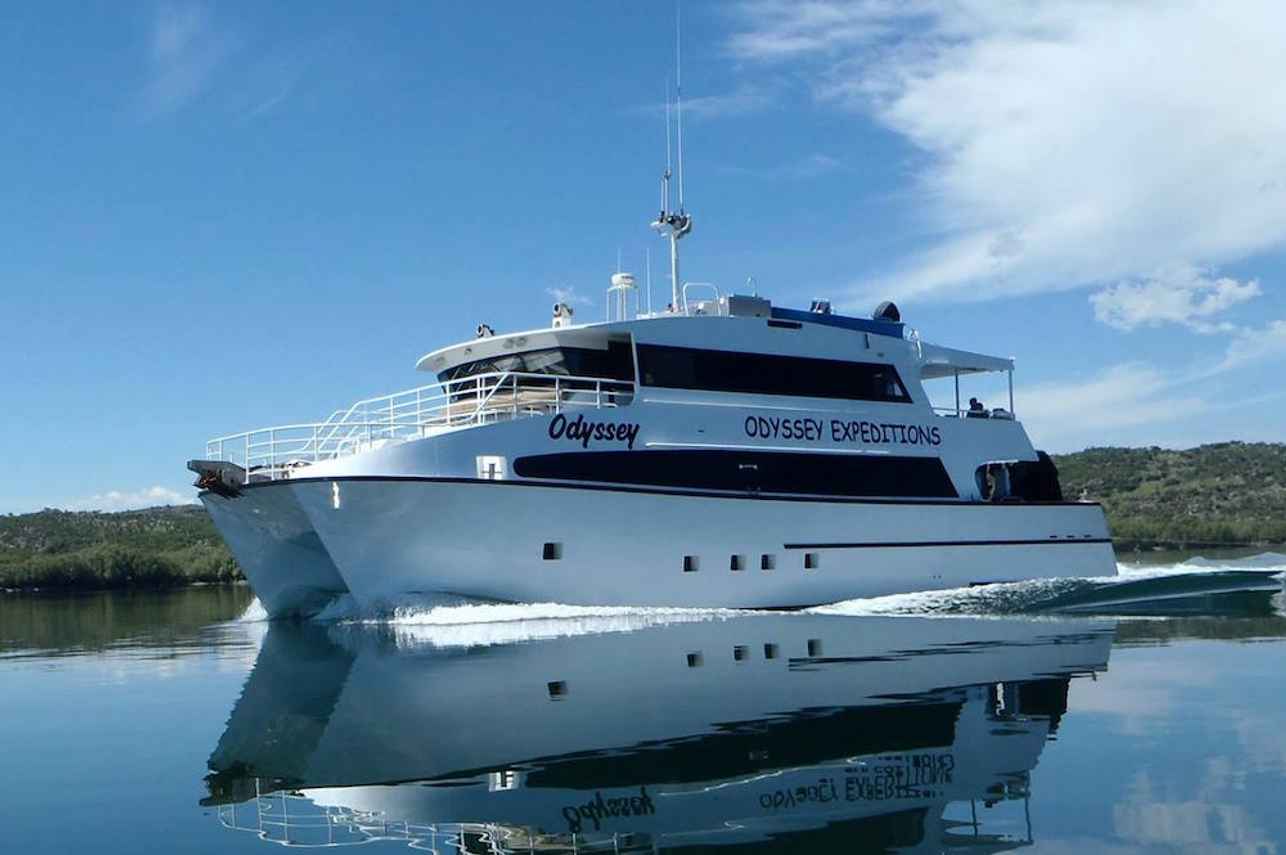
Odyssey Liveaboard
Australia
20 guests24 m
$392/day
Dive sites similar to Cocklebiddy Cave
Same character, same waters — six more sites divers love for the exact same reasons.Compare seasons, access and liveaboard routes — then pick the site that fits your trip best.
© Esri — Maxar, Earthstar, GIS
Rottnest Island
Australia
Rottnest Island, located approximately 18 kilometers off Perth, Western Australia, offers exceptional diving characterized by its distinctive limestone formations.
- Suitable for
- Intermediate
- Current
- Mild
- Access
- Dayboat
- Depth
- 8–22 m
- Theme
- Reef / Cave & cavern
© Esri — Maxar, Earthstar, GIS
Second Valley
Australia
Second Valley, a picturesque, north-facing cove nestled on the Fleurieu Peninsula, offers a varied and captivating dive experience.
- Suitable for
- Intermediate
- Current
- Mild
- Access
- Shore / dayboat
- Depth
- 3–15 m
- Theme
- Reef / Cave & cavern
© Esri — Maxar, Earthstar, GIS
Jenolan Caves — Blue Lake
Australia
The Jenolan Caves complex, nestled high in Australia's Blue Mountains, 175 km west of Sydney, houses a network of waterlogged cave systems, including the Mammoth Cave where underwater exploration occurs.
- Suitable for
- Expert
- Current
- No current
- Access
- Shore / dayboat
- Depth
- 4–25 m
- Theme
- Cave & cavern
© Esri — Maxar, Earthstar, GIS
The Grotto
Australia
The Grotto is a boat-access reef dive situated on the Lonsdale Wall, offering an ideal experience for divers who appreciate detailed inspection rather than technical profiles.
- Suitable for
- Intermediate
- Current
- Moderate
- Access
- Dayboat
- Depth
- 12–23 m
- Theme
- Reef / Cave & cavern
© Esri — Maxar, Earthstar, GIS
Fish Rock Cave
Australia
Fish Rock Cave, located off South West Rocks in New South Wales, Australia, is renowned as the country's only true ocean cave dive.
- Suitable for
- Advanced
- Current
- Strong
- Access
- Liveaboard or dayboat
- Depth
- 7–35 m
- Theme
- Cave & cavern / Channel
© Esri — Maxar, Earthstar, GIS
Bait Reef - Stepping Stones
Australia
The Stepping Stones at Bait Reef offer an intermediate diving experience within the Great Barrier Reef Marine Park, situated approximately 65 km northeast of Airlie Beach.
- Suitable for
- Intermediate
- Current
- Strong
- Access
- Liveaboard or dayboat
- Depth
- 3–30 m
- Theme
- Cave & cavern / Reef