Biodiversity Cruise (Maumere | MAU - Sorong | SOQ)
Pindito · Indonesia · 17D16N
About this route
This extensive biodiversity cruise starts in Maumere on Flores Island and journeys through the Banda Sea to Sorong in West Papua. The itinerary covers over 1,100 nautical miles, exploring volcanic islands and those formed from coral reefs, passing through the Alor and Wetar regions, and potentially visiting the famous Snake Island Gunung Api. The trip culminates in Raja Ampat, a highlight known for its incredible marine diversity and significant migration routes for large marine mammals.
Regions on this route
Highlights
Alor
The Alor archipelago is renowned for its dramatic cliffs and slopes, adorned with lush, vibrant corals. The northern coasts are often characterized by stronger currents, which attract large schools of pelagic fish. This area is a hotspot for diverse marine life, offering both reef and open-water encounters.
- Dramatic drop-offs
- Vibrant coral slopes
- Strong currents
- Pelagic fish schools
Banda Sea
The Banda Sea is a vast and biodiverse region, spanning over 1,100 nautical miles. It features a mix of volcanic islands and islands formed from ancient coral reefs, creating spectacular underwater topographies. The deep waters are a prime location for spotting large pelagics and whales.
- Volcanic islands
- Coral reef formations
- Deep-water pelagics
- Whale & dolphin sightings
Batanta
Batanta is one of Raja Ampat's four main islands, recognized for its unique marine environments. The area is often explored for its specific macro life and intricate reef systems. Divers can expect to find a variety of small critters and interesting reef inhabitants.
- Unique macro life
- Intricate reef systems
- Critter hunting
- Diverse reef inhabitants
Dampier Strait
The Dampier Strait is a globally renowned dive destination within Raja Ampat, famous for its powerful currents that bring nutrient-rich waters. These currents attract huge schools of fish, numerous reef sharks, and graceful manta rays to their cleaning stations, making for exhilarating drift dives.
- Strong currents
- Exhilarating drift diving
- Manta ray cleaning stations
- Massive fish aggregations
Flores
Flores offers exceptional diving, particularly in areas like Maumere Bay, which is famous for its 'blue water muck diving'. This environment provides incredible opportunities for macro photographers to discover rare and fascinating critters. The reefs also boast healthy coral ecosystems.
- Muck diving
- Macro photography
- Rare critters
- Healthy coral reefs
Gunung Api
Gunung Api, also known as 'Snake Island', is an isolated volcanic island rising dramatically from the deep Banda Sea. This site is world-famous for its incredible congregations of banded sea kraits, with hundreds of these snakes often encountered during dives. The walls also attract pelagic species.
- Snake Island
- Banded sea krait congregations
- Volcanic walls
- Pelagic encounters
Misool
Misool, another of Raja Ampat's core islands, is celebrated for its stunning soft coral reefs and healthy marine ecosystems. Its underwater topography includes dramatic overhangs and caverns. Divers can expect to find pygmy seahorses, nudibranchs, and large schools of fish within its vibrant waters.
- Soft coral heaven
- Dramatic overhangs
- Pygmy seahorses
- Rich macro life
Papua
West Papua encompasses the extraordinary Raja Ampat region, often referred to as 'the last paradise'. Its vast marine area is globally recognized for its unparalleled biodiversity, featuring ancient coral reefs, volcanic islands, and significant migration paths for large marine mammals.
- Unparalleled biodiversity
- Ancient coral reefs
- Volcanic landscapes
- Marine mammal haven
Raja Ampat
Raja Ampat, meaning 'united kingdom', is an unparalleled highlight for any diver. With over 1,500 islands, its biodiversity is unmatched, encompassing a vast array of coral and fish species. It also serves as a significant migration route for large marine mammals, ensuring diverse underwater encounters.
- Unrivalled biodiversity
- Vast coral ecosystems
- Marine mammal migration
- 1,500+ islands
Salawati
Salawati is another significant island within Raja Ampat, offering diverse diving experiences. Its waters contain healthy coral gardens and support a wide range of marine species. The sites around Salawati are known for their vibrant reef ecosystems and potential for unique discoveries.
- Healthy coral gardens
- Wide range of species
- Vibrant reef ecosystems
- Exploratory diving
Waigeo
Waigeo is one of the four main islands in Raja Ampat, known for its pristine reefs and diverse marine habitats. This area frequently features vibrant coral gardens and a rich variety of fish species. Exploring its waters reveals macro subjects and larger schooling fish alike.
- Pristine reefs
- Vibrant coral gardens
- Diverse fish species
- Macro & schooling fish
Requirements
- CertificationAdvanced Open Water
- Minimum logged dives50
- ExperienceDivers should have logged a minimum of 50 dives to participate in this trip.
Good to know
- The last dive of the trip will be on the penultimate day; divers are recommended to wait 24 hours before flying after their last dive.
- Check-in and check-out times will be provided upon booking confirmation.
- The last dive is on the penultimate day, ensuring a 24-hour surface interval before flying.
- The exact route and sites are subject to change based on local regulations, guest experience, weather, logistics, and Captain's discretion.
Day-by-day plan
Day 1: Embarkation in Maumere, Flores
Arrive in Maumere, where you will be met and transferred to the vessel. Once settled into your cabin, you will receive a welcome briefing from the cruise director and a safety orientation before the journey begins.
Day 2: Flores & Alor Archipelago Exploration
The adventure begins with diving in Maumere Bay, an area known for excellent 'blue water muck diving' and a haven for macro photographers. The search is on for various pipefish, seahorses, frogfish, and countless colorful nudibranchs. The journey continues to the Alor archipelago, where divers explore dramatic cliffs and slopes covered in lush corals. The northern coasts often feature stronger currents, attracting schools of larger fish.
Dive sites: Maumere Bay, Alor
Day 3: Flores & Alor Archipelago Exploration
The adventure begins with diving in Maumere Bay, an area known for excellent 'blue water muck diving' and a haven for macro photographers. The search is on for various pipefish, seahorses, frogfish, and countless colorful nudibranchs. The journey continues to the Alor archipelago, where divers explore dramatic cliffs and slopes covered in lush corals. The northern coasts often feature stronger currents, attracting schools of larger fish.
Dive sites: Maumere Bay, Alor
Day 4: Wetar and Eastern Banda Sea
The expedition pushes east into the remote Banda Sea, exploring islands like Wetar and Romang. The diving here is characterized by stunning, untouched drop-offs and vibrant coral gardens teeming with fish life. In these deep waters, the crew keeps a constant watch for passing dolphins and whales. Night dives in this region can be particularly rewarding, with sightings of Spanish Dancers, various crustaceans, and rare bobtail squid.
Dive sites: Wetar, Romang
Day 5: Wetar and Eastern Banda Sea
The expedition pushes east into the remote Banda Sea, exploring islands like Wetar and Romang. The diving here is characterized by stunning, untouched drop-offs and vibrant coral gardens teeming with fish life. In these deep waters, the crew keeps a constant watch for passing dolphins and whales. Night dives in this region can be particularly rewarding, with sightings of Spanish Dancers, various crustaceans, and rare bobtail squid.
Dive sites: Wetar, Romang
Day 6: Volcanic Sea Mounts - Gunung Api
Arrive at isolated volcanic islands rising from the abyssal depths of the Banda Sea. Seroea offers spectacular wall diving with sharks, mackerel, and tuna patrolling the blue. The main attraction is Manuk, also known as 'Snake Island', which is famous for its incredible congregations of banded sea kraits. It is not uncommon to encounter hundreds of these snakes on a single dive, creating a truly unforgettable experience, especially at night.
Dive sites: Seroea, Gunung Api (Manuk)
Day 7: Volcanic Sea Mounts - Gunung Api
Arrive at isolated volcanic islands rising from the abyssal depths of the Banda Sea. Seroea offers spectacular wall diving with sharks, mackerel, and tuna patrolling the blue. The main attraction is Manuk, also known as 'Snake Island', which is famous for its incredible congregations of banded sea kraits. It is not uncommon to encounter hundreds of these snakes on a single dive, creating a truly unforgettable experience, especially at night.
Dive sites: Seroea, Gunung Api (Manuk)
Day 8: Exploring the Banda Islands
Anchor in the historic harbor of Banda Neira, the heart of the Spice Islands. Diving here includes exploring unique coral gardens that have flourished on a lava flow from over two decades ago. The reefs bustle with large schools of fish and vibrant macro life. At dusk, there's a chance to witness the mesmerizing mating ritual of mandarin fish.
Dive sites: Banda Neira Lava Flow
Day 9: Exploring the Banda Islands
Anchor in the historic harbor of Banda Neira, the heart of the Spice Islands. Diving here includes exploring unique coral gardens that have flourished on a lava flow from over two decades ago. The reefs bustle with large schools of fish and vibrant macro life. At dusk, there's a chance to witness the mesmerizing mating ritual of mandarin fish.
Dive sites: Banda Neira Lava Flow
Day 10: Koon - The Fish Channel
Prepare for one of the most action-packed dives of the trip at Koon. This deep channel experiences powerful currents, concentrating an astonishing spectacle of fish life. Expect to be immersed in huge schools of giant groupers, barracudas, snappers, and sweetlips against a backdrop of beautiful coral. The strong flow also attracts larger pelagics, with frequent chances to see manta rays, sharks, and mobulas.
Dive sites: Koon Channel
Day 11: At Sea - Journey to Raja Ampat
A full day is dedicated to crossing the final stretch of open ocean towards the legendary Raja Ampat archipelago. This is a perfect opportunity to relax on the sun deck, organize photos, and attend marine life presentations from the guides. Keep a keen eye on the horizon, as this passage is known for sightings of whales and dolphins.
Day 12: Southern Raja Ampat - Misool
Immerse yourself in the staggering biodiversity of Misool, a paradise for both wide-angle and macro enthusiasts. The underwater landscape is dominated by reefs draped in a kaleidoscope of soft corals and gorgonian sea fans of immense size. Divers explore legendary sites like 'Vrenelies Gärtli', navigating through overhangs and caverns, all while searching for pygmy seahorses, a stunning variety of nudibranchs, and massive schools of fish.
Dive sites: Vrenelies Gärtli, Misool
Day 13: Southern Raja Ampat - Misool
Immerse yourself in the staggering biodiversity of Misool, a paradise for both wide-angle and macro enthusiasts. The underwater landscape is dominated by reefs draped in a kaleidoscope of soft corals and gorgonian sea fans of immense size. Divers explore legendary sites like 'Vrenelies Gärtli', navigating through overhangs and caverns, all while searching for pygmy seahorses, a stunning variety of nudibranchs, and massive schools of fish.
Dive sites: Vrenelies Gärtli, Misool
Day 14: Central Raja Ampat - Dampier Strait
The voyage continues north to the famous Dampier Strait, where the Pacific Ocean fuels an explosion of marine life. Prepare for exhilarating drift dives powered by strong currents, which attract huge aggregations of fish, patrolling reef sharks, and graceful manta rays at their cleaning stations. The confluence of waters makes this area a hotspot for non-stop pelagic action and some of Raja Ampat's most iconic dive experiences.
Dive sites: Dampier Strait
Day 15: Central Raja Ampat - Dampier Strait
The voyage continues north to the famous Dampier Strait, where the Pacific Ocean fuels an explosion of marine life. Prepare for exhilarating drift dives powered by strong currents, which attract huge aggregations of fish, patrolling reef sharks, and graceful manta rays at their cleaning stations. The confluence of waters makes this area a hotspot for non-stop pelagic action and some of Raja Ampat's most iconic dive experiences.
Dive sites: Dampier Strait
Day 16: Final Dives & Cruise to Sorong
Enjoy one or two final morning dives in the fish-rich waters of the Dampier Strait, soaking in the last of Raja Ampat's phenomenal marine life. Following the dives, the boat begins its cruise towards Sorong, allowing plenty of time to wash and dry dive gear, pack, and enjoy a final sunset at sea with fellow guests.
Dive sites: Dampier Strait
Day 17: Disembarkation in Sorong, West Papua
After enjoying a final breakfast on board, it is time to say farewell to the crew. You will be transferred to Sorong's Dominique Edward Osok Airport for your flight home or onward journey.
Upcoming departures
No departures scheduled for this route right now.
All routes of this liveaboard
- Banda Sea (Labuan Bajo - Flores → Ambon - Molucca) · 12D11N
- Komodo (Maumere - Flores → Bali - Benoa) · 12D11N
- Komodo (Bali - Benoa → Labuan Bajo - Flores) · 12D11N
- Halmahera - Malukusea (Sorong | SOQ - Manado | MDC) · 11 nights
- Komodo (Maumere - Flores → Labuan Bajo - Flores) · 12D11N
- Triton Bay (Ambon - Kaimana) · 12D11N
- Komodo (Labuan Bajo - Flores → Bali - Benoa) · 12D11N
- Triton bay (Kaimana - West Papua → Sorong - West Papua, 12D11N) · 12D11N
- Banda Sea (Ambon - Molucca → Sorong - West Papua, 12D11N) · 12D11N
- Komodo (Labuan Bajo - Flores) · 12D11N
- Whale-Macro cruise (Ambon - Molucca) · 12D11N
- Whale - Macro Cruise (Ambon | AMQ - Ambon | AMQ) · 6D5N
- Biodiversity Cruise (Maumere | MAU - Ambon | AMQ) · 13N
- Banda Sea - Raja Ampat (Sorong | SOQ - Ambon | AMQ) · 12D11N
- Komodo (Bali - Benoa → Maumere - Flores) · 12D11N
- Wakatobi (Wakatobi → Maumere - Flores, 12D11N) · 12D11N
- East Flores - Alor (Maumere | MAU - Maumere | MAU) · 11 nights
- Whale-Macro cruise · 11 nights
- Banda Sea - Raja Ampat · 11 nights
- Whale - Macro cruise (Sorong | SOQ - Ambon | AMQ) · 11 nights
- Banda Sea - Raja Ampat (Ambon | AMQ - Sorong | SOQ) · 11 nights
- Raja Ampat (Sorong - Sorong) · 11 nights
- Halmahera - Maluku Sea (Sorong | SOQ - Ternate | TER) · 11 nights
- Ternate - Halmahera - Raja Ampat (Ternate | TTE - Sorong | SOQ) · 11 nights
- East Sulawesi and Beyond (Manado | MDC - Maumere | MAU) · 16 nights
- Biodiversity Cruise (Maumere - Ambon) · 13 nights
- Komodo (Labuan Bajo | LBJ - Maumere | MAU) · 11 nights
- East Flores - Alor (Maumere | MAU - Maumere | MAU) · 10 nights
- Halmahera - Malukusea (Ambon - Manado) · 11 nights
About the vessel
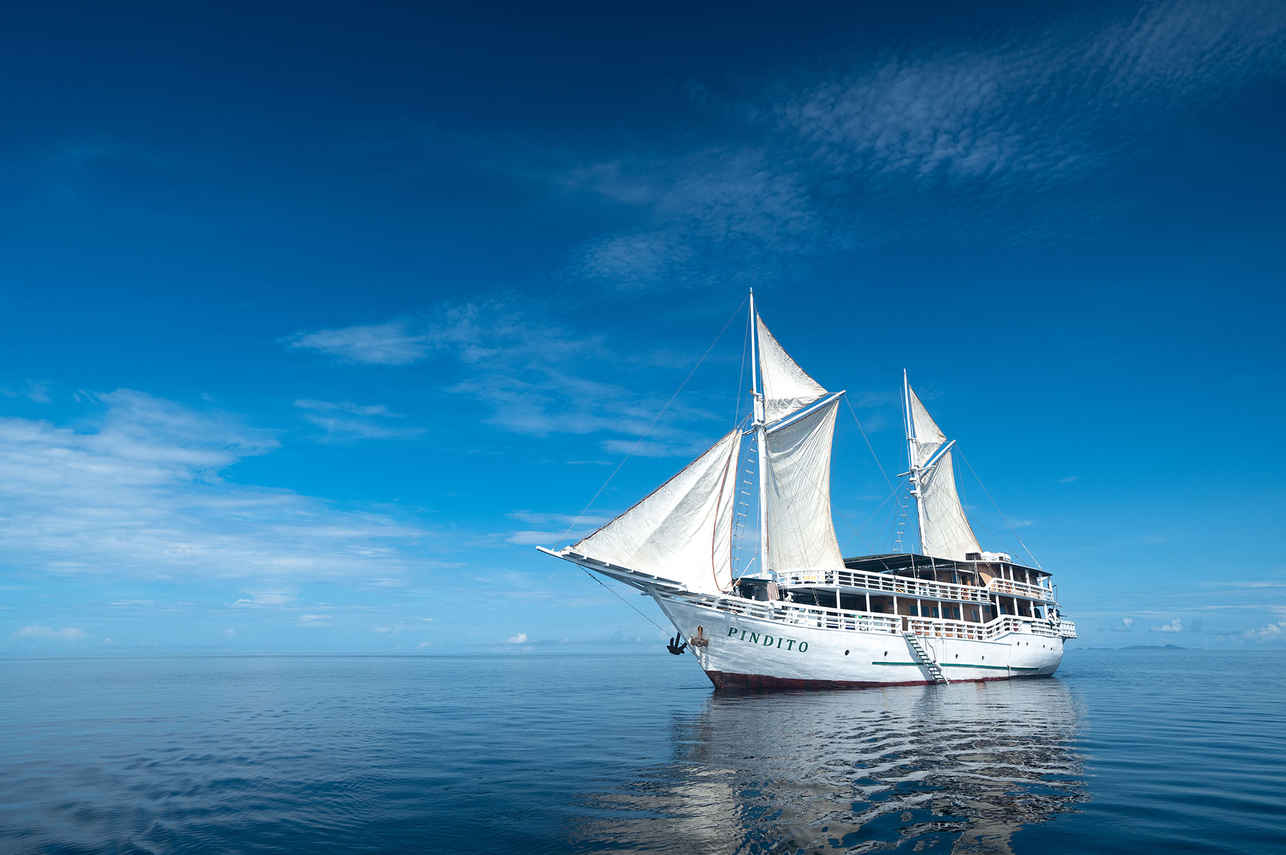 PinditoIndonesia