Banda Sea - Raja Ampat (Sorong | SOQ - Ambon | AMQ)
Pindito · Indonesia · 12D11N
About this route
Embark on an incredible liveaboard journey exploring the diverse marine ecosystems of Indonesia, from the vibrant reefs of Raja Ampat to the rich pelagic waters of the Banda Sea. This expedition begins in Sorong, West Papua, navigating towards the historic Banda Islands and the macro havens of Ambon. Divers will encounter a spectrum of experiences, from wide-angle reefscapes teeming with fish to seeking out unique macro critters. The route promises breathtaking underwater photography opportunities and encounters with a vast array of marine life.
Regions on this route
Highlights
Banda Sea
The Banda Sea is a deep, pelagic-rich environment often referred to as the 'Ring of Fire' due to its volcanic origins. It is famous for seasonal encounters with large schooling pelagic species, including various shark species, and offers dramatic drop-offs and clear blue waters. The historical significance of the Banda Islands also adds a unique cultural dimension to the diving experience.
- Pelagic encounters
- Volcanic origins
- Deep clear waters
- Schooling sharks
Batanta
Batanta, another of Raja Ampat's main islands, is particularly famous for its exceptional muck diving opportunities. Its volcanic black sand slopes and sheltered bays hide a plethora of rare and unusual macro critters, making it ideal for underwater photographers seeking unique subjects. The reefs also host healthy coral ecosystems.
- Exceptional muck diving
- Rare macro critters
- Volcanic black sand
- Unique photography
Dampier Strait
The Dampier Strait is a dynamic area in Raja Ampat characterized by strong currents, which bring nutrient-rich waters that support an incredible abundance of marine life. It is renowned for exhilarating drift dives along vibrant reefs, where divers can witness massive schools of fish and frequent encounters with pelagic species like reef sharks and mobula rays.
- Strong currents
- Nutrient-rich waters
- Massive fish schools
- Pelagic encounters
Irian Jaya
Irian Jaya, the historical name for West Papua, is synonymous with the world-class diving of Raja Ampat. This region is a melting pot of marine species, featuring extensive coral gardens, diverse fish populations, and unique endemic creatures. Its remote location contributes to its pristine conditions and offers a truly unspoiled diving adventure.
- World-class diving
- Extensive coral gardens
- Diverse fish populations
- Unspoiled adventure
Misool
Misool, located in Southern Raja Ampat, is globally recognized for its breathtaking soft coral gardens and limestone karst topography that extends both above and below the waterline. The protected areas surrounding Misool boast an incredible density of marine life, including various reef fish, manta rays, and unique critters, making it a prime destination for photographers.
- Soft coral gardens
- Limestone karst topography
- High marine density
- Manta ray encounters
Moluccas
The Moluccas, also known as the Spice Islands, boast a diverse range of diving experiences, from the historic Banda Islands with their pelagic encounters to the macro-rich waters of Ambon. This region is characterized by deep trenches, volcanic seascapes, and vibrant reefs, offering a blend of wide-angle and critter diving opportunities. Its rich history adds cultural depth to the journey.
- Diverse dive experiences
- Deep trenches
- Volcanic seascapes
- Macro & pelagic mix
Papua
Papua, often referred to as West Papua or Irian Jaya, is home to Raja Ampat, one of the world's most unique dive regions. It encompasses a vast area of over 1,500 islands, characterized by unparalleled marine biodiversity, stunning coral reefs, and dramatic landscapes. The region is a global hotspot for marine conservation and discovery.
- Unparalleled biodiversity
- Stunning coral reefs
- Dramatic landscapes
- Global hotspot
Raja Ampat
Raja Ampat, meaning 'Four Kings', is one of the world's most biodiverse marine regions, particularly known for its vibrant coral reefs and abundant fish life. The area comprises over 1,500 islands, offering both macro and wide-angle photographic opportunities. It is celebrated as a 'Mecca' for marine enthusiasts due to its unparalleled biodiversity and pristine ecosystems.
- Exceptional biodiversity
- Vibrant coral reefs
- Macro & wide-angle
- Over 1,500 islands
Salawati
Salawati, one of Raja Ampat's less-explored islands, offers a mix of pristine reefs and unique habitats. Its dive sites are known for healthy coral formations and a rich variety of reef fish, providing a more secluded diving experience. The area maintains a high level of biodiversity, suitable for both wide-angle and macro exploration.
- Pristine reefs
- Healthy coral formations
- Rich reef fish
- Secluded dive sites
Waigeo
Waigeo is one of the four main islands of Raja Ampat, known for its diverse dive sites ranging from strong current channels to sheltered bays with rich macro life. Its underwater topography includes dramatic walls, pinnacles, and sloping reefs, all covered in healthy corals. The area is a hotspot for both reef and pelagic species.
- Diverse dive sites
- Strong current channels
- Rich macro life
- Healthy coral coverage
Requirements
- CertificationOpen Water
- ExperienceNo minimum logged dives required.
Good to know
- The Pindito prioritizes flexible routing based on weather conditions to ensure the best possible diving experience.
- Typically, four dives are scheduled per day, with additional dives potentially available depending on conditions and divemaster discretion.
- Raja Ampat is a prime location for both macro and wide-angle photography due to its diverse marine life.
- Weather conditions can influence route and itinerary changes at short notice.
- Pindito prioritizes guest safety and comfort in itinerary planning.
- Additional dives may be available depending on weather and specific mooring conditions.
Day-by-day plan
Day 1: Embarkation in Sorong, West Papua
Guests are welcomed aboard the vessel in Sorong, West Papua, during the late afternoon. After settling into cabins and completing necessary paperwork, a safety briefing and orientation will be conducted. The ship is scheduled to depart in the evening, beginning its journey towards the initial diving destinations.
Day 2: Exploring Raja Ampat's Misool
Today marks the initial dives in the renowned Misool region of Raja Ampat, famous for its dramatic limestone karst formations and exceptionally vibrant soft coral gardens. Divers can expect to find a high density of marine biodiversity, including various species of reef fish, pygmy seahorses, and possibly wobbegong sharks, against a backdrop of stunning underwater topography.
Day 3: Southern Raja Ampat Biodiversity
Continue to explore the rich underwater world of Southern Raja Ampat, focusing on sites around Misool that are celebrated for their incredible coral health and profuse fish life. The reefs here are often characterized by gentle currents and excellent visibility, providing ideal conditions for observing schools of pelagic fish and unique macro subjects hidden within the corals.
Day 4: Dampier Strait Exploration
Today's diving centers on the Dampier Strait, an area renowned for its strong currents that bring nutrient-rich waters, attracting abundant marine life. Divers can anticipate exhilarating drift dives along walls and pinnacles, with opportunities to encounter large schools of fish and various pelagic species. The strait is also known for its healthy hard coral formations and diverse reef inhabitants.
Day 5: Central Raja Ampat – Waigeo & Batanta
The expedition continues to the central parts of Raja Ampat, encompassing Waigeo and Batanta, where a blend of macro and wide-angle photography opportunities awaits. These islands offer diverse dive sites, from vibrant reefs supporting a kaleidoscope of reef fish to more sheltered areas ideal for spotting cryptic critters. Current conditions can vary, offering diverse diving experiences.
Day 6: Salawati's Hidden Gems
Today's dives explore the less-frequented areas around Salawati, offering a chance to discover pristine reefs and unique marine habitats. This region is known for its healthy hard and soft coral growth, often featuring a high concentration of reef fish and opportunities to observe various macro life. Visibility is typically good, and currents can range from mild to moderate.
Day 7: Crossing Towards Banda Sea
The vessel spends today in transit, making its way towards the Banda Sea and its renowned diving sites. While there may be limited diving opportunities during the crossing, guests can relax on board, review their underwater photography, or enjoy presentations from the crew. This passage offers a chance to experience the vastness of the Indonesian archipelago above water.
Day 8: Banda Sea – Saparua & Nusa Laut
The diving adventure enters the Banda Sea, starting with the islands of Saparua and Nusa Laut. These areas are characterized by deep, clear waters and vibrant reefs, often displaying impressive hard coral formations. Divers can expect to encounter schooling fish, healthy reef ecosystems, and potentially larger pelagic species as the currents bring nutrients to the reefs.
Dive sites: Nusa Laut
Day 9: Banda Islands – History and Marine Life
Today is dedicated to exploring the historic Banda Islands, an area famous for its dramatic drop-offs and potential encounters with pelagic species, including hammerhead sharks during certain seasons. The deep walls and pinnacles are often swept by strong currents, creating nutrient-rich environments that attract large schools of fish and other open-ocean visitors. A land excursion might be possible to explore the islands' rich history.
Dive sites: Banda Neira
Day 10: Koon Island's Rich Reefs
The journey continues to Koon Island, a remote pinnacle known for its incredibly biodiverse marine ecosystem. The area features vibrant hard and soft corals, often teeming with schooling fish and a rich variety of reef life. Currents can be strong, making for exhilarating drift dives and increasing the chances of encountering pelagic species. Visibility is generally excellent.
Dive sites: Koon
Day 11: Ceram Coast Muck Diving
As the trip approaches its end, the focus shifts to the coastal areas of Ceram, offering excellent opportunities for muck diving and macro photography. The sandy slopes and rubble patches here are home to an array of unusual critters, including various species of frogfish, ghost pipefish, and nudibranchs. This provides a fascinating contrast to the wide-angle reef dives earlier in the trip.
Day 12: Disembarkation in Ambon, Moluccas
After a final breakfast on board, guests will disembark the vessel in Ambon, Moluccas. Transfers to the airport or onward accommodations will be arranged, concluding this extensive diving expedition across Raja Ampat and the Banda Sea.
Upcoming departures
- 2028-03-20 – 2028-03-31from 6,500 USDBook
All routes of this liveaboard
- Banda Sea (Labuan Bajo - Flores → Ambon - Molucca) · 12D11N
- Komodo (Maumere - Flores → Bali - Benoa) · 12D11N
- Komodo (Bali - Benoa → Labuan Bajo - Flores) · 12D11N
- Halmahera - Malukusea (Sorong | SOQ - Manado | MDC) · 11 nights
- Komodo (Maumere - Flores → Labuan Bajo - Flores) · 12D11N
- Triton Bay (Ambon - Kaimana) · 12D11N
- Komodo (Labuan Bajo - Flores → Bali - Benoa) · 12D11N
- Triton bay (Kaimana - West Papua → Sorong - West Papua, 12D11N) · 12D11N
- Banda Sea (Ambon - Molucca → Sorong - West Papua, 12D11N) · 12D11N
- Komodo (Labuan Bajo - Flores) · 12D11N
- Biodiversity Cruise (Maumere | MAU - Sorong | SOQ) · 17D16N
- Whale-Macro cruise (Ambon - Molucca) · 12D11N
- Whale - Macro Cruise (Ambon | AMQ - Ambon | AMQ) · 6D5N
- Biodiversity Cruise (Maumere | MAU - Ambon | AMQ) · 13N
- Komodo (Bali - Benoa → Maumere - Flores) · 12D11N
- Wakatobi (Wakatobi → Maumere - Flores, 12D11N) · 12D11N
- East Flores - Alor (Maumere | MAU - Maumere | MAU) · 11 nights
- Whale-Macro cruise · 11 nights
- Banda Sea - Raja Ampat · 11 nights
- Whale - Macro cruise (Sorong | SOQ - Ambon | AMQ) · 11 nights
- Banda Sea - Raja Ampat (Ambon | AMQ - Sorong | SOQ) · 11 nights
- Raja Ampat (Sorong - Sorong) · 11 nights
- Halmahera - Maluku Sea (Sorong | SOQ - Ternate | TER) · 11 nights
- Ternate - Halmahera - Raja Ampat (Ternate | TTE - Sorong | SOQ) · 11 nights
- East Sulawesi and Beyond (Manado | MDC - Maumere | MAU) · 16 nights
- Biodiversity Cruise (Maumere - Ambon) · 13 nights
- Komodo (Labuan Bajo | LBJ - Maumere | MAU) · 11 nights
- East Flores - Alor (Maumere | MAU - Maumere | MAU) · 10 nights
- Halmahera - Malukusea (Ambon - Manado) · 11 nights
About the vessel
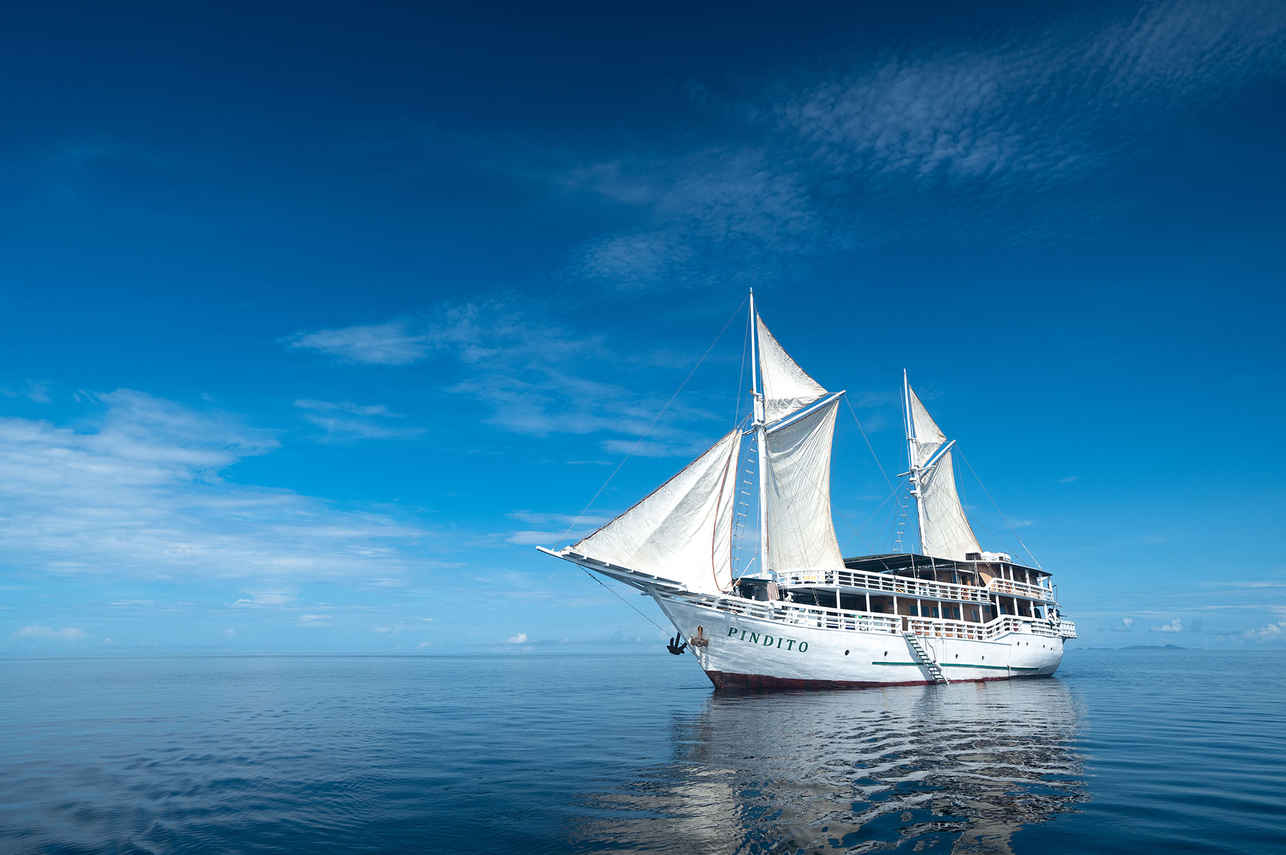 PinditoIndonesia