Wakatobi (Wakatobi → Maumere - Flores, 12D11N)
Pindito · Indonesia · 12D11N
About this route
This is a journey of contrasts, beginning in the world-renowned Wakatobi National Park, acclaimed for its staggering biodiversity and pristine coral reefs. The itinerary then charts a course towards the Alor and Flores region, a global hotspot for both thrilling pelagic action and unique critter hunting. Diving will transition from vibrant, current-swept walls and coral gardens to volcanic black sand slopes, perfect for muck diving enthusiasts. Expect a flexible schedule tailored to the best conditions, with opportunities to encounter everything from pygmy seahorses and rhinopias to reef sharks and potentially larger pelagics in the Pantar Strait's cool, nutrient-rich waters.
Requirements
- CertificationAdvanced Open Water
- Minimum logged dives25
- ExperienceDivers should have at least 25 logged dives and hold an Advanced Open Water certification.
Good to know
- The last dive is on the penultimate day of the trip; divers are recommended to wait 24 hours before flying after the last dive.
- Guests will be transferred from the airport or hotel to the ship on embarkation day.
- The crew will arrange transfers to the airport for onward flights on disembarkation day.
Day-by-day plan
Day 1: Embarkation in Wakatobi
Wakatobi, Southeast Sulawesi
Arrive and transfer to the vessel for boarding. After settling into your cabin, the crew provides a comprehensive welcome briefing covering the boat's facilities, safety procedures, and the exciting dive plan for the days ahead. The evening is spent enjoying dinner as the boat prepares for its departure into Wakatobi National Park.
Good to know: Arrival and transfer to the boat | Welcome briefing and safety orientation | Settle into cabins
Day 2: Wakatobi National Park — Outer Reefs
Wakatobi National Park
The diving begins in the heart of Wakatobi, a UNESCO Marine Biosphere Reserve celebrated for its spectacular reef health and biodiversity. The day is spent exploring steep walls, vibrant coral gardens, and dramatic overhangs. The sheer density of reef fish is astounding, with large schools of fusiliers, snappers, and surgeons flowing over the pristine coral.
Good to know: Diving in Wakatobi National Park | Focus on wall dives and coral gardens
Day 3: Wakatobi National Park — Tomia Island
Tomia Island, Wakatobi
Diving continues around Tomia Island, home to some of Wakatobi's most famous dive sites. Explore complex reef structures with numerous sea fans and massive sponges. The area is a hotspot for macro life, and guides are experts at spotting cryptic creatures like pygmy seahorses hiding in gorgonians and various species of colorful nudibranchs.
Good to know: Diving around Tomia Island | Excellent macro and wide-angle opportunities
Day 4: Wakatobi National Park — Kaledupa & Binongko
Wakatobi National Park
A final day exploring the southern reaches of the park around Kaledupa or Binongko islands. The underwater topography includes gentle slopes, pinnacles, and patch reefs teeming with life. Keep an eye out for larger marine animals passing by in the blue, as well as the rich reef-dwelling fauna that makes this region a world-class dive destination. Overnight, the boat begins its crossing towards the Flores Sea.
Good to know: Final dives in Wakatobi | Overnight passage towards Flores
Day 5: Passage Across the Flores Sea
Flores Sea
This is a day of transition as the vessel cruises west. Depending on conditions, there may be an opportunity for an exploratory dive on a remote, submerged seamount or atoll. These dives offer a taste of true adventure, with the potential for unpredictable encounters with pelagic species drawn in from the deep surrounding waters.
Good to know: Sea crossing day | Potential for an exploratory dive based on conditions
Day 6: East of Flores — The Solor Archipelago
Solor Archipelago, East Flores
Arrival in the Solor Archipelago, an area of volcanic islands and pristine, fish-filled reefs. The diving here is diverse, with healthy coral slopes and walls patrolled by reef sharks. There may also be an opportunity for a land excursion to the village of Lamalera, one of the last communities in the world to practice traditional, subsistence whale hunting with hand-thrown harpoons.
Good to know: Diving on pristine reefs | Land excursion to Lamalera village (weather permitting)
Day 7: Pantar Strait — Pelagics & Currents
Pantar Strait, Alor
The journey continues to the Pantar Strait, a channel known for its nutrient-rich, cooler waters and strong currents. These conditions attract an abundance of marine life, including large pelagics. Dives at sites like 'Sharks Galore' can feature encounters with various shark species, giant groupers, and occasionally mola mola or even whale sharks. A 5mm wetsuit is recommended for the cooler temperatures here.
Dive sites: Sharks Galore, The Bullet
Good to know: Cool water diving with strong currents | High chance of pelagic encounters
Day 8: Pantar & Kawula — Muck & Macro
Pantar Strait, Alor
Today's focus shifts to the incredible macro and muck diving opportunities in the region. Slow exploration over black volcanic sand slopes reveals a hidden world of bizarre critters. This is a prime area to search for rare cephalopods, scorpionfish, and other masters of camouflage, making it a paradise for underwater photographers.
Good to know: Black sand muck diving | Ideal for macro photography and critter hunting
Day 9: Adonara Island Reefs
Adonara Island, East Flores
Diving around Adonara reveals colourful reefs adorned with a wide variety of corals and textured sponges. These sites are excellent for finding tiny pygmy seahorses clinging to their host gorgonians. Along the drop-offs, schools of snappers and sweetlips congregate, while giant trevallies and reef sharks patrol the points.
Good to know: Reef diving with a mix of macro and wide-angle subjects
Day 10: Maumere Bay — The Muck Mecca
Maumere Bay, Flores
The boat repositions to Maumere Bay, one of Indonesia's original and most celebrated muck diving locations. The dark sand slopes under the town pier and at nearby sites are a critter wonderland. It's an awesome place to tick off rare species from your checklist, with everything from frogfish and scorpionfish to mandarinfish and seahorses.
Good to know: World-class muck diving in Maumere Bay | Search for rare and cryptic creatures
Day 11: Final Dives & Cruise to Port
Maumere Bay, Flores
Enjoy one or two final dives in the morning at one of Maumere's fantastic sites, offering a last chance to photograph its unique inhabitants. Afterwards, the crew will help with rinsing and packing dive gear. The afternoon is for relaxing on board and sharing photos as the vessel makes its way to the final anchorage in preparation for disembarkation.
Good to know: One or two final dives in the morning | Gear rinsing and packing | Cruise to final port
Day 12: Disembarkation in Maumere - Flores
Maumere - Flores
After a final breakfast on board, it's time to say goodbye to the crew. Guests will be transferred to Maumere airport for their onward flights, filled with memories of an incredible journey from Wakatobi's reefs to Maumere's macro wonders.
Good to know: Final breakfast onboard | Disembarkation | Transfer to Maumere airport
Upcoming departures
- 2028-05-01 – 2028-05-12from 6,500 USDBook
All routes of this liveaboard
- Banda Sea (Labuan Bajo - Flores → Ambon - Molucca) · 12D11N
- Komodo (Maumere - Flores → Bali - Benoa) · 12D11N
- Komodo (Bali - Benoa → Labuan Bajo - Flores) · 12D11N
- Halmahera - Malukusea (Sorong | SOQ - Manado | MDC) · 11 nights
- Komodo (Maumere - Flores → Labuan Bajo - Flores) · 12D11N
- Triton Bay (Ambon - Kaimana) · 12D11N
- Komodo (Labuan Bajo - Flores → Bali - Benoa) · 12D11N
- Triton bay (Kaimana - West Papua → Sorong - West Papua, 12D11N) · 12D11N
- Banda Sea (Ambon - Molucca → Sorong - West Papua, 12D11N) · 12D11N
- Komodo (Labuan Bajo - Flores) · 12D11N
- Biodiversity Cruise (Maumere | MAU - Sorong | SOQ) · 17D16N
- Whale-Macro cruise (Ambon - Molucca) · 12D11N
- Whale - Macro Cruise (Ambon | AMQ - Ambon | AMQ) · 6D5N
- Biodiversity Cruise (Maumere | MAU - Ambon | AMQ) · 13N
- Banda Sea - Raja Ampat (Sorong | SOQ - Ambon | AMQ) · 12D11N
- Komodo (Bali - Benoa → Maumere - Flores) · 12D11N
- East Flores - Alor (Maumere | MAU - Maumere | MAU) · 11 nights
- Whale-Macro cruise · 11 nights
- Banda Sea - Raja Ampat · 11 nights
- Whale - Macro cruise (Sorong | SOQ - Ambon | AMQ) · 11 nights
- Banda Sea - Raja Ampat (Ambon | AMQ - Sorong | SOQ) · 11 nights
- Raja Ampat (Sorong - Sorong) · 11 nights
- Halmahera - Maluku Sea (Sorong | SOQ - Ternate | TER) · 11 nights
- Ternate - Halmahera - Raja Ampat (Ternate | TTE - Sorong | SOQ) · 11 nights
- East Sulawesi and Beyond (Manado | MDC - Maumere | MAU) · 16 nights
- Biodiversity Cruise (Maumere - Ambon) · 13 nights
- Komodo (Labuan Bajo | LBJ - Maumere | MAU) · 11 nights
- East Flores - Alor (Maumere | MAU - Maumere | MAU) · 10 nights
- Halmahera - Malukusea (Ambon - Manado) · 11 nights
About the vessel
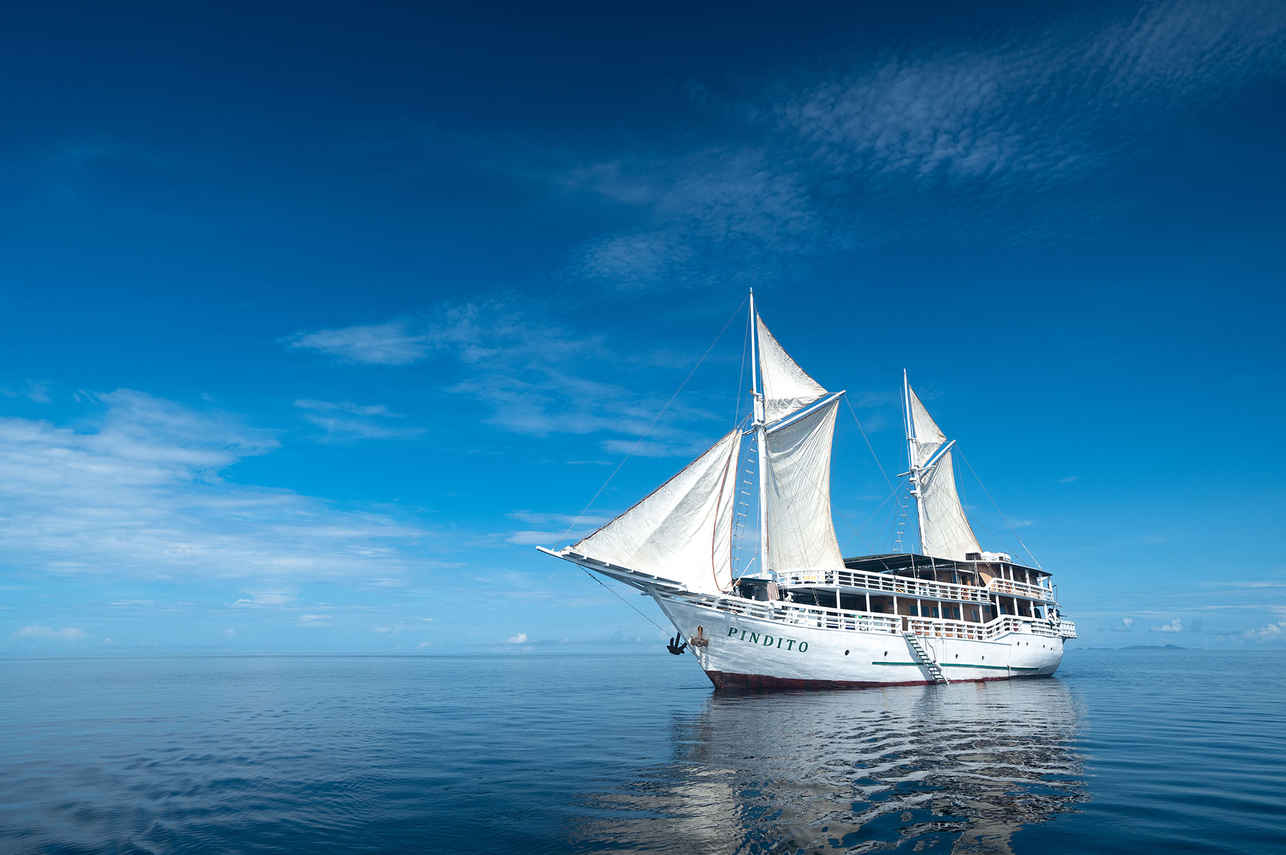 PinditoIndonesia