About Cenderawasih Bay
Cenderawasih Bay, situated on the eastern side of West Papua's Bird's Head Peninsula, is a remote and largely unexplored diving frontier in Indonesia. This vast marine protected area, the largest in Southeast Asia, holds significant geological and historical importance, offering divers a blend of natural wonders and submerged history. The bay’s isolation has fostered unique endemic marine life and preserved pristine ecosystems. Topographically, the dive sites range from expansive fringing reefs, barrier reefs, and atolls to patch reefs and shallow-water mounds. Divers can explore dramatic walls adorned with prolific sponge life and schooling fish, along with abundant and healthy reefs surrounding its many islands. There are also several Japanese WWII wrecks, including a Catalina seaplane and a Zero fighter, which provide interesting structural elements for exploration. Silty slopes offer excellent opportunities for muck diving, and light-filled coral gardens thrive in shallower depths. The bay is particularly renowned for its year-round whale shark encounters, often occurring around fishing platforms where they feed. While these gentle giants are the main draw, the area also boasts a rich diversity of fish, including endemic species like the Cenderawasih long-nosed butterflyfish and ornate angelfish found at unusually shallow depths. Other marine life includes pygmy seahorses, frogfish, ghost pipefish, mimic octopuses, and several shark species, along with occasional sightings of dolphins and dugongs. Over 150 coral species and 200 fish species have been recorded. Diving here is primarily conducted via liveaboard, which often involves obtaining permission from local villages. The waters are typically clear and calm, with excellent visibility. Most sites are suitable for all certification levels, offering a mix of reef, wreck, and muck diving experiences. Divers can anticipate multiple daily dives, often including dedicated whale shark interactions.
Highlights
Year-round whale shark encountersWWII Japanese ship and plane wrecksIndonesia's largest marine protected areaEndemic marine speciesPristine fringing and barrier reefsRemarkable coral diversityCalm, clear watersUnique vertical feeding whale sharks
Season calendar
Best months to dive here
Jan
Feb
Mar
Apr
May
Jun
Jul
Aug
Sep
Oct
Nov
Dec
Excellent
Dive site facts: Cenderawasih Bay
- Depth
- 5–40+ m
- Typical dive
- Variable depending on site, 50-60 min
- Current
- Weak to medium
- Visibility
- 10–30 m
- Water temperature
- 27–30 °C
- Entry
- Liveaboard tender
- Level
- All levels, AOWD recommended for wrecks
- Dive type
- Big animals, wreck, reef, wall, macro
- Night dive
- Possible
- Region / port
- West Papua, Indonesia
- Coordinates
- -2.5, 134.9
Conditions & Currents
Dive conditions in Cenderawasih Bay are generally characterized by weak to medium currents, providing a relaxed diving environment suitable for various skill levels. The bay's semi-enclosed geography and protection from several large islands contribute to calm sea conditions, with minimal extreme waves or currents. Visibility typically ranges from 10 to 30 meters, though it can vary based on specific conditions and plankton concentrations, especially in areas frequented by large filter feeders. Water temperatures remain consistently warm, between 27 to 30 degrees Celsius year-round, eliminating concerns about thermoclines. Divers often enter from liveaboard tenders directly to specific sites, particularly under the fishing bagans where whale sharks are present, allowing for extended, unhurried encounters without strong drift. The calm environment means less demanding entry/exit procedure
Marine life & sighting chances

Whale shark
Year-round · common
Pygmy seahorse
occasional
Frogfish
occasional
Ghost pipefish
occasional
Mimic octopus
occasional
Parrotfish
common
Damselfish
common
Rabbitfish
common
Butterflyfish
common
Anemonefish
common
Whitetip reef shark
occasional
Blacktip reef shark
occasionalEpaulet shark
occasional
Dive profile & how the dive runs
Diving at Cenderawasih Bay is primarily conducted from liveaboards, utilizing tenders to reach specific sites. For whale shark encounters, dives typically occur under traditional Indonesian fishing platforms, known as bagans, in Kwatisore Bay. Divers descend to depths between 7 to 15 meters to position themselves for optimal viewing of whale sharks ascending from deeper waters to feed on bycatch. The dive often starts with observations of sharks from mid-water, gradually moving shallower towards the bagan's nets. Encounters can involve multiple whale sharks, often feeding vertically. Dives under bagans are characterized by minimal current, allowing for extended bottom times and observation. For wreck dives, such as the Shinwa Maru or P38 fighter planes, entry is typically a negative descent to the wreck, with depth progressions following the structure's contours, often between 12 to 40 meters. Safety stops are performed in the clear, shallow waters above the dive site, usually around 5 meters, before reboarding the tender.
Underwater photography
Cenderawasih Bay offers exceptional photographic opportunities, especially for wide-angle shots of whale sharks. A fisheye lens is highly recommended for close-up interactions with these gentle giants, enabling you to capture their immense scale. Be mindful of other divers in your frame due to the wide-angle, though their presence can also provide a sense of scale. When photographing whale sharks near the surface or under the bagans, consider a mid-range zoom for flatter horizons and to show the interaction with fishing platforms. Natural light is often sufficient, especially in the shallow depths where whale sharks feed, but strobes can enhance color and contrast. For wreck photography, wide-angle lenses are also beneficial to capture the full scope of the sunken vessels, which are often heavily encrusted with corals and marine life. Macro photographers will find subjects on the reefs and sandy slopes, including pygmy seahorses, frogfish, and ghost pipefish, requiring dedicated macro lenses and potentially snoots for creative lighting.
Combine with nearby dive sites
Getting there & logistics
Access to Cenderawasih Bay is primarily via liveaboard, which typically depart from Manokwari (MKW), Nabire (NBX), or Biak (BIK) airports. Divers generally fly into Jakarta (CGK) or Makassar (UPG) for connecting domestic flights to these gateway cities. The journey often involves multiple connections and can take 6 to 9 hours from an international airport, necessitating an overnight stay before boarding. Liveaboard trips in Cenderawasih Bay are usually 10 to 14 days long to allow sufficient time to cover the vast area and explore diverse sites beyond just whale sharks, including WWII wrecks and endemic reef systems. There are no readily available day boat operations due to the remote and spread-out nature of the dive sites. Itineraries sometimes combine Cenderawasih Bay with northern Raja Ampat or other Indonesian destinations like Lembeh Strait or Triton Bay.
Safety & environment
Due to its remote location in West Papua, Cenderawasih Bay necessitates robust dive safety planning. The nearest recompression chamber is likely in major Indonesian cities such as Jakarta or Manado, requiring a potentially lengthy and complex evacuation, often by air, in case of a serious diving emergency. Therefore, comprehensive dive accident insurance, including evacuation coverage, is essential for all divers. Site-specific hazards are generally low, with weak to medium currents prevailing, particularly around the whale shark bagans. However, divers must maintain appropriate distance and conduct when interacting with whale sharks to avoid startling them or interfering with their natural feeding behavior. While generally calm, divers should be aware of potential boat traffic from local fishing vessels. A minimum certification of Advanced Open Water is recommended for some wreck dives that extend beyond 30 meters, and previous experience in remote diving environments is beneficial.
Who it suits — and who it doesn't
Suited for
- Whale shark enthusiasts seeking consistent encounters
- Underwater photographers targeting big animals
- Liveaboard divers desiring remote, unspoiled destinations
- Divers interested in WWII wreck exploration
- Those looking for unique endemic marine life
- Advanced divers comfortable with remote travel
Less suited for
- Divers new to the sport or entry-level certified
- Those seeking resort-based diving with daily excursions
- Divers sensitive to long travel times and multiple connections
- Individuals with limited budget, as liveaboards are the primary option
- Divers preferring strong current, pelagic action-packed dives away from specific feeding sites
FAQ
Cenderawasih Bay FAQ
When is the best time to dive Cenderawasih Bay?
The prime diving season for Cenderawasih Bay is between June and October, as this period offers the calmest weather and sea conditions. While whale sharks are present year-round, these months are favored by liveaboard operators. This timing also provides an excellent alternative for divers when other popular Indonesian dive regions might experience less favorable conditions.
Can I see whale sharks year-round in Cenderawasih Bay?
Yes, Cenderawasih Bay is unique for its resident population of whale sharks, which can be encountered throughout the entire year. These whale sharks have learned to feed from the bycatch discarded by local fishermen's platforms, called 'bagans,' providing a consistent food source that keeps them in the bay rather than migrating.
What makes Cenderawasih Bay unique compared to other Indonesian dive sites?
Cenderawasih Bay stands out for its consistent, year-round whale shark encounters and its unique population of endemic marine species. Its geological isolation has fostered biodiversity found nowhere else. Additionally, the presence of well-preserved WWII wrecks and its status as Indonesia's largest marine protected area contribute to its distinctiveness.
What kind of diving can I expect in Cenderawasih Bay?
Diving in Cenderawasih Bay offers a diverse range of experiences. The highlight is undoubtedly interacting with whale sharks at shallow depths under fishing bagans. Beyond this, you can explore historical WWII wrecks, drift along vibrant coral walls and drop-offs, and discover excellent macro life on sandy slopes and reefs. Currents are generally mild to moderate, making it suitable for various dive styles.
How do I get to Cenderawasih Bay for a dive trip?
To reach Cenderawasih Bay, you'll typically fly domestically within Indonesia from major international gateways like Jakarta or Makassar to one of the regional airports such as Manokwari (MKW), Nabire (NBX), or Biak (BIK). From these airports, you'll board a liveaboard, as day trips are not practical due to the bay's vastness and remote nature. Liveaboard trips usually last 10 to 14 days.
Are there other marine animals to see besides whale sharks?
Absolutely. Cenderawasih Bay is rich in marine biodiversity, hosting over 150 coral species and more than 200 fish species. Divers frequently encounter reef sharks, dolphins, and occasional sightings of dugongs. The bay is also home to various macro critters like pygmy seahorses, frogfish, ghost pipefish, and endemic species like the Cenderawasih fairy wrasse.
Why dive Cenderawasih Bay from a liveaboard?
Cenderawasih Bay is one of Indonesia's signature dive sites. A liveaboard sleeps you on the water and puts you in the water for three to four guided dives per day, including dawn and night dives that day-boat operators rarely offer. You skip the daily commute back to port and reach quieter, less-crowded sites in the same region on a single trip.
Below are the liveaboards that include Cenderawasih Bay on their Indonesia itineraries.
Liveaboards diving Cenderawasih Bay
These liveaboards may visit Cenderawasih Bay on selected itineraries — the exact dive sites depend on departure, weather and conditions.
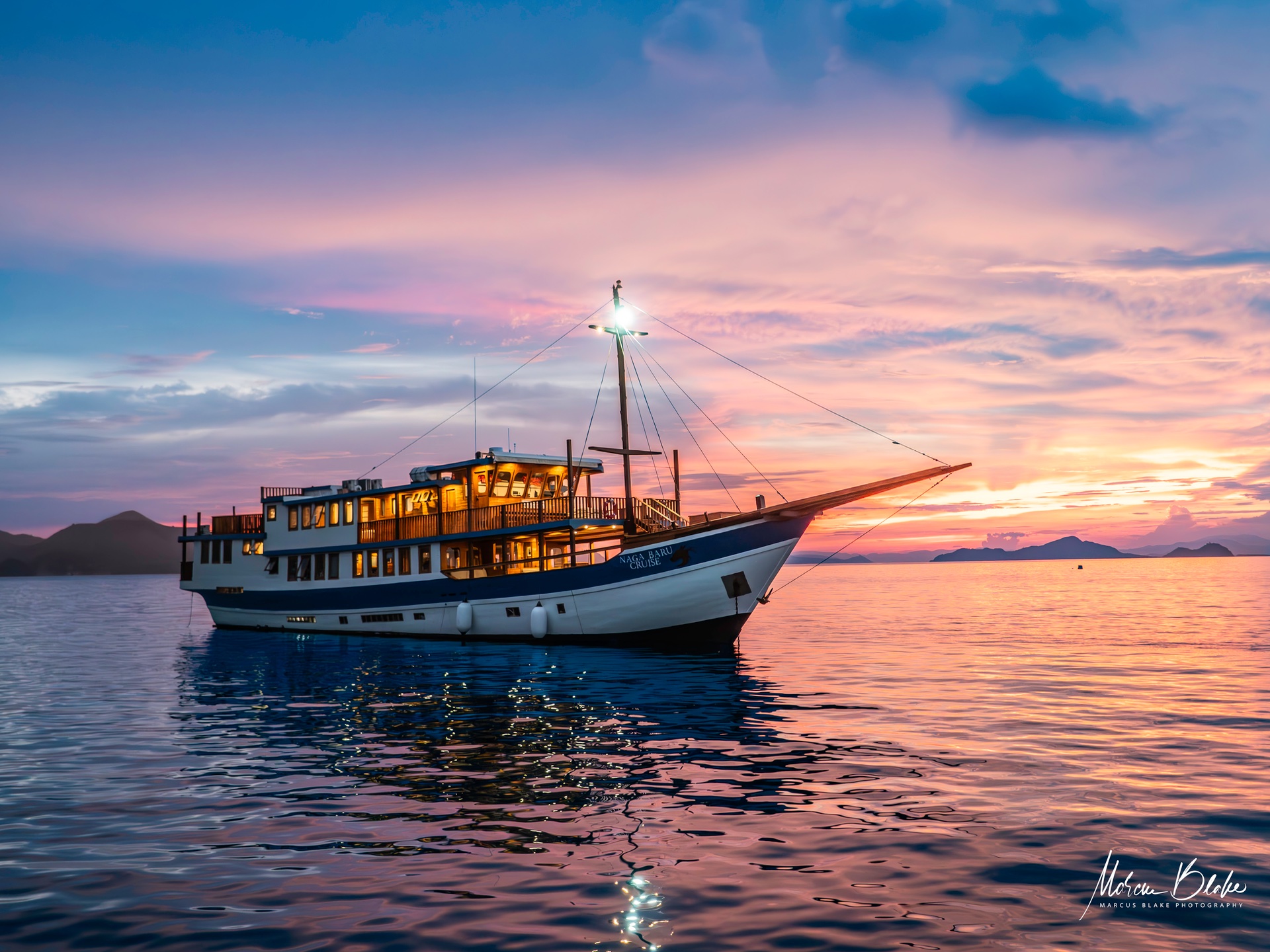
Naga Biru
Indonesia
12 guests40 m
$271/day
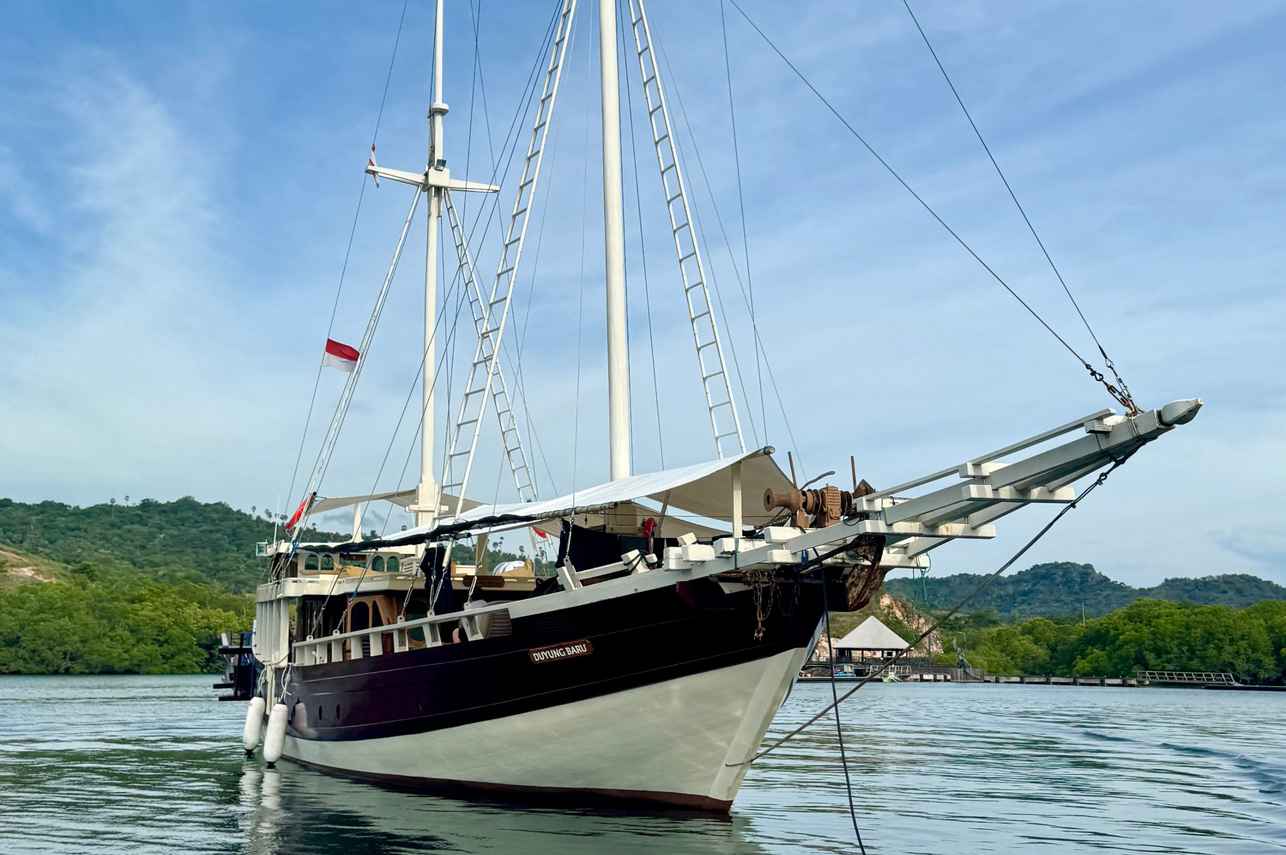
Ecopro Duyung Baru
Indonesia
6 guests27 m
$361/day
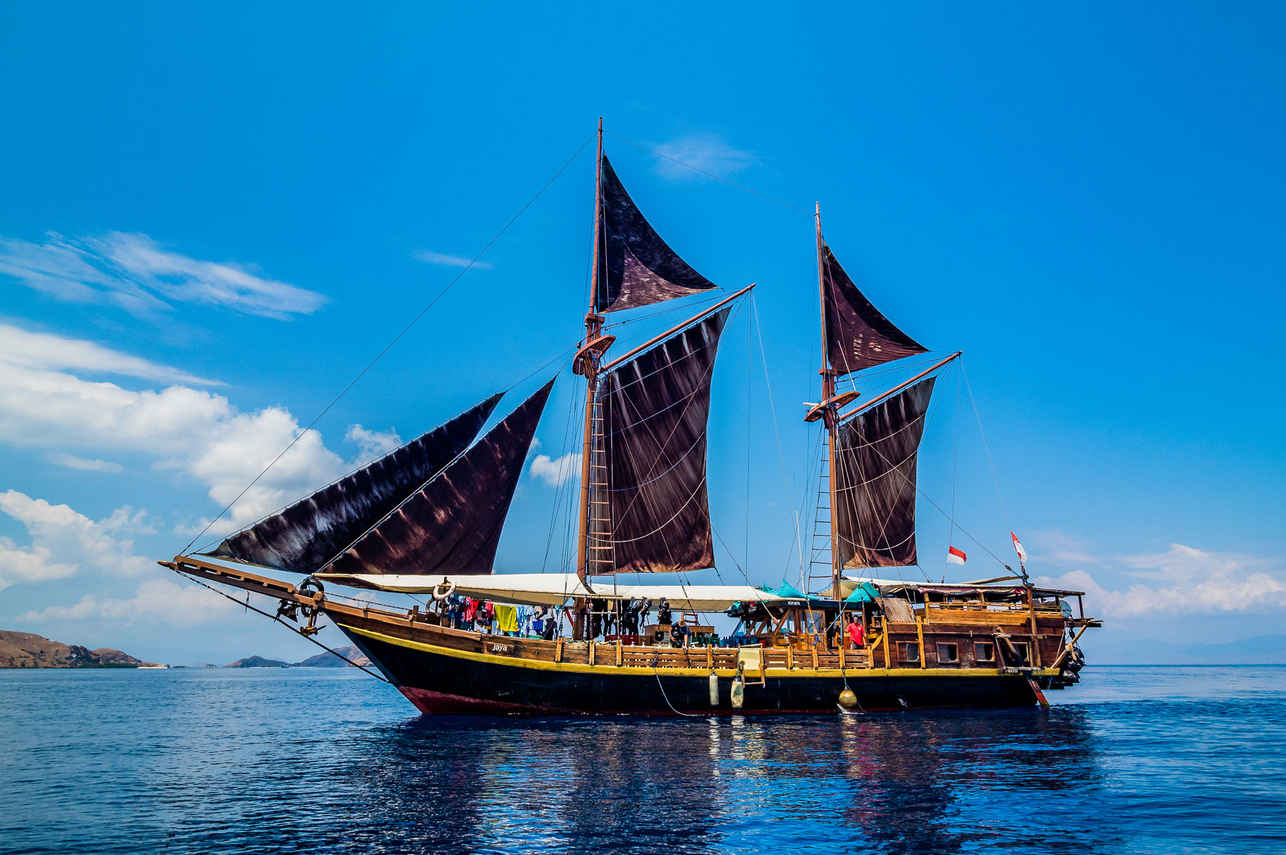
Jaya
Indonesia
14 guests23 m
$280/day
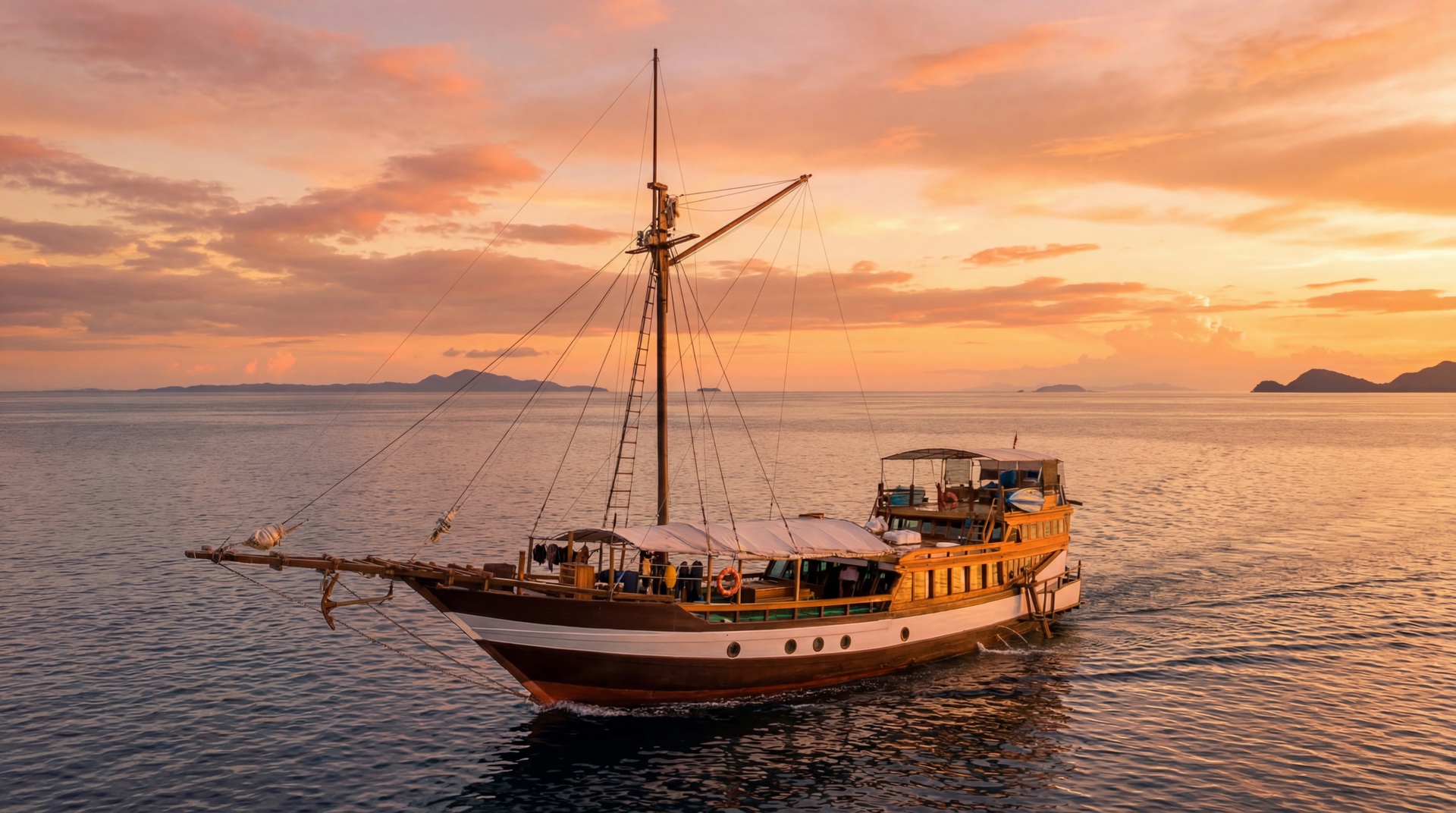
Wellenreng
Indonesia
9 guests25 m
$423/day
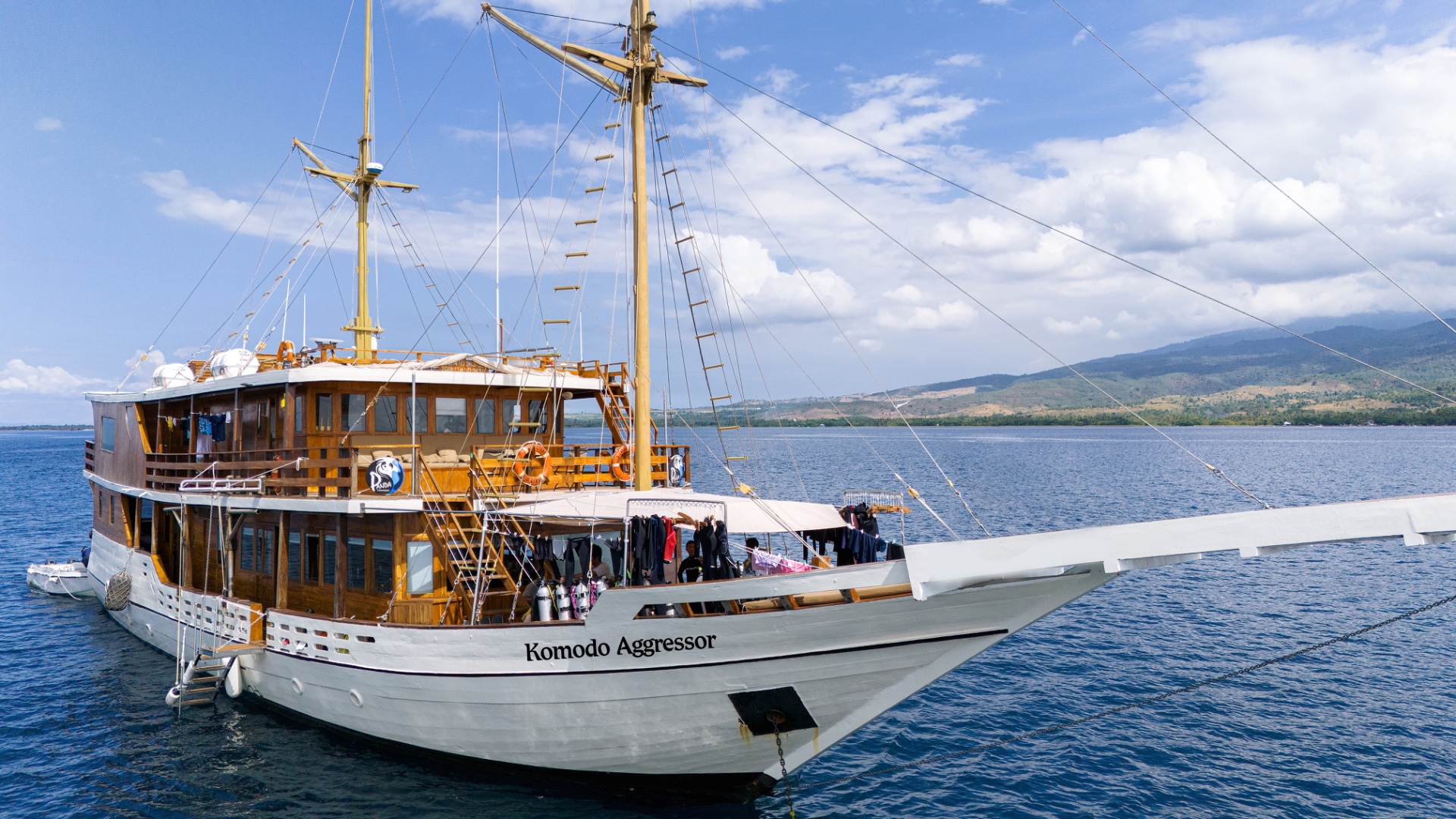
Komodo Aggressor
Komodo, Indonesia
16 guests29 m
$312/day
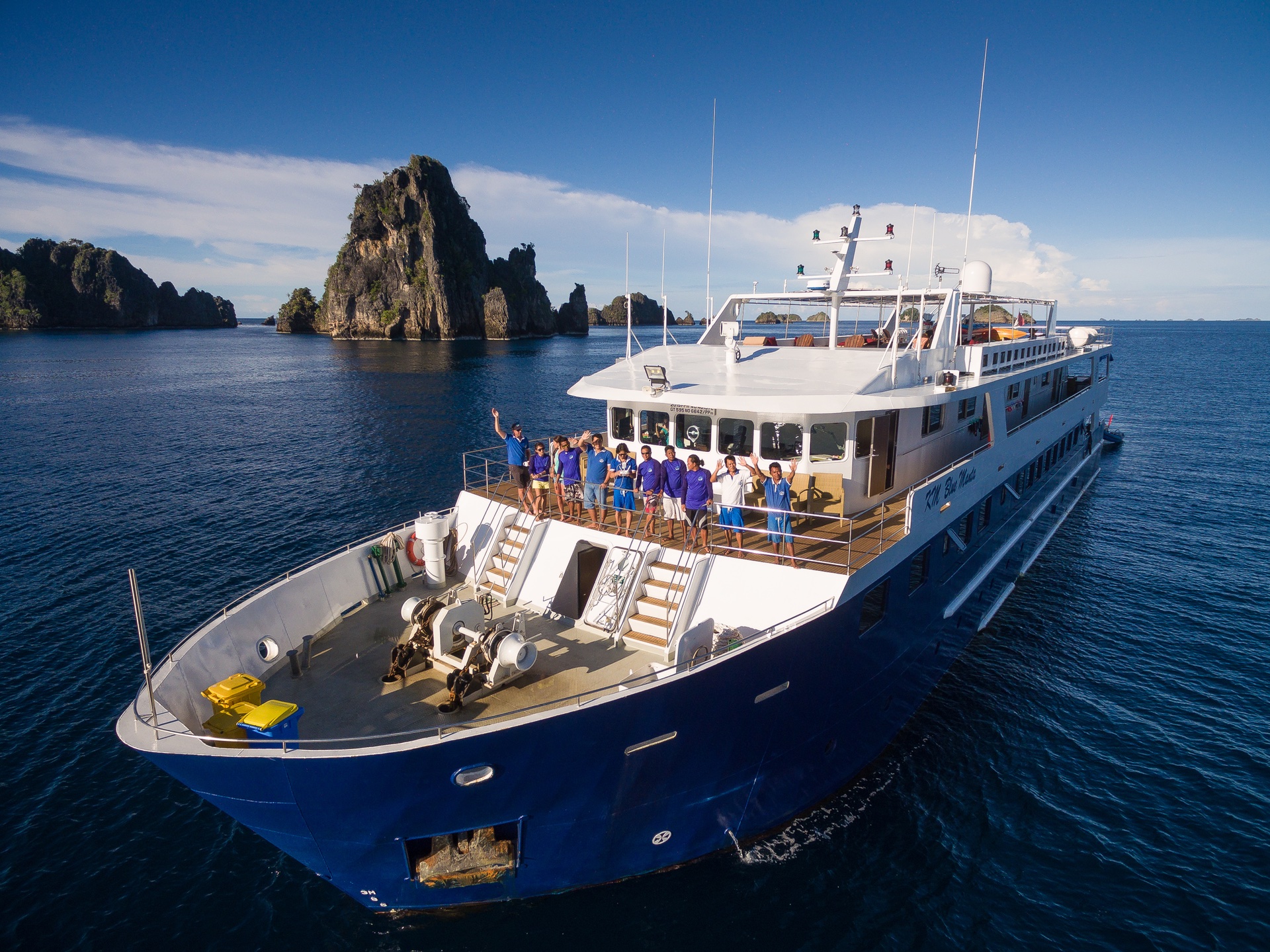
Blue Manta
Indonesia
20 guests45 m
$482/day
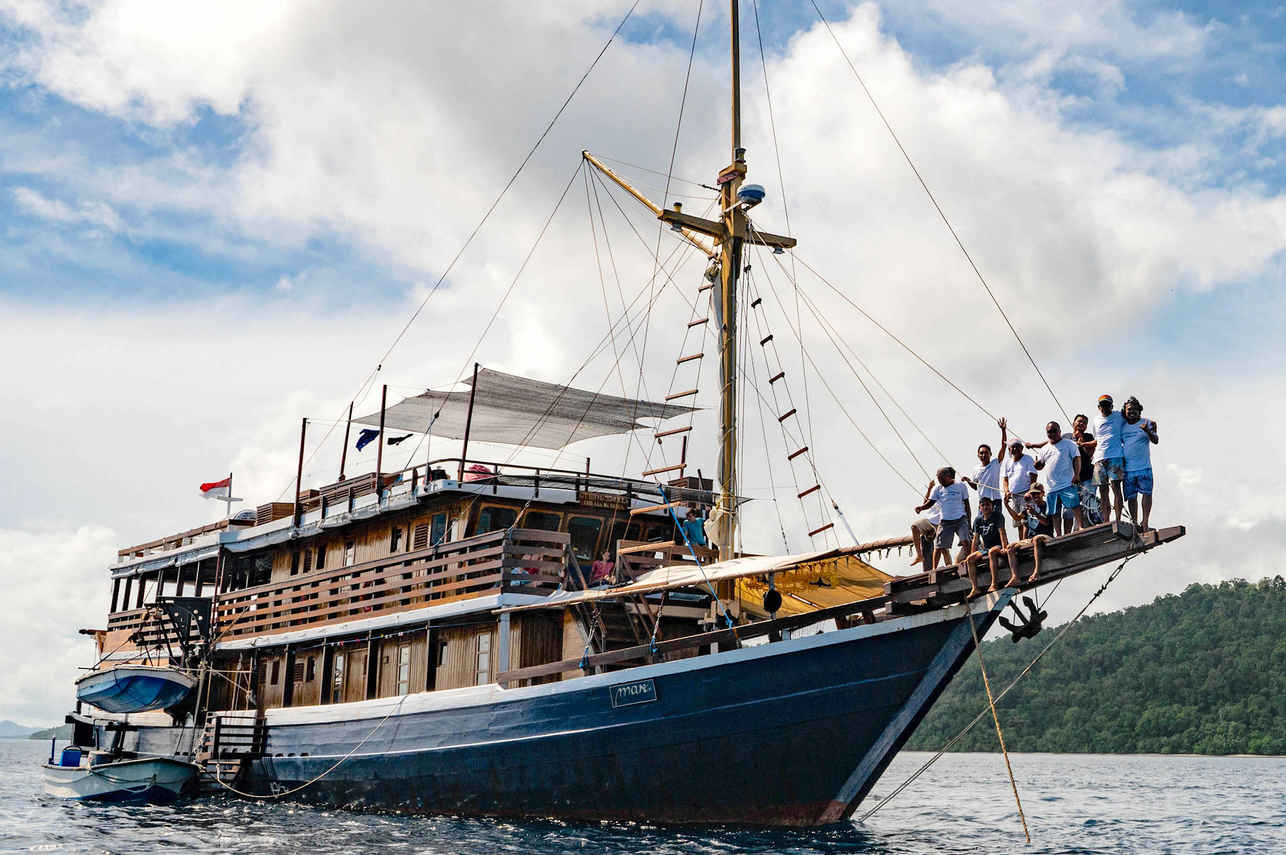
Mari
Indonesia
14 guests32.2 m
$320/day
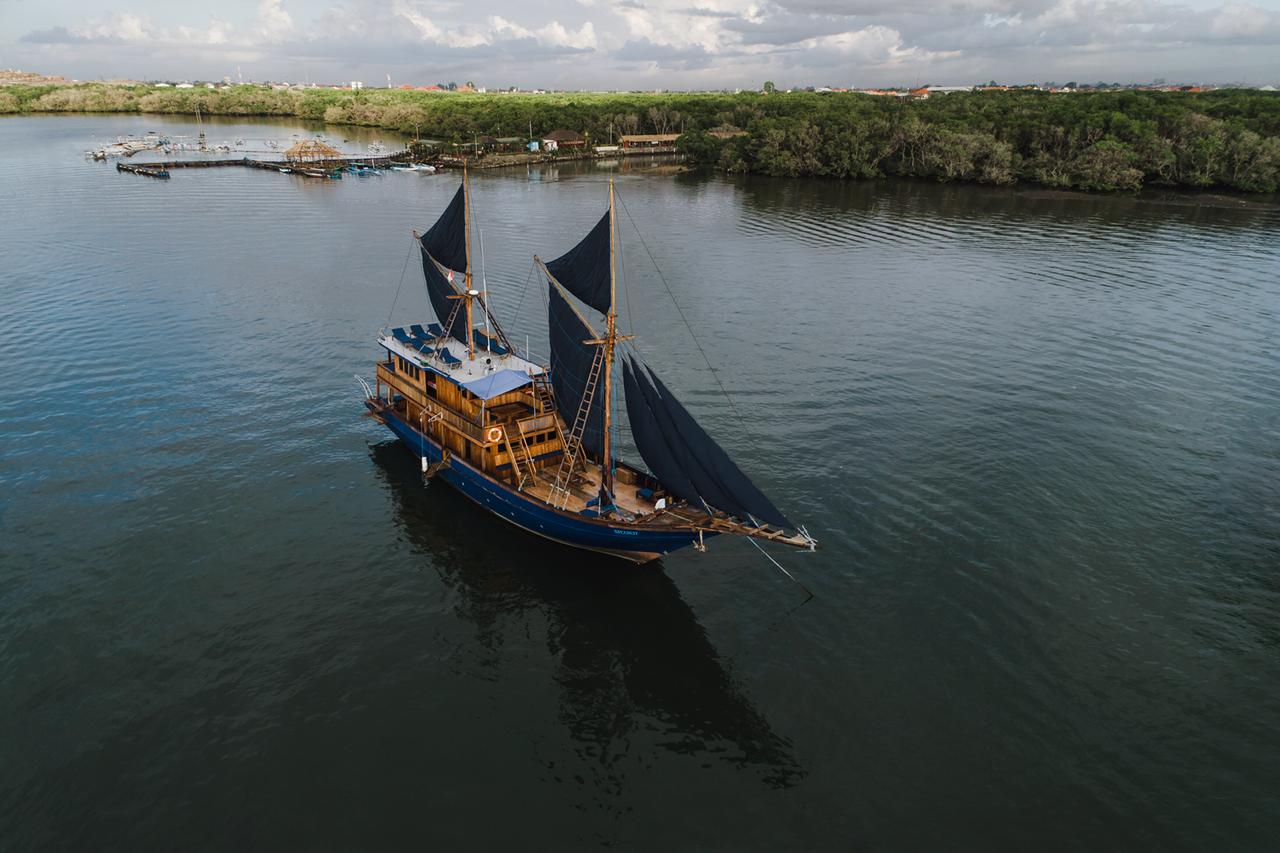
Situju7
Komodo, Indonesia
10 guests32.7 m
$362/day
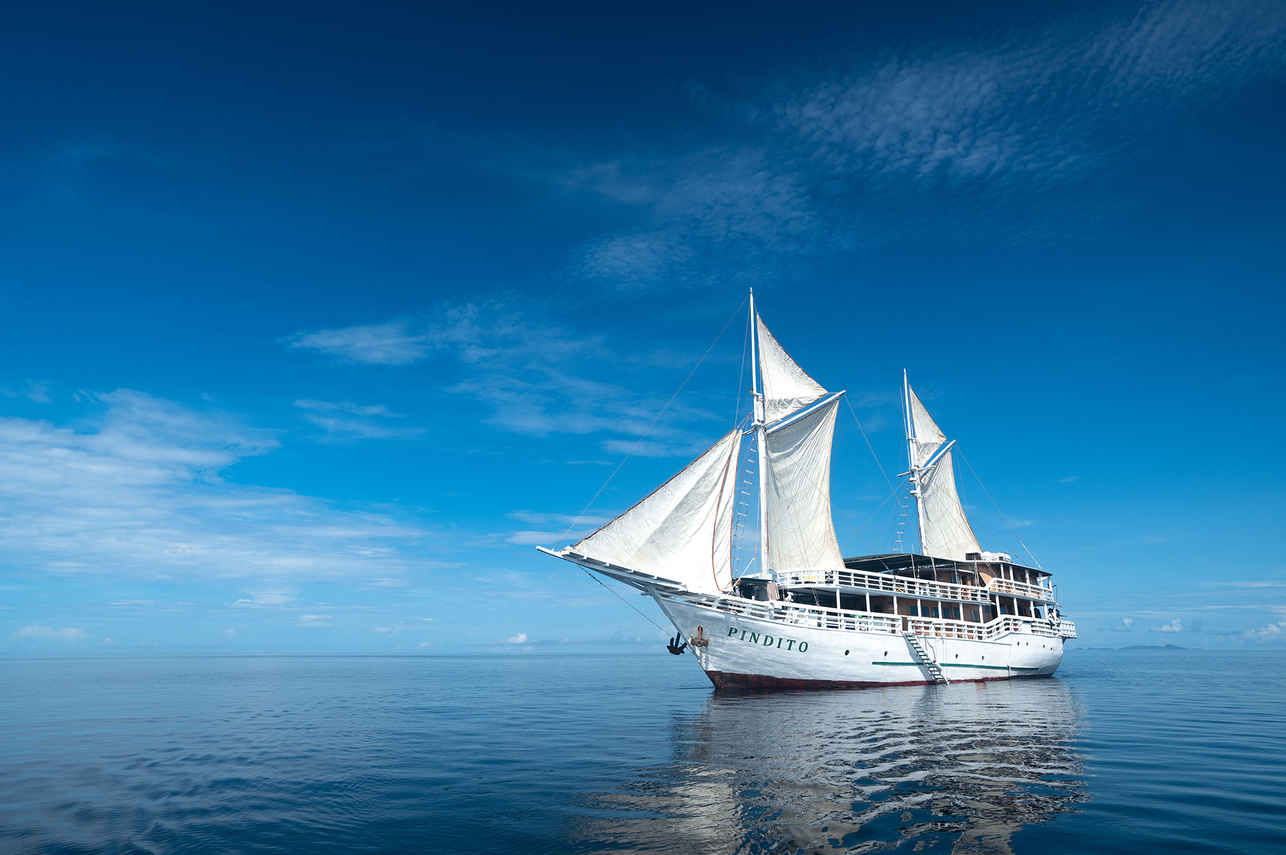
Pindito
Indonesia
16 guests37.79 m
$533/day
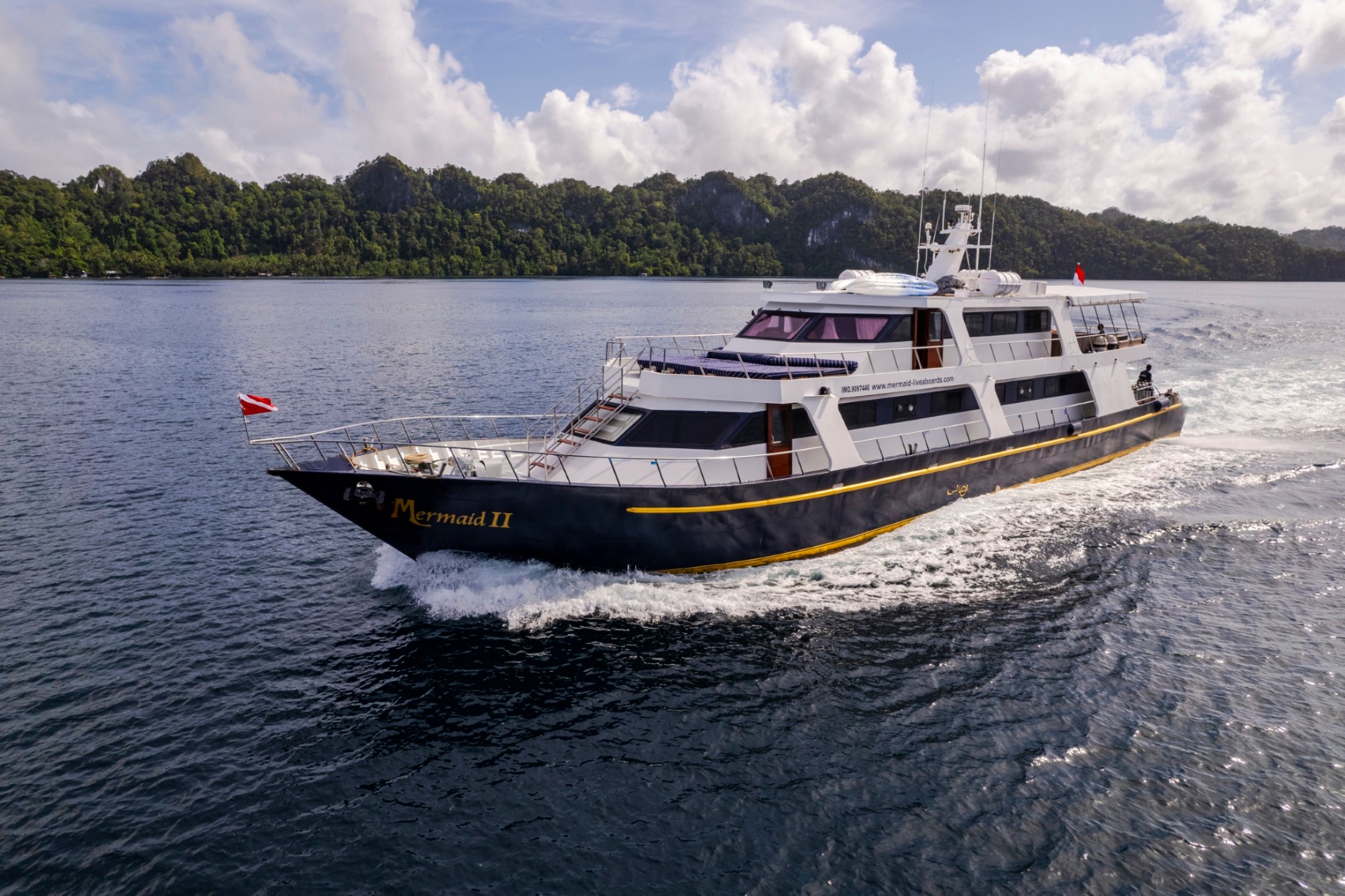
Mermaid II
Komodo, Indonesia
18 guests
$388/day
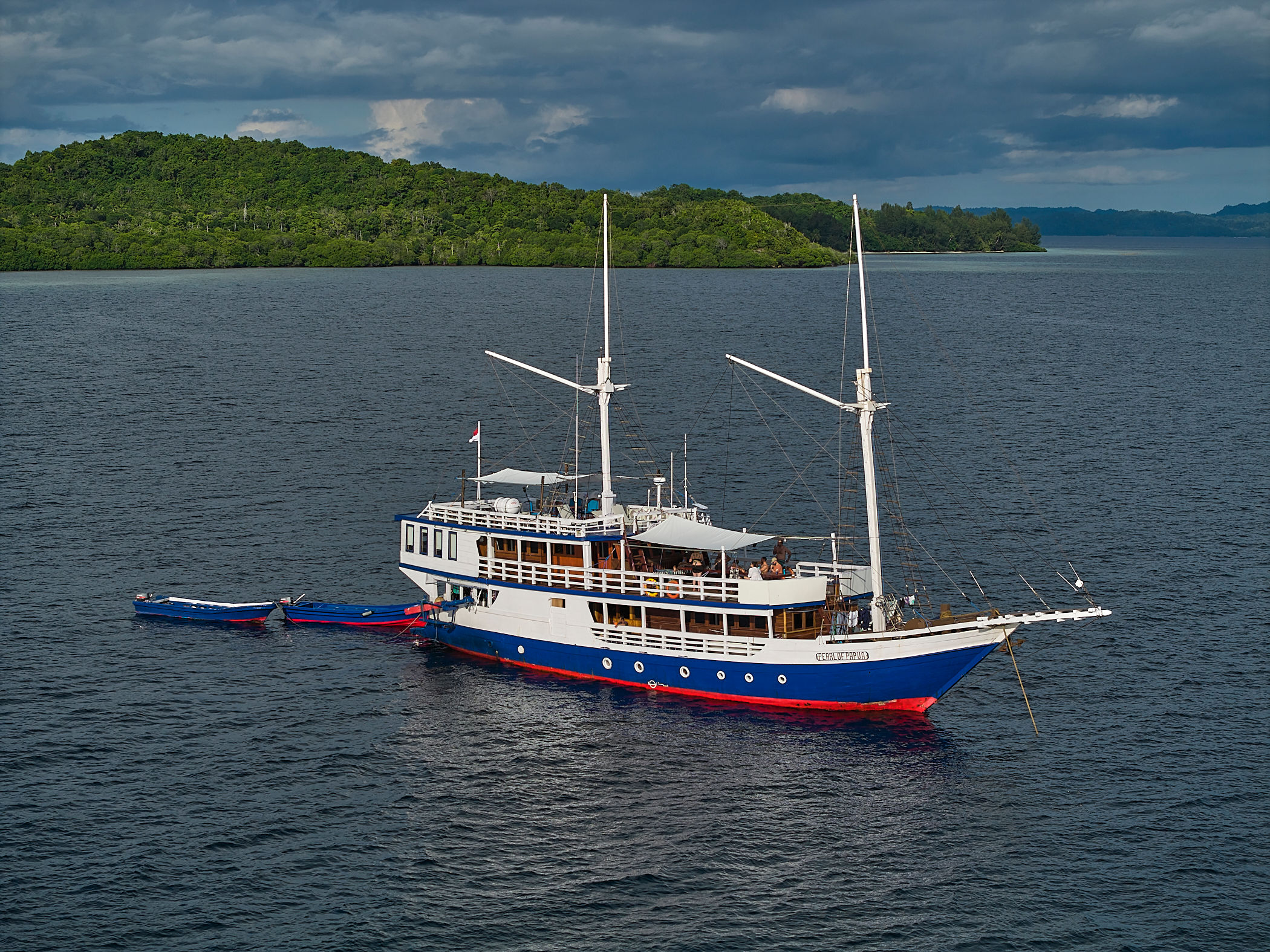
Pearl of Papua
Raja Ampat, Indonesia
14 guests30 m
$303/day
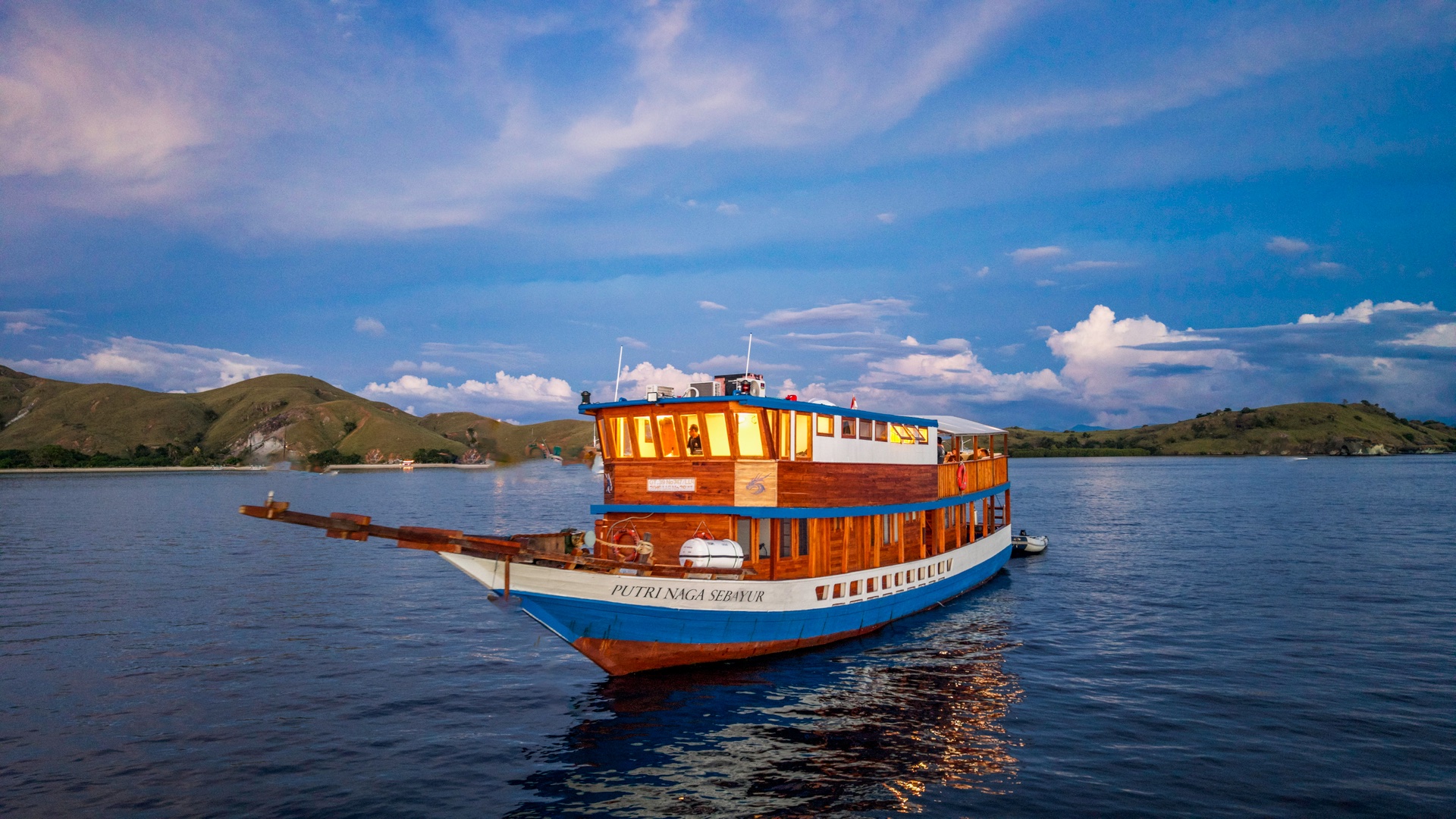
Putri Naga
Komodo, Indonesia
6 guests25 m
Dive sites similar to Cenderawasih Bay
Same character, same waters — six more sites divers love for the exact same reasons.Compare seasons, access and liveaboard routes — then pick the site that fits your trip best.
© Esri — Maxar, Earthstar, GIS
Big La Laguna
Philippines
Big La Laguna is a beach community situated on the western edge of the Sabang Peninsula, a popular dive region on Mindoro Island, Philippines.
- Suitable for
- Intermediate
- Current
- Moderate
- Access
- Dayboat
- Depth
- 5–35 m
- Theme
- Reef / Wall
© Esri — Maxar, Earthstar, GIS
Rusa Pinnacle
Alor
Rusa Pinnacle is a challenging yet highly rewarding dive site situated in the Alor archipelago, part of Indonesia's East Nusa Tenggara.
- Suitable for
- Advanced
- Current
- Strong
- Access
- Liveaboard only
- Depth
- 6–30 m
- Theme
- Reef
Lipah Bay is situated on Bali's northeast coast within the Amed area, nestled against the dramatic backdrop of Gunung Agung.
- Suitable for
- Beginner
- Current
- Mild
- Access
- Liveaboard or dayboat
- Depth
- 5–30 m
- Theme
- Reef / Drift
© Esri — Maxar, Earthstar, GIS
Tangked Cave
Bali
Tangked Cave, sometimes referred to as Tangked Taked Shark Cave, is an advanced dive site situated in the open ocean off Bali's southeastern coast.
- Suitable for
- Advanced
- Current
- Moderate
- Access
- Liveaboard or dayboat
- Depth
- 15–40 m
- Theme
- Cave & cavern / Reef
© Esri — Maxar, Earthstar, GIS
Schools Out
Alor
Schools Out in Alor offers divers an exceptional encounter with healthy coral reefs and a rich variety of marine species.
- Suitable for
- Intermediate
- Current
- Mild
- Access
- Liveaboard only
- Depth
- 20–30 m
- Theme
- Reef
© Esri — Maxar, Earthstar, GIS
Batununggul
Bali
Batununggul, also known as Suana or Batumulapan by some operators, is a dynamic wall and sloping reef dive site situated on the eastern side of Nusa Penida, Bali.
- Suitable for
- Advanced
- Current
- Strong
- Access
- Liveaboard or dayboat
- Depth
- 10–40 m
- Theme
- Wall