Falkland Islands - South Georgia - Elephant Island - Antarctica - Polar Circle (Ushuaia - Ushuaia)
Hondius Antarctica Diving · Antarctica · 22 nights
About this route
This expedition offers a unique opportunity to explore the remote and pristine landscapes of the Falkland Islands, South Georgia, and the Antarctic Peninsula. Participants will discover a rich tapestry of wildlife, from albatrosses and penguins to seals and whales, set against a backdrop of dramatic glaciers and ice-filled waters. The journey blends incredible natural beauty with historical insights, including significant sites related to early Antarctic exploration.
Regions on this route
Highlights
Antarctic Peninsula
The Antarctic Peninsula is the northernmost part of the Antarctic mainland, characterized by dramatic ice-covered landscapes, towering glaciers, and a remarkable abundance of wildlife, including penguins, seals, and whales. It is a prime destination for exploring the Antarctic wilderness.
- Dramatic glaciers
- Abundant wildlife
- Penguins, seals, whales
Beagle Channel
The Beagle Channel is a scenic strait in Tierra del Fuego, known for its stunning natural beauty and historical significance. It offers views of rugged landscapes and varied wildlife along its shores.
- Scenic strait
- Tierra del Fuego
- Historical importance
Drake Passage
The Drake Passage is the body of water connecting the Atlantic and Pacific oceans, known for its often rough seas. It is a key gateway to Antarctica and offers excellent opportunities for pelagic birdwatching.
- Gateway to Antarctica
- Pelagic birdwatching
- Dynamic sea conditions
Elephant Island
Elephant Island is a remote, ice-covered island in the outer South Shetland Islands, famous as the survival site for Ernest Shackleton's crew after the loss of the Endurance. It serves as a significant landmark in Antarctic exploration history.
- Shackleton's expedition history
- Remote icy island
- Historical landmark
Falkland Islands
The Falkland Islands are a remote archipelago in the South Atlantic, renowned for their incredible birdlife, particularly large colonies of albatrosses and several penguin species. The islands also offer insights into their unique cultural and historical heritage.
- Rich birdlife
- Penguin colonies
- Historical charm
South Georgia
South Georgia is an isolated island in the South Atlantic, famed for its colossal King penguin colonies and vast populations of seals. It offers breathtaking landscapes and significant historical sites related to whaling and early Antarctic exploration.
- Colossal penguin colonies
- Vast seal populations
- Dramatic landscapes
South Orkney Islands
These volcanic islands feature dramatic landscapes and serve as a base for scientific research. Visitors may encounter various penguin species and seals, particularly on Coronation Island and Laurie Island.
- Volcanic islands
- Scientific stations
- Penguins and seals
South Shetlands
The South Shetland Islands are a chain of volcanic islands north of the Antarctic Peninsula, known for their abundant wildlife, including vast penguin colonies and various seal species. They offer dramatic landscapes and historical sites.
- Volcanic archipelago
- Abundant wildlife
- Penguin colonies
Ushuaia
Ushuaia, located on the southernmost tip of Argentina, is known as the "End of the World." It serves as a primary gateway for Antarctic expeditions, offering scenic views of the Beagle Channel and a charming town atmosphere.
- Southernmost city
- Antarctic gateway
- Beagle Channel views
Good to know
- Itinerary is a guideline and subject to change based on weather, ice, and wildlife conditions.
- Early booking is recommended for this popular expedition.
Day-by-day plan
Day 1: Embarkation – Ushuaia
Your voyage begins in Ushuaia, Argentina, the southernmost city in the world, located at the tip of South America. After settling into your cabin, you'll have time to explore this small resort town, known as the "End of the World," and admire the Beagle Channel before embarking on your Antarctic adventure.
Day 2: At Sea – The Winged Life of the Westerlies
Today is spent crossing the westerlies, a region known for its strong winds and dynamic seas. This transit offers an excellent opportunity to observe various species of albatrosses, storm petrels, shearwaters, and diving petrels, which are often seen soaring gracefully over the waves.
Day 3: Falkland Islands – Wildlife Discoveries
The Falkland Islands are renowned for their abundant wildlife, particularly their large seabird colonies and marine mammal populations. The archipelago is a vital breeding ground, supporting numerous species that thrive in its protected waters. Chances are high to spot commerson's dolphins playing in the surrounding waters.
Day 4: Falkland Islands – Westpoint Island & Saunders Island
Today's exploration of the Falkland Islands includes visits to Westpoint Island, a birding hotspot known for its black-browed albatross rookery and rockhopper penguins. Saunders Island offers further opportunities for wildlife viewing, with nesting areas for Gentoo, Magellanic, and King penguins, along with imperial shags and rockhopper penguins. Landings provide close-up encounters with these fascinating creatures.
Day 5: Falkland Islands – Port Stanley
Today focuses on Port Stanley, the capital of the Falkland Islands. This charming British-influenced town features colorful houses and a strong sense of its unique history. Visitors can explore local museums, witness decades-old clipper ships, and appreciate the community of approximately 2,100 people who call this remote outpost home.
Day 6: At Sea – Towards South Georgia
As the vessel continues its journey south towards South Georgia, the water temperature gradually cools. This transition brings forth nutrient-rich waters that support an abundance of marine life. Keep an eye out for various species of albatrosses, petrels, prions, seals, and whales that thrive in these productive waters.
Day 7: At Sea – Towards South Georgia
As the vessel continues its journey south towards South Georgia, the water temperature gradually cools. This transition brings forth nutrient-rich waters that support an abundance of marine life. Keep an eye out for various species of albatrosses, petrels, prions, seals, and whales that thrive in these productive waters.
Day 8: South Georgia – Exploring Fortuna Bay
Today marks the arrival in South Georgia, with planned activities focusing on the island's unique wildlife and dramatic landscapes. Fortuna Bay is a significant site, offering opportunities to see a variety of wildlife. Weather conditions will dictate the exact program, ensuring the best possible experience.
Day 9: South Georgia – Salisbury Plain & Grytviken
Activities in South Georgia continue, with potential visits to Salisbury Plain, known for its vast colony of King penguins. Another possible destination is Grytviken, a former whaling station and now a museum, offering historical insights into the island's past. The specific itinerary adjusts based on prevailing weather and ice conditions.
Day 10: South Georgia – Exploring the Island
Further exploration of South Georgia continues, with the day's activities determined by current weather conditions. This ensures visitors have the best opportunities to experience the island's diverse wildlife and stunning scenery. Possible sites include areas known for large penguin colonies or historical landmarks.
Day 11: At Sea – Southward Bound
Today is spent at sea, heading south towards the Antarctic continent. This leg of the journey offers further opportunities for spotting pelagic birds and marine mammals, as the vessel approaches the colder, ice-filled waters of the Antarctic region. Keep watch for various species of seals and whales.
Day 12: South Orkney Islands – Scenic Vistas
Depending on conditions, a visit to the South Orkney Islands may include Coronation Island or Laurie Island. These islands are home to scientific stations and offer dramatic scenery, with ice-covered landscapes and towering cliffs. Wildlife, particularly various penguin species and seals, may be observed.
Day 13: Elephant Island – Legendary Exploration
Today, the journey may lead to Elephant Island, a historically significant site where Ernest Shackleton's crew found refuge after their ship, the Endurance, was crushed by ice. This barren, icy island holds a poignant place in Antarctic exploration history. Weather permitting, the vessel will cruise along its shores.
Day 14: Antarctic Peninsula – Unveiling the Continent
Upon reaching the Antarctic Peninsula, you'll be immersed in a landscape of towering icebergs, dramatic glaciers, and abundant wildlife. Possible landings offer opportunities to set foot on the continent, explore its pristine natural beauty, and observe its unique fauna. The itinerary remains flexible to maximize sightings and experiences.
Day 15: Antarctic Peninsula – Scenic South Shetland
The volcanic South Shetland Islands feature a rugged coastline and snow-capped peaks, offering stunning vistas. The area is known for lush green vegetation in some areas, providing a contrast to the icy surroundings. It is a haven for various penguin species and other Antarctic wildlife, often providing excellent photo opportunities.
Day 16: Antarctic Peninsula – Weddell Sea & Neko Harbour
A possible visit to the Weddell Sea offers breathtaking ice landscapes and unique geological formations. Later, Neko Harbour, known for its active glacier and Gentoo penguin colony, provides opportunities for Zodiac cruises and landings. This area is celebrated for its stunning panoramic views and abundant wildlife.
Day 17: Antarctic Peninsula – Gerlache Strait
The vessel will navigate through the scenic Gerlache Strait, an area celebrated for its vast icebergs and dramatic scenery. Zodiac cruises are planned to explore hidden bays and coves, offering up-close encounters with wildlife and stunning photographic opportunities. This region is a prime location for spotting whales and various seal species.
Day 18: Antarctic Peninsula – Paradise Bay & Port Lockroy
Paradise Bay, renowned for its towering glaciers and pristine waters, offers breathtaking views and opportunities for Zodiac cruises. Another potential stop is Port Lockroy, a historic British base and museum, where visitors can learn about Antarctic heritage. The specific sites visited are weather-dependent, aiming to maximize exploration and wildlife encounters.
Day 19: Antarctic Peninsula – Deception Island & Cuverville Island
Today's itinerary might include Deception Island, an active volcano with a flooded caldera, offering a unique opportunity to explore its geothermal waters and historical whaling remains. Cuverville Island, a small island, is home to one of the largest gentoo penguin colonies in the Antarctic Peninsula, providing incredible wildlife viewing opportunities.
Day 20: Antarctic Peninsula – Pointe Lockroy & Jougla Point
Further exploration of the Antarctic Peninsula continues, with potential visits to locations like Pointe Lockroy, a historic British Antarctic research station turned museum and post office, and Jougla Point, known for its large colonies of Gentoo penguins and a variety of sea birds. The specific itinerary is flexible to take advantage of the best wildlife and weather conditions.
Day 21: At Sea – Familiar Seas
As the ship sails away from the Antarctic Peninsula, you'll cross familiar seas towards Ushuaia. This transit offers a final chance to reflect on the incredible journey and perhaps spot some last marine life from the deck. Enjoy the serene beauty of the open ocean and share experiences with fellow travelers.
Day 22: At Sea – Familiar Seas
As the ship sails away from the Antarctic Peninsula, you'll cross familiar seas towards Ushuaia. This transit offers a final chance to reflect on the incredible journey and perhaps spot some last marine life from the deck. Enjoy the serene beauty of the open ocean and share experiences with fellow travelers.
Day 23: Disembarkation – Ushuaia
Your incredible Antarctic journey concludes today as you disembark in Ushuaia. It's time to say goodbye to your fellow adventurers and the crew, taking with you a lifetime of memories from this extraordinary expedition.
Upcoming departures
- 2027-02-13 – 2027-03-07from 18,295 USDBook
All routes of this liveaboard
- Falkland Islands - South Georgia - Antarctica (Ushuaia - Ushuaia) · 18 nights
- Falkland Islands, South Georgia & Antarctic Peninsula (Puerto Madryn - Ushuaia) · 20 nights
- Antarctica - Whale Watching Discovery and Learning Voyage (Ushuaia - Ushuaia) · 10 nights
- Antarctica - Discovery and Learning Voyage (Ushuaia - Ushuaia) · 10 nights
- Antarctica - Discovery and Learning Voyage (Ushuaia - Ushuaia) · 10 nights
- Antarctica - Whale Watching (Ushuaia - Ushuaia) · 10 nights
- Falkland Islands - South Georgia - Elephant Island - Antarctica - Polar Circle (Ushuaia - Ushuaia) · 22 nights
About the vessel
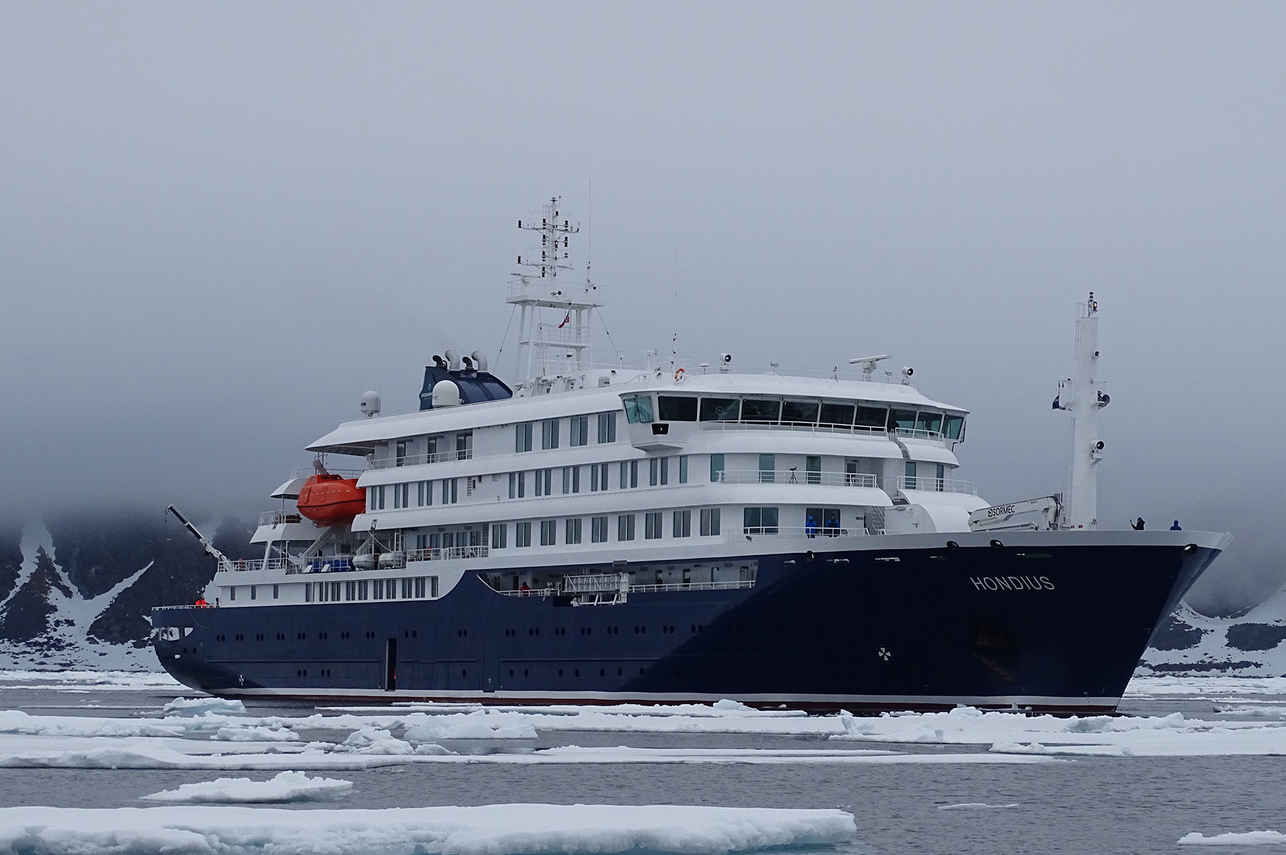 Hondius Antarctica DivingAntarctica