Falkland Islands - South Georgia - Antarctica (Ushuaia - Ushuaia)
Hondius Antarctica Diving · Antarctica · 18 nights
About this route
This expedition offers an unforgettable journey through the Falkland Islands, South Georgia, and the Antarctic Peninsula, exploring some of Earth's last untamed areas. Guests will discover exceptional landscapes and diverse wildlife, from historical sites and vibrant colonies of seabirds and marine mammals to the majestic icy realms of Antarctica. The itinerary promises a comprehensive exploration of this remote and pristine region.
Regions on this route
Highlights
Antarctic Peninsula
The Antarctic Peninsula is a region of stunning natural beauty, characterized by towering icebergs, majestic glaciers, and dramatic fjords. It is a prime destination for wildlife observation, with common sightings of various penguin species, seals, and whales. The landscape offers unparalleled photographic opportunities and a profound sense of wilderness.
- Towering icebergs
- Glacial fjords
- Diverse penguin species
- Whale watching
Elephant Island
Elephant Island is a remote, ice-covered island in the South Shetland Islands, famously known as the refuge for Ernest Shackleton's crew during his ill-fated Imperial Trans-Antarctic Expedition. While landings are challenging due to its harsh conditions, the island's historical significance and dramatic icy facade make it a notable landmark in Antarctic exploration.
- Shackleton's expedition history
- Ice-covered landscapes
- Remote Antarctic outpost
Falkland Islands
The Falkland Islands are a haven for birdlife, particularly various penguin species like Magellanic, Gentoo, and King penguins. The islands also feature historical sites related to the 1982 conflict and offer insights into Victorian culture in Port Stanley. The rugged coastline and diverse ecosystems make it a unique destination for wildlife viewing and cultural exploration.
- Diverse penguin species
- Varied birdlife
- Historical importance
- Coastal landscapes
South Georgia
South Georgia is an important sub-Antarctic island known for its rich biodiversity and historical significance. It hosts immense colonies of king penguins, macaroni penguins, and a significant population of fur and elephant seals. The island's dramatic landscapes include glaciers, mountains, and vast plains. Historical sites, such as the former whaling station Grytviken, offer insights into human presence in this remote region.
- King penguin colonies
- Elephant and fur seals
- Glacial landscapes
- Historical whaling stations
South Orkney Islands
The South Orkney Islands are a group of islands in the Southern Ocean, known for their scientific research stations and wildlife. Laurie Island, home to Orcadas Base, an Argentine scientific station, offers opportunities for exploration (conditions permitting). The islands provide a unique glimpse into the sub-Antarctic environment and its resilient ecosystems.
- Scientific research stations
- Sub-Antarctic wildlife
- Remote island group
- Glacial views
South Pole
While not a direct destination for this type of trip, the South Pole represents the ultimate goal of Antarctic exploration, symbolizing the remote and untouched nature of the continent. Its inclusion as a key region emphasizes the expedition's deep immersion into the Antarctic environment and its associated challenges and rewards.
- Symbol of Antarctic exploration
- Extreme remote location
- Illustrates expedition depth
Ushuaia
Ushuaia, located on the southernmost tip of Argentina, is often referred to as the 'End of the World'. This vibrant city serves as the primary gateway for Antarctic expeditions, offering a unique blend of urban amenities surrounded by the dramatic mountain scenery of Tierra del Fuego. It's the starting point for voyages into the remote polar regions.
- Gateway to Antarctica
- Southernmost city
- Mountain scenery
- Beagle Channel access
Shore excursions
- Explore the historical sites and wildlife of Carcass Island, known for its diverse bird species including Magellenic and Gentoo penguins.
- Visit Saunders Island to observe King, Magellanic, and Gentoo penguins, alongside black-browed albatrosses.
- Discover the Victorian charm of Port Stanley and its museums in the Falkland Islands.
- Experience the raw beauty of Fortuna Bay with its large king penguin colony and Shackleton's Waterfall.
- Witness the vast Antarctic fur seal breeding beaches at Salisbury Plain.
- Visit the historic Grytviken whaling station in South Georgia.
- Explore the Argentine scientific station at Orcadas Base on Laurie Island (conditions permitting).
- Land on the Antarctic Continent itself via the Weddell Sea (conditions permitting).
Day-by-day plan
Day 1: Ushuaia – World's End Departure
The journey commences in Ushuaia, Argentina, a city renowned as the southernmost in the world. Guests will embark on the vessel in the afternoon, setting sail through the Beagle Channel with its stunning mountain-ringed scenery. This marks the beginning of an extraordinary adventure.
Day 2: Drake Passage – Ocean Crossing
Today is dedicated to traversing the Southern Ocean, often referred to as the Drake Passage. The vessel will steer southwards, navigating strong winds and ocean swells. This passage provides an opportunity to spot various seabirds and marine fauna that thrive in these waters.
Day 3: Falkland Islands – Wildlife Encounters
The Falkland Islands are known for their abundant wildlife and rich history. While the itinerary is flexible, opportunities often arise to explore diverse islands, which are home to significant breeding populations of seabirds and marine mammals. The area is known for its incredible birdlife and penguin colonies.
Day 4: Falkland Islands – Stanley Exploration
Today focuses on the Falkland Islands' cultural center, Port Stanley, a town filled with Victorian-era charm and colorful houses. Guests can explore various historical sites, including the 1982 conflict memorials. The local museum offers insight into the islands' history and natural heritage.
Day 5: Southern Ocean Crossing – Towards South Georgia
The vessel continues its journey eastward across the Southern Ocean toward South Georgia. This day is spent at sea, allowing guests to relax and observe the dramatic shifts in the marine environment. The waters here are known for their rich nutrient content, attracting various seabirds and marine mammals.
Day 6: Southern Ocean Crossing – Towards South Georgia
The vessel continues its journey eastward across the Southern Ocean toward South Georgia. This day is spent at sea, allowing guests to relax and observe the dramatic shifts in the marine environment. The waters here are known for their rich nutrient content, attracting various seabirds and marine mammals.
Day 7: South Georgia – Expedition Day
Arrival in South Georgia marks the beginning of active exploration, with activities planned based on weather conditions. This island is a haven for wildlife, with a stunning landscape of glaciers, mountains, and vast plains. The area is renowned for its immense penguin colonies and historical significance.
Day 8: South Georgia – Fortuna Bay & Salisbury Plain
Today's opportunities in South Georgia may include a visit to Fortuna Bay, featuring a large king penguin colony and a historic Shackleton's Waterfall. Salisbury Plain is also a major highlight, known for one of the world's largest breeding beaches for Antarctic fur seals. Spring is an ideal time to observe young elephant seals.
Day 9: South Georgia – Grytviken and South Orkney Journey
An optional visit to Grytviken, a historical whaling station, offers insights into the island's past. Following exploration, the vessel will start its southward journey towards the South Orkney Islands. This segment of the trip focuses on transitioning between two distinct regions, with continued opportunities for marine life sightings.
Day 10: Southward Bound – Oceanic Transect
The vessel continues its southward trajectory, navigating the expansive waters that lead towards the South Orkney Islands. This day offers further opportunities to spot seabirds and potentially other marine animals that inhabit the colder southern seas. The journey provides a sense of the vastness of the Antarctic region.
Day 11: Southward Bound – Oceanic Transect
The vessel continues its southward trajectory, navigating the expansive waters that lead towards the South Orkney Islands. This day offers further opportunities to spot seabirds and potentially other marine animals that inhabit the colder southern seas. The journey provides a sense of the vastness of the Antarctic region.
Day 12: South Orkney – Scenic Views
Today includes a potential visit to Orcadas Base, an Argentine scientific station on Laurie Island in the South Orkney Archipelago. If conditions permit, guests can explore the area, which offers panoramic views of the surrounding glaciers. The precise itinerary depends on local ice and weather conditions.
Day 13: Antarctica – Iceberg Realm
Entering the Antarctic region brings spectacular views of icebergs and the chance to spot whales. This vast, icy wilderness offers immense photographic opportunities. The precise activities and landing sites are determined by local weather and ice conditions to ensure safety and optimal wildlife viewing.
Day 14: Antarctica – Iceberg Realm
Entering the Antarctic region brings spectacular views of icebergs and the chance to spot whales. This vast, icy wilderness offers immense photographic opportunities. The precise activities and landing sites are determined by local weather and ice conditions to ensure safety and optimal wildlife viewing.
Day 15: Antarctica – Weddell Sea Exploration
Today's focus is on exploring the Weddell Sea, known for its colossal tabular icebergs. Possible activities include a visit to the eastern side of the Antarctic Peninsula, near Adélie penguin colonies. The goal is to set foot on the Antarctic Continent itself, an experience that highlights the immense beauty of this polar region.
Day 16: Antarctic Peninsula – Stunning Vistas
The expedition continues into the Antarctic Peninsula, a region famed for its breathtaking scenery. This area often features dramatic fjords, towering glaciers, and abundant wildlife. The ship may also navigate towards the Gerlache Strait, offering incredible photographic opportunities amidst the icy terrain.
Day 17: Drake Passage – Homeward Bound
Today marks the beginning of the return journey across the Drake Passage, heading back towards Ushuaia. Guests can reflect on the incredible experiences of the past days while keeping an eye out for familiar seabirds and marine life that accompany the vessel on its journey north.
Day 18: Drake Passage – Homeward Bound
Today marks the beginning of the return journey across the Drake Passage, heading back towards Ushuaia. Guests can reflect on the incredible experiences of the past days while keeping an eye out for familiar seabirds and marine life that accompany the vessel on its journey north.
Day 19: Ushuaia – Disembarkation
The expedition concludes with disembarkation in Ushuaia. This is the final day, and guests will depart with unforgettable memories of their adventure in the Antarctic region.
Upcoming departures
- 2028-01-18 – 2028-02-05from 18,806 USDBook
All routes of this liveaboard
- Falkland Islands, South Georgia & Antarctic Peninsula (Puerto Madryn - Ushuaia) · 20 nights
- Antarctica - Whale Watching Discovery and Learning Voyage (Ushuaia - Ushuaia) · 10 nights
- Antarctica - Discovery and Learning Voyage (Ushuaia - Ushuaia) · 10 nights
- Antarctica - Discovery and Learning Voyage (Ushuaia - Ushuaia) · 10 nights
- Falkland Islands - South Georgia - Elephant Island - Antarctica - Polar Circle (Ushuaia - Ushuaia) · 22 nights
- Antarctica - Whale Watching (Ushuaia - Ushuaia) · 10 nights
- Falkland Islands - South Georgia - Elephant Island - Antarctica - Polar Circle (Ushuaia - Ushuaia) · 22 nights
About the vessel
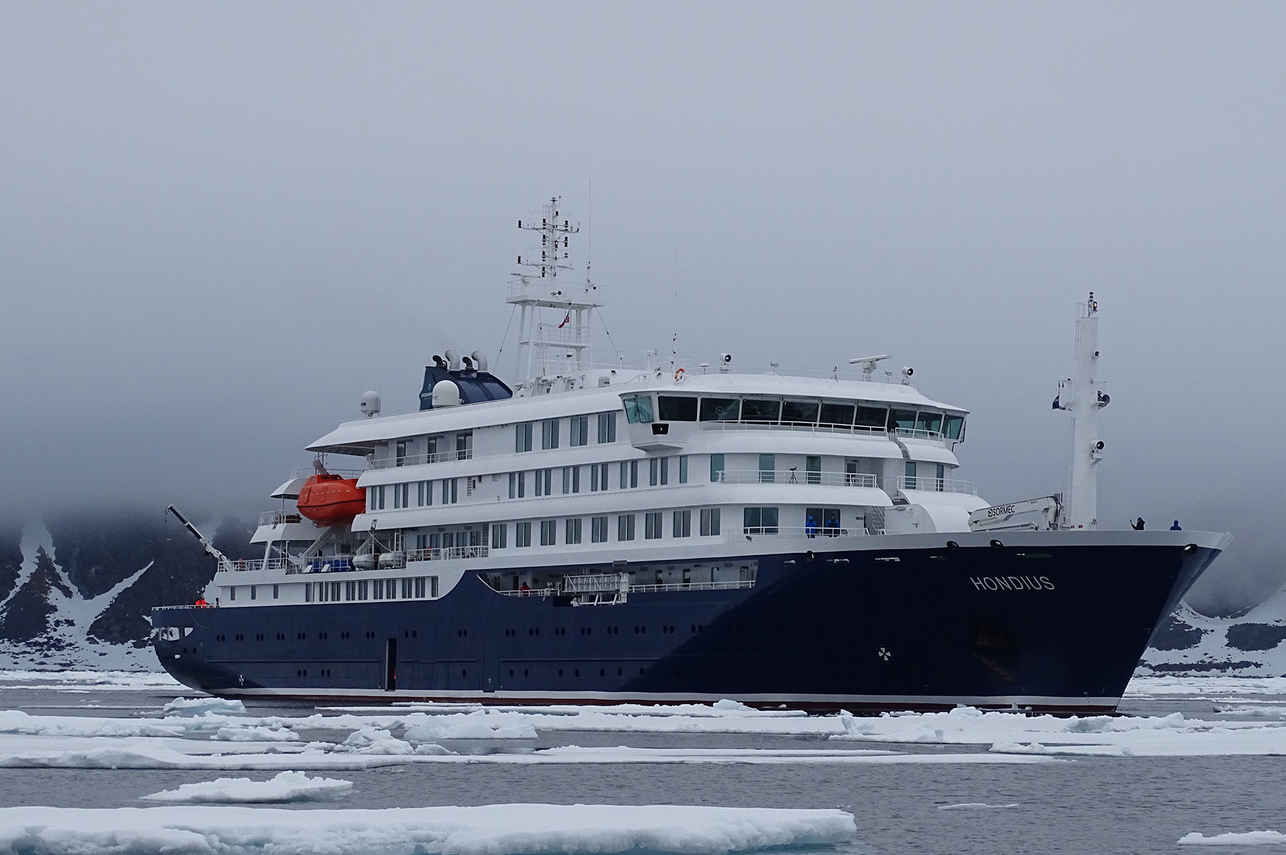 Hondius Antarctica DivingAntarctica