Raja Ampat North & South (Sorong - Sorong)
Gaia Love · Alor · 11 Days / 10 Nights
About this route
This 11-day itinerary explores the diverse northern and southern regions of Raja Ampat, departing from and returning to Sorong. Guests can expect around 29 dives, with a focus on comprehensive exploration of this marine biodiversity hotspot. The region is renowned for its rich coral reefs and abundant marine life, including various species of sharks, rays, and schools of fish.
Day-by-day plan
Day 1: Embarkation in Sorong
Sorong
Guests board Gaia Love in Sorong, the gateway port to Raja Ampat. After welcome drinks, cabin assignments and a full safety and dive briefing, the boat departs into the Dampier Strait. A relaxed afternoon check dive lets the crew confirm weights and trim before the real diving begins.
Day 2: Dampier Strait — Cape Kri & Blue Magic
Dampier Strait, Central Raja Ampat
Full day in the Dampier Strait between Waigeo and Batanta, where nutrient-rich currents create some of the most fish-dense diving in the world. Sites such as Cape Kri and Blue Magic are on the plan, with schooling fish, sweetlips aggregations and the famous fish thunder of large bait balls moving through open water. Reef mantas regularly cruise the cleaning stations.
Day 3: Dampier Strait — Arborek & Manta Sandy
Dampier Strait
Diving continues around the central Dampier sites and the small island of Arborek, known for its pristine jetty dive and resident fish life. Manta Sandy is a typical stop here: a sandy channel where reef mantas queue at cleaning stations. Soft corals on the jetty pilings and wobbegong sharks beneath the wood make the shallow safety stops as rich as the deep portion of the dive.
Day 4: Penemu Islands & Fam
Northern Dampier / Penemu
Northwest of Dampier Strait the boat reaches the Penemu Islands, famous for their hard coral gardens and the iconic Karst lagoon viewpoint. Topside guests can hike to the viewpoint over the turquoise lagoons; underwater the focus is on healthy hard coral plateaus, schooling barracuda and reef sharks patrolling the drop-offs.
Day 5: Aljui Bay & Waigeo
Northern Raja Ampat, Aljui Bay
Gaia Love cruises into Aljui Bay on the west side of Waigeo. The bay is home to a working pearl farm; its jetties are renowned for unusual macro critters and sleeping wobbegongs tucked under the wood. Expect dedicated macro and muck dives alongside reef walls — a strong contrast to the high-current Dampier sites.
Day 6: Kawe & Wayag
Far Northern Raja Ampat
Further north, the rocks and seamounts of Kawe sit directly on the equator — one of the few places in the world where you can cross between hemispheres while diving. Currents and feeding stations attract big schools of fish and oceanic mantas. Continuing on to the Wayag area, the boat reaches the uninhabited limestone islands and white-sand beaches that define Raja Ampat in most photographs.
Day 7: Crossing south — Batanta & Critter Sites
Batanta Island
As the vessel repositions south, dives focus on Batanta Island west of Sorong, which offers a different signature: black-sand critter sites packed with macro subjects. Walking sharks (epaulette sharks), pygmy seahorses, ghost pipefish and unusual nudibranchs are typical sightings between the wider Dampier and Misool legs.
Day 8: Misool — Soft Coral Gardens
Southern Raja Ampat, Misool
Arrival in Misool, in the south of Raja Ampat, marks the start of the second signature region of the trip. Sites such as Boo Windows, Magic Mountain and Whale Rock are typical: walls and seamounts wrapped in some of the densest soft coral and sea fan growth on the planet. Both reef and oceanic manta encounters are possible at Magic Mountain.
Day 9: Misool — Mangroves & Walls
Misool, Western Tip
Continued diving in the Misool archipelago. The plan includes the western tip of Misool, home to one of the world's most striking shallow mangrove dives, with sun rays cutting through the roots over colourful soft corals. Pelagic activity along the outer walls — trevally, snapper schools and reef sharks — typically rounds out the day.
Day 10: Return crossing to Sorong
Southern Raja Ampat → Sorong
Final two morning dives in the south or central area depending on conditions and the captain's routing. The afternoon is spent crossing back towards Sorong, with at least 18–24 hours of surface interval before flying. Guests rinse and pack gear, settle on-board accounts and join the farewell dinner.
Day 11: Disembarkation in Sorong
Sorong
After breakfast guests disembark in Sorong harbour and are transferred to the airport for onward flights. The final opportunity to dive is on Day 10; a minimum 24-hour surface interval is observed before any flight.
Upcoming departures
- 2027-11-22 – 2027-12-02from 6,400 USDBook
- 2028-01-09 – 2028-01-19from 6,500 USDBook
- 2028-01-21 – 2028-01-31from 6,500 USDBook
- 2028-02-02 – 2028-02-12from 6,500 USDBook
- 2028-02-14 – 2028-02-24from 6,500 USDBook
- 2028-02-26 – 2028-03-07from 6,500 USDBook
- 2028-04-04 – 2028-04-14from 6,500 USDBook
- 2028-12-23 – 2029-01-02from 6,500 USDBook
- 2029-01-04 – 2029-01-14from 6,500 USDBook
- 2029-01-16 – 2029-01-26from 6,500 USDBook
- 2029-01-28 – 2029-02-07from 6,500 USDBook
- 2029-02-09 – 2029-02-19from 6,500 USDBook
All routes of this liveaboard
- Triton Bay, South Raja Ampat* (Kaimana → Sorong) · 12D11N
- Gorontalo, Togian Islands (Gorontalo - Gorontalo) · 10 nights
- Kalimantan (Tarakan, 11D10N) · 11D10N
- Banda Seas Forgotten Islands (Tual → Ambon) · 12D11N
- Komodo National Park, Sumbawa (Labuan Bajo → Benoa) · 12D11N
- Lembeh, Sangihe island (Bitung, 11D10N) · 11D10N
- Sumbawa, Komodo National Park (Benoa → Labuan Bajo) · 12D11N
- Ambon, Triton Bay (Ambon - Kaimana) · 12D11N
- Cenderawasih (Manokwari, 11D10N) · 11D10N
- Alor Flores, Komodo National Park (Kalabahi → Labuan Bajo, 12D11N) · 12D11N
- Raja Ampat (South), Ambon (Sorong - Sorong) · 11 nights
- Raja Ampat North & South (Sorong - Sorong) · 10 nights
- Halmahera North & South, Morotai (Ternate) (Ternate → Ternate) · 12D11N
- Triton Bay (Kaimana → Kaimana) · 9D8N
- Manado, Lembeh, Gorontalo, Togian Islands (Manado - Gorontalo) · 10 nights
- Raja Ampat (South), Ambon (Sorong - Sorong) · 11 nights
- Banda Sea, Forgotten Islands (Ambon → Kalabahi) · 12D11N
- Halmahera, Gorontalo, Togian, Lembeh (Ternate → Gorontalo) · 12D11N
- Palu, Sangalaki, Maratua, Derawan (Tarakan - Tarakan) · 11 nights
- Raja Ampat - Central (Sorong - Sorong) · 8D7N
- Sangalaki, Maratua, Derawan (Tarakan - Tarakan) · 10 Days / 9 Nights
- Sangalaki, Maratua, Derawan, Manado (Tarakan - Manado) · 12 Days / 11 Nights
- Manado, South Halmahera, Ambon (Manado - Ambon) · 12 Days / 11 Nights
- Banda Sea, Forgotten Islands (Ambon - Ambon) · 11 Days / 10 Nights
- Ambon, Raja Ampat South (Ambon - Sorong) · 12 Days / 11 Nights
- Raja Ampat (Central) · 7 nights
- Ambon, Raja Ampat (South) · 11 nights
- Derawan, Sangalaki, Maratua · 10 nights
- Gorontalo, Togian Islands · 10 nights
About the vessel
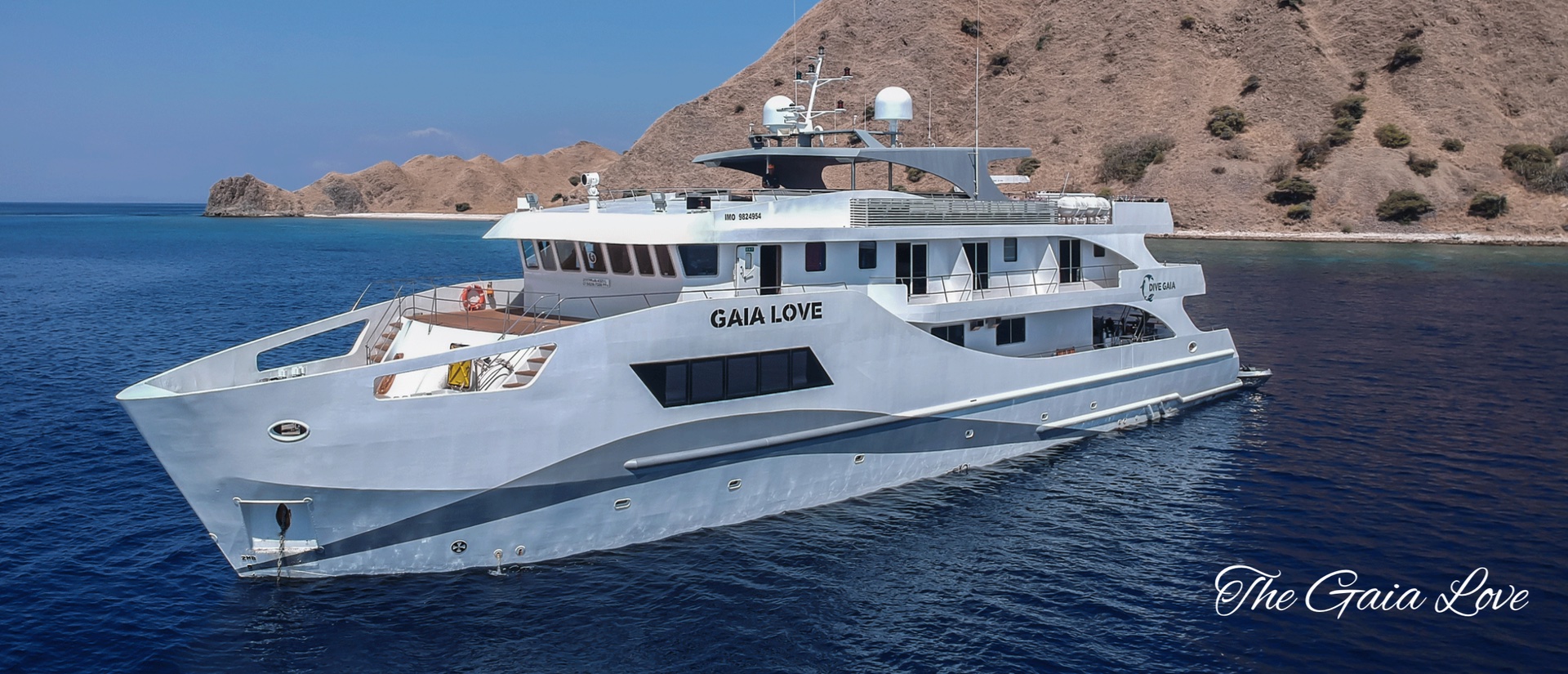 Gaia LoveAlor