Alor Flores, Komodo National Park (Kalabahi → Labuan Bajo, 12D11N)
Gaia Love · Alor · 12D11N
About this route
This liveaboard journey explores the rich biodiversity of Alor and Komodo National Park, offering a diverse range of dive sites from warm tropical waters to cooler currents. Komodo, a New 7 Wonders of Nature, boasts over 1,000 species of fish and hundreds of corals, with varied underwater terrain including sheer walls, pinnacles, and sandy flats. Alor, part of the Lesser Sunda islands, provides constant marine life surprises, from tiny creatures to larger fish and marine mammals. Expect encounters with pelagics and macro life, with diving experiences ranging from fish-filled sites to volcanic black sand.
Requirements
- CertificationOpen Water
- Minimum logged dives50
- ExperienceDivers should have an Open Water certification with a minimum of 50 logged dives.
Good to know
- Guests are advised to arrive on the earliest available flight on the day of embarkation.
- Guests should book the earliest departing flight on the day of disembarkation.
- Guest transfers are arranged individually according to flight ETA and ETD.
- The last dive of the trip is on the penultimate day.
- Divers are recommended to wait 24 hours before flying after their last dive.
Day-by-day plan
Day 1: Embarkation in Kalabahi
Kalabahi, Alor
Arrive at Alor's Mali Airport (ARD) and transfer to the port of Kalabahi to board the vessel. Once all guests are onboard, the crew provides a welcome briefing, including safety procedures and an overview of the journey ahead. Settle into your cabin before enjoying dinner as the boat prepares for its westward adventure.
Good to know: Guest arrival and airport transfer | Welcome briefing and safety procedures | Cabin allocation | Dinner onboard
Day 2: Alor — Pantar Strait Reefs
Pantar Strait, Alor
The diving adventure begins in the nutrient-rich Pantar Strait, separating the islands of Alor and Pantar. This area is celebrated for its exceptionally healthy and vibrant coral reefs, steep walls, and prolific fish life. Dives here offer a mix of beautiful coral gardens and the chance for encounters with pelagic species cruising through the channels.
Good to know: Diving in the Pantar Strait | Exploring vibrant coral walls and slopes
Day 3: Alor — Kalabahi Bay Muck
Kalabahi Bay, Alor
Today is dedicated to exploring the renowned muck and critter diving sites within Kalabahi Bay. The volcanic sand slopes are a treasure trove for macro photographers and enthusiasts. Divers spend the day searching the sand for rare and unusual subjects, with night dives often revealing nocturnal wonders like the wonderpus.
Good to know: Macro and muck diving focus | Searching for rare critters | Potential for a night dive
Day 4: Savu Sea Crossing — Lembata Island
Lembata Island, Savu Sea
The vessel journeys west across the Savu Sea, with opportunities to spot dolphins and whales along the way. Diving takes place around Lembata Island, exploring coral-encrusted boulders and healthy reefs. The underwater topography here harbors schools of fusiliers, angelfish, and elusive macro life like pygmy seahorses hidden in sea fans.
Good to know: Westward crossing towards Flores | Diving around Lembata Island
Day 5: East Flores — Adonara & Solor
Adonara Island, Flores
Continuing west, the boat explores the waters of the Solor Archipelago, including the islands of Adonara and Solor. This region is off the beaten path, offering pristine and rarely visited dive sites. Divers explore vibrant fringing reefs and walls adorned with large sea fans and soft corals, encountering turtles and schools of reef fish.
Good to know: Exploring the remote Solor Archipelago | Diving on pristine, untouched reefs
Day 6: Maumere Bay — Wreck & Muck
Maumere, Flores
The journey reaches Maumere Bay, an area known for its excellent reef regeneration and exciting muck diving. The highlight is a dive on the Wai Terang, a Japanese WWII freighter now lying on its side. The wreck is covered in hard and soft corals, attracting numerous reef fish, while nearby sandy slopes hide fascinating critters like ribbon eels.
Dive sites: Wai Terang
Good to know: Wreck diving on a WWII freighter | Muck diving in Maumere Bay
Day 7: North Flores — Babi Island
Babi Island, Flores
Dives are focused around Babi Island, off the north coast of Flores. The island features a healthy reef wall that drops to 50 meters, teeming with marine life. The wall is patrolled by snappers, parrotfish, and angelfish, while crevices provide shelter for various species of moray eels.
Dive sites: Babi Island
Good to know: Wall diving around Babi Island | Exploring a diverse and healthy reef ecosystem
Day 8: Sangeang Volcano — Volcanic Muck Diving
Sangeang Island, Komodo
The boat arrives at the active volcanic island of Sangeang. Its black sand slopes and underwater fumaroles, which release streams of bubbles from the seafloor, create a unique diving environment. This is a premier macro photography destination, perfect for finding flamboyant cuttlefish, ghost pipefish, and a wide variety of nudibranchs.
Dive sites: Sangeang Volcano
Good to know: Diving on black sand slopes | Witnessing underwater volcanic activity ('bubble reefs') | Superb macro photography opportunities
Day 9: North Komodo — Castle Rock & Golden Passage
North Komodo National Park
Entering the world-renowned Komodo National Park, the diving shifts to high-voltage drift dives in the north. Sites like Castle Rock and Golden Passage are swept by strong currents, attracting large pelagic species. Divers can expect to see schools of giant trevally, barracuda, and numerous reef sharks in the blue.
Dive sites: Castle Rock, Golden Passage
Good to know: Adrenaline-fueled drift dives | Strong currents and big fish action
Day 10: Komodo National Park — Batu Bolong & Crystal Rock
Central Komodo National Park
Today features two of Komodo's most iconic dive sites. Batu Bolong is a pinnacle rising from the deep, its steep walls protected from fishing and covered in a dense blanket of colorful corals and teeming with fish. Nearby, Crystal Rock is another submerged seamount known for its excellent visibility and huge schools of fusiliers and sweetlips.
Dive sites: Batu Bolong, Crystal Rock
Good to know: Diving Komodo's signature pinnacles | Experiencing incredible fish density and biodiversity
Day 11: South Komodo — Manta Point & Dragon Trek
South Komodo & Rinca Island
The focus turns to manta rays at a renowned cleaning station like Manta Point (Karang Makassar). This shallow drift dive offers incredible opportunities to observe numerous mantas as they glide in to be cleaned by wrasse. In the afternoon, guests go ashore on Rinca or Komodo Island for a guided trek to see the legendary Komodo dragons in their natural habitat.
Dive sites: Manta Point, Manta Alley
Good to know: Diving with manta rays at a cleaning station | Land excursion to see Komodo dragons | Typically two dives are offered today
Day 12: Disembarkation in Labuan Bajo
Labuan Bajo, Flores
Enjoy a final breakfast on board with fellow guests. The crew will assist with organizing transfers to the Komodo Airport (LBJ) in Labuan Bajo for your onward journey, filled with memories of an incredible dive adventure across the Lesser Sunda Islands.
Good to know: Final breakfast onboard | Farewells to the crew | Transfer to the local airport or hotel
Upcoming departures
All routes of this liveaboard
- Triton Bay, South Raja Ampat* (Kaimana → Sorong) · 12D11N
- Gorontalo, Togian Islands (Gorontalo - Gorontalo) · 10 nights
- Kalimantan (Tarakan, 11D10N) · 11D10N
- Banda Seas Forgotten Islands (Tual → Ambon) · 12D11N
- Komodo National Park, Sumbawa (Labuan Bajo → Benoa) · 12D11N
- Lembeh, Sangihe island (Bitung, 11D10N) · 11D10N
- Sumbawa, Komodo National Park (Benoa → Labuan Bajo) · 12D11N
- Ambon, Triton Bay (Ambon - Kaimana) · 12D11N
- Cenderawasih (Manokwari, 11D10N) · 11D10N
- Raja Ampat (South), Ambon (Sorong - Sorong) · 11 nights
- Raja Ampat North & South (Sorong - Sorong) · 10 nights
- Halmahera North & South, Morotai (Ternate) (Ternate → Ternate) · 12D11N
- Triton Bay (Kaimana → Kaimana) · 9D8N
- Manado, Lembeh, Gorontalo, Togian Islands (Manado - Gorontalo) · 10 nights
- Raja Ampat (South), Ambon (Sorong - Sorong) · 11 nights
- Banda Sea, Forgotten Islands (Ambon → Kalabahi) · 12D11N
- Halmahera, Gorontalo, Togian, Lembeh (Ternate → Gorontalo) · 12D11N
- Palu, Sangalaki, Maratua, Derawan (Tarakan - Tarakan) · 11 nights
- Raja Ampat - Central (Sorong - Sorong) · 8D7N
- Sangalaki, Maratua, Derawan (Tarakan - Tarakan) · 10 Days / 9 Nights
- Sangalaki, Maratua, Derawan, Manado (Tarakan - Manado) · 12 Days / 11 Nights
- Manado, South Halmahera, Ambon (Manado - Ambon) · 12 Days / 11 Nights
- Banda Sea, Forgotten Islands (Ambon - Ambon) · 11 Days / 10 Nights
- Ambon, Raja Ampat South (Ambon - Sorong) · 12 Days / 11 Nights
- Raja Ampat North & South (Sorong - Sorong) · 11 Days / 10 Nights
- Raja Ampat (Central) · 7 nights
- Ambon, Raja Ampat (South) · 11 nights
- Derawan, Sangalaki, Maratua · 10 nights
- Gorontalo, Togian Islands · 10 nights
About the vessel
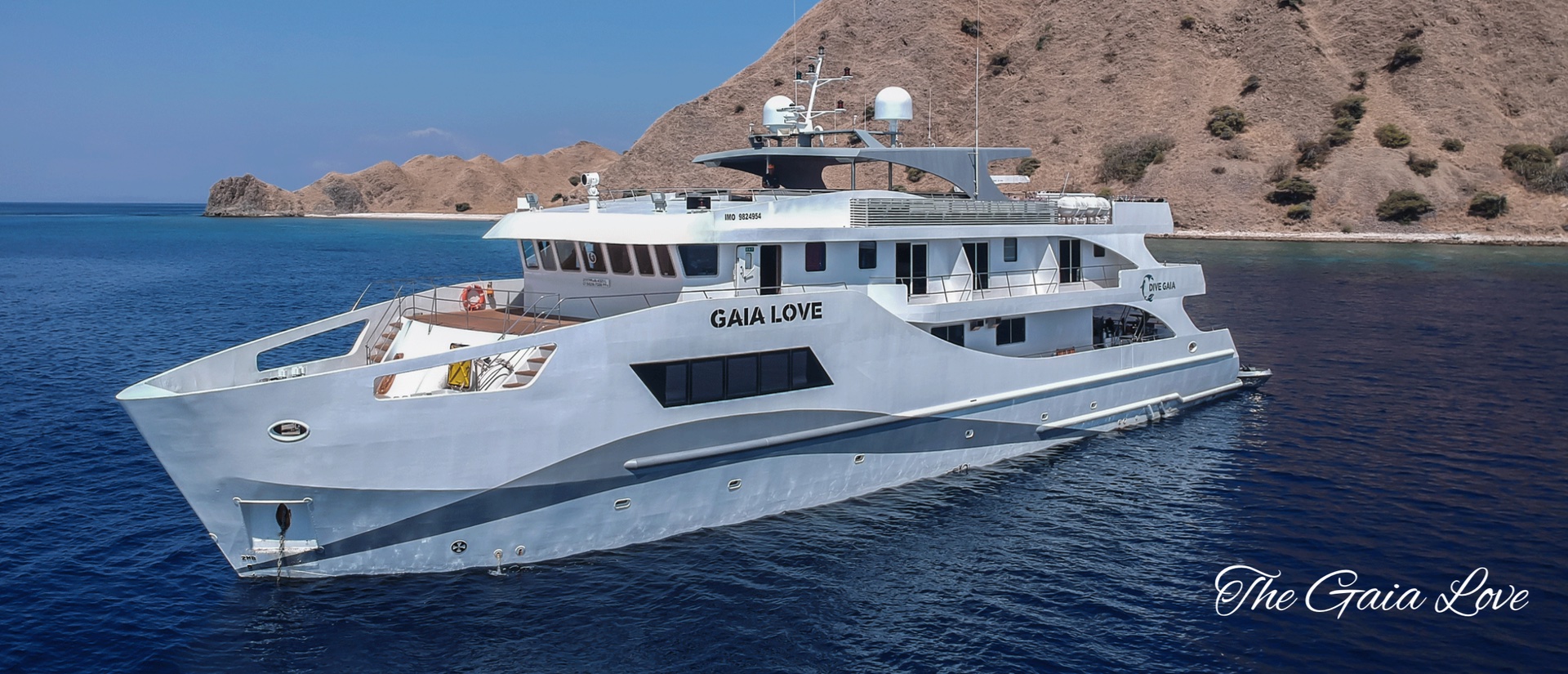 Gaia LoveAlor