Cenderawasih Bay (Manokwari - Sorong)
Coralia · Indonesia · 12 nights
About this route
Explore Cenderawasih Bay, a protected national park at the western edge of the Bird's Head Seascape, renowned for its pristine marine environment, diverse coral gardens, and abundant fish life. This unspoiled region offers unique encounters, most notably with whale sharks feeding at traditional fishing platforms. The itinerary also features dives on WWII wrecks, vibrant reefs, and opportunities to discover endemic species and macro life, promising an exceptional diving experience.
Regions on this route
Highlights
Cenderawasih Bay
Cenderawasih Bay, located at the western edge of the Bird's Head Seascape, is Indonesia's largest marine national park and a relatively new dive destination. It is celebrated for its pristine conditions, extensive hard coral gardens, and over 500 species of corals. The bay is particularly famous for its reliable whale shark encounters near traditional fishing platforms. Divers can expect a mix of pelagic sightings, healthy reef systems, unique macro species, and historical WWII wrecks.
- Whale shark encounters
- Pristine coral gardens
- Endemic marine life
- Historical WWII wrecks
Requirements
- CertificationOpen Water
- Minimum logged dives30
- ExperienceDivers require Open Water certification and 30 minimum logged dives.
Day-by-day plan
Day 1: Manokwari – Embarkation Day
Board the liveaboard in Manokwari during the afternoon. Guests will receive a welcome briefing and safety drill, followed by time to settle into their cabins. The vessel will overnight onboard.
Day 2: Cenderawasih Bay / Pulau Purup – Critter Diving
Today marks the entrance into Cenderawasih Bay National Park, focusing on critter dive sites around Pulau Purup. Divers can anticipate exploring sloping reefs adorned with elephant ear sponges and searching for endemic fish species, such as the vibrant flasher wrasse. The area is known for its macro life and unique reef inhabitants.
Day 3: Cenderawasih Bay – Additional Sites
Continuing exploration within Cenderawasih Bay, this day offers dives across multiple reefs. Expect to encounter diverse marine ecosystems, including schools of fusiliers, barracuda, and damselfish, alongside reef sharks. Roon Island is known for its ridges and sloping walls, featuring sea fans and soft corals. Pulau Rippon often features WWII plane wrecks, coral slopes, turtles, and abundant macro life.
Dive sites: Roon Island, Pulau Rippon
Day 4: Cenderawasih Bay – Additional Sites
Continuing exploration within Cenderawasih Bay, this day offers dives across multiple reefs. Expect to encounter diverse marine ecosystems, including schools of fusiliers, barracuda, and damselfish, alongside reef sharks. Roon Island is known for its ridges and sloping walls, featuring sea fans and soft corals. Pulau Rippon often features WWII plane wrecks, coral slopes, turtles, and abundant macro life.
Dive sites: Roon Island, Pulau Rippon
Day 5: Tanjung Mangguar – Vibrant Slopes
Dive one of Cenderawasih Bay's most stunning locations at Tanjung Mangguar. This site is characterized by soft coral-covered slopes teeming with abundant fish life. Divers may encounter large schools of barracuda, trevally, fusiliers, and surgeonfish. There's also a chance of sighting manta rays, mobula rays, and various sharks, with an optional night dive offered.
Day 6: Kwatisore Bay – Whale Shark Encounters
Today offers a highlight of the trip with early morning dives in Kwatisore Bay for close-up encounters with whale sharks. The crew will coordinate with local fishermen to locate whale sharks feeding at traditional bagans, which are fishing platforms. This region is world-renowned for its consistent whale shark sightings, providing an unforgettable experience.
Day 7: Tridacna Atoll – Deep Dives
Explore the deep drop-offs and fringing reefs of Tridacna Atoll, an area celebrated for its extensive soft coral carpets. Sites here are adorned with large barrel sponges, sea whips, and massive elephant ear sponges. Flexible diving allows for exploration of additional reef sites or revisiting favorite spots, known for their vibrant invertebrate life and diverse fish populations.
Day 8: Tridacna Atoll – Flexible Diving
Explore the deep drop-offs and fringing reefs of Tridacna Atoll, an area celebrated for its extensive soft coral carpets. Sites here are adorned with large barrel sponges, sea whips, and massive elephant ear sponges. Flexible diving allows for exploration of additional reef sites or revisiting favorite spots, known for their vibrant invertebrate life and diverse fish populations.
Day 9: Manokwari Harbour – WWII Wrecks
Today focuses on exploring the historical Japanese WWII wrecks located in Manokwari Harbour. Divers will discover a freighter and a former coastal patrol boat, both heavily encrusted with corals and teeming with marine life. This area is also popular for optional critter dives, offering opportunities to observe a variety of macro species alongside the larger wreck inhabitants.
Day 10: Manokwari Harbour – Wreck Exploration
Continuing the exploration of Manokwari Harbour, divers will further investigate the Japanese WWII wrecks. These sites, including a freighter and a coastal patrol boat, are richly encrusted with corals and vibrant marine ecosystems. The day also allows for optional critter dives, providing excellent opportunities for macro photography and discovering smaller, unique marine creatures.
Day 11: Overnight Transit to The Junkyard
The vessel embarks on an overnight cruise towards Pulau Amsterdam, preparing for the next day's dives. This day primarily involves transit, offering a chance to relax and enjoy the scenic journey across the waters.
Day 12: The Junkyard (Pulau Amsterdam) – Artificial Reef
Today features dives at The Junkyard, an artificial reef created from a scuttled boat and barge near Pulau Amsterdam. This site is now thriving with marine life, offering two dives. The evening includes a goodbye dinner as the vessel continues its cruise towards Sorong, concluding the diving portion of the trip.
Day 13: Sorong – Disembarkation Day
Guests will disembark in Sorong during the morning, after breakfast, marking the conclusion of the liveaboard journey. Transfers will be arranged according to individual travel plans.
Upcoming departures
- 2028-08-17 – 2028-08-29from 8,100 USDBook
All routes of this liveaboard
- Raja Ampat | Misool & Dampier Strait (Sorong - Sorong) · 8 nights
- Komodo (Labuan Bajo - Labuan Bajo) · 10 nights
- Raja Ampat: Misool, Dampier Strait & Wayag (Sorong - Sorong) · 11 nights
- Cenderawasih Bay (Sorong - Manokwari) · 12 nights
- Raja Ampat: Dampier Strait & Wayag (Sorong - Sorong) · 10 nights
- Cendrawasih Bay (Sorong - Manokwari) · 11 nights
- Raja Ampat: Misool, Dampier Strait & Wayag (Sorong - Sorong) · 12 nights
- Raja Ampat Dampier Strait & Wayag (Sorong - Sorong) · 7 nights
- Komodo & Sumbawa (Bali - Labuan Bajo) · 10 nights
- Cendrawasih Bay (Manokwari - Manokwari) · 10 nights
- Komodo & Sumbawa (Labuan Bajo - Bali) · 13 nights
- Raja Ampat: Misool & Dampier Strait (Sorong - Sorong) · 10 nights
- Raja Ampat: Dampier Strait & Wayag (Sorong - Sorong) · 8 nights
- Raja Ampat (Batanta & Dampier Strait) (Sorong - Sorong) · 7 nights
- Raja Ampat: Batanta, Kawe & Dampier Strait (Sorong - Sorong) · 9 nights
- Raja Ampat: Dampier Strait, Batanta & Kawe (Sorong - Sorong) · 10 nights
- Raja Ampat (Misool & Dampier Strait) · 10 nights
- Raja Ampat (Batanta & Dampier Strait) · 10 nights
- Raja Ampat (Misool & Dampier Strait) · 9 nights
- Raja Ampat (Misool, Dampier Strait & Wayag) · 12 nights
- Raja Ampat (Dampier Strait & Wayag) · 7 nights
- Raja Ampat (Misool & Dampier Strait) · 8 nights
- Komodo & Sumbawa (starts in Bali) · 10 nights
- Raja Ampat, Banda Islands, Ambon · 12 nights
- Ambon, Banda & Forgotten Islands · 11 nights
- Forgotten Islands, Banda & Ambon · 11 nights
- Raja Ampat (Misool, Dampier Strait & Wayag) · 11 nights
- Cenderawasih Bay (start in Sorong) · 12 nights
- Cenderawasih Bay · 10 nights
About the vessel
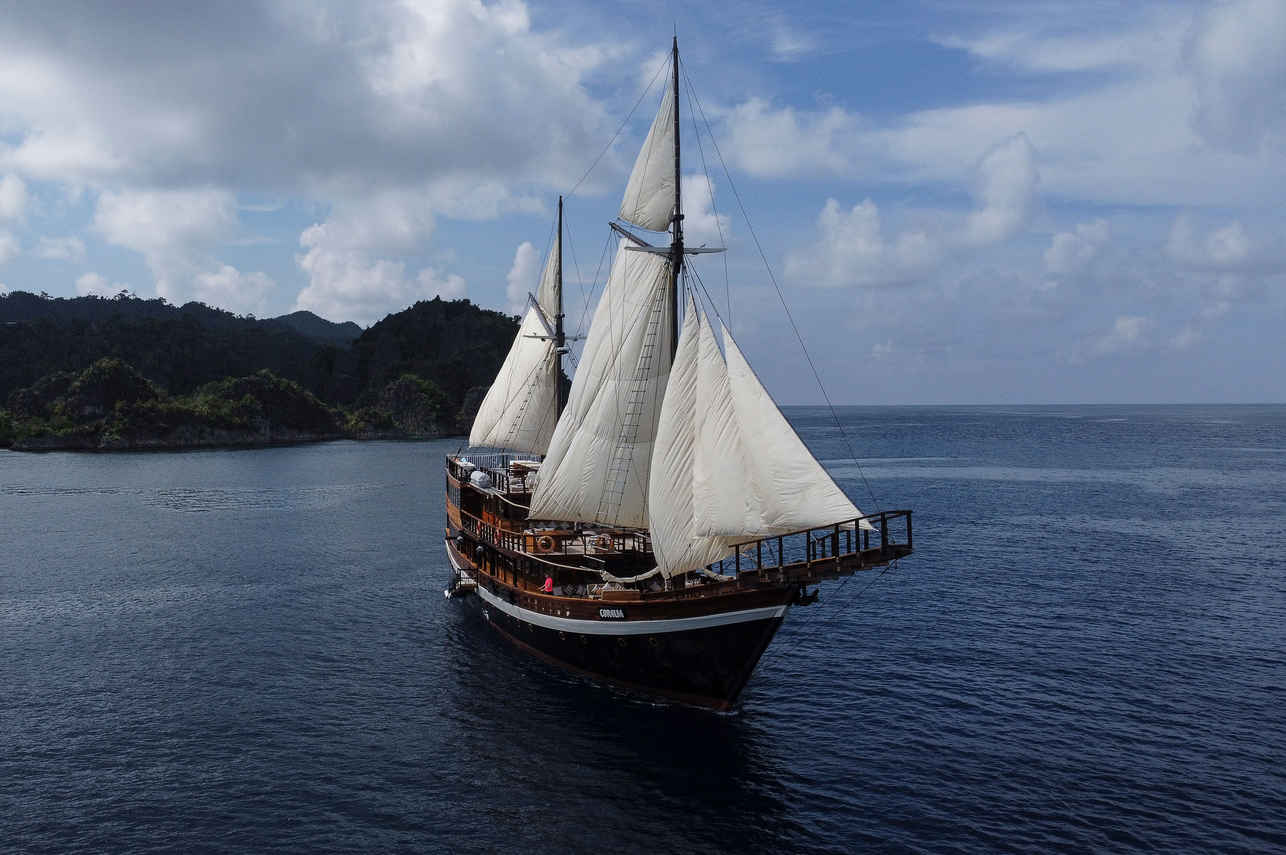 CoraliaIndonesia