North & Brothers (Hurghada - Hurghada)
Blue Pearl · Egypt · 7 nights
About this route
This itinerary explores the renowned northern Red Sea, combining historical wreck diving with vibrant reef encounters. Divers will visit famous sites like the wrecks of Abu Nuhas before heading south to the iconic Brother Islands. The trip offers a diverse underwater experience, showcasing both world-famous wrecks and pristine coral reefs. It's an ideal choice for those seeking a variety of diving experiences in Egypt's Red Sea.
Regions on this route
Highlights
Abu Nuhas
Abu Nuhas is notoriously known as the 'Ships Graveyard' due to its location close to the busy shipping lanes of the Gulf of Suez. This reef has claimed numerous ships, creating an artificial reef system. On its northern side, four wrecks rest on a sandy seafloor, while the south side offers safe anchorage for liveaboards and features the Yellow Fish Reef, providing diverse diving opportunities.
- Ship graveyard
- Multiple wrecks
- Yellow Fish Reef
- Safe anchorage
Big Brother Island
Big Brother is a 400-meter long island offering incredible wreck and wall diving. The wreck of the Numidia lies on the northern tip between 10 and 80 meters, while the northwest side of the island houses the wreck of the Aida. Every section of this reef is covered with corals and is known for sightings of large pelagic species.
- Wreck diving
- Wall diving
- Pelagic sightings
- Coral-covered reefs
Gubal Island
Located at the Straits of Gubal, Gubal Island is also known as 'Bluff Point' due to the turbulence created by strong currents from the east. The island features the wreck of the 'Ulysses' and 'The Barge' wreck, starting at 5m and sloping to 25m. The wrecks create protection for various types of night creatures, making it a great spot for night dives.
- Strong currents
- Wreck diving
- Night dive potential
- Diverse reef life
Little Brother Island
From its name, Little Brother is smaller than Big Brother Island and is surrounded by walls, covered in soft corals. The dives can be challenging but are definitely rewarding, often featuring sightings of large pelagic marine life and beautiful gorgonian fan coral forests, making it an awe-inspiring site.
- Wall diving
- Soft corals
- Pelagic encounters
- Gorgonian fan corals
Red Sea
The Red Sea is renowned for its vibrant coral reefs, diverse marine life, and excellent visibility. It offers a wide range of diving experiences, from shallow coral gardens to deep wall dives and iconic shipwrecks. The northern Red Sea, in particular, is a popular destination for both wreck enthusiasts and those seeking pristine reef environments.
- Vibrant coral reefs
- Diverse marine life
- Excellent visibility
- Wreck diving
Small Crack
Small Crack is a narrow split in the reef of Shaab Mahmoud, offering a unique drift dive experience. Divers are carried along the outside wall next to vibrant corals and colorful fish. A sandy slope leads down to a swim-through, where the current can carry divers through a 5m deep channel and out into a sandy lagoon.
- Drift dive
- Swim-through
- Coral walls
- Sandy lagoon exit
The Brothers
The Brother Islands, comprising Big Brother and Little Brother, are isolated pinnacles rising from the deep, offering spectacular wall dives and encounters with pelagic species. Strong currents are common, attracting various sharks and large schooling fish. Both islands are famous for their pristine coral gardens and dramatic underwater topography, making them a highlight for experienced divers in the Red Sea.
- Pelagic encounters
- Wall diving
- Pristine coral gardens
- Strong currents
Thistlegorm
The SS Thistlegorm is one of the most famous wrecks in the Red Sea. This 129m English freighter was bombed by German aviation in October 1941. Today, it lies on a sandy bottom at a depth of 32m, creating an enormous habitat for various marine life. It is especially popular for its large schooling fish and preserved cargo.
- World-famous wreck
- Historical cargo
- Large fish schools
- Photographic wreck
Requirements
- CertificationAdvanced Open Water
- Minimum logged dives50
- ExperienceAdvanced Open Water certification with a minimum of 50 logged dives is required.
Good to know
- All dive sites are subject to weather conditions and the captain's discretion.
- A minimum of 50 logged dives is required for this itinerary.
Day-by-day plan
Day 1: Embarkation – Hurghada
Guests arrive in Hurghada and transfer to the liveaboard vessel for check-in. After settling into cabins, there will be a welcome briefing and an opportunity to prepare for the week of diving ahead. The evening allows for relaxation and getting acquainted with the crew and fellow divers.
Day 2: Northern Red Sea – Wrecks of Abu Nuhas
The day's diving focuses on the renowned Abu Nuhas reef, often called the 'Ships Graveyard' due to its multiple shipwrecks. This site, strategically located near busy shipping lanes, features several wrecks resting on a sandy seafloor at varying depths. Divers can explore the Giannis D, a fully intact stern section, and the Carnatic, a British P&O steamer now draped in soft corals, offering rich photographic opportunities and marine life habitats.
Dive sites: Abu Nuhas, Giannis D - Abu Nuhas, Carnatic - Abu Nuhas
Day 3: Sharm El Sheikh Region – SS Thistlegorm
Today is dedicated to exploring the iconic SS Thistlegorm, one of the most famous wrecks in the world. This 129m English freighter, bombed in 1941, rests on a sandy bottom at 32m, creating an immense artificial reef. The site is known for its extensive cargo, including motorcycles, trucks, and railway carriages, which are now home to a diverse array of marine life, making it a spectacular wreck dive.
Dive sites: SS Thistlegorm
Day 4: Shaab Mahmoud – Coral Gardens & Drift Dives
Diving today includes sites within the Shaab Mahmoud area, offering a mix of vibrant coral gardens and exciting drift opportunities. One notable site is Small Crack, a narrow swim-through in the reef wall where currents can carry divers through a beautiful coral landscape. This area provides diverse underwater topography and is a good location for observing reef inhabitants as well as potential pelagic species.
Dive sites: Small Crack
Day 5: Brother Islands – Big Brother
The day is spent at Big Brother, a prominent island known for its dramatic wall diving and rich marine biodiversity. The island features the wreck of the Aida and the Numidia, offering advanced wreck exploration opportunities. The northwest side of the island is notable for its wreck, while other sections boast vibrant reef coverage. Large pelagic species are commonly sighted around the strong currents that typically sweep the area.
Dive sites: Big Brother
Day 6: Brother Islands – Little Brother
Diving continues at the Brother Islands, focusing on Little Brother. This smaller island is characterized by its surrounding walls and diverse coral life, presenting challenging yet rewarding dives. The strong currents often bring large pelagics close to the reefs. Divers can admire beautiful gorgonian fan corals and explore the varied topography, which supports an impressive array of marine species.
Dive sites: Little Brother
Day 7: Return to Hurghada – Gubal Island
As the trip nears its end, the itinerary includes dives around Gubal Island, situated at the Straits of Gubal. This area, known as 'Bluff Point', experiences strong currents that create a vibrant marine environment. Divers can explore the wreck of the 'Ulysses' and 'The Barge' wreck, often encountering nocturnal creatures during night dives. After the final dives, the vessel begins its journey back to Hurghada.
Dive sites: Gubal Island
Day 8: Disembarkation – Hurghada
Guests enjoy a final breakfast on board before disembarking the vessel in Hurghada. Transfers will be arranged according to individual travel plans, concluding the Red Sea diving adventure.
Upcoming departures
- 2027-03-25 – 2027-04-01from 1,288 USDBook
- 2027-04-15 – 2027-04-22from 1,288 USDBook
- 2027-05-06 – 2027-05-13from 1,288 USDBook
- 2027-06-17 – 2027-06-24from 1,288 USDBook
- 2027-07-15 – 2027-07-22from 1,288 USDBook
- 2027-10-14 – 2027-10-21from 1,476 USDBook
- 2027-11-18 – 2027-11-25from 1,476 USDBook
- 2027-12-23 – 2027-12-30from 1,163 USDBook
All routes of this liveaboard
- Brothers, Daedalus and Elphinstone (Hurghada - Hurghada) · 7 nights
- Brothers, Daedalus and Elphinstone (Hurghada - Port Ghalib) · 7 nights
- North & Tiran (Hurghada - Hurghada) · 7N
- Brothers, Daedalus, Elphinstone (Port Ghalib - Hurghada) · 7 nights
- North & Wrecks · 8 Days / 7 Nights
- North & Safaga (Hurghada - Hurghada) · 7 nights
- Brothers-Daedalus-Elphinstone · 7 nights
About the vessel
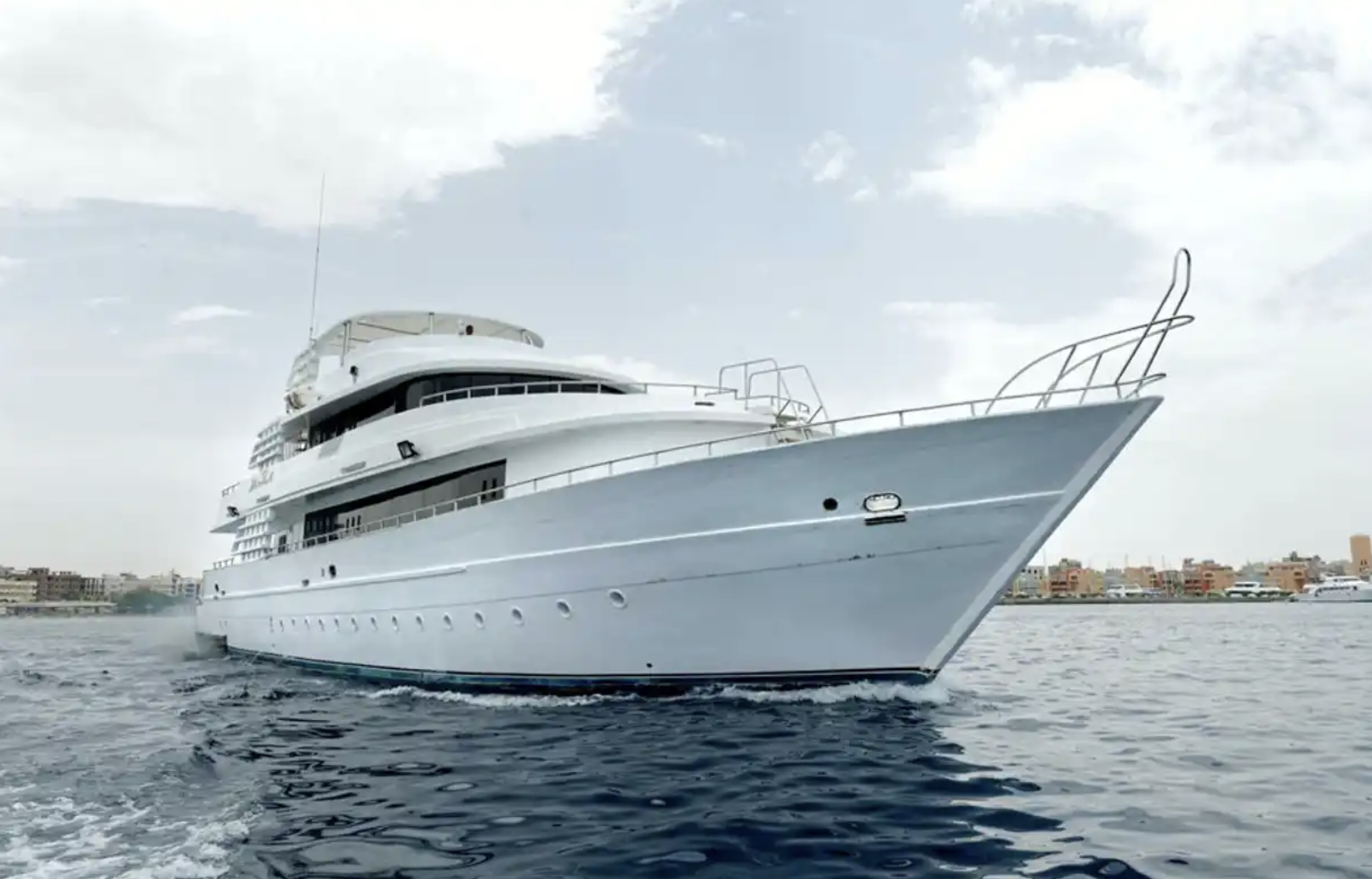 Blue PearlEgypt