Raja Ampat - Triton Bay (Sorong → Kaimana)
Ambai · Indonesia · 13D12N
About this route
Embark on an unforgettable journey through the Raja Ampat and Triton Bay region of Indonesia, an area renowned for its unparalleled biodiversity. Expect to encounter a vibrant mosaic of marine life, from schooling fish and majestic manta rays to elusive pygmy seahorses and colorful nudibranchs, all set against breathtaking underwater topographic features. This route offers a chance to explore remote reefs and pristine waters where conservation efforts have preserved an astonishing array of corals and aquatic creatures.
Requirements
- CertificationAdvanced Open Water
- Minimum logged dives30
- ExperienceDivers should have a minimum of 30 logged dives.
Good to know
- The last dive is on the penultimate day of the trip at around 10 am.
- Divers are recommended to wait for 24 hours before flying after the last dive.
- Snorkelers are welcome on this trip and specific guidance is offered.
- Activities like sea kayaking, lagoon exploration, hiking, and visits to local areas are offered, subject to weather conditions and itinerary.
- Four complimentary kayaks and paddles are available for guests to use.
- The itinerary may slightly vary depending on weather conditions, currents, visibility, and tides.
- There are 4 overnight crossings on this trip.
Day-by-day plan
Day 1: Embarkation in Sorong
Upon arrival at Sorong airport, you will be transferred to the vessel for embarkation. After a welcome briefing, the ship will depart for the Dampier Strait. Check-in is before 12:00 noon, and departure is as soon as all documents are ready, most probably around 14:00.
Day 2: Dampier Strait & Misool
Explore the Dampier Strait, known for its sloping sides covered with soft corals and a reliable manta ray aggregation at Manta Sandy. Dive sites like Cape Kri and Penemu are famous for large concentrations of fish, including barracudas, fusiliers, bannerfish, and sweetlips. Enjoy a fantastic viewpoint at 'Little Wayag'. The underwater topography is predominantly rocky, with ridges and rock formations. The area is abundant with soft corals, gorgonians, pygmy seahorses, tiny crabs, and nudibranchs. Overnight navigation to Misool.
Dive sites: Manta Sandy, Cape Kri, Penemu
Day 3: Misool
Spend the day exploring the South of Raja Ampat around Misool and its satellite islets. Expect excellent wide-angle pictures, mantas, and massive schools of fish. The underwater topography is predominantly rocky, with ridges and rock formations. The very colorful reefs display an abundance of soft corals and huge gorgonians. Macro subjects are abundant as well, with the four kinds of pygmy seahorses, tiny crabs, nudibranchs, and other rare photogenic life all over. You will discover three fantastic dive sites: No Contest, Love Potion, and 3 Rocks. These sites are rich with vertical walls and fantastic coverage of soft corals, and host schools of Platax, aggregations of snappers, and bumphead parrotfish. You may also explore a very special anchorage inside an almost closed bay surrounded by high rocks.
Dive sites: No Contest, Love Potion, 3 Rocks
Day 4: Misool
Continue diving in the Misool area. After a short morning navigation, you will go to Misool South East and start another day of diving in the vicinity of Misool eco-resort. Dive sites like Boo Rocks and FiaBacet offer large openings in the rock that completely pierce the island from the surface to 5 meters deep, showcasing an explosion of colors and fish density. In the evening, a dinner on the beach of a small island is organized. Misool East, Fashion dives in Misool, Yellit Kecil, a great wall with excellent fans and soft corals, a rock tank, and Nudi rock are also highlights. Expect to see large schools of fish, Napoleon wrasse, and possibly mantas. Overnight navigation to Koon.
Dive sites: Boo Rocks, FiaBacet, Misool East, Fashion, Yellit Kecil
Day 5: Misool
Conclude your exploration of Misool, an area known for its rich marine life and stunning coral formations. The very colorful reefs display an abundance of soft corals and huge gorgonians. Macro subjects are abundant as well, with the four kinds of pygmy seahorses, tiny crabs, nudibranchs, and other rare photogenic life all over. You will have three dives in Koon, a very fishy corner with a lot of fish, including giant groupers, schools of batfish, schools of jacks, and possibly hammerheads. One night of navigation is needed to reach the next island of Sabuda.
Dive sites: Koon
Day 6: Sabuda & Momon
Halfway between Misool and the coast of Papua, Sabuda is a scenic group of islands with beautiful lagoons and white sand beaches. The diving is interesting with large schools of fish (surgeons, trevallies, barracudas) and potential manta rays. Another night of navigation brings the vessel to Momon, which features magnificent landscapes. The mountainous coast is covered with primary forest, and a river from the highlands ends in the sea as a large waterfall. Guests swim and play at the waterfall. Divers explore a seamount outside the coast, encountering huge schools of jacks, Napoleon wrasse, potential mantas, and even whale sharks. A small islet has thousands of bats flying out at sunset, which offers a good macro dive.
Day 7: Momon & Triton Bay
Enjoy the natural beauty of Momon, including a visit to a magnificent waterfall where you can swim and play. The area is known for its mountainous coast covered with primary forest. Afterwards, the journey continues with a third night of navigation necessary to reach Triton Bay. This day may include land excursions into the jungle looking for tree kangaroos.
Day 8: Triton Bay
Begin your exploration of Triton Bay, an area known for its unique soft coral development. You'll find soft corals in the shallow waters (0-5m) on rock and boomies, transitioning to black and tubastrea corals with sweetlips and snappers between 0-15m. The bottom is mostly sandy or rubble with interesting critters like nudibranchs and frogfish. Some spots have a lot of baitfish, attracting devil rays and other predators. The 'bagans' (fishing platforms) are platforms for baitfish fishing at night, eventually attracting whale sharks. You will dive with whale sharks under the fishing platforms (Bagan).
Dive sites: Bagan
Day 9: Triton Bay
Continue diving in Triton Bay, experiencing its incredible giant soft corals reaching up to the surface and an abundance of critters. The area is known for its unique soft coral development. You'll find soft corals in the shallow waters (0-5m) on rock and boomies, transitioning to black and tubastrea corals with sweetlips and snappers between 0-15m. The bottom is mostly sandy or rubble with interesting critters like nudibranchs and frogfish. Some spots have a lot of baitfish, attracting devil rays and other predators. Optional short excursion with the dinghies in the early morning to see the incredible beaches, lagoons, and birds of the area.
Day 10: Triton Bay
Further explore the diverse dive sites of Triton Bay. The area is known for its unique soft coral development. You'll find soft corals in the shallow waters (0-5m) on rock and boomies, transitioning to black and tubastrea corals with sweetlips and snappers between 0-15m. The bottom is mostly sandy or rubble with interesting critters like nudibranchs and frogfish. Some spots have a lot of baitfish, attracting devil rays and other predators. You will have 6 dives in Triton Bay, including one night dive. Black coral forests, groups of sweetlips everywhere, a lot of groupers and other fishes, amazing soft corals up to the surface, and impressive critters are common.
Day 11: Triton Bay & Koon
Enjoy the final dives in Triton Bay, known for its rich soft coral gardens and diverse marine life. The area is known for its unique soft coral development. You'll find soft corals in the shallow waters (0-5m) on rock and boomies, transitioning to black and tubastrea corals with sweetlips and snappers between 0-15m. The bottom is mostly sandy or rubble with interesting critters like nudibranchs and frogfish. Some spots have a lot of baitfish, attracting devil rays and other predators. Leaving Triton Bay and crossing to Misool, you will dive the small archipelago of Koon (walls, pinnacles, numerous eagle and marble rays).
Dive sites: Koon
Day 12: Last Dives & Farewell
This day marks the last diving opportunities of the trip. The last dive is on the penultimate day of the trip at around 10 am. Enjoy traditional photos with the crew before the farewell dinner. Divers are recommended to wait for 24 hours before flying after the last dive.
Day 13: Disembarkation in Kaimana
After breakfast, guests will disembark in Kaimana. Transfers will be organized to the airport or your hotel. Check-out time is before 12:00 noon.
Upcoming departures
All routes of this liveaboard
- Ring of Fire - Forgotten Islands (Ambon → Saumlaki, 13D12N) · 13D12N
- Raja Ampat - Triton Bay (Sorong - Kaimana) · 11 nights
- Raja Ampat Ultimate (Sorong, Indonesia → Sorong, Indonesia) · 13D12N
- Halmahera (Ternate - Ternate) · 10 Days / 9 Nights
- Triton Bay - Raja Ampat (Kaimana - Sorong) · 12 nights
- Raja Ampat - Halmahera - Lembeh (Sorong → Bitung) · 13D12N
- Halmahera - Misool - Banda Sea (Ternate - Ambon) · 15 Days / 14 Nights
- Forgotten Islands - Ring of Fire - Raja Ampat (Saumlaki - Sorong) · 13 Days / 12 Nights
- Triton Bay - Raja Ampat (Kaimana - Sorong) · 12 Days / 11 Nights
- Raja Ampat Ultimate (Sorong - Sorong) · 12 Days / 11 Nights
- Raja Ampat South & Center (Sorong - Sorong) · 10 Days / 9 Nights
- Raja Ampat (Sorong - Sorong) · 11 Days / 10 Nights
- North Sulawesi - Togians (Bitung - Luwuk) · 12 Days / 11 Nights
- Raja Ampat - Halmahera - Lembeh · 12 nights
- Halmahera- Misool - Banda Sea · 14 nights
About the vessel
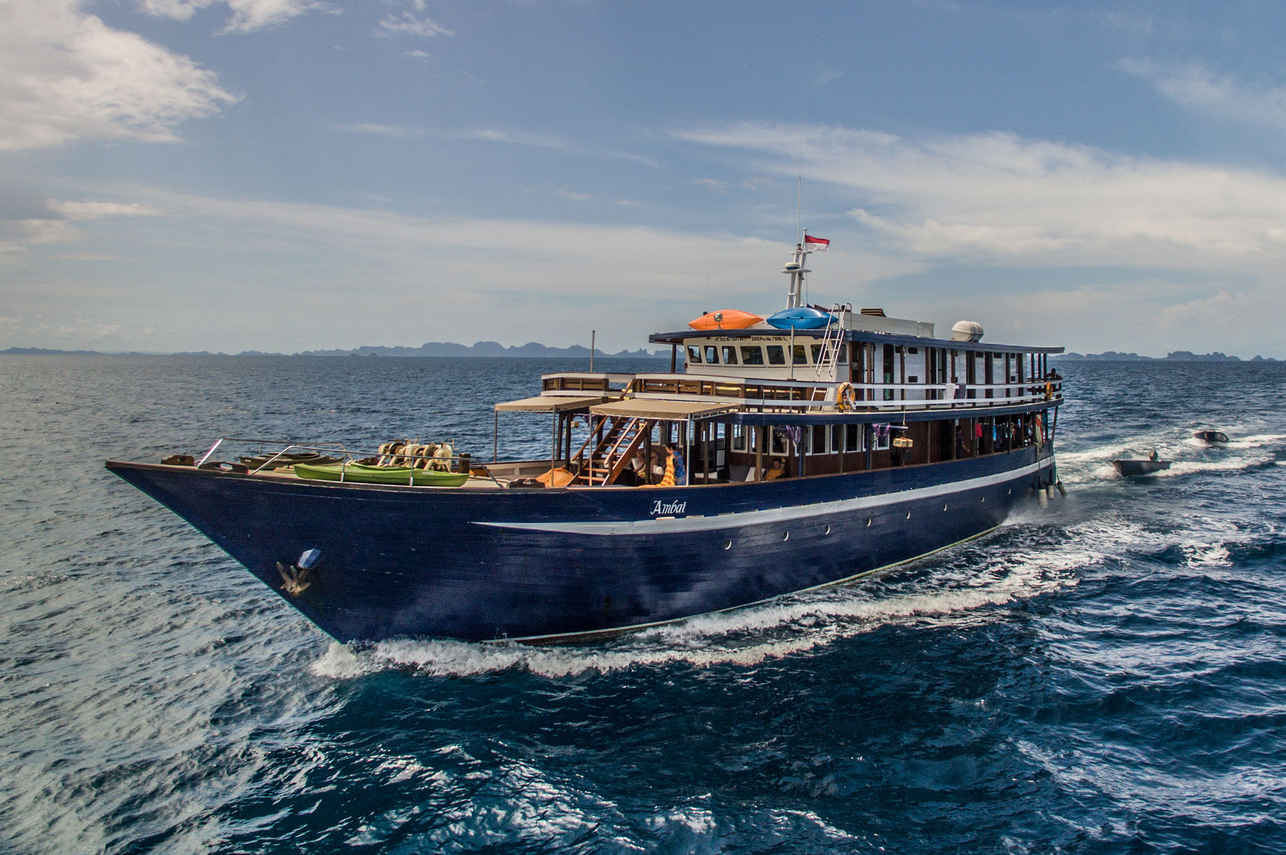 AmbaiIndonesia