Flame Angelfish in its natural habitat — diving encounters and best destinations

Flame Angelfish

6-10 years

Want to dive with this animal?

Only destinations where this animal occurs.

The Flame Angelfish at a glance

The flame angelfish (Centropyge loriculus) is widely regarded as one of the most vividly coloured dwarf angelfishes in the world's oceans. Sporting a compact, laterally compressed, oval body, this species is immediately distinguished by its glowing, luminous red-orange to deep scarlet coloration. Traversing its flanks are three to seven distinct, vertical black bars that create a striking zebra-like contrast. The posterior margins of both the dorsal and anal fins are brilliantly trimmed in iridescent, electric-blue margins, often accompanied by deep purplish-black submarginal bands. The caudal fin is translucent to pale yellow, allowing the fiery hue of the torso to dominate its visual profile. Sexual dimorphism is subtle, though mature males generally display slightly larger bodies, more pointed dorsal and anal fins, and more pronounced blue striping along the fin edges compared to females.

Behaviour & reproduction

Size
Unknown
Weight
Up to 100 g
Lifespan
6-10 years
Status
Not Evaluated

Endemic to the tropical waters of the Pacific Ocean, the flame angelfish maintains a close ecological association with coral-rich habitats. It is a territorial, benthic-dwelling fish that forms dynamic social harems, typically consisting of a single dominant male defending a territory that encompasses two to seven smaller adult females and juveniles. These fish are intensely loyal to specific coral heads, rubble patches, and reef crevices, rarely straying more than a metre from the safety of the reef matrix. They exhibit protogynous hermaphroditism: all individuals begin life as females, with the largest and most dominant individual within a harem transitioning into a breeding male if the resident male disappears. Spawning occurs at dusk, when the male courts each female individually, culminating in a brief, synchronous ascent above the coral canopy to release pelagic eggs into the water column.
Diving Tips

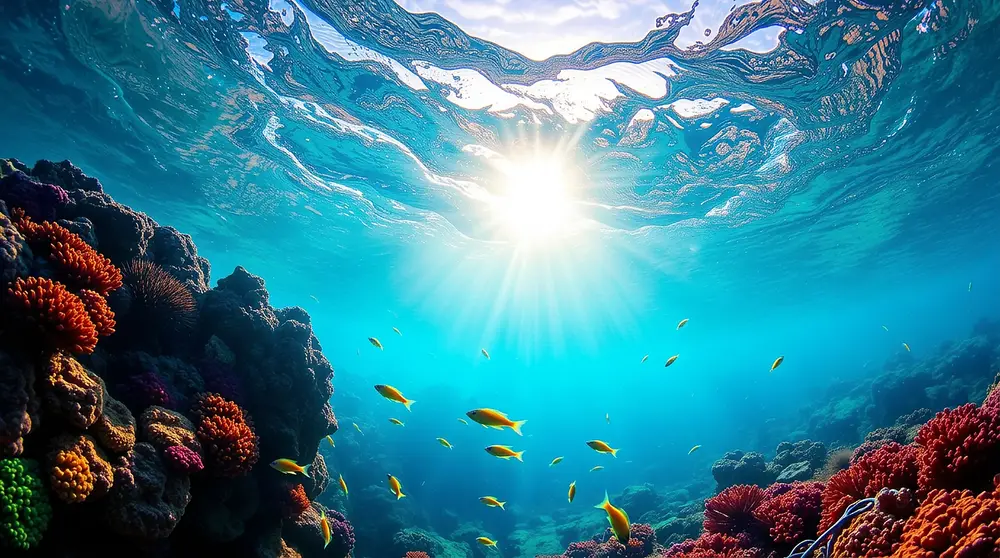
Photographing or observing the flame angelfish requires patience, pristine trim, and excellent buoyancy control, as these fish are notoriously skittish around clumsy movements. Avoid chasing them across the reef; instead, locate an active coral bommie or finger coral patch where one has ducked away, hover neutrally at a respectful distance of one to two metres, and wait motionless. Within a minute or two, its natural curiosity will coax it back out into the open to resume grazing.

For underwater photographers, a dedicated macro lens (such as a 60mm or 100mm) paired with fast twin strobes is essential to illuminate the brilliant scarlet tones and electric-blue fin fringes that ambient light at depth filters out. Set a rapid shutter speed (1/200s or faster) and a tight aperture (f/8 to f/16) to capture crisp details as the fish darts swiftly between coral branches. Always ensure your fins and body remain well clear of delicate branching corals.

Fun facts about the Flame Angelfish

  • The flame angelfish is a protogynous hermaphrodite, meaning all individuals mature first as females and the dominant individual can transition into a male.
  • Its dazzling colouration varies geographically, with individuals from the Marquesas Islands often lacking black bars entirely and displaying an all-red body.
  • Mating takes place exclusively at twilight, with pairs performing a rapid upward spawning dash to release gametes into offshore currents.
  • Despite its brilliant neon appearance on shallow sunlit reefs, the red pigment quickly appears dull grey-brown at depth without artificial dive lights.

Best time to see the Flame Angelfish

Diving encounters with flame angelfish are rewarding year-round throughout their tropical Pacific range, though weather windows dictate optimal travel seasons. In the Great Barrier Reef and Coral Sea, the prime diving conditions run from June to November, offering superb visibility, lower humidity, and calm seas. For the Hawaiian Archipelago, the summer months from May to September provide the calmest surface conditions and warm water across outer reefs and exposed drop-offs. Liveaboard itineraries visiting the Society Islands and the Tuamotu Archipelago in French Polynesia are outstanding between April and October, when trade winds settle and horizontal underwater visibility regularly exceeds 40 metres. In Fiji, diving is exceptional from May to October during the dry winter season, featuring clear water and thriving hard coral formations.

Where the Flame Angelfish lives

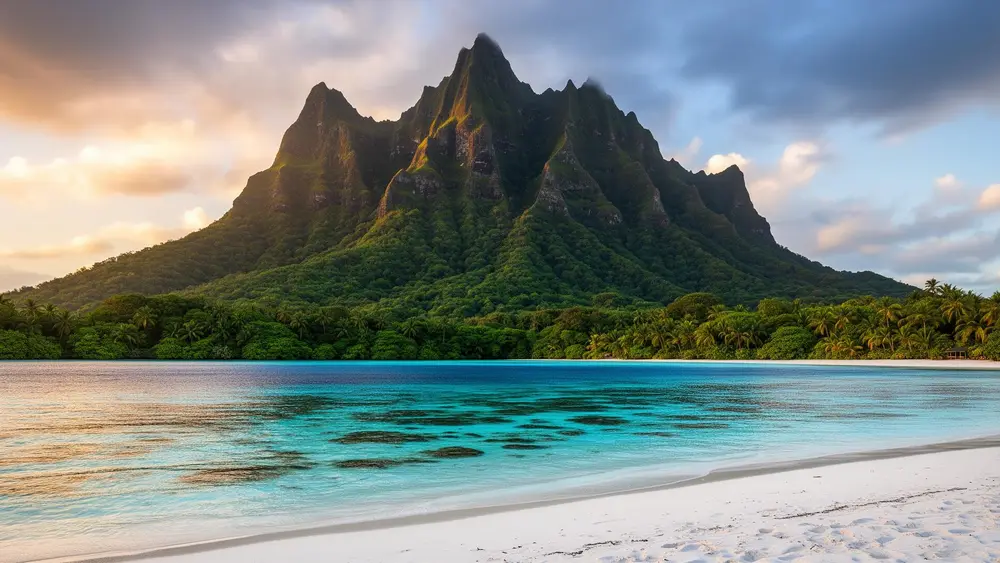
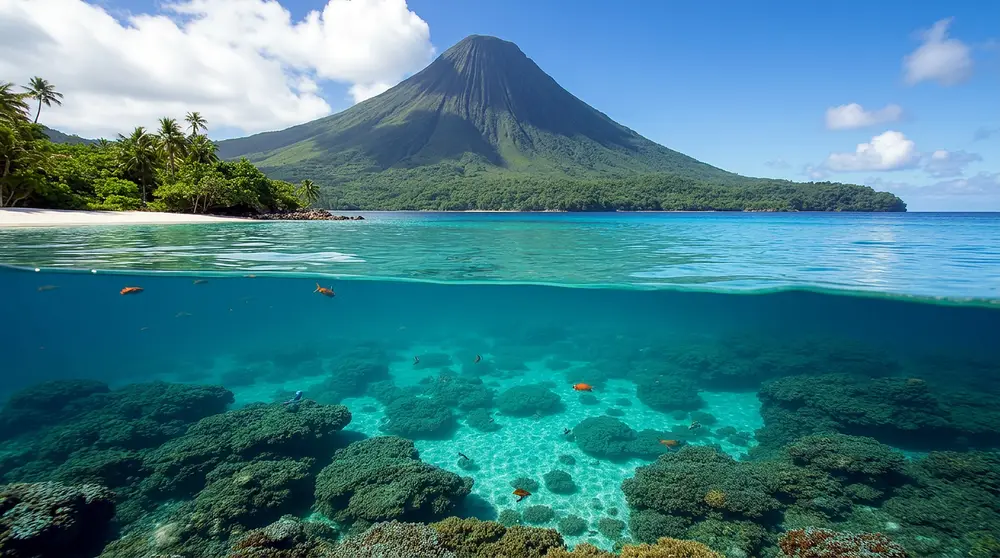
The flame angelfish inhabits tropical coral reefs across the vast expanse of the Central and Western Pacific Ocean. The waters this animal calls home extend from the Great Barrier Reef, Fiji, and the Solomon Islands eastward through French Polynesia, the Cook Islands, and north to the Marshall Islands and the Hawaiian Archipelago. It primarily occupies exposed outer reef slopes, clear lagoon drop-offs, and dense coral gardens across a bathymetric range from 5 to 60 metres, though it is most abundant between 10 and 25 metres. The species requires structurally complex environments dominated by robust hard corals—such as *Acropora* and *Porites*—interspersed with coral rubble channels, deep recesses, and undercut ledges that provide essential shelter, grazing surfaces, and rapid escape routes from ambient predators.

What the Flame Angelfish eats

The flame angelfish is a diurnal omnivore with a pronounced preference for benthic algae and associated microfauna. Throughout daylight hours, it grazes persistently across hard substrates, utilizing its small, terminal mouth equipped with specialized bristle-like teeth to scrape epilithic algal turfs from dead coral skeletons, rocky boulders, and coral rubble. While filamentous green and red algae constitute the bulk of its nutritional intake, the species also opportunistically consumes small benthic invertebrates, detritus, ascidians, and tiny hydroids residing within the algal mat. Feeding peaks during the late morning and mid-afternoon as ambient light enhances visibility within crevices. By continuously cropping fast-growing turf algae, the flame angelfish plays an important ecological role in preventing algae from smothering living coral colonies on healthy tropical reefs.

Flame Angelfish: frequently asked questions

When is the best time to see Flame Angelfish?
Diving encounters with flame angelfish are rewarding year-round throughout their tropical Pacific range, though weather windows dictate optimal travel seasons. In the Great Barrier Reef and Coral Sea, the prime diving conditions run from June to November, offering superb visibility, lower humidity, and calm seas. For the Hawaiian Archipelago, the summer months from May to September provide the calmest surface conditions and warm water across outer reefs and exposed drop-offs. Liveaboard itineraries visiting the Society Islands and the Tuamotu Archipelago in French Polynesia are outstanding between April and October, when trade winds settle and horizontal underwater visibility regularly exceeds 40 metres. In Fiji, diving is exceptional from May to October during the dry winter season, featuring clear water and thriving hard coral formations.
How big does Flame Angelfish get?
Flame Angelfish: Unknown
Is Flame Angelfish dangerous for divers?
Photographing or observing the flame angelfish requires patience, pristine trim, and excellent buoyancy control, as these fish are notoriously skittish around clumsy movements. Avoid chasing them across the reef; instead, locate an active coral bommie or finger coral patch where one has ducked away, hover neutrally at a respectful distance of one to two metres, and wait motionless. Within a minute or two, its natural curiosity will coax it back out into the open to resume grazing. For underwater photographers, a dedicated macro lens (such as a 60mm or 100mm) paired with fast twin strobes is essential to illuminate the brilliant scarlet tones and electric-blue fin fringes that ambient light at depth filters out. Set a rapid shutter speed (1/200s or faster) and a tight aperture (f/8 to f/16) to capture crisp details as the fish darts swiftly between coral branches. Always ensure your fins and body remain well clear of delicate branching corals.
What is the conservation status of Flame Angelfish?
Flame Angelfish: Not Evaluated
Plan your trip

Ready to dive with these animals?

Choose a destination or search every available vessel to find the liveaboard that matches the marine life you want to see.