Itinerary A (Baltra - Baltra)
Solaris · Galápagos · 6 nights
About this route
This Galápagos itinerary aboard the Solaris offers a unique journey through some of the archipelago's most iconic islands. Guests will explore diverse ecosystems, from the white-sand beaches of Santa Cruz to the volcanic landscapes of Isabela and the vibrant red shores of Rabida. The trip focuses on immersive land excursions, providing opportunities to observe unique wildlife in their natural habitats, learn about conservation efforts, and experience the stunning geological formations that define this UNESCO World Heritage site.
Regions on this route
Highlights
Chinese Hat
Chinese Hat is a small, distinctively shaped volcanic islet located southeast of Santiago Island, named for its resemblance to a traditional Asian hat. This uninhabited islet offers a unique opportunity for snorkeling around its rocky shores, which are teeming with marine life. It's also a great spot to observe Galápagos sea lions basking on the rocks and various seabirds, making it a picturesque and wildlife-rich destination.
- Unique volcanic islet shape
- Excellent snorkeling
- Galápagos sea lion colony
- Diverse marine life
Fernandina Island
Fernandina is the youngest and most volcanically active island in the Galápagos, renowned for its pristine ecosystems. Its landscapes are dominated by vast lava flows, creating a rugged yet beautiful environment. The island supports large colonies of marine iguanas and is a primary habitat for the unique flightless cormorant, making it a critical site for observing endemic species in their natural, untouched habitat.
- Youngest Galápagos island
- Vast lava flows
- Marine iguana colonies
- Flightless cormorant habitat
Isabela Island
Isabela is the largest island in the Galápagos, formed by six active shield volcanoes. Its diverse topography includes immense lava fields, mangrove forests, and unique uplifted marine areas. Isabela is a sanctuary for a wide array of wildlife, including Galápagos penguins, marine iguanas, and various sea bird species. Sites like Tintoreras and Moreno Point offer glimpses into its rich marine and volcanic geology.
- Largest Galápagos island
- Active shield volcanoes
- Galápagos penguins
- Diverse marine life
Rabida Island
Rabida Island is instantly recognizable by its striking red volcanic sand beaches, a result of its high iron content. This vibrant color contrasts beautifully with the turquoise waters and green vegetation. The island is a significant site for birdwatching, featuring a saltwater lagoon that attracts flamingos, pintail ducks, and other wading birds. Its unique geological features make it a memorable stop.
- Striking red sand beaches
- Volcanic landscapes
- Flamingo lagoon
- Diverse birdwatching
Santa Cruz Island
Santa Cruz is a central island in the Galápagos, known for its diverse ecosystems ranging from arid lowlands to lush highlands. It is home to the Charles Darwin Research Station, a vital center for conservation and scientific research. Visitors can explore lava tunnels, observe giant tortoises in their natural highland habitats, and enjoy beautiful white-sand beaches like Las Bachas, often frequented by flamingos and other shorebirds.
- Charles Darwin Research Station
- Giant tortoises in highlands
- Diverse ecosystems
- Beautiful white-sand beaches
Santiago Island
Santiago Island, also known as San Salvador, offers a variety of compelling landscapes and wildlife experiences. Its shores feature black-sand beaches, volcanic rock formations, and tidal pools where marine iguanas and fur seals can be observed. Historic sites like Buccaneer's Cove provide a glimpse into the island's past, while Espumilla Beach is a crucial nesting ground for sea turtles and home to lagoons with flamingos and other wading birds.
- Black-sand beaches
- Volcanic rock formations
- Galápagos fur seals
- Sea turtle nesting sites
Shore excursions
- Explore Las Bachas Beach on Santa Cruz Island
- Visit Tintoreras islet on Isabela Island
- Discover C.C. Arnoldo Tupiza & Wetlands on Isabela Island
- Tour a Tortoise breeding center on Isabela Island
- Hike to Moreno Point on Isabela Island
- Visit historic Tagus Cove on Isabela Island
- Explore Punta Espinoza on Fernandina Island
- Visit Vicente Roca Point on Isabela Island
- Relax at Espumilla Beach on Santiago Island
- Admire Buccaneer's Cove on Santiago Island
- Visit Puerto Egas on Santiago Island
- Explore Rabida Island's red sand beaches
- Visit Chinese Hat islet for snorkeling and wildlife viewing
- Tour the Charles Darwin Research Station on Santa Cruz Island
Day-by-day plan
Day 1: Embarkation – Baltra Island
Guests will arrive at Baltra Airport (GPS) and be transferred to the Solaris for embarkation. After settling into cabins, the afternoon will be spent exploring Las Bachas Beach on Santa Cruz Island, known for its pristine white sands and lagoon frequented by flamingos and various shorebirds.
Day 2: Isabela Island – Wildlife Encounters
The day begins with a visit to Tintoreras in Isabela, a small islet famed for its colony of whitetip reef sharks resting in volcanic crevices and its marine iguana nesting sites. C. Arnoldo Tupiza & Wetlands, offering diverse birdlife, followed by a visit to a Tortoise breeding center to learn about conservation efforts for the iconic Galápagos giant tortoise.
Dive sites: Tintoreras
Day 3: Isabela Island – Volcanic Landscapes
Today focuses on the unique volcanic formations of Isabela Island. The morning features an excursion to Moreno Point, characterized by its barren lava flows and tide pools abundant with marine life. In the afternoon, guests will visit Tagus Cove, historically a popular anchorage for pirates and whalers, offering breathtaking views and opportunities to spot flightless cormorants.
Dive sites: Moreno Point, Tagus Cove
Day 4: Fernandina & Isabela Islands – Endemic Wildlife
The morning takes guests to Punta Espinoza on Fernandina Island, a place renowned for its large colonies of marine iguanas and the rare flightless cormorant, thriving on one of the youngest and most pristine islands. The afternoon is spent at Vicente Roca Point on Isabela Island, where a cold-water upwelling creates a rich feeding ground for a variety of marine birds and offers opportunities to snorkel with sea turtles.
Dive sites: Punta Espinoza, Vicente Roca Point
Day 5: Santiago Island – Beaches & Coves
Today's exploration of Santiago Island begins with a morning visit to Espumilla Beach, a nesting site for sea turtles and a common spot for flamingos in its saltwater lagoon. Buccaneer's Cove, a historic hideout for pirates and whalers, offers impressive rock formations. The afternoon includes a visit to Puerto Egas, known for its black-sand beach and tidal pools teeming with marine life, including Galápagos fur seals.
Dive sites: Espumilla Beach, Buccaneer's Cove, Puerto Egas
Day 6: Rabida & Santiago Islands – Distinctive Landscapes
The day starts with a visit to Rabida Island, famous for its distinctive red volcanic sand beaches and a lagoon that hosts flamingos, pintail ducks, and other wading birds. The afternoon takes guests to Chinese Hat, a small volcanic islet off Santiago Island, named for its shape. It offers excellent opportunities for snorkeling amidst diverse marine life and observing Galápagos sea lions.
Dive sites: Rabida, Chinese Hat
Day 7: Disembarkation – Baltra Island
On the final day, guests will visit the Charles Darwin Research Station on Santa Cruz Island to learn about ongoing conservation efforts and observe various species in captivity. Following this educational experience, guests will be transferred back to Baltra Airport (GPS), marking the end of the tour.
Upcoming departures
- 2026-11-03 – 2026-11-09from 6,195 USDBook
- 2026-11-17 – 2026-11-23from 6,195 USDBook
- 2026-12-29 – 2027-01-04from 7,124 USDBook
- 2027-01-12 – 2027-01-18from 6,495 USDBook
- 2027-01-26 – 2027-02-01from 6,495 USDBook
- 2027-02-09 – 2027-02-15from 6,495 USDBook
- 2027-02-23 – 2027-03-01from 6,495 USDBook
- 2027-03-09 – 2027-03-15from 6,495 USDBook
- 2027-03-23 – 2027-03-29from 7,469 USDBook
- 2027-04-06 – 2027-04-12from 6,495 USDBook
- 2027-04-20 – 2027-04-26from 6,495 USDBook
- 2027-05-04 – 2027-05-10from 6,495 USDBook
All routes of this liveaboard
About the vessel
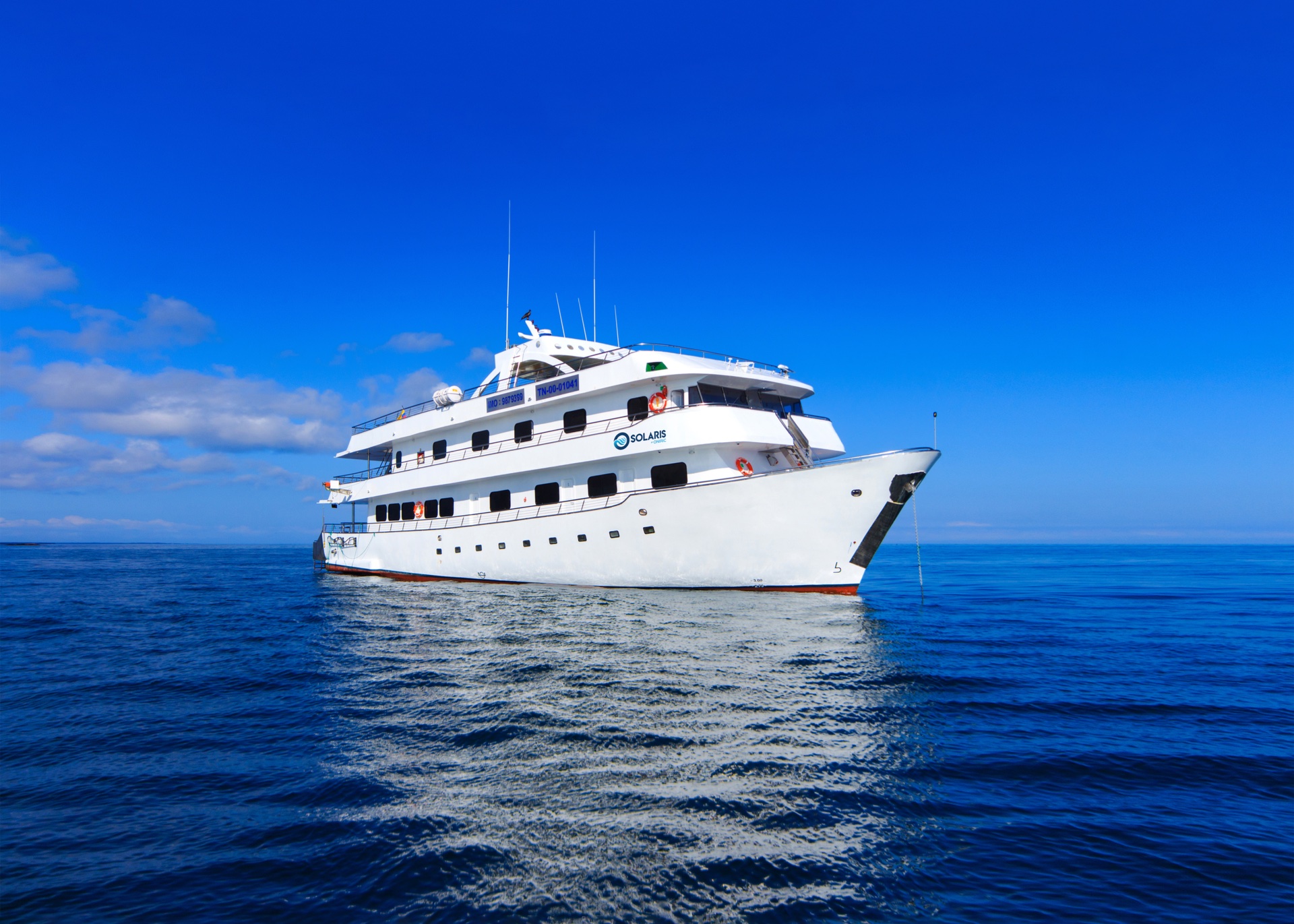 SolarisGalápagos