Itinerary A (Baltra - Baltra)
Solaris · Galápagos · 4 nights
About this route
This 7-day, 6-night adventure cruise in the Galápagos Islands offers an immersive journey through diverse ecosystems. Guests will explore a variety of islands, encountering unique wildlife both on land and in the water. The itinerary focuses on discovering the natural wonders of this iconic archipelago, known for its endemic species and stunning landscapes. Each day brings new opportunities to observe the celebrated biodiversity of the Galápagos.
Regions on this route
Highlights
Chinese Hat
Chinese Hat is a small, uniquely shaped volcanic islet located southeast of Santiago Island, resembling a traditional Asian hat. This site is renowned for its shallow waters, which are ideal for snorkeling, and for its diverse marine life, including penguins, sea lions, and whitetip reef sharks, offering a concentrated experience of the Galápagos' underwater beauty.
- Unique volcanic shape
- Penguin and sea lion sightings
- Shallow water snorkeling
Fernandina Island
Fernandina is the youngest and westernmost island in the Galápagos, renowned for its pristine ecosystem and active volcano. Punta Espinosa, a key site, showcases vast marine iguana colonies, flightless cormorants, and sea lions against a dramatic lava flow backdrop, making it a prime location for observing endemic species.
- Marine iguana colonies
- Flightless cormorants
- Pristine volcanic landscapes
Isabela Island
Isabela, the largest island, is shaped by six active volcanoes and boasts an incredibly diverse array of wildlife. From the tranquil Tintoreras, known for its sharks and penguins, to the rugged volcanic terrain of Moreno Point and Tagus Cove, it offers unparalleled opportunities to encounter iconic Galápagos species like giant tortoises, marine iguanas, and flightless cormorants.
- Volcanic landscapes
- Giant tortoise encounters
- Diverse marine life
Rabida Island
Rabida Island is distinguished by its unique red volcanic sand beaches, creating a stunning visual contrast with the turquoise waters. It is a haven for various bird species, including flamingos and brown pelicans, and provides excellent opportunities to observe sea lions, making it a picturesque stop for both geology and wildlife enthusiasts.
- Red sand beaches
- Birdwatching opportunities
- Sea lion observations
Santa Cruz Island
Santa Cruz is a central hub in the Galápagos, offering diverse environments from lush highlands to white sandy beaches. Key attractions include the Charles Darwin Research Station, vital for conservation efforts, and Las Bachas Beach, a significant nesting site for sea turtles and a habitat for coastal birds.
- Conservation efforts
- Sea turtle nesting
- Coastal birdwatching
Santiago Island
Santiago Island, also known as San Salvador, features diverse landscapes from volcanic rock formations to lush vegetation in its highlands. It's home to a variety of wildlife, including fur seals, sea lions, and marine iguanas. The island's geological history is prominently displayed, with sites like Sullivan Bay showcasing recent lava flows.
- Diverse landscapes
- Fur seals and sea lions
- Volcanic geology
Shore excursions
- Explore Las Bachas Beach on Santa Cruz Island.
- Visit Tintoreras on Isabela Island to see white-tip reef sharks.
- Discover C.C. Arnoldo Tupiza & Wetlands on Isabela Island.
- Tour the Tortoise Breeding Center on Isabela Island.
- Walk the lava flows of Moreno Point on Isabela Island.
- Explore Tagus Cove on Isabela Island, a historic anchorage.
- Visit Punta Espinosa on Fernandina Island to observe marine iguanas and cormorants.
- Explore Vicente Roca Point on Isabela Island for marine wildlife viewing.
- Relax at Espumilla Beach on Santiago Island, a sea turtle nesting site.
- Discover Buccaneer's Cove on Santiago Island with its unique rock formations.
- Explore Puerto Egas on Santiago Island, known for its fur seals.
- Visit Rabida Island, characterized by its red sand beaches.
- Explore Chinese Hat, a small volcanic island near Santiago.
- Visit the Charles Darwin Research Station on Santa Cruz Island.
Day-by-day plan
Day 1: Embarkation – Baltra & Santa Cruz
Guests arrive at Baltra Airport (GPS) and are transferred to the Solaris liveaboard. After settling in, the afternoon features a visit to Las Bachas Beach on Santa Cruz Island. This initial exploration allows for orientation and a taste of the island's pristine coastal environment before the full itinerary unfolds.
Dive sites: Las Bachas Beach
Day 2: Isabela Island – Wildlife & Conservation
Today's journey focuses on Isabela Island, starting with a morning visit to Tintoreras, known for its small channels where white-tip reef sharks can be observed. C. Arnoldo Tupiza & Wetlands and the Tortoise Breeding Center, offering insights into the island's unique terrestrial wildlife and conservation efforts.
Dive sites: Tintoreras
Day 3: Isabela Island – Volcanic Landscapes & Marine Life
Exploration continues on Isabela Island with a morning visit to Moreno Point, characterized by its barren lava flows and tide pools, often home to penguins and marine iguanas. The afternoon brings a trip to Tagus Cove, a historic anchorage offering opportunities to observe flightless cormorants and stunning volcanic landscapes.
Dive sites: Moreno Point, Tagus Cove
Day 4: Fernandina & Isabela – Unique Endemics
Today's activities focus on the western islands of Fernandina and Isabela, known for their abundant and unique endemic species. The morning involves a visit to Punta Espinosa on Fernandina, famous for its large colonies of marine iguanas and flightless cormorants. The afternoon is spent at Vicente Roca Point on Isabela, offering opportunities to spot green sea turtles, sunfish, and various boobies.
Dive sites: Punta Espinosa, Vicente Roca Point
Day 5: Santiago Island – Diverse Landscapes
The day explores Santiago Island, offering a blend of coastal beauty and unique geological formations. The morning may include visits to Espumilla Beach, a nesting site for sea turtles, and Buccaneer's Cove, a historic hideout with striking rock formations. The afternoon features Puerto Egas, known for its tide pools and the chance to see fur seals and marine iguanas.
Dive sites: Espumilla Beach, Buccaneer's Cove, Puerto Egas
Upcoming departures
- 2026-10-26 – 2026-10-30from 3,735 USDBook
- 2026-10-30 – 2026-11-03from 4,150 USDBook
- 2026-11-09 – 2026-11-13from 4,150 USDBook
- 2026-11-13 – 2026-11-17from 4,150 USDBook
- 2026-11-23 – 2026-11-27from 3,735 USDBook
- 2026-11-27 – 2026-12-01from 4,150 USDBook
- 2026-12-07 – 2026-12-11from 4,150 USDBook
- 2026-12-11 – 2026-12-15from 3,320 USDBook
- 2026-12-21 – 2026-12-25from 4,773 USDBook
- 2026-12-25 – 2026-12-29from 4,773 USDBook
- 2027-01-04 – 2027-01-08from 4,350 USDBook
- 2027-01-18 – 2027-01-22from 3,698 USDBook
All routes of this liveaboard
About the vessel
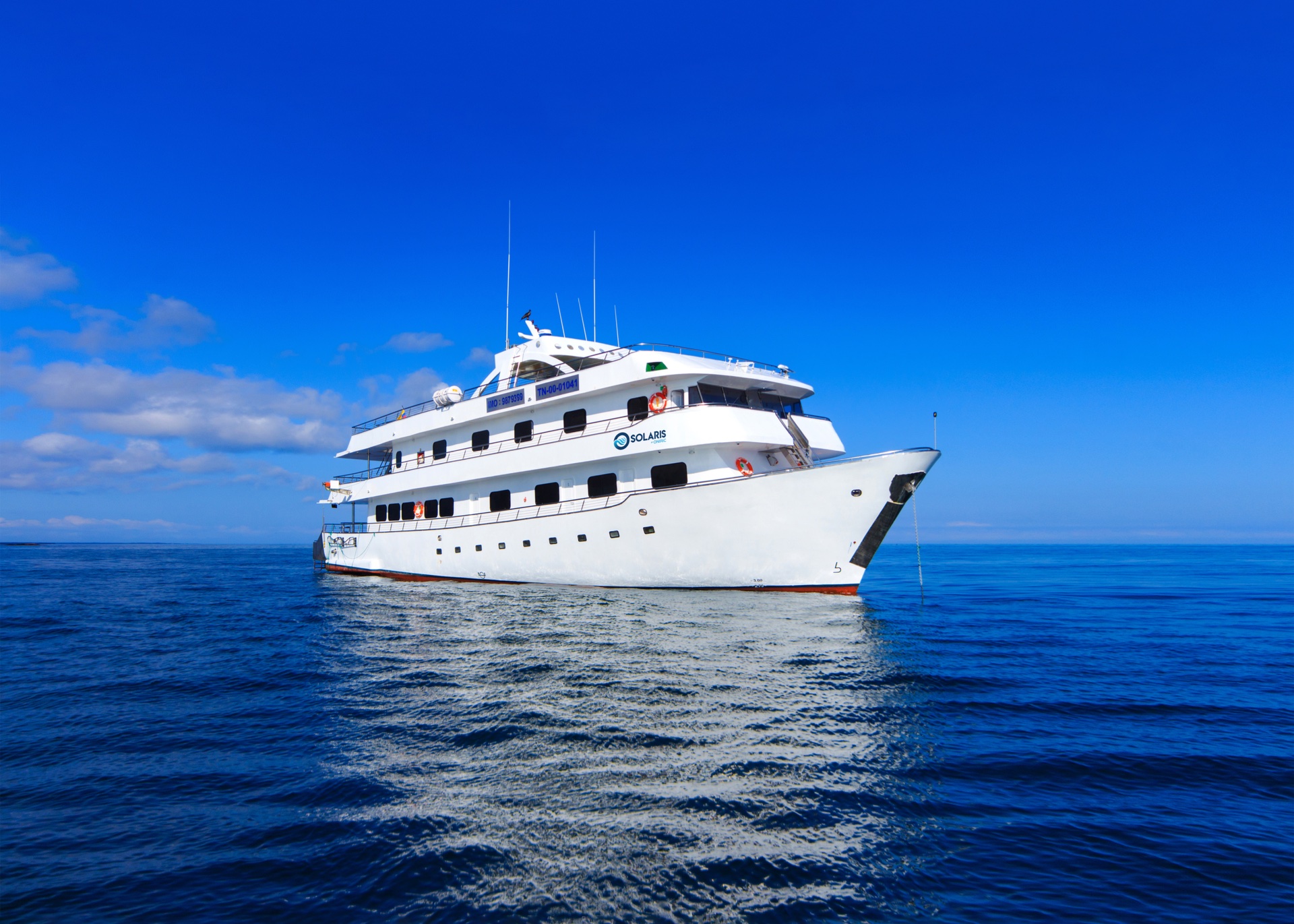 SolarisGalápagos