Bali to Komodo (Serangan - Labuan Bajo)
Samambaia · Indonesia · 11 nights
About this route
Embark on an unforgettable liveaboard journey from Bali to Komodo, exploring the diverse underwater landscapes and vibrant marine life of Indonesia. This itinerary offers a unique blend of thrilling drift dives, encounters with iconic megafauna, and exploration of pristine coral gardens. Discover volcanic black sand slopes, nutrient-rich channels, and remote islands, promising a truly immersive diving adventure. Topside activities include scenic treks, visits to traditional villages, and whale watching, complementing the incredible underwater experiences.
Regions on this route
Highlights
Banta
Banta Island, located just outside Komodo National Park, is a key area for encountering majestic manta rays, especially at sites like Manta Wall. The island's waters are characterized by strong currents and nutrient-rich upwellings, creating ideal conditions for large pelagic sightings and vibrant reef ecosystems. Divers can expect exciting drift dives, colorful coral formations, and abundant reef fish.
- Manta ray encounters
- Strong currents
- Pelagic sightings
- Colorful coral formations
Flores
Flores offers a gateway to the Komodo National Park and surrounding dive areas, providing a mix of cultural experiences and stunning natural beauty. The waters around Flores are rich in marine life, featuring diverse coral ecosystems and opportunities for both macro and wide-angle photography. It serves as a crucial hub for liveaboard expeditions exploring the Lesser Sunda Islands.
- Gateway to Komodo
- Cultural experiences
- Diverse coral ecosystems
- Photography opportunities
Golden Passage
The Golden Passage, located between Komodo and Gili Lawa Laut, is a narrow channel known for its strong, nutrient-rich currents. These currents create a dynamic environment for a spectacular array of marine life, including large schools of fish, sharks, and occasional pelagic visitors. It's a drift diving paradise offering exhilarating experiences and vibrant coral formations along its walls.
- Strong drift currents
- Nutrient-rich waters
- Large fish schools
- Shark sightings
Komodo
Komodo National Park is a UNESCO World Heritage site renowned for its exceptional marine biodiversity and the iconic Komodo dragons. The diving here is characterized by strong currents, vibrant coral gardens, and a rich variety of pelagic and reef species. The park encompasses a diverse range of dive environments, from volcanic black sand slopes to clear water reefs and manta cleaning stations.
- Komodo dragons
- Strong currents
- Rich marine biodiversity
- Vibrant coral reefs
Komodo National Park
Komodo National Park is celebrated worldwide for its powerful currents, which bring nutrient-rich waters that sustain an incredibly diverse marine ecosystem. The park is home to a wide array of sharks, manta rays, and large schooling fish, alongside vibrant hard and soft coral gardens. Dive sites often feature pinnacles, walls, and exciting drift dives, making it a thrilling destination for experienced divers.
- Powerful currents
- Nutrient-rich waters
- Pelagic encounters
- Pinnacle and wall dives
Lombok
Lombok offers a diverse range of dive sites, from vibrant coral reefs to productive muck diving areas. The island's waters are home to a variety of macro critters and healthy reef ecosystems, providing opportunities for both wide-angle and macro photography. It serves as an excellent starting point or transition zone for liveaboard trips exploring the Lesser Sunda Islands.
- Diverse dive sites
- Macro critters
- Healthy reef ecosystems
- Photography opportunities
Manta Point
Manta Point is a world-famous cleaning station and feeding ground for reef manta rays within Komodo National Park. Divers can often experience multiple manta ray encounters during a single dive, watching them gracefully glide through the strong currents. The site's clear, nutrient-rich waters also attract other pelagic species and a variety of reef fish.
- Manta ray encounters
- Cleaning station
- Nutrient-rich waters
- Pelagic sightings
Moyo Island
Moyo Island is a pristine island known for its lush landscapes and healthy surrounding coral reefs. The diving here offers clear waters, abundant marine life, and vibrant coral gardens, providing a tranquil contrast to the more action-packed sites of Komodo. It's an ideal location for relaxed reef dives and exploring unspoiled underwater environments.
- Pristine reefs
- Clear waters
- Abundant marine life
- Tranquil diving
Rinca
Rinca Island is famous for being one of the few places to spot the Komodo dragons in their natural habitat. Beyond the land-based encounters, the waters surrounding Rinca offer exceptional diving, particularly in areas like Horseshoe Bay and Nusa Kode. These sites are known for their unique topography, abundant macro life, and the chance to encounter rare and unusual species against dramatic underwater landscapes.
- Komodo dragon habitat
- Unique topography
- Abundant macro life
- Rare species
Sangeang
Sangeang Volcano offers a unique diving experience with its black sand slopes and active volcanic features, including 'bubble reefs' where gas seeps from the seafloor. This area is a macro photographer's paradise, home to a wide variety of unusual critters such as pygmy seahorses, ghost pipefish, and rare nudibranchs. The stark contrast between the vibrant coral patches and dark volcanic sand creates a truly distinct underwater environment.
- Volcanic black sand
- Unique bubble reefs
- Macro photography haven
- Rare critters
Satonda
Satonda Island is a unique volcanic island featuring a saltwater lake in its caldera, surrounded by pristine coral reefs. The diving around Satonda is characterized by healthy hard and soft coral formations, with good visibility and opportunities to see both macro life and schooling reef fish. The island's unique geology adds an interesting dimension to the underwater exploration.
- Unique volcanic island
- Saltwater lake
- Healthy coral formations
- Diverse reef fish
Requirements
- CertificationOpen Water
- Minimum logged dives30
- ExperienceMinimum 30 logged dives required.
Shore excursions
- Scenic rides through lagoons and coves in tenders
- Trekking to breathtaking viewpoints
- Visits to traditional villages
- Whale watching experiences
- Water action such as wakeboarding and kayaking
Good to know
- A minimum of 30 logged dives is required for this trip.
- Divers are recommended to wait 24 hours before flying after their last dive.
- The itinerary is subject to change based on local regulations, guest experience, weather, and logistics.
Day-by-day plan
Day 1: Embarkation – Serangan, Bali
Guests will embark in Serangan, Bali, where they will settle into their cabins and receive a comprehensive briefing about the upcoming adventure. This day focuses on getting acquainted with the vessel and preparing for the exciting journey ahead.
Day 2: Lombok – Check Dive & Canyon Reefs
The day begins with an essential check dive to ensure comfort and readiness for the trip, followed by initial dives near Lombok. Divers will explore candy-critter rich sites, known for their abundant macro life and vibrant reef fish. The area often features healthy reefs with excellent visibility, making it a fantastic start to the diving expedition.
Day 3: Moyo & Satonda – Pristine Reefs
Today's dives focus on the pristine waters around Moyo and Satonda, renowned for their healthy coral formations and diverse marine ecosystems. Expect to encounter abundant reef fish, trevally, and tuna schooling in the currents. The area is known for vibrant hard and soft corals, often providing excellent visibility for colorful reef exploration. A land excursion to Satonda Island to explore its unique saltwater lake may also be offered.
Day 4: Sangeang – Muck Diving & Volcanic Slopes
Diving around Sangeang offers a unique experience with active volcanic slopes and nutrient-rich black sand. This area is a haven for macro enthusiasts, commonly featuring pygmy seahorses, ghost pipefish, and various nudibranchs. The unique environment creates a stark contrast of vibrant corals against the dark volcanic backdrop, often revealing interesting bubble reefs where gas seeps from the seafloor. Currents can vary, offering a mix of drift and muck diving opportunities.
Day 5: Banta – Manta Ray Encounters
Banta is well-known for its vibrant reefs and strong currents, often creating ideal conditions for manta ray sightings. Dive sites like 'Manta Wall' and 'The Rollercoaster' are famous for their nutrient-rich waters attracting these majestic creatures. The day typically includes a mix of wall and pinnacle dives, with the potential for exciting drift diving. A land excursion to enjoy the sunset over the Komodo National Park and Sangeang volcano may also be offered.
Dive sites: Manta Wall, The Rollercoaster
Day 6: Central Komodo – Northern Park Reefs
Exploring the northern reaches of Komodo National Park, divers will encounter renowned sites such as 'Crystal Rock' and 'Castle Rock'. These sites are famous for their strong currents, which attract large schools of fish and pelagic species. Expect dynamic dives with vibrant coral gardens, diverse reef inhabitants and the potential for shark encounters. The nutrient-rich waters ensure a healthy and active ecosystem.
Dive sites: Crystal Rock, Castle Rock, The Cauldron, Lighthouse
Day 7: Komodo Central & Rinca – Top Dive Sites
This day features some of the top dive sites in the central Komodo and Rinca areas, including 'Tataswa Kecil', 'Batu Bolong', and 'Manta Point'. These sites are known for their spectacular coral formations, strong currents, and abundant marine life, particularly attracting manta rays. Divers can expect a variety of experiences, from dynamic drift dives to vibrant reef explorations, all offering incredible underwater scenery.
Dive sites: Tataswa Kecil, Batu Bolong, Manta Point
Day 8: Rinca Trekking & Diving – Dragon Encounters
After a morning trek to see the famous Komodo dragons on Rinca Island, the day continues with diving in the southern Komodo National Park. This region, including known sites like Nusa Kode and Horseshoe Bay, is famous for its rich nutrient waters and abundant marine biodiversity. Divers can expect to find good visibility, vibrant corals, and a plethora of macro and reef fish, alongside potential encounters with larger pelagic species. The area is also known for its diverse invertebrate life.
Dive sites: Nusa Kode, Horseshoe Bay
Day 9: Nusa Kode – Remote Southern Dive Sites
Exploring Nusa Kode in the Horseshoe Bay area provides access to some of Komodo's most spectacular diving. Dive sites like 'Yellow Wall of Texas', 'Devil's Corner', and 'Torpedo Alley' are known for their dramatic walls, strong currents, and abundant marine life. Divers can anticipate encountering a variety of pelagic species, vibrant reef fish, and interesting macro subjects, with the possibility of seeing rare critters such as starry night octopus, frogfish, and nudibranchs.
Dive sites: Yellow Wall of Texas, Devil's Corner, Torpedo Alley
Day 10: Komodo Central & North – Favorite Reefs
Today focuses on revisiting some of the most cherished dive sites in central and northern Komodo National Park. These areas are consistently rich in marine biodiversity, offering excellent opportunities for encounters with a variety of reef fish, sharks, and possibly manta rays. The choice of sites will depend on conditions, ensuring the best possible diving experience in this world-class dive region.
Day 11: Komodo Central – Relaxation & Last Dives
The final diving day takes place in the central Komodo region, offering two more dives before heading back towards Labuan Bajo. These dives allow guests to enjoy the vibrant reefs one last time, with opportunities to spot diverse marine life. Following the dives, the journey to Labuan Bajo begins, where guests can relax and enjoy the scenic cruise.
Day 12: Disembarkation – Labuan Bajo
Guests will disembark in Labuan Bajo, where they can connect with their onward travel arrangements. The crew will assist with luggage and transfers to ensure a smooth departure.
Upcoming departures
- 2027-07-26 – 2027-08-06from 7,535 USDBook
All routes of this liveaboard
- East Flores & Banda Sea (Maumere - Ambon) · 11 nights
- Banda Sea & South Raja Ampat (Ambon - Ambon) · 11 nights
- Triton Bay & Raja Ampat (Kaimana - Sorong) · 11 nights
- Flores & Komodo National Park (Maumere → LabuanBajo) · 12D11N
- Komodo & East Flores (Labuan Bajo - Maumere) · 11 nights
- Banda Sea & Raja Ampat (Ambon - Sorong) · 11 nights
- Banda Sea & East Flores (Ambon → Maumere) · 12D11N
- Banda Sea (Maumere - Ambon) · 11 nights
- Triton Bay (Kaimana - Kaimana) · 11 nights
- Komodo National Park and East Flores (Labuanbajo → Maumere) · 12D11N
- Banda Sea & Alor (Ambon → Maumere) · 12D11N
- East Flores & Alor (Maumere - Maumere) · 12 Days / 11 Nights
- Banda Sea & Raja Ampat (Ambon - Sorong) · 12 Days / 11 Nights
- Raja Ampat South & Central (Sorong - Sorong) · 12 Days / 11 Nights
- Raja Ampat North & Central (Sorong - Sorong) · 12 Days / 11 Nights
- Raja Ampat & Triton Bay (Sorong - Kaimana) · 12 Days / 11 Nights
- Raja Ampat & Banda Sea (Sorong - Ambon) · 12 Days / 11 Nights
- Raja Ampat North & Central (Sorong - Sorong) · 7 Days / 6 Nights
- Raja Ampat South & Central — Extended Misool & Dampier (Sorong - Sorong) · 14 Days / 13 Nights
- Raja Ampat South & Central — Misool & Dampier Festive (Sorong - Sorong) · 13 Days / 12 Nights
- Raja Ampat South & Central — Short Misool & Dampier (Sorong - Sorong) · 10 Days / 9 Nights
- Komodo & East Flores — Cross-Flores Expedition (Labuan Bajo - Maumere) · 13 Days / 12 Nights
- Komodo National Park (Labuan Bajo - Labuan Bajo) · 11 nights
- Banda Sea · 11 nights
- Komodo National Park (Labuan Bajo - Labuan Bajo) · 11 nights
- Raja Ampat & Halmahera · 11 nights
- Full Halmahera · 11 nights
- Halmahera & Raja Ampat · 11 nights
- Triton Bay & Banda Sea (Kaimana - Ambon) · 11 nights
About the vessel
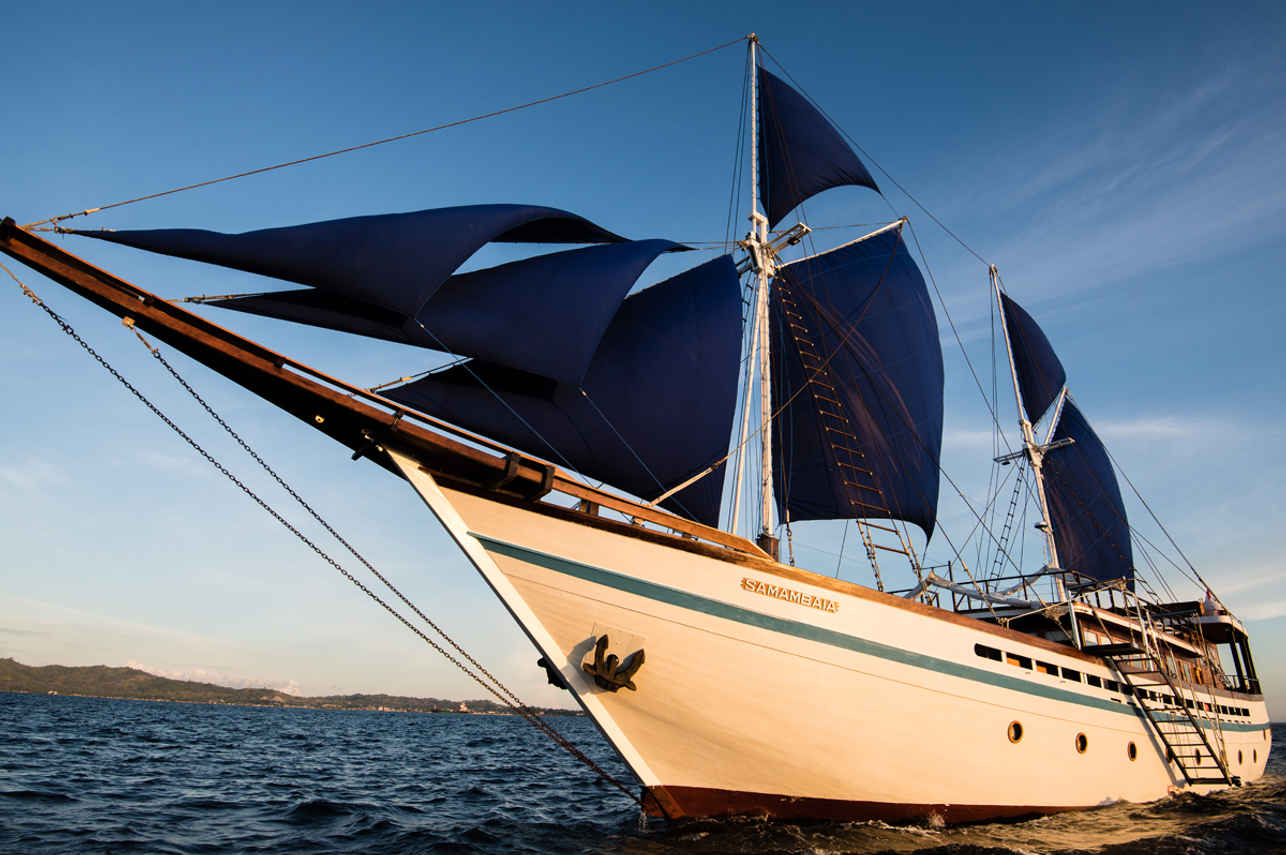 SamambaiaIndonesia