Komodo North - South (Labuan Bajo - Labuan Bajo)
Panunee · Indonesia · 6 Days / 5 Nights
About this route
This exciting 6-day liveaboard journey explores the diverse waters of Komodo National Park, navigating routes from north to south. Guests will encounter an incredible variety of marine life, from vibrant coral reefs and critter-rich muck diving sites to thrilling encounters with mantas and pelagics. The itinerary focuses on the unique topography and ecological hotspots around Labuan Bajo, offering a comprehensive diving experience suitable for experienced divers.
Regions on this route
Highlights
Batu Balong
Batu Balong is a small rocky island dive site known for its remarkably healthy and abundant reef life. It boasts vibrant corals and thousands of small, colorful reef fish. The area is protected from destructive fishing practices, ensuring a pristine environment. While currents can be strong, diving is typically done during slack tide to fully appreciate its beauty.
- Healthy coral gardens
- Abundant reef fish
- Protected marine area
- Critter spotting
Bidadari Island
Bidadari Island's location is characterized by huge towers of stone covered with hard and soft corals. It is a good spot for nudibranchs, dusky sharks, and bumphead parrotfish. The gentle slope covered with every color of table corals and some small caves are home of some huge lobsters. The area is also a good spot for macro critters.
- Hard and soft corals
- Nudibranchs
- Bumphead parrotfish
- Lobsters
Cannibal Rock
Cannibal Rock is characterized by its dramatic hard and soft coral formations. It is a very diverse site with a wide variety of marine life. Divers can expect to see numerous unusual nudibranchs, zebra crabs, and various frogfish. The top of the reef is covered by anemones, providing a habitat for diverse species of sea anemone fish, making it a vibrant and rich dive.
- Hard and soft corals
- Nudibranchs
- Zebra crabs
- Anemone fish diversity
Castle Rock
Castle Rock is a highly dynamic dive site, famous for its strong currents that bring in large schools of pelagic fish. Divers can expect to see barracuda, trevally, and mackerel in abundance. The site is also a good spot for encounters with whitetip reef sharks, grey reef sharks, and occasional manta rays, offering thrilling action.
- Pelagic fish schools
- Reef sharks
- Strong currents
- Thriving reef life
Crystal Rock
Crystal Rock is a vibrant dive site characterized by its stunning soft coral gardens and abundant marine life. It is particularly known for clear water and strong currents, which attract large schools of fish including damselfish, pyramid butterflyfish, and snappers. Macro critters and octopuses are also often sighted here.
- Vibrant soft corals
- Large fish schools
- Strong currents
- Macro photography
Komodo
Komodo refers to the main island within the National Park, synonymous with the iconic Komodo Dragon. Its surrounding waters offer an unparalleled diving experience due to the confluence of various currents, creating diverse ecosystems ranging from vibrant coral gardens to nutrient-rich channels where large pelagic species thrive. Diving here is characterized by thrilling drifts and abundant marine encounters.
- Komodo Dragon sightings
- Diverse dive sites
- Rich marine ecosystems
- Dynamic currents
Komodo National Park
Komodo National Park encompasses a vast marine protected area recognized for its exceptional biodiversity, dramatic volcanic islands, and unique land animals. The park's waters are characterized by strong currents, creating nutrient-rich environments that support a spectacular array of coral reefs and an incredible diversity of marine species, from tiny critters to large pelagics.
- High marine biodiversity
- Strong currents
- Komodo Dragon habitat
- Pristine coral reefs
Manta Alley
Manta Alley is one of Komodo's most famous dive sites, renowned for its consistent sightings of reef manta rays. The site features several cleaning stations and feeding areas where mantas gather, particularly during specific seasons. Divers often experience multiple close encounters with these majestic creatures in a dynamic underwater environment.
- Frequent manta ray sightings
- Manta cleaning stations
- Strong currents
- Pelagic encounters
Rinca
Rinca Island is renowned as one of the primary habitats for the Komodo dragon, offering unique terrestrial excursions to observe these prehistoric reptiles in their natural environment. While primarily known for its land-based wildlife, the surrounding waters offer diverse diving opportunities.
Sebayour
Sebayour is a good dive spot for check diving with a gentle slope and sandy area continuing to the ridge. There are a lot of macro fish like jawfish, bubble coral ribbons, leaf fish, and porcelain crabs. The area is also plenty of fusiliers, bumphead parrotfish, red tooth triggerfish, and jackfishes. It is a very relaxing spot with plenty of macro life.
- Macro life
- Jawfish
- Bubble coral ribbons
- Porcelain crabs
Tawawa Besar
Tawawa Besar features fringing reefs and steep banks covered in corals. It is known for large schools of sweetlips, various sharks, and turtles. Manta rays sometimes come to this area, and the best way to dive here is to drift with the current along the northeastern side and then loop around for a safety stop, offering a scenic drift experience.
- Fringing reefs
- Steep banks
- Sweetlips schools
- Drift diving
Tawawa Kecil
Tawawa Kecil is a small rocky island composed of boulders and rocks, mostly covered with orange cup corals. This site is best dived during slack tide to appreciate its beauty. The area is home to diverse marine life including large groupers, snappers, sweetlips, jacks, and various sharks, and has also been known for dugong sightings.
- Orange cup corals
- Groupers and snappers
- Potential dugong sightings
- Rocky reef formations
Wainilu
Wainilu is an excellent site for macro diving, featuring a sandy bottom with scattered rubble and small coral patches. It is home to a variety of unique critters such as mandarin fish, Wonderpus octopuses, Indian walkman, frogfish, and harlequin sweetlips. Divers often refer to it as a 'Little Lembeh' for its rich macro life.
- Macro critters
- Mandarin fish
- Wonderpus octopus
- Frogfish
Yellow Wall
Yellow Wall is aptly named for its extensive cover of beautiful yellow soft corals that adorn its vertical surfaces. This site offers stunning panoramic views underwater and is generally a gentle dive, allowing divers to appreciate the vibrant colors and intricate details of the coral formations.
- Extensive yellow soft corals
- Colorful reef scenery
- Gentle diving conditions
- Beautiful wall dive
Requirements
- CertificationOpen Water
- Minimum logged dives100
- ExperienceOpen Water certification with a minimum of 100 logged dives is required for this trip.
Shore excursions
- A land excursion to search for the famous Komodo Dragon is included on Day 5.
- Explore the picturesque Pink Beach, offering opportunities for relaxation and stunning views.
Good to know
- A minimum of 100 logged dives is required for this trip.
- Airport and port transfers are included in the trip price for Labuan Bajo.
- Please adhere to the check-in and check-out times for smooth logistics.
- A park fee of $260 USD per person is payable in cash upon check-in for the Marine Park, Port, and round-trip airport transfer.
Day-by-day plan
Day 1: Embarkation – Labuan Bajo
The adventure begins with guests arriving at Labuan Bajo (Komodo) airport, followed by a transfer to the Panunee liveaboard. After checking in and settling into cabins, a comprehensive welcome briefing and lunch will be provided. The afternoon features a check dive and night dive at Wainilu, allowing divers to acclimate to the equipment and conditions while observing nocturnal reef activity.
Dive sites: Wainilu
Day 2: Komodo North – Tatama Besar, Pink Beach
Today's dives explore the northern Komodo region, visiting sites like Makassar Reef, Tatama Besar, Batu Bolong, and Pink Beach. Makassar Reef is renowned for its large manta ray population, offering potential encounters with these majestic creatures. Tatama Besar features fringing reefs and steep banks with vibrant corals, often showcasing schools of sweetlips, sharks, and turtles. Batu Bolong offers a rich reef with abundant small colorful fish, while Pink Beach provides a picturesque backdrop.
Dive sites: Makassar Reef, Tawawa Besar, Batu Bolong, Pink Beach
Day 3: Central Komodo – Manta Alley, Yellow Wall
The focus shifts to Central Komodo's iconic sites, including Manta Alley, Cannibal Rock, Torpedo Point, and Yellow Wall. Manta Alley is a famous dive site known for its consistent manta ray sightings, especially during specific seasons. Cannibal Rock and Torpedo Point offer diverse underwater terrain, often featuring unique critters and interesting rock formations. Yellow Wall is characterized by its extensive yellow soft coral, creating a stunning visual experience.
Dive sites: Manta Alley, Cannibal Rock, Torpedo Point, Yellow Wall
Day 4: Komodo North – Batu Bolong, Castle Rock
Today's diving continues to explore the northern reaches of Komodo National Park, with planned dives at Batu Bolong, Castle Rock, Shotgun, and Gili Lawa. Castle Rock is a renowned site famous for its strong currents and abundant pelagic life, including large schools of fish and various sharks. Batu Bolong provides a vibrant reef with diverse marine creatures. These sites collectively offer thrilling drift dives and opportunities for encounters with larger marine species.
Dive sites: Batu Bolong, Castle Rock, Shotgun, Gili Lawa
Day 5: Komodo – Dragon Search & Castle Rock
The final full day of the itinerary combines diving with a unique land excursion to search for the Komodo Dragon. Divers will visit Castle Rock and Crystal Rock, sites known for abundant marine life and strong currents that attract pelagics. Crystal Rock is particularly noted for its thriving coral gardens and diverse fish schools, including colorful damselfish and butterflyfish. The day provides a balance of thrilling underwater exploration and an iconic terrestrial wildlife experience.
Dive sites: Castle Rock, Crystal Rock
Day 6: Disembarkation – Labuan Bajo
On the final day, guests enjoy breakfast before checking out from the Panunee liveaboard. Transfers to the airport or a local hotel in Labuan Bajo will be arranged, concluding the unforgettable Komodo diving and exploration journey.
Upcoming departures
All routes of this liveaboard
- Ambon - Banda - Raja Ampat (Ambon - Sorong) · 11 Days / 10 Nights
- Raja Ampat - Central (Sorong - Sorong) · 7 Days / 6 Nights
- Komodo North - South (Labuan Bajo - Labuan Bajo) · 7 Days / 6 Nights
- Raja Ampat-Misool (Sorong - Sorong) · 9 Days / 8 Nights
- Komodo North-South (Labuan Bajo - Labuan Bajo) · 7 Days / 6 Nights
- Crossing Ambon-Banda-Raja Ampat (Ambon - Sorong) · 11 Days / 10 Nights
- Raja Ampat - Misool (Sorong - Sorong) · 9 Days / 8 Nights
- Ambon-Banda Sea (Ambon - Ambon) · 8 Days / 7 Nights
- Raja Ampat (Central) (Sorong - Sorong) · 7 Days / 6 Nights
- Komodo North-South (Labuan Bajo - Labuan Bajo) · 6 Days / 5 Nights
- Macro-Black Water Ambon (Ambon - Ambon) · 7 Days / 6 Nights
About the vessel
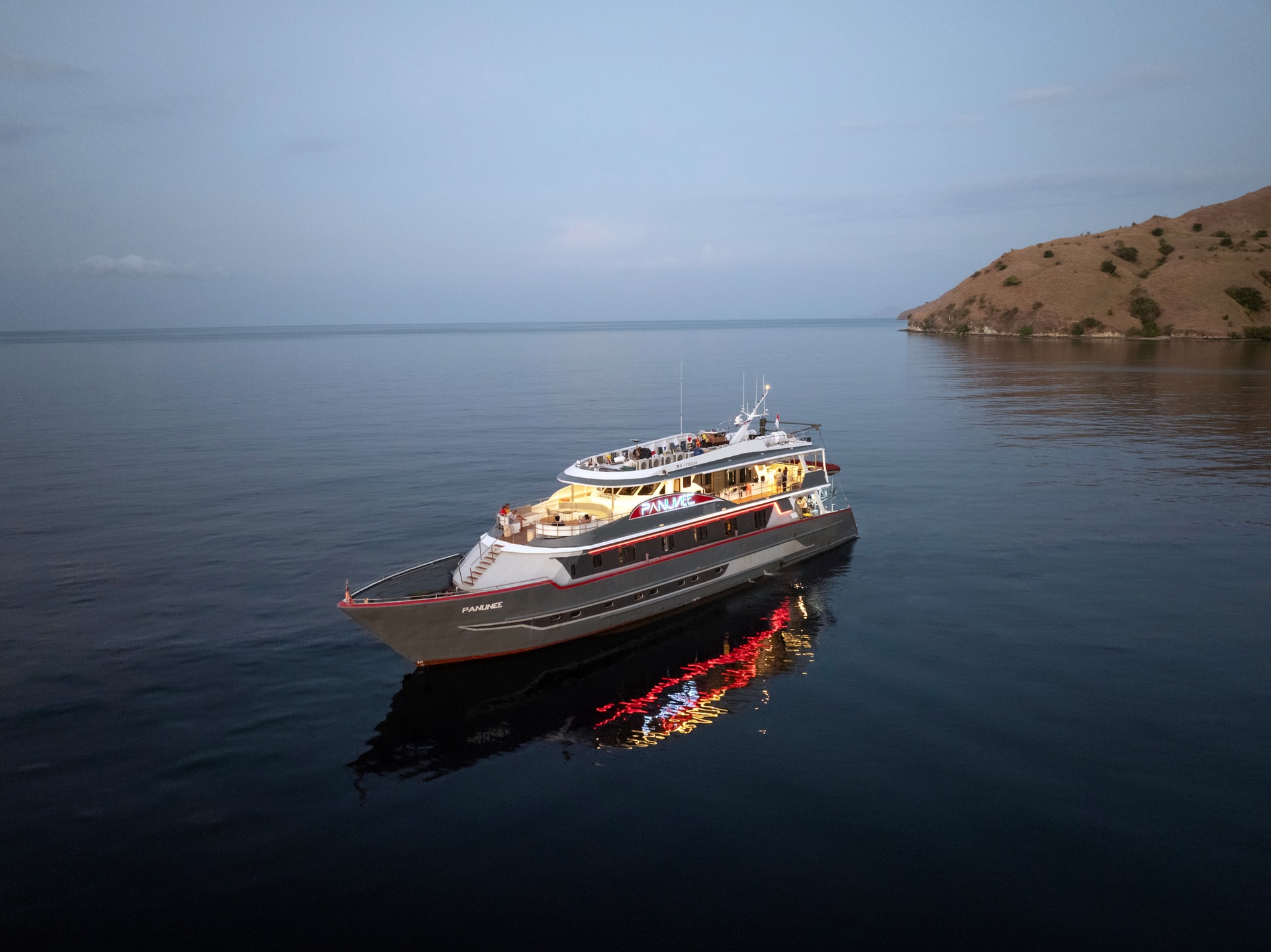 PanuneeIndonesia