Komodo North - South (Labuan Bajo - Labuan Bajo)
Panunee · Indonesia · 7 Days / 6 Nights
About this route
This Komodo North to South itinerary offers a comprehensive exploration of the region's diverse marine ecosystems, starting and ending in Labuan Bajo. Divers will encounter a mix of challenging currents and vibrant reef systems, from macro-rich sites to pelagic encounters. The route includes iconic locations like Batu Bolong, Manta Alley, and Castle Rock, promising a variety of underwater experiences. Expect rich coral formations, abundant reef fish, and opportunities to spot larger marine life.
Regions on this route
Highlights
Batu Bolong
Batu Bolong is a small rocky island and a spectacular dive site, often described as an underwater aquarium. Diving is concentrated on the protected sides to avoid strong currents. The area is covered in vibrant corals, sponges, and anemones, teeming with schools of reef fish. It's known for its pristine conditions and abundant marine life.
- Vibrant coral gardens
- Abundant reef fish
- Pristine conditions
- Protected from currents
Bidadari Island
Bidadari Island offers a good spot for check dives, characterized by huge towers of stone covered with hard and soft corals. The area features numerous soft coral species, abundant fish life, and small caves that hide various lobsters. It's a picturesque site with diverse reef topography and vibrant marine ecosystems.
- Check dive site
- Coral towers
- Soft corals
- Lobster habitats
Cannibal Rock
Cannibal Rock is a vibrant and diverse dive site featuring both hard and soft corals. It's very abundant with schooling juvenile barracuda, zebra crabs, and frogfish. The reef is covered by anemones with various species of sea anemonefish. Diving here is often dynamic due to the presence of currents.
- Hard and soft corals
- Schooling barracuda
- Zebra crabs and frogfish
- Anemonefish diversity
Castle Rock
Castle Rock is a deep dive spot known for its strong currents and a high concentration of schooling fish. The site features impressive fish life, including barracudas, trevally, and mackerel, along with white tips, black tips, and grey reef sharks. The excellent visibility often enhances encounters with these pelagic species.
- Schooling barracudas
- Reef sharks
- Strong currents
- Excellent visibility
Crystal Rock
Crystal Rock is a submerged pinnacle often exposed to strong currents, especially at low tide. This site is celebrated for its incredible diversity of soft and hard corals, attracting a wide array of colourful reef fish and pelagic species. It's a dynamic dive, offering sightings of sharks, trevally, and various macro critters.
- Submerged pinnacle
- Strong currents
- Rich coral diversity
- Pelagic fish schools
Komodo
Komodo National Park, a UNESCO World Heritage site, is globally renowned for its exceptional marine biodiversity and challenging dive conditions. The area features strong currents, dramatic underwater topography, and a rich variety of corals and pelagic life. It's a prime destination for encountering large marine animals.
- Strong currents
- Rich biodiversity
- Pelagic encounters
- Dramatic topography
Komodo National Park
Komodo National Park, a UNESCO World Heritage site, is globally renowned for its exceptional marine biodiversity and challenging dive conditions. The area features strong currents, dramatic underwater topography, and a rich variety of corals and pelagic life. It's a prime destination for encountering large marine animals.
- Strong currents
- Rich biodiversity
- Pelagic encounters
- Dramatic topography
Manta Alley
Manta Alley is a very famous dive site renowned for frequent encounters with reef manta rays. The site is a cleaning station and feeding ground, especially during certain seasons. Divers can observe numerous mantas gracefully navigating the currents, making it a highlight for many visitors to Komodo.
- Manta ray encounters
- Cleaning station
- Feeding ground
- Graceful pelagics
Rinca
Rinca is one of the larger islands in Komodo National Park and is known for its terrestrial wildlife, particularly the Komodo dragons. While primarily a land-based attraction, the surrounding waters offer diverse dive sites with healthy reefs and a variety of marine species.
- Komodo dragons (topside)
- Healthy reefs
- Diverse marine species
Sebayour
Sebayour is a gentle slope covered with diverse macro life, making it an excellent spot for critter enthusiasts. The site is home to jawfish, bubble coral shrimps, leaf fish, and porcelain crabs. Expect to see plenty of fusiliers, bumphead parrotfish, redtooth triggerfishes, and jackfishes in the area.
- Macro critters
- Gentle slope
- Abundant reef fish
- Jawfish and leaf fish
Tanjung Kecil
Tanjung Kecil is a small rocky island featuring strong currents, making it an ideal drift dive location. The site boasts excellent visibility and is covered with orange cup corals. It's a great spot to see larger marine life and enjoy a fast-paced dive experience.
- Drift diving
- Strong currents
- Orange cup corals
- Excellent visibility
Waenilu
Waenilu is a popular dive site known for its rich macro life. It is home to a variety of nudibranchs, banded pipefishes, mandarin fishes, Wonderpus octopuses, Indian walkman, frogfishes, and harlequin sweetlips. Some divers refer to this area as "Little Lembeh" due to its exceptional critter opportunities.
- Exceptional macro life
- Nudibranchs
- Mandarin fish
- Frogfish
Yellow Wall
Yellow Wall is a beautiful dive site known for its extensive yellow soft corals. It offers stunning scenery and is often combined with other nearby sites. The vibrant hues of the corals create a picturesque underwater landscape, attracting a variety of reef fish.
- Extensive yellow soft corals
- Stunning scenery
- Picturesque landscape
- Variety of reef fish
Requirements
- CertificationOpen Water
- Minimum logged dives100
- ExperienceOpen Water certification with a minimum of 100 logged dives is required for this trip.
Good to know
- A 5mm semi-dry or wet suit is recommended for comfort during dives in Komodo waters.
- Divers are advised to wait 24 hours after their last dive before flying.
- The air temperature typically ranges from 25-33 degrees Celsius, with water temperatures from 26-28 degrees Celsius in the North and 22-27 degrees Celsius in the South.
- Dive conditions are suitable for intermediate to advanced divers.
Day-by-day plan
Day 1: Embarkation – Labuan Bajo
Guests will arrive at Labuan Bajo (Komodo) airport and be transferred to the pier for check-in on the Panunee liveaboard. After settling into cabins, a welcome briefing will be held. The first day concludes with dinner and an overnight stay in the Waiinilu area, preparing for the diving adventure ahead.
Day 2: Central Komodo – Reefs and Current
Today's diving focuses on the central Komodo region, visiting sites like Makassar Reef and Tatawa Besar. Makassar Reef is renowned for its strong currents and pelagic encounters, while Tatawa Besar offers diverse topography with vibrant soft corals. The day typically includes a dive at Batu Bolong, famous for its abundant marine life and colourful corals, often presenting challenging conditions due to currents. Pink Beach is also visited.
Dive sites: Makassar Reef, Tatawa Besar, Batu Bolong, Pink Beach
Day 3: North Komodo – Signature Sites
Diving continues in the northern Komodo area, with visits to iconic sites such as Manta Alley and Cannibal Rock. Manta Alley is a prime location for encounters with reef manta rays, especially during feeding aggregations. Cannibal Rock offers a diverse hard and soft coral reef, known for its unique critters and colourful topography. The day typically includes a dive at Torpedo Point, offering a chance for macro life, and Yellow Wall, celebrated for its yellow soft corals.
Dive sites: Manta Alley, Cannibal Rock, Torpedo Point, Yellow Wall
Day 4: Komodo National Park – Diverse Marine Life
Today's dives continue within the Komodo National Park, exploring a variety of sites known for their rich biodiversity. The itinerary typically includes dives at Batu Bolong, which is celebrated for its thriving coral gardens and abundant fish life, and Castle Rock, a deep site renowned for schooling pelagics. These sites offer a blend of vibrant reef ecosystems and opportunities for encountering larger marine species, providing a comprehensive diving experience.
Dive sites: Batu Bolong, Castle Rock, Shotgun
Day 5: Komodo National Park – Diverse Marine Life
Today's dives continue within the Komodo National Park, exploring a variety of sites known for their rich biodiversity. The itinerary typically includes dives at Batu Bolong, which is celebrated for its thriving coral gardens and abundant fish life, and Castle Rock, a deep site renowned for schooling pelagics. These sites offer a blend of vibrant reef ecosystems and opportunities for encountering larger marine species, providing a comprehensive diving experience.
Dive sites: Batu Bolong, Castle Rock, Shotgun
Day 6: Komodo National Park – Final Dives
The final day of diving focuses on sites such as Castle Rock and Crystal Rock, searching for specific marine life that makes these areas unique. Castle Rock is a deep site known for its vibrant fish life and potential for strong currents, often attracting schools of pelagics. Crystal Rock, a submerged pinnacle, features dynamic currents and a rich diversity of reef creatures, making for exciting and colourful dives. The afternoon is spent cruising back towards Labuan Bajo.
Dive sites: Castle Rock, Crystal Rock
Day 7: Disembarkation – Labuan Bajo
Guests will enjoy breakfast on board before checking out of the Panunee liveaboard. Transfers to the airport or hotel in Labuan Bajo are provided, marking the end of the Komodo diving adventure.
Upcoming departures
All routes of this liveaboard
- Komodo North - South (Labuan Bajo - Labuan Bajo) · 6 Days / 5 Nights
- Ambon - Banda - Raja Ampat (Ambon - Sorong) · 11 Days / 10 Nights
- Raja Ampat - Central (Sorong - Sorong) · 7 Days / 6 Nights
- Raja Ampat-Misool (Sorong - Sorong) · 9 Days / 8 Nights
- Komodo North-South (Labuan Bajo - Labuan Bajo) · 7 Days / 6 Nights
- Crossing Ambon-Banda-Raja Ampat (Ambon - Sorong) · 11 Days / 10 Nights
- Raja Ampat - Misool (Sorong - Sorong) · 9 Days / 8 Nights
- Ambon-Banda Sea (Ambon - Ambon) · 8 Days / 7 Nights
- Raja Ampat (Central) (Sorong - Sorong) · 7 Days / 6 Nights
- Komodo North-South (Labuan Bajo - Labuan Bajo) · 6 Days / 5 Nights
- Macro-Black Water Ambon (Ambon - Ambon) · 7 Days / 6 Nights
About the vessel
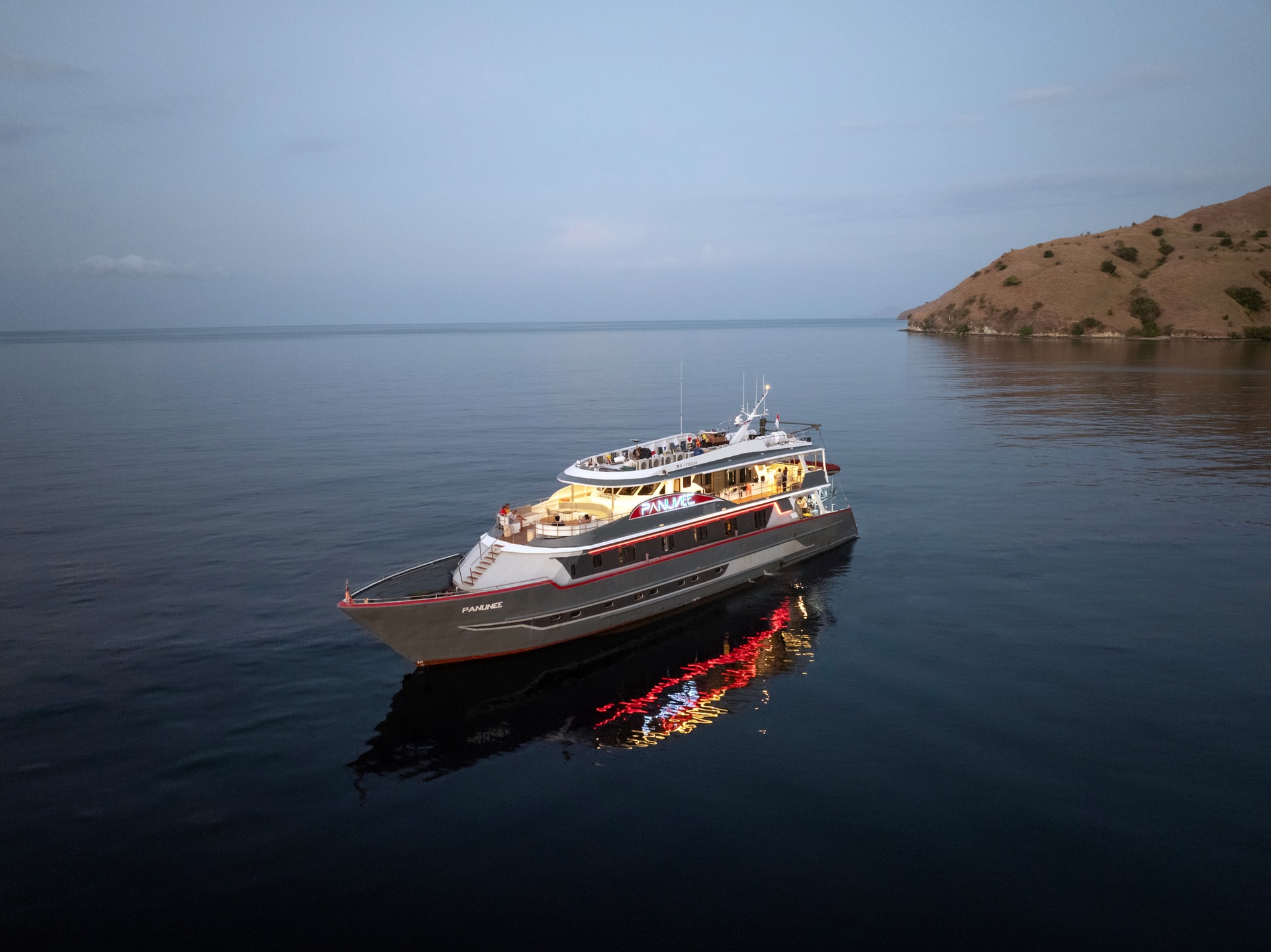 PanuneeIndonesia