Bellingshausen Sea / Peter I Island + Ellsworth Land - Incl. Helicopters (Ushuaia - Ushuaia)
Ortelius · Antarctica · 24 nights
About this route
This adventurous expedition offers a unique opportunity to discover very rarely visited places deep south along the coast of Antarctica, including the Bellingshausen Sea, the coast of Ellsworth Land, and Peter I Island. Divers will explore a region known for its remote beauty and challenging conditions, with the added thrill of helicopter assistance for reaching exclusive dive sites. The itinerary combines exceptional diving experiences with opportunities for wildlife observation and exploration of historical sites in the Antarctic.
Regions on this route
Highlights
Antarctic Peninsula
The Antarctic Peninsula is a dramatic region characterized by icy landscapes, towering glaciers, and abundant wildlife. It is a prime location for observing a variety of penguin species, seals, and diverse seabirds. The underwater environment features unique cold-water ecosystems with vibrant benthic life and intriguing ice formations, offering exceptional diving experiences.
- Penguin colonies
- Seal sightings
- Glacial landscapes
- Cold-water ecosystems
Crystal Sound
Crystal Sound is a stunning area within the Antarctic Circle, known for its vast expanses of ice and numerous icebergs. If conditions permit, landings on historic islands like Detaille Island can offer insights into early scientific research. The region provides scenic beauty and opportunities for unique dives among ice structures.
- Icy landscapes
- Historic research stations
- Iceberg formations
- Scenic beauty
Horseshoe Island
Horseshoe Island is home to an abandoned British Antarctic Survey base, with well-preserved historical buildings. It offers insights into a bygone era of scientific exploration. The island's topography and surrounding waters provide unique opportunities for both land-based exploration and underwater discovery, potentially revealing interesting cold-water marine life.
- Abandoned research base
- Historical scientific site
- Unique island topography
Peter I Island
Peter I Island is an uninhabited volcanic island in the Bellingshausen Sea, discovered by Fabian von Bellingshausen in 1821. This extremely remote and rarely visited island is known for its dramatic landscapes and challenging access due to ice and weather. Helicopter operations may allow for unique opportunities to explore its pristine environment and potentially dive its unusual volcanic underwater terrain.
- Remote volcanic island
- Challenging access
- Helicopter access potential
- Unique underwater terrain
Red Rock Ridge
Red Rock Ridge is a distinctive landing site in the Antarctic mainland, featuring a prominent red hued rock that stands out against the icy backdrop. If conditions are favorable, it offers great potential for exploring unique geological formations. The nearby waters are known for Adélie penguin breeding colonies and sightings of seals and Antarctic skuas, providing rich wildlife encounters.
- Distinctive red rock geology
- Adélie penguin colonies
- Seal and skua sightings
Stonington Island
Stonington Island holds significant historical value, serving as a site for American and British research bases from the 1930s. The island's rich history, diverse artifacts, and its stunning natural beauty make it a powerful reminder of Antarctica's remoteness. The pristine marine environment offers unique diving opportunities with intact cold-water ecosystems.
- Historic research bases
- Preserved artifacts
- Pristine marine environment
Requirements
- CertificationAdvanced Open Water
- Minimum logged dives30
- ExperienceDivers must have at least 30 logged dives.
Good to know
- Diving is an optional activity at an additional cost.
- Divers must be experienced with cold-water, dry-suit diving.
- Two dives per day (one morning, one afternoon) are generally planned, subject to weather and ice conditions.
- All dive guides are certified and experienced in their field.
- Basic dive equipment (tanks, compressors, weights) is provided, but divers must bring their own personal gear.
- Maximum dive depth is 20 meters / 65 feet.
- The itinerary is a guideline, and activities depend on local ice and weather conditions.
- Helicopter operations are dependent on local conditions and are not guaranteed.
Day-by-day plan
Day 1: Embarkation – Ushuaia
" After boarding the vessel, you'll have time to settle into your cabin and explore the ship. The evening includes a welcome briefing and a chance to enjoy the scenic Beagle Channel before setting sail.
Day 2: Drake Passage – Antarctic Exploration
The next two days are spent crossing the Drake Passage, a body of water known for its often rough seas. This transit provides an opportunity to begin lectures and presentations about the Antarctic environment, geology, and wildlife. The area is known for diverse seabirds, including wandering albatrosses, grey-headed albatrosses, and various petrels, often sighted from the ship's deck.
Day 3: Drake Passage – Antarctic Wildlife
Continuing through the Drake Passage, the ship enters the Antarctic Convergence, where the colder Antarctic waters meet warmer sub-Antarctic seas. This area is biologically rich, often attracting a variety of marine life. Guests can continue to enjoy lectures and birdwatching, preparing for the Antarctic experience ahead.
Day 4: Antarctic Peninsula – Belgian Explorer History
Today, the expedition aims to land guests at Auguste Island, a site with historical significance related to the Belgian explorer Adrien de Gerlache and his 1898 expedition. The Antarctic Peninsula region is characterized by stunning icy landscapes and opportunities for observing various species of penguins and seals. The area often features dramatic ice formations and abundant wildlife.
Day 5: Antarctic Peninsula – Hydrurga Rocks
The day focuses on the Hydrurga Rocks area, a small group of islets located east of the much larger Two Hummock Island. This region is known for its chinstrap penguins, Weddell seals, leopard seals, and southern elephant seals. The area offers opportunities for zodiac cruises and potentially diving among the rich Antarctic marine environment.
Day 6: Antarctic Peninsula – Port Point Exploration
Moving further south, the expedition aims to visit several key locations in the Antarctic Peninsula. Charlotte Bay is known for its stunning scenery and often offers good opportunities for Zodiac excursions. Port Point is a potential landing site, where zodiacs allow for close encounters with the coastal environment and local wildlife. Divers will explore the unique underwater topography.
Day 7: Antarctic Peninsula – Cuverville Island
Today's focus is Cuverville Island, a small, pristine island nestled between the mountains of the Antarctic Peninsula and Rongé Island. It is known as a major breeding colony for gentoo penguins and other seabirds. The marine environment around the island is often vibrant, with opportunities for observing diverse species. Diving in this area can reveal rich benthic life.
Day 8: Antarctic Peninsula – Danco Island
The expedition continues to Danco Island, recognized as an active area for gentoo penguins and crabeater seals. This island offers excellent opportunities for shore excursions and wildlife viewing, with rich marine life surrounding its shores. The underwater landscape is often characterized by rocky reefs and vibrant invertebrate communities, providing good diving potential.
Day 9: Flándres Bay & Renard Island – Historical Sites
The day explores Flándres Bay, a significant historical area featuring the basic structure of Adrien de Gerlache's expedition, as well as Renard Island. Renard Island is known for its steep, rugged terrain and the historic hut of the French explorer Jean-Baptiste Charcot. The area's sheltered waters often provide unique diving opportunities with diverse marine flora and fauna.
Day 10: Crossing the Antarctic Circle – Crystal Sound
The expedition crosses the Antarctic Circle, venturing into Crystal Sound, a stunning area known for its dramatic scenery and numerous icebergs. Weather permitting, a landing on Detaille Island is planned, home to a historic monument and former research station. The site offers a rare glimpse into early scientific research in Antarctica, along with opportunities for scenic beauty.
Day 11: Crossing the Antarctic Circle – Horseshoe Island
Today focuses on the exploration of Horseshoe Island, home to an abandoned British Antarctic Survey base. The island is known for its well-preserved historical buildings and offers insight into a bygone era of scientific exploration. The surrounding waters can provide unique diving scenarios with interesting underwater features and potentially encounters with seals.
Day 12: Continuing Southward – Ross Sea
As the vessel heads further south, guests will keep a keen watch for the giants of the sea, such as various whale species. The journey continues towards the Ross Sea, an area known for true exploration, where few have ventured before. The waters here are cold and rich in nutrients, potentially offering unique marine life encounters for divers.
Day 13: Continuing Southward – Bellingshausen Sea
The journey continues towards the Bellingshausen Sea, an area named after the Bellingshausen expedition. This extremely remote region is characterized by vast, unexplored waters and dramatic icy landscapes. The focus will be on further exploration and potential dive opportunities, with the expedition leader determining the best activities based on conditions.
Day 14: Continuing Southward – Bellingshausen Sea
The journey continues towards the Bellingshausen Sea, an area named after the Bellingshausen expedition. This extremely remote region is characterized by vast, unexplored waters and dramatic icy landscapes. The focus will be on further exploration and potential dive opportunities, with the expedition leader determining the best activities based on conditions.
Day 15: Entering the Bellingshausen Sea – Ronne Entrance
Today marks the entrance into the Ronne Entrance, the first recorded area during aerial flights of Lincoln Ellsworth and later charted by the British Graham Land Expedition. This region is very rarely visited and offers unique exploration opportunities. Helicopter operations may be utilized to access remote sites, depending on weather and ice conditions.
Day 16: Entering the Bellingshausen Sea – Ellsworth Land
Exploring Ellsworth Land, the expedition will attempt to find suitable landing sites for zodiac or helicopter excursions. This remote area offers unparalleled opportunities for pristine exploration and unique diving. The activity plan for the day is highly dependent on local ice and weather conditions, guided by the expedition leader.
Day 17: Entering the Bellingshausen Sea – Helicopter Access
Utilizing helicopters, the expedition may access some of the most remote sites in the Bellingshausen Sea and Ellsworth Land. This provides a unique chance to explore areas inaccessible by ship, offering exceptional diving experiences in untouched waters. The day is dedicated to maximizing exploration opportunities depending on conditions.
Day 18: Entering the Bellingshausen Sea – Expedition Activity
Continuing exploration in the Bellingshausen Sea, the expedition focuses on maximizing opportunities for unique diving and land excursions. The region's isolation ensures a pristine environment, with varied underwater topographies and potentially unique marine life. Activities are carefully planned to make the most of local conditions.
Day 19: Peter I Island – Norwegian Discovery
Today is dedicated to a rare glimpse of Peter I Island, an uninhabited volcanic island discovered by Fabian von Bellingshausen in 1821 and later claimed by Norway. This remote island is known for its dramatic landscapes and challenging access due to ice and weather conditions. Diving around the island could reveal unique volcanic formations and cold-water species.
Day 20: Peter I Island – Helicopter Landings
Weather and ice conditions permitting, helicopter landings on Peter I Island are planned to provide an extraordinary opportunity to explore this remote location. This offers a unique chance to set foot on one of the most isolated landmasses in the world, with potential for shore excursions and unique views of the island's geology. Diving activities will be organized around the helicopter schedule.
Day 21: Northward Bound – Drake Passage
The expedition sets course northward, leaving the Bellingshausen Sea behind and re-entering the Drake Passage. Educational lectures continue, covering topics such as the history of Antarctic exploration and marine ecosystems. Guests can enjoy wildlife observations from the deck as the ship transitions back through the convergence zone.
Day 22: Northward Bound – Drake Passage Fauna
As the ship continues through the Drake Passage, there will be further opportunities to observe the diverse seabird populations that frequent these waters. The Antarctic Convergence is a biologically rich area, often leading to sightings of various whales and dolphins as well. The expedition prepares for its final stretch before reaching South America.
Day 23: Northward Bound – Drake Passage Experience
The final days in the Drake Passage offer a chance to reflect on the expedition and enjoy the camaraderie of fellow adventurers. The journey provides stunning views of the open ocean and a chance to spot any remaining marine life. The ship continues its steady course towards Ushuaia.
Day 24: Disembarkation – Ushuaia
The expedition concludes as the vessel arrives back in Ushuaia, Argentina. Guests will disembark after breakfast, with transfers to the airport or onward travel arrangements. This marks the end of an unforgettable journey to the remote and icy wilderness of Antarctica.
Upcoming departures
- 2027-01-14 – 2027-02-07from 19,772 USDBook
All routes of this liveaboard
- Antarctica - Discovery and Learning (Ushuaia - Ushuaia) · 10 nights
- Arctic Highlights · 7 nights
- Antarctica - Polar Circle - Deep South Discovery Voyage - Aurora Australis / Southern Lights (Ushuaia - Ushuaia) · 12 nights
- South Spitsbergen Explorer - Bear Island - Diving (supplemented) · 9 nights
- Antarctica - Whale Watching Discovery and Learning Voyage (Ushuaia - Ushuaia) · 10 nights
- Falkland Islands - South Georgia - Antarctica (Ushuaia - Ushuaia) · 18 nights
About the vessel
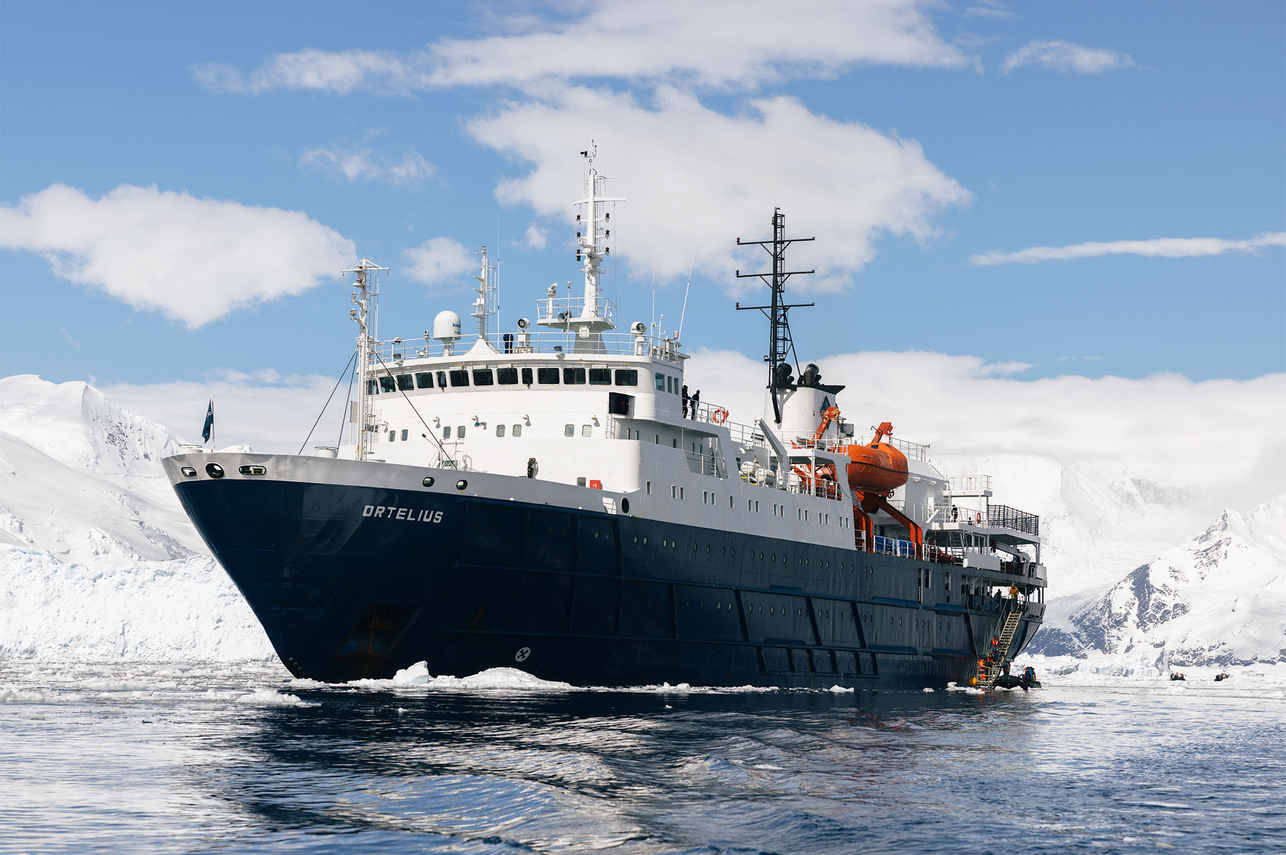 OrteliusAntarctica