Bali - Komodo - Bali + Whale Sharks of Saleh Bay
Mermaid II · Komodo, Indonesia · 7 nights
About this route
This itinerary explores the nutrient-rich waters between Bali and Komodo, culminating in the vibrant caldera of Saleh Bay, a known aggregation point for whale sharks. Divers can expect to encounter a dynamic range of marine life, from thriving coral reefs and macro critters to schooling fish and pelagic species, particularly in the strong currents characteristic of the region. The journey provides a comprehensive experience of Indonesia's Lesser Sunda Islands, combining classic Komodo diving with an immersive encounter in a unique whale shark habitat. The trip also highlights the stunning landscapes and rich cultural heritage of the region, including opportunities for land excursions.
Regions on this route
Highlights
Batu Balong
Batu Balong is a vibrant pinnacle dive site in central Komodo, often described as an aquarium due to its incredibly dense and colorful coral coverage. Despite strong currents on the surface, the sheltered lee side offers spectacular reef exploration with abundant fish life.
- Colorful coral gardens
- Dense fish populations
- Vibrant pinnacle
- Sheltered reef exploration
Castle Rock
Adjacent to Crystal Rock, Castle Rock is another iconic dive site in Komodo known for its strong, often unpredictable currents. It's a magnet for large schools of fish, grey reef sharks, and the occasional manta ray, providing an action-packed diving experience.
- Iconic pinnacle dive
- Strong currents
- Schooling fish
- Shark sightings
Crystal Rock
Crystal Rock is a renowned dive site in northern Komodo, characterized by its pinnacle formation that attracts various pelagic species and schooling fish due to strong currents. It offers exhilarating drift dives and chances to see sharks and large trevally.
- Pinnacle formation
- Strong currents
- Pelagic encounters
- Schooling fish
Gili Lawa Laut
Located in the northern part of Komodo, Gili Lawa Laut is renowned for its thrilling drift dives and vibrant reefs. The area's strong currents attract large schools of fish and pelagic species, making it a hotspot for dynamic underwater action.
- Dynamic drift dives
- Vibrant coral reefs
- Large fish schools
- Pelagic encounters
Komodo
Komodo National Park is a UNESCO World Heritage Site and New 7 Wonders of Nature, comprising 3 large and 26 smaller islands. It offers incredibly rich waters with diverse marine life, from thriving coral reefs to large pelagics, due to strong currents and nutrient-rich waters.
- UNESCO World Heritage Site
- Rich marine biodiversity
- Strong currents
- Diverse topography
Komodo National Park
As a UNESCO World Heritage Site, Komodo National Park offers an unparalleled diving experience. Its waters are teeming with diverse marine life, from vibrant coral gardens and macro critters to schooling fish and large pelagics. The park is characterized by nutrient-rich currents that support its thriving ecosystem.
- UNESCO World Heritage Site
- Vibrant coral gardens
- Rich pelagic life
- Strong currents
Manta
This region encompasses sites known for frequent encounters with manta rays, particularly Manta Alley. The nutrient-rich waters attract these majestic creatures, offering incredible opportunities for divers to observe them feeding and cleaning.
- Manta ray aggregation
- Cleaning stations
- Nutrient-rich waters
Manta Alley
Manta Alley, located in South Komodo, is a world-famous site for consistent manta ray encounters. The colder, nutrient-rich waters attract large numbers of reef manta rays, often seen feeding or visiting cleaning stations, especially during cooler seasons.
- Consistent manta sightings
- Cleaning stations
- Feeding mantas
- Rich plankton waters
Manta Point
Another prime location for manta rays, Manta Point offers reliable encounters with these majestic creatures. Divers can observe mantas gracefully gliding through the water, particularly at cleaning stations or feeding aggregations, often in clear waters.
- Reliable manta encounters
- Clear water visibility
- Manta cleaning stations
Moyo Island
Moyo Island, located north of Sumbawa, offers calm, clear waters ideal for a variety of reef and macro diving. Its pristine coral reefs are home to a rich diversity of small critters, colorful reef fish, and beautiful soft corals, making it a haven for underwater photography.
- Calm clear waters
- Pristine coral reefs
- Macro photography
- Colorful reef fish
Padar
Padar Island is famous for its stunning panoramic viewpoints and diverse landscapes, including pink, black, and white sand beaches. Its surrounding waters offer beautiful reef diving, often featuring abundant reef fish and vibrant coral formations.
- Panoramic viewpoints
- Unique sand beaches
- Vibrant coral reefs
- Abundant reef fish
Rinca
Rinca is one of the main islands within Komodo National Park, famous for its population of Komodo dragons. While primarily known for land excursions, its surrounding waters also feature diverse reef ecosystems. It offers a glimpse into both the terrestrial and marine wonders of the region.
- Komodo dragon habitat
- Diverse reef ecosystems
- Land excursions
Saleh Bay
Saleh Bay, situated in Sumbawa, is renowned for its incredible aggregations of whale sharks. These gentle giants are often found feeding around local fishing platforms, offering unparalleled opportunities for diving and snorkeling encounters. The bay also hosts diverse reef life.
- Whale shark encounters
- Gentle giants
- Feeding aggregations
- Diverse reef life
Sangeang
Sangeang Volcano is an active volcano known for its unique black sand slopes and rich macro life. The volcanic activity creates a distinct environment where rare critters thrive, offering exceptional opportunities for muck diving and underwater photography.
- Active volcano
- Black sand diving
- Unique macro life
- Critter spotting
Satonda
Satonda Island is a volcanic island with a unique saltwater lake in its caldera and is known for its macro and reef diving. The surrounding waters are rich in small marine life and colorful corals, often combined with topside experiences like watching millions of fruit bats at sunset.
- Volcanic island
- Macro dive sites
- Colorful corals
- Bat spectacle
Requirements
- CertificationOpen Water
- Minimum logged dives4
- ExperienceGuests without Open Water certification may still enjoy snorkeling or choose to complete a Discover Scuba Dive or certification courses onboard.
Shore excursions
- Enjoy a visit to pink beach on Komodo Island, known for its unique sand.
- Witness the sunset from Padar Island with its surreal landscape.
- Observe millions of bats flying at sunset near Satonda Island.
- Take a land excursion to Loh Liang in Komodo National Park to see Komodo dragons.
- Visit Bontoh village for a cultural experience.
- Swim and snorkel in the waters of the Lesser Sunda Islands.
Good to know
- A 24-hour no-fly period after the last dive is recommended for all divers.
- Certification courses are available onboard for guests without the required Open Water certification.
Day-by-day plan
Day 1: Embarkation – Benoa Harbour, Bali
Boarding the vessel Mermaid II takes place at Benoa Harbour in Bali. Guests will check-in, set up their cabins, and attend a boat and safety briefing. Dinner will be served onboard as the ship begins its overnight journey to Moyo Island.
Day 2: Moyo Island – Calm Waters and Reefs
Today starts with two great dives around Moyo Island in the calm, clear waters of Angel Reef, known for its massive coral reef, large schools of longfin bannerfish, and redtooth triggerfish. The area often features frogfish, nudibranchs, surgeonfish, snappers, and dogtooth tuna. The massive garden eel garden on Angel Reef is a sight to behold, while a world-class night dive along the shallow reefs at Labuan Haji offers sightings of octopus, bobtail squid, cuttlefish, and various macro critters.
Dive sites: Angel Reef, Labuan Haji
Day 3: Saleh Bay – Whale Shark Encounters
An early start in Saleh Bay offers the unique opportunity for diving and snorkeling with whale sharks, often aggregated around fishing platforms. The vessel will head north to Satonda Island for a macro/reef dive, known for abundant small critters and vibrant reef life. A world-class night dive here often reveals millions of bats flying at sunset.
Dive sites: Saleh Bay, Satonda Island
Day 4: Gili Banta – North Komodo National Park
Today focuses on the best dive sites in the northern part of Komodo National Park, starting with Gili Banta. This area is known for strong currents and offers delights such as Batu Monco, Crystal Rock, and Lighthouse Reef. Divers can expect large schools of reef fish, big action from giant trevally, jacks, snappers, and unicorn fish, alongside occasional sightings of grey reef sharks and stunning scenery.
Dive sites: Gili Banta, Batu Monco, Crystal Rock, Lighthouse Reef
Day 5: South Komodo – Manta Alley
Explore the southern Komodo Island with two dives at the world-famous Manta Alley, an aggregation point for manta rays. Following these thrilling dives, a land excursion to Loh Liang in Komodo National Park offers the opportunity to walk with Komodo dragons. The day concludes with a truly special night dive experience.
Dive sites: Manta Alley, Komodo National Park
Day 6: Gili Lawalaut / Gili Darat – Critter Diving
Two fabulous dives are scheduled around the Gili Lawalaut/Gili Darat area, particularly at sites like Batu Bolong and Shotgun. Gili Darat Passage then leads to a fantastic critter night dive, offering a chance to spot unique macro life. A village visit at Bontoh village provides a cultural experience before cruising to Sumbawa.
Dive sites: Gili Lawalaut, Gili Darat, Batu Bolong, Shotgun, Sangeang Volcano
Day 7: Sumbawa & Moyo Islands – Ghost Pipefish
Enjoy two fantastic dives off Sumbawa and Moyo Islands, areas renowned for sightings of ghost pipefish, ribbon eels, and various species of turtles. Cuttlefish and 'fish soup' are commonly encountered in these waters. The day concludes with an overnight journey back to Benoa in the south of Bali.
Dive sites: Sumbawa, Moyo Islands
Day 8: Disembarkation – Benoa Harbour, Bali
Disembarkation takes place at Benoa Harbour after breakfast at 8:00 AM. Guests should note that the last dive was on the penultimate day, and a 24-hour no-fly period after diving is recommended.
Upcoming departures
- 2027-05-15 – 2027-05-22from 3,408 USDBook
- 2027-05-22 – 2027-05-29from 3,408 USDBook
- 2027-07-10 – 2027-07-17from 3,408 USDBook
- 2027-07-24 – 2027-07-31from 3,408 USDBook
- 2027-08-14 – 2027-08-21from 3,408 USDBook
- 2027-08-28 – 2027-09-04from 3,408 USDBook
- 2027-09-11 – 2027-09-18from 3,408 USDBook
- 2028-05-20 – 2028-05-27from 3,408 USDBook
- 2028-05-27 – 2028-06-03from 3,408 USDBook
- 2028-06-03 – 2028-06-10from 3,408 USDBook
- 2028-06-10 – 2028-06-17from 3,408 USDBook
- 2028-06-17 – 2028-06-24from 3,408 USDBook
All routes of this liveaboard
- Best of Komodo (Labuan Bajo - Labuan Bajo) · 7 nights
- Komodo - Bali (Bali - Bali) · 7 nights
- Bali - Komodo - Maumere – with Whale Sharks of Saleh Bay · 9 nights
- Biodiversity Special - Ring of Fire: Maumere - Alor - Banda Sea - Ambon · 11 nights
- Biodiversity Special - Ring of Fire: Ambon - Banda Sea - Alor - Maumere (Ambon - Maumere) · 11 nights
- Maumere - Komodo - Bali with Whale Sharks of Saleh Bay · 9 nights
- Bali - Komodo - Bali – with Whale Sharks of Saleh Bay · 9 nights
- Biodiversity Super Special: Maumere - Alor - Banda Sea - Raja Ampat (Maumere - Sorong) · 15 nights
- Raja Ampat (Sorong - Sorong) · 8 nights
- Raja Ampat - Halmahera - Lembeh (Sorong - Manado) · 11 nights
- Lembeh - Togian - Lembeh (Bitung - Bitung) · 11 nights
- Bali-Komodo-Bali with Whale Sharks of Saleh Bay · 7 nights
- Lembeh - Halmahera - Raja Ampat (Manado - Sorong) · 11 nights
- Biodiversity Super Special: Raja Ampat - Banda Sea - Alor - Maumere (Sorong - Maumere) · 15 nights
- Bali - Komodo - Maumere – with Whale Sharks of Saleh Bay · 7 nights
- In Port · 5 nights
- Lembeh - Togian - Lembeh with Whale Sharks · 9 nights
- In Port · 5 nights
- In Port · 13 nights
- In Port · 7 nights
- In Port · 10 nights
About the vessel
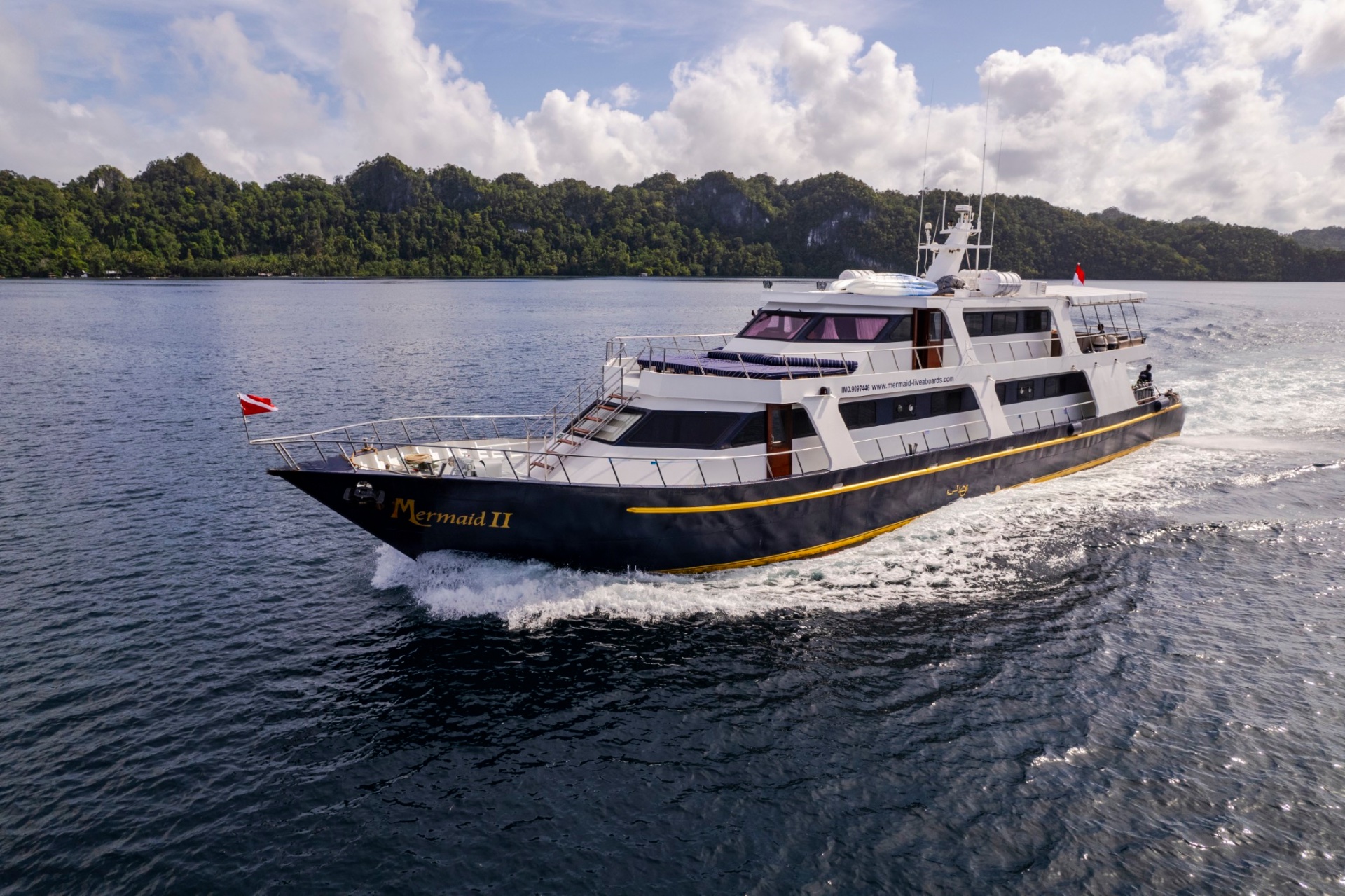 Mermaid IIKomodo, Indonesia