Galapagos Islands (Isla Lobos, San Cristobal - Isla Lobos, San Cristobal)
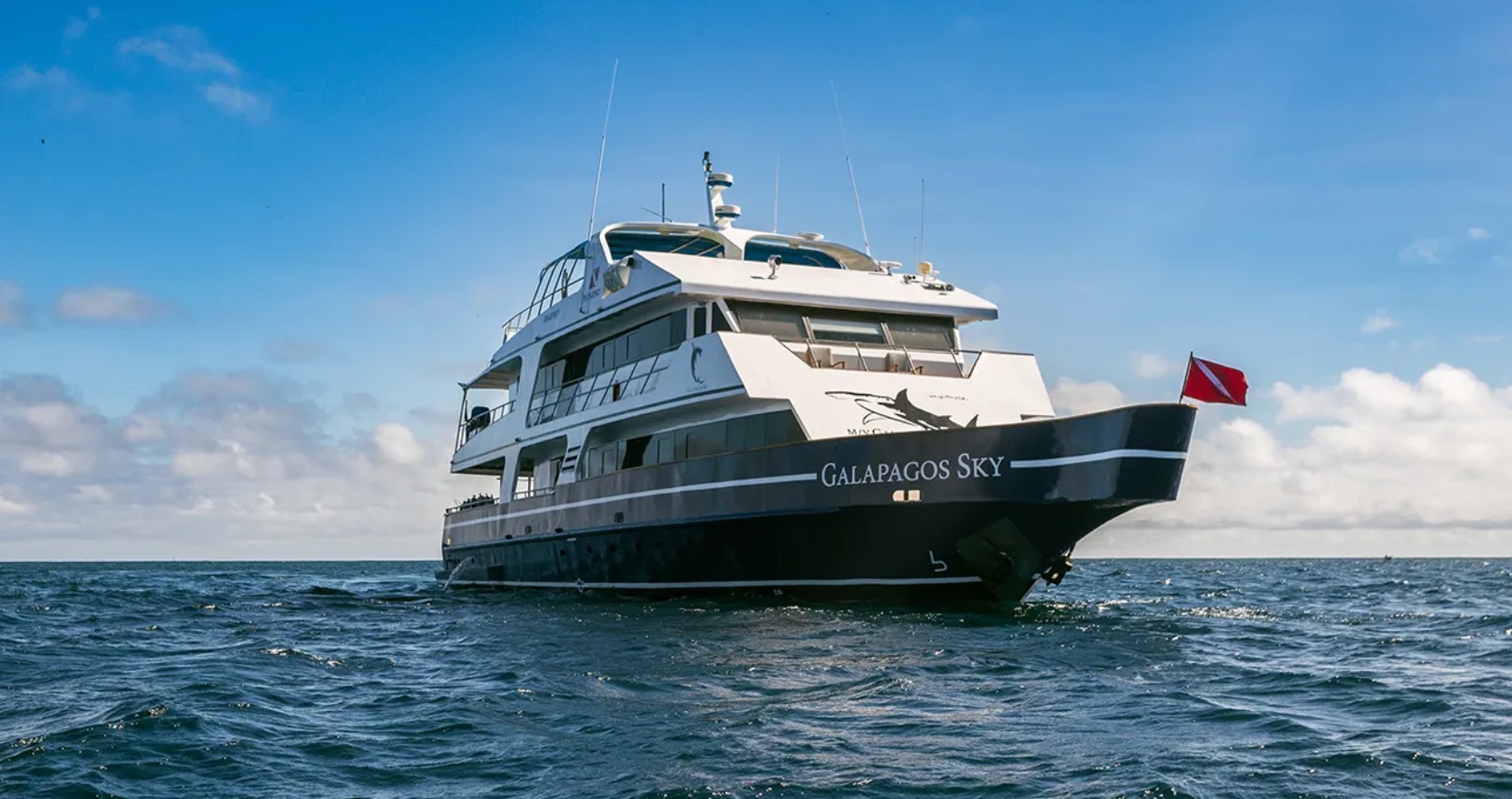
Galapagos Sky · Galápagos · 8D7N
About this route
This 8-day itinerary explores the renowned Galapagos Islands, offering an exceptional diving adventure for advanced divers. The trip focuses on the iconic Wolf and Darwin Islands, where divers can encounter massive schools of hammerhead sharks, Galapagos sharks, and seasonal whale sharks. The journey also includes dives with unique marine iguanas and opportunities to spot Mola mola in colder waters. Topside excursions provide a chance to observe giant tortoises and diverse birdlife, making for a comprehensive Galapagos experience. Divers should be comfortable with currents and variable conditions.
Regions on this route
Highlights
Cape Douglas
Located on Fernandina Island, Cape Douglas is renowned for its unique underwater marine iguana encounters. Divers can observe these reptiles feeding on algae, along with Galapagos penguins, horn sharks, and flightless cormorants. The area is characterized by cold, nutrient-rich waters that attract a variety of marine life.
- Marine iguana interactions
- Penguins and cormorants
- Horn shark sightings
Cousins Rock
Cousins Rock is a popular dive site distinguished by its stunning wall adorned with black corals. It's an excellent location for macro life, with frequent sightings of seahorses, frogfish, and scorpionfish. Large schools of barracuda are common, and playful sea lions often interact with divers during safety stops, adding to the vibrant atmosphere of this central Galapagos site.
- Black coral wall
- Seahorse spotting
- Sea lion interactions
- Barracuda schools
Darwin Island
Darwin Island, home to the iconic Darwin's Arch (now the Pillars), is considered a premier diving destination. It is a hotspot for large pelagic species, including dense schools of scalloped hammerhead sharks, Galapagos sharks, and regular whale shark sightings from June to November. The strong currents attract a variety of marine life, such as yellowfin tuna, bigeye jacks, and eagle rays, providing unparalleled underwater spectacles.
- Whale shark encounters
- Scalloped hammerheads
- Pelagic fish schools
- Darwin's Arch (Pillars)
Punta Vicente Roca
Situated on Isabela Island, Punta Vicente Roca offers diving in cooler waters, rich in upwellings. This site is particularly known for sightings of the elusive Mola mola (oceanic sunfish), bullhead sharks, and red-lipped batfish. The steep wall is covered in colorful invertebrates, attracting a diverse array of small reef fish like scorpionfish and seahorses.
- Mola mola encounters
- Bullhead sharks
- Red-lipped batfish
- Vibrant wall diving
Wolf Island
Wolf Island is a legendary dive site in the northern Galapagos, globally recognized for its abundant shark populations. Divers regularly encounter massive schools of scalloped hammerhead sharks, Galapagos sharks, and occasional whale sharks during the season. The strong currents and pelagic action make it an exhilarating diving experience, often accompanied by dolphins and various tuna species.
- Massive hammerhead schools
- Galapagos sharks
- Dolphin pods
- Night dive potential
Requirements
- CertificationAdvanced Open Water
- Minimum logged dives60
- ExperienceExperience in strong currents is recommended, along with good buoyancy control.
Shore excursions
- Explore Bartolome Island for scenic views.
- Visit the Santa Cruz Highlands to see giant tortoises in their natural environment.
- Enjoy free time in Puerto Ayora town.
- Optional visit to the Interpretation Center in San Cristobal.
Good to know
- Nitrox certification is required for divers and must be scheduled in advance.
- Guests under 15 years old are not permitted to dive in the Galapagos Islands.
- Guests must book their own flights with sufficient time to board the boat, as delays may not be accommodated.
- Itinerary is subject to change due to local conditions or National Park regulations.
Day-by-day plan
Day 1: Embarkation – San Cristobal
Upon arrival at San Cristobal Island, guests will be transferred to the Galapagos Sky liveaboard. After settling into cabins and receiving a safety briefing, the vessel will proceed for a check-out dive. This initial dive offers an introduction to the local marine environment and an opportunity to become comfortable with the gear.
Dive sites: Isla Lobos
Day 2: Bartolome & Cousins Rock – Central Galapagos
The day begins with a land visit to Bartolome, offering panoramic views. Following this, the itinerary moves to Cousins Rock for diving. This site is celebrated for its stunning wall adorned with black corals, where divers can often spot seahorses, frogfish, and schools of barracuda. Playful sea lions frequently join divers during safety stops, adding to the vibrant underwater experience.
Dive sites: Cousins Rock
Day 3: Wolf & Darwin Islands – Northern Expeditions
Today marks the first of three dedicated days exploring the legendary Wolf and Darwin Islands, which are considered the pinnacle of Galapagos diving. These remote northern islands are renowned for their abundant pelagic life and strong currents. Divers can expect thrilling encounters with massive schools of scalloped hammerhead sharks, Galapagos sharks, and large pods of dolphins. The underwater topography features dramatic walls and pinnacles, often teeming with yellowfin tuna, bigeye jacks, and eagle rays.
Dive sites: Wolf Island, Darwin Island
Day 4: Wolf & Darwin Islands – Shark Haven
Continuing the exploration of the biodiverse Wolf and Darwin Islands, divers will experience multiple dives at these world-class sites. The area is globally recognized for its incredible abundance of large marine species, with consistent sightings of scalloped hammerhead sharks and Galapagos sharks. During the appropriate season, whale sharks are frequently encountered. The strong currents in these waters facilitate incredible drift dives, revealing a vibrant ecosystem rich with reef fish and other pelagic species.
Dive sites: Wolf Island, Darwin Island
Day 5: Wolf & Darwin Islands – Ultimate Pelagic Dive
The third full day at the iconic Wolf and Darwin Islands offers continued opportunities for unparalleled pelagic encounters. Dive sites feature strong currents and varying visibility, creating dynamic conditions perfect for large marine life. Besides the impressive shark populations, divers can often spot large pods of dolphins, various species of rays, and a bustling underwater ecosystem of yellowfin tuna and jacks. A night dive at Wolf Island presents a unique chance to observe nocturnal species and the endemic red-lipped batfish.
Dive sites: Wolf Island, Darwin Island
Day 6: Fernandina & Isabela Islands – Unique Wildlife
Today's diving explores the western islands, starting with Cape Douglas on Fernandina Island. This site is famous for its unique marine iguanas, which divers can observe feeding underwater. In the afternoon, the vessel moves to Punta Vicente Roca on Isabela Island. The colder, nutrient-rich waters here are known for Mola mola (oceanic sunfish), bullhead sharks, and red-lipped batfish, with a vibrant wall covered in invertebrates.
Dive sites: Cape Douglas, Punta Vicente Roca
Day 7: Pinzon Island & Santa Cruz Highlands – Last Dives & Land Tour
The final dive of the trip takes place at Pinzon Island, a site known for its diverse marine life including various shark species, sea lions, and rays. After the morning dive, guests will embark on a rewarding land tour into the highlands of Santa Cruz Island to witness the iconic giant tortoises in their natural habitat. The day concludes with some free time in the town of Puerto Ayora, offering a chance to explore before returning to the liveaboard for the farewell evening.
Dive sites: Isla Pinzon
Day 8: Disembarkation – San Cristobal
Following a final breakfast on board the Galapagos Sky, guests will disembark in San Cristobal. There is an optional visit to the local Interpretation Center for those interested in learning more about the islands' unique ecosystem and conservation efforts, before being transferred to the airport for their departure.
Upcoming departures
- 2026-11-22 – 2026-11-29from 7,495 USDBook
- 2026-11-29 – 2026-12-06from 7,495 USDBook
- 2026-12-06 – 2026-12-13from 7,495 USDBook
- 2026-12-13 – 2026-12-20from 7,495 USDBook
- 2026-12-20 – 2026-12-27from 7,495 USDBook
- 2026-12-27 – 2027-01-03from 7,495 USDBook
- 2027-01-03 – 2027-01-10from 7,495 USDBook
- 2027-01-10 – 2027-01-17from 7,495 USDBook
- 2027-01-17 – 2027-01-24from 7,495 USDBook
- 2027-02-07 – 2027-02-14from 7,495 USDBook
- 2027-02-14 – 2027-02-21from 7,495 USDBook
- 2027-02-21 – 2027-02-28from 7,495 USDBook
All routes of this liveaboard
- Galapagos Islands (Isla Lobos, San Cristobal - Isla Lobos, San Cristobal) · 7 nights
- Galapagos Islands (San Cristobal to Baltra) · 11D10N
- Galapagos 10 nights (San Cristobal → Ayora) · 11D10N
- Galapagos 10 nights (Ayora → San Cristobal) · 11D10N
- Galapagos 10 nights (Ayora) (Ayora → Ayora) · 11D10N
- Galapagos 10 nights · 10 nights
About the vessel
 Galapagos SkyGalápagos