Galapagos 10 nights (Ayora → San Cristobal)
Galapagos Sky · Galápagos · 11D10N
About this route
Embark on an extended 11-day diving expedition through Ecuador's iconic Galapagos Islands, a UNESCO World Heritage site and a true paradise for nature lovers. This itinerary is designed for experienced divers, focusing on the legendary northern islands of Darwin and Wolf, accessible only by liveaboard. Expect challenging conditions with strong currents and cooler water, which bring incredible rewards: massive schools of scalloped hammerheads, seasonal whale sharks, and unique endemic species like marine iguanas and Galapagos penguins. This trip requires an Advanced Open Water certification and a minimum of 50 logged dives, ensuring all guests are prepared for the thrilling, world-class diving ahead.
Requirements
- CertificationAdvanced Open Water
- Minimum logged dives50
- ExperienceExperience with strong currents and drift diving is required.
Day-by-day plan
Day 1: Embarkation in Ayora
Puerto Ayora, Santa Cruz Island
Guests arrive and board the vessel in Puerto Ayora on Santa Cruz Island. The afternoon is for settling into cabins, a welcome briefing by the crew, and setting up dive equipment. The vessel will set sail in the evening, beginning the journey through the archipelago.
Good to know: Boarding and check-in | Welcome briefing | Departure in the evening
Day 2: Central Islands — Punta Carrión
Punta Carrión, Santa Cruz Island
The first dives of the trip take place in the central islands, likely starting with a check dive at Punta Carrión. This site is an excellent introduction to Galapagos diving, offering opportunities to dive with playful sea lions, encounter white-tip reef sharks resting on sandy bottoms, and see schools of eagle rays passing by.
Dive sites: Punta Carrión
Good to know: Check dive | Encounters with playful sea lions
Day 3: At Sea — Passage to the Northern Islands
At Sea
The vessel travels north on a full-day and overnight passage to reach the world-renowned islands of Wolf and Darwin. This is a day for relaxation, attending detailed dive briefings about the challenging conditions ahead, preparing camera gear, and anticipating the pelagic encounters to come.
Good to know: Full day transit | Dive and safety briefings | Prepare for Wolf & Darwin
Day 4: Wolf Island — The Theatre of Evolution
Wolf Island, Northern Galapagos
The diving action begins in earnest at Wolf Island, a remote location teeming with life. Dives here are often thrilling drift dives in strong currents. The main attraction is the immense schools of scalloped hammerhead sharks that patrol the area. Divers can also expect to see Galapagos sharks, silky sharks, and pods of dolphins.
Dive sites: Shark Bay, The Landslide
Good to know: First dives in the northern islands | Strong currents and drift diving
Day 5: Darwin Island — Darwin's Arch
Darwin Island, Northern Galapagos
Today's dives are at the legendary Darwin's Arch, often cited as one of the best dive sites on the planet. Divers typically position themselves on a rocky ledge, known as 'the theater,' to watch a constant procession of marine megafauna. From June to November, this is a premier spot for encounters with majestic whale sharks.
Dive sites: Darwin's Arch
Good to know: Diving at the world-famous Darwin's Arch | Peak season for whale sharks is June-November
Day 6: Wolf & Darwin Islands Exploration
Wolf Island & Darwin Island, Northern Galapagos
A final full day is dedicated to maximizing time at these incredible northern islands. The cruise director and dive guides will select the best sites at Wolf or Darwin based on current conditions and recent sightings, providing more chances for unforgettable encounters with the huge schools of sharks and other pelagic life.
Dive sites: Wolf Island, Darwin Island
Good to know: Return to favorite sites | Maximize pelagic encounters
Day 7: At Sea — Passage to the Western Islands
At Sea
The vessel begins the long journey south from the northern islands towards the cooler waters of the western archipelago. This transit day is a perfect opportunity to rest, edit photos, log dives, and enjoy the amenities of the boat while anticipating the unique wildlife of the western sites.
Good to know: Full day transit | Photo editing and relaxation
Day 8: Western Galapagos — Cabo Douglas & Punta Vicente Roca
Fernandina & Isabela Islands
Explore the unique biodiversity of the Cromwell Current's upwelling. At Cabo Douglas on Fernandina, divers have the rare opportunity to see endemic marine iguanas feeding underwater. Nearby, at Punta Vicente Roca on Isabela, the cooler water brings chances to find Mola mola, red-lipped batfish, and snorkel with Galapagos penguins and flightless cormorants.
Dive sites: Cabo Douglas, Punta Vicente Roca
Good to know: Dive with marine iguanas | Colder water diving
Day 9: Cousins Rock — Manta Ray Cleaning Station
Santiago Island, Central Galapagos
The journey east continues with a stop at Cousins Rock, a volcanic islet renowned for its terraced landscape and rich marine life. The steep walls are adorned with black corals and sea fans. This site serves as a cleaning station, making it a reliable spot for observing squadrons of eagle rays and occasional giant manta rays.
Dive sites: Cousins Rock
Good to know: Potential for manta ray sightings | Sea lions often join the dive
Day 10: Kicker Rock & San Cristobal Land Visit
San Cristobal Island
The final day of diving is at the iconic Kicker Rock (León Dormido), a massive tuff cone eroded into two towering pinnacles. Divers explore the channel between the rocks, a natural funnel for marine life including Galapagos sharks, hammerheads, and vast schools of fish. In the afternoon, a land excursion on San Cristobal provides a chance to visit a tortoise breeding center or the Interpretation Center.
Dive sites: Kicker Rock (León Dormido)
Good to know: Final dives of the trip | Afternoon land tour
Day 11: Disembarkation in San Cristobal
Puerto Baquerizo Moreno, San Cristobal
Following a final breakfast on board, guests say goodbye to the crew and are transferred to the San Cristobal Airport (SCY) for their flight back to the mainland. The trip concludes with transfer arrangements.
Good to know: Final breakfast | Disembarkation | Airport transfer
Upcoming departures
All routes of this liveaboard
- Galapagos Islands (Isla Lobos, San Cristobal - Isla Lobos, San Cristobal) · 7 nights
- Galapagos Islands (San Cristobal to Baltra) · 11D10N
- Galapagos 10 nights (San Cristobal → Ayora) · 11D10N
- Galapagos 10 nights (Ayora) (Ayora → Ayora) · 11D10N
- Galapagos Islands (Isla Lobos, San Cristobal - Isla Lobos, San Cristobal) · 8D7N
- Galapagos 10 nights · 10 nights
About the vessel
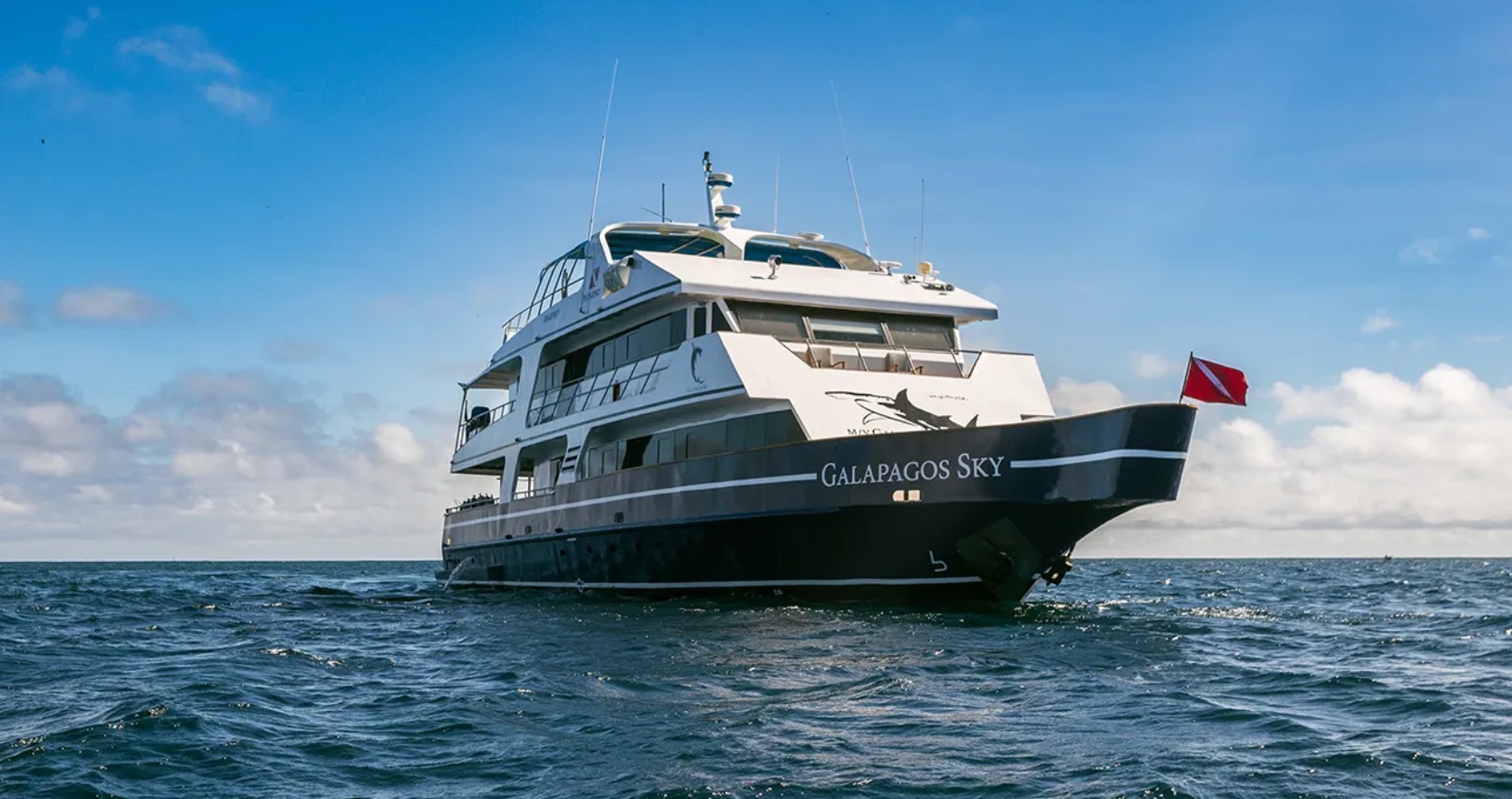 Galapagos SkyGalápagos