In the Steps of Pirates & Darwin (Baltra - San Cristobal)
Evolution · Galápagos · 7 nights
About this route
Follow in the wake of legendary explorers and buccaneers on this comprehensive journey through the Galapagos archipelago. This route explores the volcanic landscapes of the western islands, including the geologically young Fernandina and the massive Isabela, before returning to the central and southern reaches. Guests can expect a rich tapestry of wildlife encounters from giant tortoises in the highlands to snorkeling alongside playful sea lions and penguins. The cruise offers a blend of panga rides, nature hikes, and aquatic exploration in one of the world's most pristine natural sanctuaries.
Regions on this route
Highlights
Espanola Island
The southernmost island and a biodiversity hotspot. It is the exclusive nesting ground for the waved albatross and features dramatic cliffs where the ocean surges through volcanic blowholes.
- Waved albatross colonies
- Gardner Bay snorkeling
- Punta Suarez blowhole
Fernandina Island
The youngest and most volcanically active island in the archipelago. Punta Espinoza provides a stark landscape of black lava where massive colonies of marine iguanas and flightless cormorants reside.
- Marine iguana colonies
- La Cumbre volcano
- Punta Espinoza hikes
Isabela Island
Isabela is the largest island in the chain, formed by six shield volcanoes including the massive Wolf Volcano. It offers varied terrain from the mangroves of Tagus Cove to the uplifted seabed at Urbina Bay.
- Tagus Cove pirate history
- Urbina Bay coral heads
- Wolf Volcano views
San Cristobal
The first island visited by Darwin in 1835, this easternmost island serves as a primary hub. It is home to the provincial capital and the famous Kicker Rock (Leon Dormido), an eroded volcanic cone rising 500 feet from the sea.
- Kicker Rock formation
- Frigate bird nesting
- Interpretation Center
Santa Cruz Island
As the second-largest island, Santa Cruz acts as the economic center of the Galapagos. It features diverse ecosystems, from the white-sand beaches of Las Bachas to the lush, high-altitude Scalesia forests and volcanic lava tubes.
- Giant tortoise reserves
- Charles Darwin Station
- Lava tube formations
Shore excursions
- Hike the volcanic ledges of Bartolome to reach a summit with panoramic views of Pinnacle Rock.
- Visit the Charles Darwin Research Station to see the Giant Tortoise Breeding and Rearing Program.
- Explore the Santa Cruz Highlands to track giant tortoises in their wild Scalesia forest habitat.
- Take a panga ride through the mangrove inlets of Bahia Borrero to spot sea turtles and reef sharks.
- Walk across the pahoehoe 'rope-like' lava fields at Sullivan Bay to admire unique geological formations.
- Observe the courtship fencing displays of waved albatrosses at their nesting sites on Espanola Island.
- Browse the local shops and restaurants in the seaside port town of Puerto Ayora.
- Visit the Interpretation Center on San Cristobal to learn about the human and natural history of the archipelago.
Good to know
- Galapagos flights are required to be booked through Quasar Expeditions to ensure logistics alignment.
- Itineraries are subject to change based on National Park regulations, weather conditions, and Captain's discretion.
Day-by-day plan
Day 1: Embarkation – Baltra Island
Upon arrival at the airport, guests transfer to the Evolution to settle into their cabins and attend a safety briefing. The afternoon features a panga exploration of the mangrove inlets at Bahia Borrero or the volcanic tuff cone of Daphne Minor.
Day 2: Isabela & Fernandina – Volcanic Frontiers
Morning exploration at Punta Vicente Roca involves navigating turquoise coves beneath ancient volcanic cliffs where flightless cormorants and boobies nest. The afternoon is spent at Punta Espinoza on Fernandina, home to vast colonies of marine iguanas resting on dark lava flows. Snorkeling in these nutrient-rich waters often reveals Pacific green sea turtles and Galapagos penguins among the rocky shallows.
Dive sites: Punta Vicente Roca, Punta Espinoza
Day 3: Isabela Island – Giant Iguanas & Tagus Cove
The day begins at Urbina Bay, where visitors walk among uplifted coral heads and search for giant land iguanas. Later, the vessel moves to Tagus Cove, a historic pirate anchorage, for a hike overlooking the saltwater-filled Darwin Lake. The surrounding waters are influenced by the Cromwell Current upwelling, which frequently attracts cetaceans and large schools of fish.
Dive sites: Urbina Bay, Tagus Cove
Day 4: Bartolome & Sullivan Bay – Iconic Landscapes
Iconic views of Pinnacle Rock await at Bartolome Island, where a boardwalk leads to a panoramic summit overlooking volcanic formations. The afternoon visit to Sullivan Bay features a hike across a field of pahoehoe lava, showcasing the archipelago's recent geological activity. Underwater, the area is known for clear waters where snorkelers often see white-tipped reef sharks and tropical fish schools.
Dive sites: Bartolome, Sullivan Bay
Day 5: Santa Cruz & Rabida – Scarlet Sands
Las Bachas offers white-coral beaches famous for sea turtle nesting and pink flamingos in the nearby lagoons. The journey continues to Rabida Island, distinguished by its unique red sand beaches and towering cliffs. Kayaking along the shoreline provides opportunities to spot masked boobies, while the reefs often feature large schools of striped salemas and inquisitive sea lions.
Dive sites: Bachas Beach, Rabida Island
Day 6: Santa Cruz Highlands – Giant Tortoises
Today is dedicated to the lush highlands of Santa Cruz, where giant tortoises roam freely in their natural habitat. Guests visit the Charles Darwin Research Station to learn about breeding programs and see tortoises of various ages. The afternoon includes exploration of the seaside town of Puerto Ayora, offering a glimpse into local life and regional conservation efforts.
Dive sites: Pit Craters, Highlands Tortoise Reserve, Charles Darwin Research Station
Day 7: Espanola Island – Albatross & Gardner Bay
At Punta Suarez, visitors witness a high concentration of endemic wildlife, including the world's only nesting site for waved albatrosses. The southern cliffs feature dramatic blowholes and colorful marine iguanas. The afternoon is spent at Gardner Bay, a pristine beach where sea lions bask and the snorkeling around Gardner Island is teeming with king angelfish and parrotfish.
Dive sites: Punta Suarez, Gardner Bay
Day 8: Disembarkation – San Cristobal
The final morning includes a visit to the Interpretation Center on San Cristobal to review the islands' natural history. After a brief stroll through Puerto Baquerizo Moreno, guests transfer to the airport for their departure flights.
Dive sites: Interpretation Center, Kicker Rock
Upcoming departures
- 2026-11-28 – 2026-12-05from 10,950 USDBook
- 2026-12-12 – 2026-12-19from 10,950 USDBook
- 2027-01-09 – 2027-01-16Book
- 2027-01-23 – 2027-01-30from 11,950 USDBook
- 2027-02-06 – 2027-02-13from 10,350 USDBook
- 2027-02-20 – 2027-02-27from 10,350 USDBook
- 2027-03-06 – 2027-03-13from 10,350 USDBook
- 2027-04-03 – 2027-04-10from 10,950 USDBook
- 2027-04-17 – 2027-04-24from 10,350 USDBook
- 2027-05-01 – 2027-05-08from 10,350 USDBook
- 2027-05-15 – 2027-05-22from 10,350 USDBook
- 2027-05-29 – 2027-06-05from 10,950 USDBook
All routes of this liveaboard
About the vessel
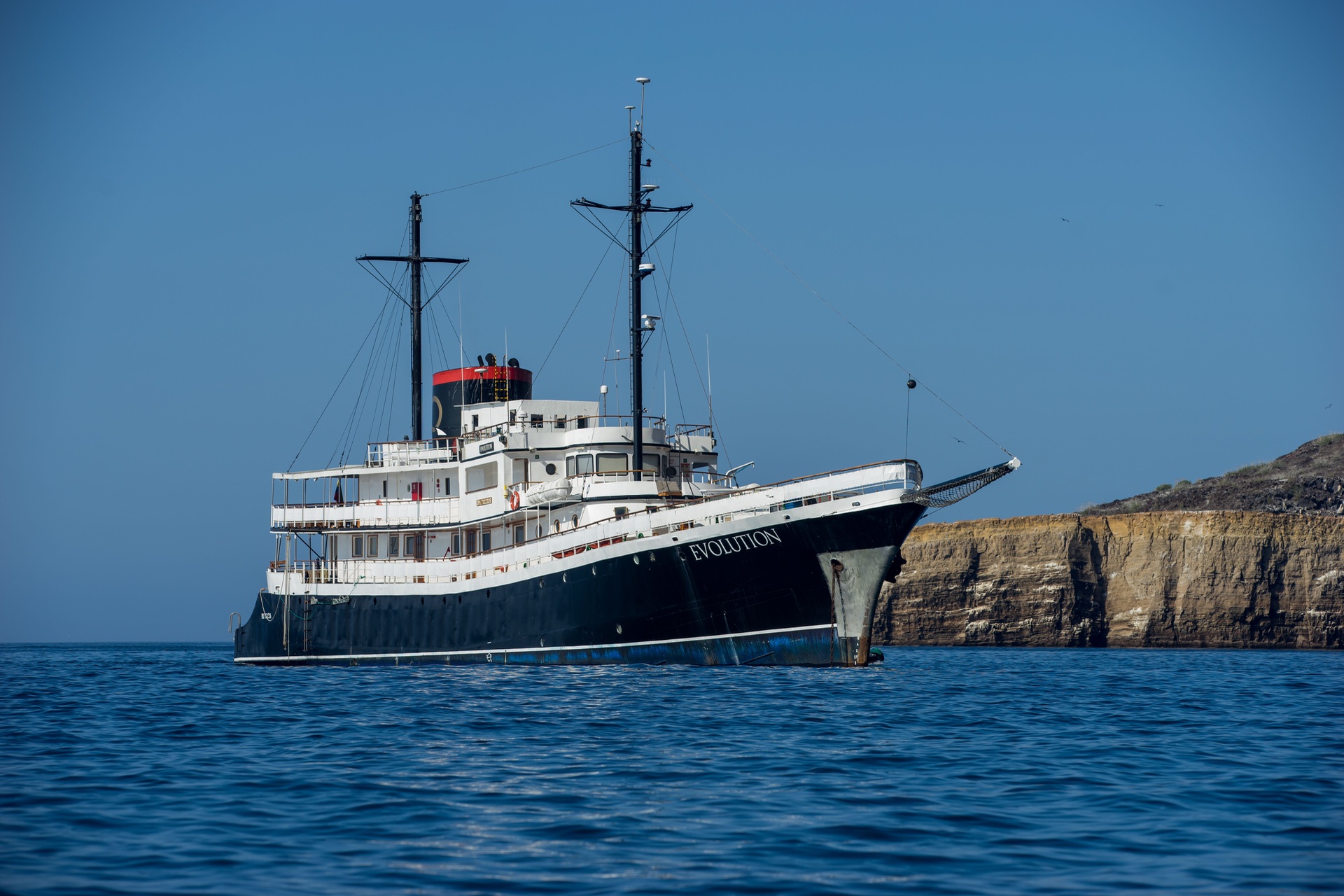 EvolutionGalápagos