Footsteps Back in Time (San Cristobal - Baltra)
Evolution · Galápagos · 7 nights
About this route
Embark on a classic expedition through the Galapagos archipelago, following the historic path of early explorers and naturalists. This route traverses volcanic landscapes, crystal coves, and quiet mangrove lagoons, offering exceptional opportunities for close wildlife encounters. Guests can expect a mix of snorkeling, kayaking, and guided land excursions to witness the unique biodiversity that defines this equatorial crown jewel.
Regions on this route
Highlights
Devil’s Crown
A jagged, submerged volcanic crater located off the coast of Floreana Island, this site is widely considered one of the best snorkeling spots in the archipelago. The interior of the crown is protected from heavy swells, creating a haven for a dense concentration of reef fish and sea lions. Stronger currents on the exterior often attract larger pelagic visitors and schools of rays.
- Volcanic crater topography
- Vibrant coral growth
- High fish density
Kicker Rock
Rising 152 meters vertically from the ocean, this dramatic volcanic monolith is a landmark of San Cristobal. The vertical walls are covered in sponges and invertebrates, while the deep channel between the rocks serves as a corridor for sharks and rays. It is a premier location for observing the sheer scale of the archipelago's geological formations from the waterline.
- 150m vertical walls
- Shark corridor
- Iconic geological landmark
Shore excursions
- Hike to Frigate Bird Hill on San Cristobal to see nesting magnificent and great frigatebirds.
- Explore the massive underground lava tubes and natural tunnels on Santa Cruz Island.
- Visit the historic Post Office Barrel on Floreana to continue the whalers' tradition of postcard exchange.
- Guided walk through a forest of giant prickly pear cacti on Santa Fe Island.
- Observe the Giant Tortoise Breeding Program at the Charles Darwin Research Station.
Good to know
- Galapagos flights are required to be booked through the boat operator, Quasar Expeditions.
- The itinerary involves two landings each full day in the National Park.
- Itineraries are subject to change based on local regulations and National Park Guide discretion.
Day-by-day plan
Day 1: Arrival and Embarkation – San Cristobal
Upon arrival at the airport, guests are greeted by National Park Guides for a transfer to the waterfront. After settling into cabins and receiving a safety briefing, the journey begins with a visit to the local interpretation center and a hike to Frigate Bird Hill. The evening concludes with a sunset cruise to the iconic Kicker Rock formation and a landing at the white sands of Cerro Brujo.
Dive sites: Kicker Rock, Cerro Brujo
Day 2: South Plaza & Mosquera – Wildlife Encounters
The day focuses on the rich biodiversity of South Plaza Island, known for its prickly pear cacti and colorful land iguanas. Snorkeling sessions are conducted at Punta Carrion, a sheltered cove that serves as a nursery for various marine species. The afternoon features a stop at Mosquera Island, a sandy stretch home to one of the largest sea lion colonies in the archipelago, surrounded by rocky tide pools.
Dive sites: Punta Carrion, Mosquera Island
Day 3: Santiago Island – Volcanic Landscapes
Exploration continues at Chinese Hat, a volcanic islet featuring impressive lava formations and turquoise waters perfect for kayaking or snorkeling. The afternoon is spent at James Bay, where black-sand beaches and extinct craters provide a dramatic backdrop for spotting flamingos in inland lagoons. The area is known for its clear grottos and diverse birdlife, including the tool-using woodpecker finch.
Dive sites: Chinese Hat, James Bay
Day 4: Genovesa Island – The Bird Sanctuary
Often called 'Bird Island', Genovesa offers spectacular avian displays at Darwin Bay and Prince Phillip’s Steps. Snorkelers can explore the deep-water caldera, where the underwater terrain often attracts large pelagics near the basalt cliffs. The sheltered waters of the bay are ideal for observing tropical fish and the occasional fur sea lion resting along the rocky shoreline.
Dive sites: Darwin Bay, Prince Phillip’s Steps
Day 5: North Seymour & Santa Fe – Island Giants
Morning excursions on North Seymour reveal a flat landscape teeming with nesting frigatebirds and blue-footed boobies performing courtship dances. Later, the vessel moves to Santa Fe Island to visit one of the most beautiful coves in the Galapagos, home to a forest of giant prickly pear cacti. The northern shoreline offers excellent visibility for spotting rays and sharks in the shallow, clear waters.
Dive sites: North Seymour, Santa Fe Island
Day 6: Floreana Island – History and Marine Life
Visit the historic Post Office Bay to participate in a centuries-old tradition of hand-delivering postcards before exploring the green olivine beach of Punta Cormorant. The afternoon is dedicated to world-class snorkeling at Champion Islet or Devil’s Crown, a submerged volcanic crater. This site is renowned for its vibrant marine life, including seasonal humpback whales and playful sea lions.
Dive sites: Devil’s Crown, Champion Islet, Punta Cormorant
Day 7: Santa Cruz – Highland Giants
Spend the day on the second-largest island in the archipelago, starting with a visit to the Charles Darwin Research Station to see the tortoise breeding program. The afternoon transitions to the lush Santa Cruz Highlands, where giant tortoises roam freely in their natural habitat. Guests can also walk through massive underground lava tubes formed by ancient volcanic flows.
Dive sites: Charles Darwin Research Station, Santa Cruz Highlands
Day 8: Black Turtle Cove & Disembarkation
The final morning features a peaceful panga ride through the protected mangrove lagoon of Black Turtle Cove, a sanctuary for juvenile sharks and rays. After this last wildlife encounter, the vessel cruises to Baltra Island for the final transfer. The crew assists with luggage and transportation to the airport for departing flights back to the mainland.
Dive sites: Black Turtle Cove
Upcoming departures
- 2026-10-24 – 2026-10-31from 10,600 USDBook
- 2026-11-21 – 2026-11-28from 10,950 USDBook
- 2027-01-02 – 2027-01-09Book
- 2027-01-16 – 2027-01-23Book
- 2027-01-30 – 2027-02-06from 10,350 USDBook
- 2027-02-13 – 2027-02-20Book
- 2027-02-27 – 2027-03-06from 10,350 USDBook
- 2027-03-13 – 2027-03-20from 11,350 USDBook
- 2027-03-27 – 2027-04-03from 11,350 USDBook
- 2027-04-10 – 2027-04-17from 10,350 USDBook
- 2027-04-24 – 2027-05-01from 10,350 USDBook
- 2027-05-08 – 2027-05-15from 10,350 USDBook
All routes of this liveaboard
About the vessel
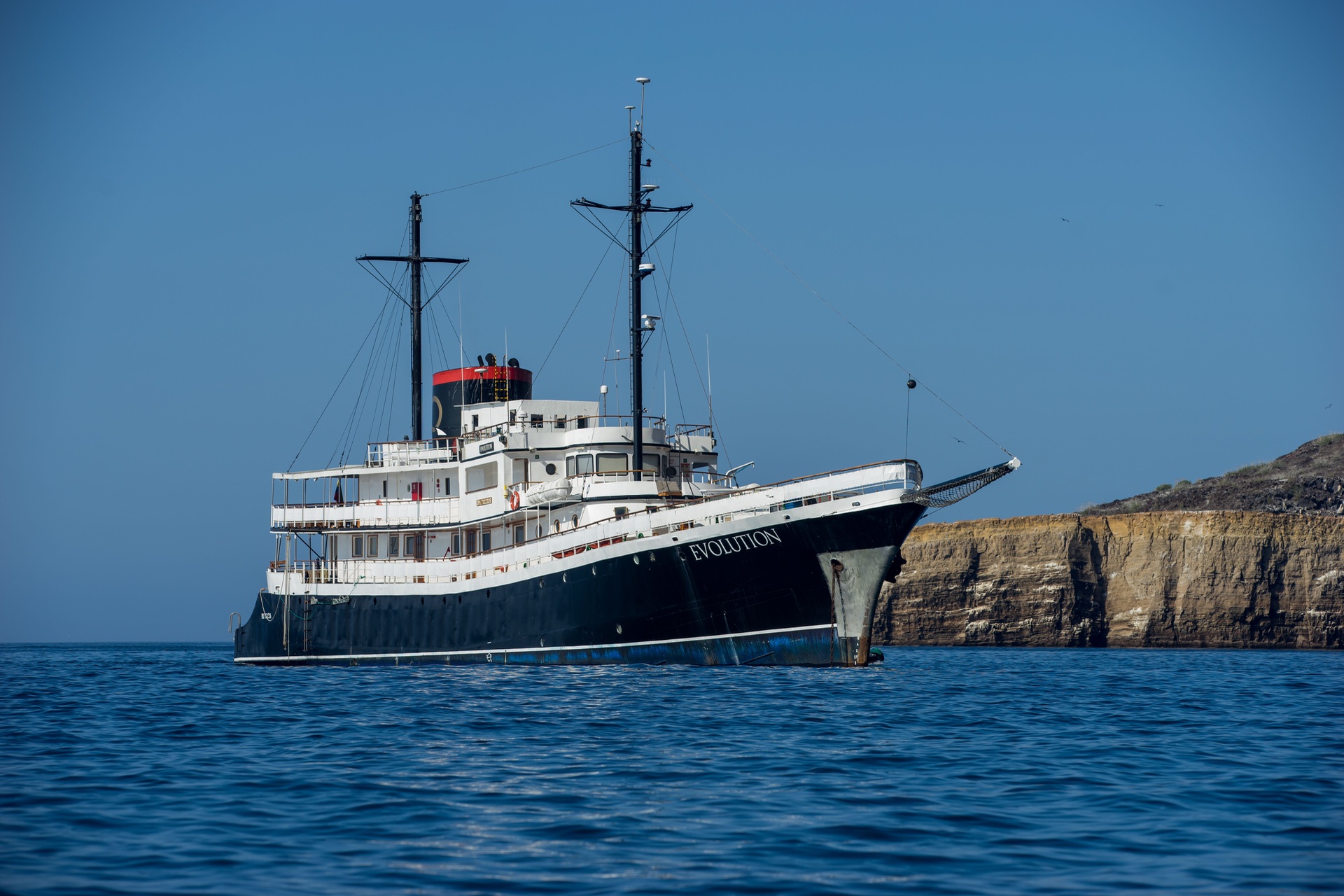 EvolutionGalápagos