Male - Baa - Male
Conte Max · Maldives · 10 nights
About this route
This expedition is timed to align with the monsoon winds and lunar currents, which significantly influence the movements and feeding habits of reef manta rays. The trip aims to leverage Manta Trust expertise to locate these feeding aggregations, offering guests the unique experience of diving amidst these gentle giants. The journey explores the northern atolls of Baa, Raa, and Lhaviyani, focusing on untouched reefs and prime locations for manta ray feeding and cleaning. Guests may also have the opportunity to encounter whale sharks, making for truly unforgettable underwater encounters.
Regions on this route
Highlights
Baa Atoll
Baa Atoll is renowned globally, particularly for its seasonal aggregations of reef manta rays and whale sharks, especially during the plankton-rich monsoon periods. This UNESCO Biosphere Reserve features stunning coral formations, diverse reef systems, and strong currents that bring in nutrient-rich waters. It is an exceptional destination for observing large pelagic marine life, including various shark species and eagle rays, amidst pristine underwater landscapes.
- Manta ray feeding frenzies
- Whale shark sightings
- UNESCO Biosphere Reserve
- Healthy coral reefs
Male Atoll
Malé Atoll, located in the central Maldives, serves as a gateway to many dive adventures. It is characterized by diverse channels, vibrant thilas (submerged pinnacles), and richly adorned reefs. The atoll offers a mix of drift dives and reef explorations, often revealing abundant schooling fish and occasional pelagic encounters. Its accessible location makes it a common starting or ending point for liveaboard itineraries.
- Accessible dive sites
- Vibrant reef ecosystems
- Schooling fish
Raa Atoll
Raa Atoll, situated north of Baa Atoll, is increasingly recognized for its exceptional dive sites and frequent manta ray sightings. This region boasts stunning vertical walls covered in soft corals and thriving anemone gardens. Its remote location means less dive traffic, offering a more pristine and exclusive diving experience. The atoll's channels and thilas are often bustling with pelagic species, including sharks, eagle rays, and large schools of tuna.
- Frequent manta ray encounters
- Stunning soft coral walls
- Abundant pelagic life
- Pristine dive sites
Requirements
- CertificationOpen Water
- Minimum logged dives1
- ExperienceDivers require an Open Water certification with a minimum of 1 logged dive.
Good to know
- The last dive is scheduled for the penultimate day of the trip.
- Divers are recommended to observe a 24-hour no-fly period after their final dive.
Day-by-day plan
Day 1: Embarkation – Malé
The trip commences in Malé with guest transfers from the airport to the liveaboard. Upon boarding, a welcome briefing will be provided by the Cruise Director, followed by cabin allocation and a comprehensive ship orientation. Guests will have ample time to settle in, familiarize themselves with the crew and vessel, and prepare their dive equipment.
Day 2: North Atolls – Manta & Whale Shark Search
Today's diving focuses on the North Atolls, including Baa, Raa, and Lhaviyani, renowned for their productive waters during specific monsoon conditions. This area is known for strong currents that bring in plankton, attracting large aggregations of reef manta rays and, potentially, whale sharks. Divers can expect a diverse underwater landscape with vertical walls adorned in soft corals and vibrant anemone gardens, hosting a rich variety of marine life. Diving continues in the North Atolls, which include regions like Baa, Raa, and Lhaviyani. These waters are particularly active during certain monsoonal periods, creating planktonic blooms that draw in feeding manta rays and offering chances for whale shark encounters. The dive sites typically feature dramatic vertical walls covered in soft corals and thriving anemone gardens, providing habitat for a wide array of marine species.
Day 3: North Atolls – Manta & Whale Shark Search
Today's diving focuses on the North Atolls, including Baa, Raa, and Lhaviyani, renowned for their productive waters during specific monsoon conditions. This area is known for strong currents that bring in plankton, attracting large aggregations of reef manta rays and, potentially, whale sharks. Divers can expect a diverse underwater landscape with vertical walls adorned in soft corals and vibrant anemone gardens, hosting a rich variety of marine life. Diving continues in the North Atolls, which include regions like Baa, Raa, and Lhaviyani. These waters are particularly active during certain monsoonal periods, creating planktonic blooms that draw in feeding manta rays and offering chances for whale shark encounters. The dive sites typically feature dramatic vertical walls covered in soft corals and thriving anemone gardens, providing habitat for a wide array of marine species.
Day 4: North Atolls – Manta & Whale Shark Search
Today's diving focuses on the North Atolls, including Baa, Raa, and Lhaviyani, renowned for their productive waters during specific monsoon conditions. This area is known for strong currents that bring in plankton, attracting large aggregations of reef manta rays and, potentially, whale sharks. Divers can expect a diverse underwater landscape with vertical walls adorned in soft corals and vibrant anemone gardens, hosting a rich variety of marine life. Diving continues in the North Atolls, which include regions like Baa, Raa, and Lhaviyani. These waters are particularly active during certain monsoonal periods, creating planktonic blooms that draw in feeding manta rays and offering chances for whale shark encounters. The dive sites typically feature dramatic vertical walls covered in soft corals and thriving anemone gardens, providing habitat for a wide array of marine species.
Day 5: North Atolls – Manta & Whale Shark Search
Today's diving focuses on the North Atolls, including Baa, Raa, and Lhaviyani, renowned for their productive waters during specific monsoon conditions. This area is known for strong currents that bring in plankton, attracting large aggregations of reef manta rays and, potentially, whale sharks. Divers can expect a diverse underwater landscape with vertical walls adorned in soft corals and vibrant anemone gardens, hosting a rich variety of marine life. Diving continues in the North Atolls, which include regions like Baa, Raa, and Lhaviyani. These waters are particularly active during certain monsoonal periods, creating planktonic blooms that draw in feeding manta rays and offering chances for whale shark encounters. The dive sites typically feature dramatic vertical walls covered in soft corals and thriving anemone gardens, providing habitat for a wide array of marine species.
Day 6: North Atolls – Manta & Whale Shark Search
Today's diving focuses on the North Atolls, including Baa, Raa, and Lhaviyani, renowned for their productive waters during specific monsoon conditions. This area is known for strong currents that bring in plankton, attracting large aggregations of reef manta rays and, potentially, whale sharks. Divers can expect a diverse underwater landscape with vertical walls adorned in soft corals and vibrant anemone gardens, hosting a rich variety of marine life. Diving continues in the North Atolls, which include regions like Baa, Raa, and Lhaviyani. These waters are particularly active during certain monsoonal periods, creating planktonic blooms that draw in feeding manta rays and offering chances for whale shark encounters. The dive sites typically feature dramatic vertical walls covered in soft corals and thriving anemone gardens, providing habitat for a wide array of marine species.
Day 7: North Atolls – Manta & Whale Shark Search
Today's diving focuses on the North Atolls, including Baa, Raa, and Lhaviyani, renowned for their productive waters during specific monsoon conditions. This area is known for strong currents that bring in plankton, attracting large aggregations of reef manta rays and, potentially, whale sharks. Divers can expect a diverse underwater landscape with vertical walls adorned in soft corals and vibrant anemone gardens, hosting a rich variety of marine life. Diving continues in the North Atolls, which include regions like Baa, Raa, and Lhaviyani. These waters are particularly active during certain monsoonal periods, creating planktonic blooms that draw in feeding manta rays and offering chances for whale shark encounters. The dive sites typically feature dramatic vertical walls covered in soft corals and thriving anemone gardens, providing habitat for a wide array of marine species.
Day 8: North Atolls – Manta & Whale Shark Search
Today's diving focuses on the North Atolls, including Baa, Raa, and Lhaviyani, renowned for their productive waters during specific monsoon conditions. This area is known for strong currents that bring in plankton, attracting large aggregations of reef manta rays and, potentially, whale sharks. Divers can expect a diverse underwater landscape with vertical walls adorned in soft corals and vibrant anemone gardens, hosting a rich variety of marine life. Diving continues in the North Atolls, which include regions like Baa, Raa, and Lhaviyani. These waters are particularly active during certain monsoonal periods, creating planktonic blooms that draw in feeding manta rays and offering chances for whale shark encounters. The dive sites typically feature dramatic vertical walls covered in soft corals and thriving anemone gardens, providing habitat for a wide array of marine species.
Day 9: North Atolls – Manta & Whale Shark Search
Today's diving focuses on the North Atolls, including Baa, Raa, and Lhaviyani, renowned for their productive waters during specific monsoon conditions. This area is known for strong currents that bring in plankton, attracting large aggregations of reef manta rays and, potentially, whale sharks. Divers can expect a diverse underwater landscape with vertical walls adorned in soft corals and vibrant anemone gardens, hosting a rich variety of marine life. Diving continues in the North Atolls, which include regions like Baa, Raa, and Lhaviyani. These waters are particularly active during certain monsoonal periods, creating planktonic blooms that draw in feeding manta rays and offering chances for whale shark encounters. The dive sites typically feature dramatic vertical walls covered in soft corals and thriving anemone gardens, providing habitat for a wide array of marine species.
Day 10: Malé – Last Dives & Cruise Back
This marks the final day of diving, with 1-2 scheduled dives in the morning. After the dives, the liveaboard will begin its cruise back towards Malé, arriving in the afternoon. Guests can enjoy the scenic journey, reflect on their diving experiences, and prepare for departure the following day.
Day 11: Disembarkation – Malé
Guests will check out from the liveaboard in the early morning after breakfast. The crew will assist with transfers to the airport, concluding the dive trip.
Upcoming departures
No departures scheduled for this route right now.
All routes of this liveaboard
- Central Atolls (Male - Male) · 7 nights
- Male - Baa - Male · 7 nights
- Central Atolls (Male - Male) · 10 nights
- Huvadhoo / Fuvahmulah · 7 nights
- Male - Baa - Male · 7 nights
- Central Atolls (Malé – Malé) — 11 Nights · 12 Days / 11 Nights
- Central Atolls (Malé – Malé) — 3 Nights · 4 Days / 3 Nights
- Huvadhoo - Laamu · 7 nights
- Male/Baa/ Male (Male - Male) · 9 nights
- Fuvahmulah / Huvadhoo (Fuvahmulah - Huvadhoo) · 8 Days / 7 Nights
- Central Atolls (Male - Male) · 8 Days / 7 Nights
- Male/Baa/ Male · 7 nights
- Baa - Male (Male - Male) · 5 nights
- Male / Laamu · 7 nights
- Laamu/Huvadhoo · 7 nights
- Laamu / Male · 7 nights
- Huvadhoo - Laamu · 7 nights
- Huvadhoo / Fuvahmulah · 7 nights
- EXTREME SOUTHERN ATOLLS · 7 nights
- EXTREME SOUTHERN ATOLLS · 7 nights
- Laamu / Male · 7 nights
- Laamu/Huvadhoo · 7 nights
- Central Atolls (Male - Male) · 7 nights
About the vessel
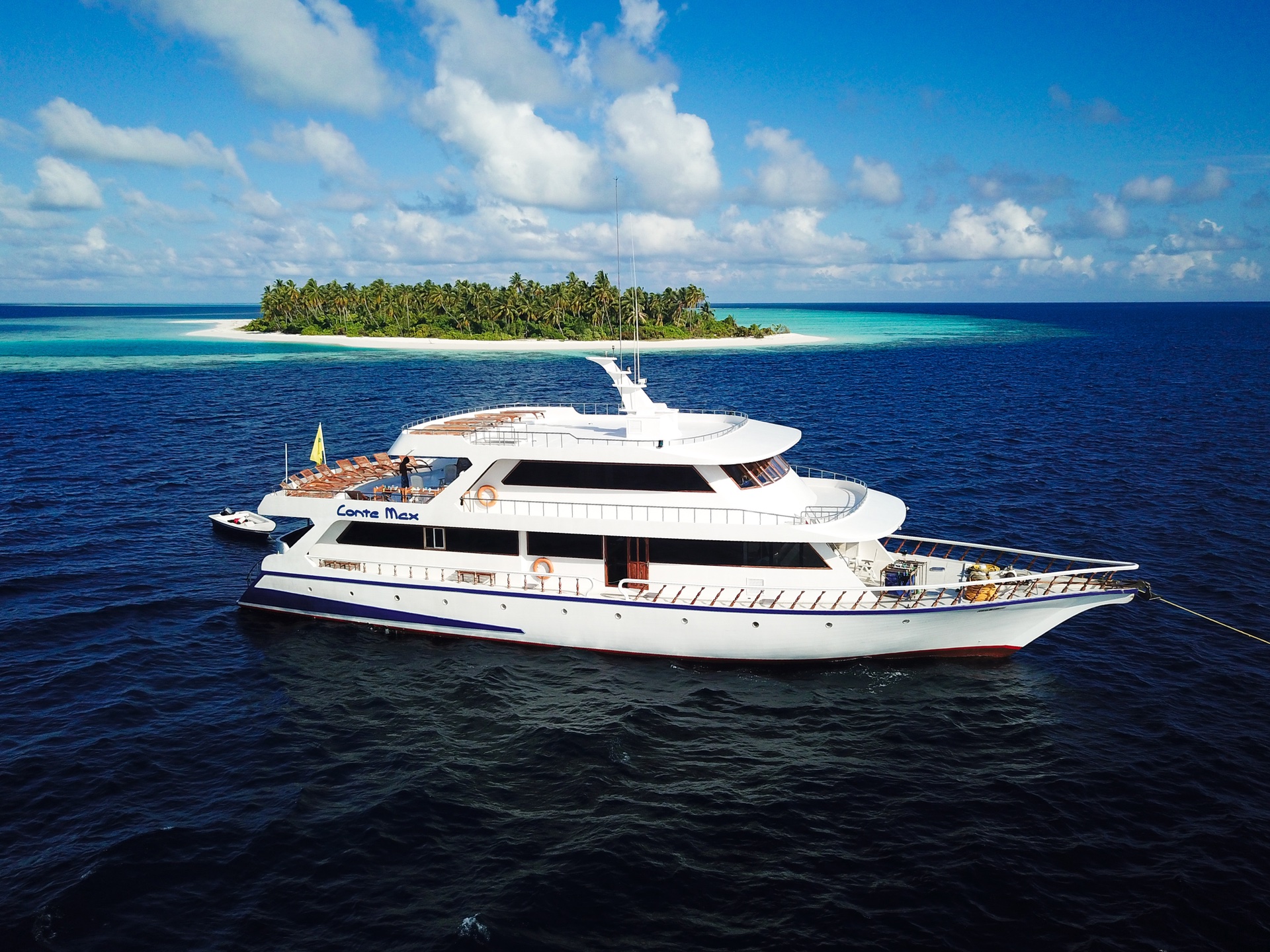 Conte MaxMaldives