North & Tiran (Hurghada - Hurghada)
Blue Storm · Egypt · 7 nights
About this route
This Red Sea itinerary explores the renowned Strait of Tiran and various northern reefs, offering a mix of famous wrecks and vibrant coral formations. Divers will encounter pristine reefs and explore areas known for their abundant marine life. The route promises an immersive experience in one of Egypt's premier diving destinations, combining historical wrecks with diverse ecosystems.
Regions on this route
Highlights
Abu Nuhas
Abu Nuhas, often called the 'Ships Graveyard,' is a reef dangerously located near busy shipping lanes in the Gulf of Suez. It has claimed numerous vessels, resulting in four accessible wrecks on its northern side, resting on a sandy seafloor beneath a steep, coral-layered reef. The southern side provides safe anchorage and features two ergs known as Yellow Fish Reef, making it a unique wreck diving destination.
- Multiple wrecks
- Ship graveyard
- Reef and erg diving
Gordon Reef
Gordon Reef, one of the four famous reefs in the Strait of Tiran, is characterized by its distinctive oval shape and a shallow plateau. It hosts a wide range of coral species and is home to a notable leopard shark often found resting on the sandy bottom. The site offers diverse topography, from shallow gardens to deeper walls.
- Leopard shark sightings
- Diverse coral gardens
- Shallow plateau
Jackson Reef
Jackson Reef is the northernmost reef in the Strait of Tiran, famous for its strong currents that often bring in large pelagic fish like hammerheads and grey reef sharks. Its walls are adorned with beautiful hard and soft corals, and it also features a wrecked Cypriot cargo ship at its northern end, adding an element of historical exploration.
- Pelagic shark encounters
- Strong currents
- Historic wreck
Red Sea
The Red Sea is globally recognized for its exceptional diving, featuring an array of pristine coral reefs, dramatic drop-offs, and numerous historical wrecks. Its unique ecosystem supports a remarkable diversity of marine life, making it a premier destination for divers seeking vibrant underwater landscapes and exciting encounters.
Straits Of Tiran
The Straits of Tiran are a globally renowned diving area at the entrance to the Gulf of Aqaba, formed by four main reefs named after British cartographers: Jackson, Woodhouse, Thomas, and Gordon. This region is famous for its exceptional coral diversity, strong currents, and a high likelihood of encountering large pelagic fish, offering world-class drift and reef diving.
- Four major reefs
- Strong currents
- Large pelagic fish
Thistlegorm
The SS Thistlegorm is arguably the Red Sea's most famous wreck, a 129m English freighter bombed in 1941. Now an artificial reef at 32m depth, it teems with an enormous variety of marine life and is especially popular for its large schooling fish. Divers can explore its cargo holds, revealing motorcycles, trucks, and other wartime supplies, making it a captivating historical dive.
- World-famous wreck
- Historical cargo
- Abundant marine life
Woodhouse Reef
Woodhouse Reef is a long, narrow reef in the Strait of Tiran, known for its strong currents and excellent drift dives. It features impressive hard and soft coral formations along its walls, attracting a variety of pelagic fish and reef dwellers. The site is a key part of the 'underwater bridge' formation.
- Strong drift currents
- Pelagic sightings
- Vibrant coral walls
Requirements
- CertificationOpen Water
- Minimum logged dives30
- ExperienceMinimum 30 logged dives required for this trip.
Good to know
- All dive sites visited are subject to prevailing weather conditions and the captain's discretion.
- A minimum of 30 logged dives is required for participation in this itinerary.
Day-by-day plan
Day 1: Embarkation – Hurghada, Egypt
Today marks the embarkation day in Hurghada, Egypt. Guests will check in at 15:00, settle into their cabins, and attend a welcome briefing before the vessel prepares for departure. No diving activities are scheduled for this day.
Day 2: Strait of Tiran – Northern Red Sea Reefs
The journey begins with dives in the Strait of Tiran, an area famous for its four main reefs – Jackson, Woodhouse, Thomas, and Gordon – which form an underwater bridge. These sites are renowned for their extraordinary coral diversity and strong southwesterly currents, often attracting large pelagic species. Divers can expect vibrant reef ecosystems.
Dive sites: Jackson Reef, Woodhouse Reef, Thomas Reef, Gordon Reef
Day 3: Strait of Tiran – Reef Exploration
Continuing the exploration of the Strait of Tiran, today focuses on further dives around its world-famous reefs. The area is known for its stunning hard and soft coral gardens, steep walls, and occasional currents that can bring in larger marine life. Divers will have opportunities to observe various reef inhabitants and potentially encounter pelagic fish.
Dive sites: Jackson Reef, Woodhouse Reef, Thomas Reef, Gordon Reef
Day 4: SS Thistlegorm – Iconic Wreck Dive
This day features an iconic dive at the SS Thistlegorm, one of the most famous wrecks in the Red Sea. This 129m English freighter, sunk in 1941, now lies at a maximum depth of 32m and transforms into an artificial reef. The site is a magnet for an enormous variety of marine life, including large schooling fish, making it a highly popular dive.
Dive sites: SS Thistlegorm - Shaab Ali
Day 5: Shaab Mahmoud – Reef and Lagoon Exploration
Diving today focuses on the Shaab Mahmoud area, including sites like Small Crack. Small Crack is a split in the barrier reef, offering drift dives along vibrant coral walls and into a sandy lagoon. Shag Rock, a large circular reef, provides excellent diving with pristine coral around its perimeter, often overlooked but rich in marine life.
Dive sites: Small Crack - Shaab Mahmoud, Shag Rock
Day 6: Abu Nuhas – Ships Graveyard
This reef is strategically located near busy shipping lanes and claims multiple vessels, resulting in four wrecks on its northern side. These wrecks rest on a sandy seafloor amidst steep sloping reefs and table corals. The southern side offers a safe anchorage and additional dive sites, including two ergs known as Yellow Fish Reef.
Dive sites: Abu Nuhas, Yellow Fish Reef
Day 7: Northern Red Sea – Final Dives
The final diving day may involve revisiting some of the trip's highlights or exploring new sites within the Northern Red Sea, depending on conditions and the captain's discretion. This provides another chance to experience the vibrant reefs and diverse marine ecosystems characteristic of the region, ensuring a memorable end to the diving adventure.
Day 8: Disembarkation – Hurghada, Egypt
Today is the disembarkation day in Hurghada, Egypt. Guests will check out from the liveaboard until 9:00, concluding their Red Sea diving adventure. Transfers to the airport or onward travel arrangements will commence.
Upcoming departures
All routes of this liveaboard
- North-Tiran-Dahab (Hurghada - Hurghada) · 7 nights
- Rocky, Zabargad, St. Johns (Port Ghalib - Port Ghalib) · 7 nights
- Brothers-Daedalus-Elphinstone (Hurghada → Port Ghalib) · 8D7N
- Brothers-Daedalus-Elphinstone (Port Ghalib → Hurghada) · 8D7N
- North & Brothers (Hurghada) (Hurghada → Hurghada) · 8D7N
- Brothers-Daedalus-Elphinstone (Port Ghalib, 8D7N) · 8D7N
- St. Johns (Port Ghalib - Port Ghalib) · 8 Days / 7 Nights
- Daedalus & Fury Shoal · 8 Days / 7 Nights
- Daedalus, Rocky & Zabargad · 8 Days / 7 Nights
- Daedalus & St. John's · 8 Days / 7 Nights
About the vessel
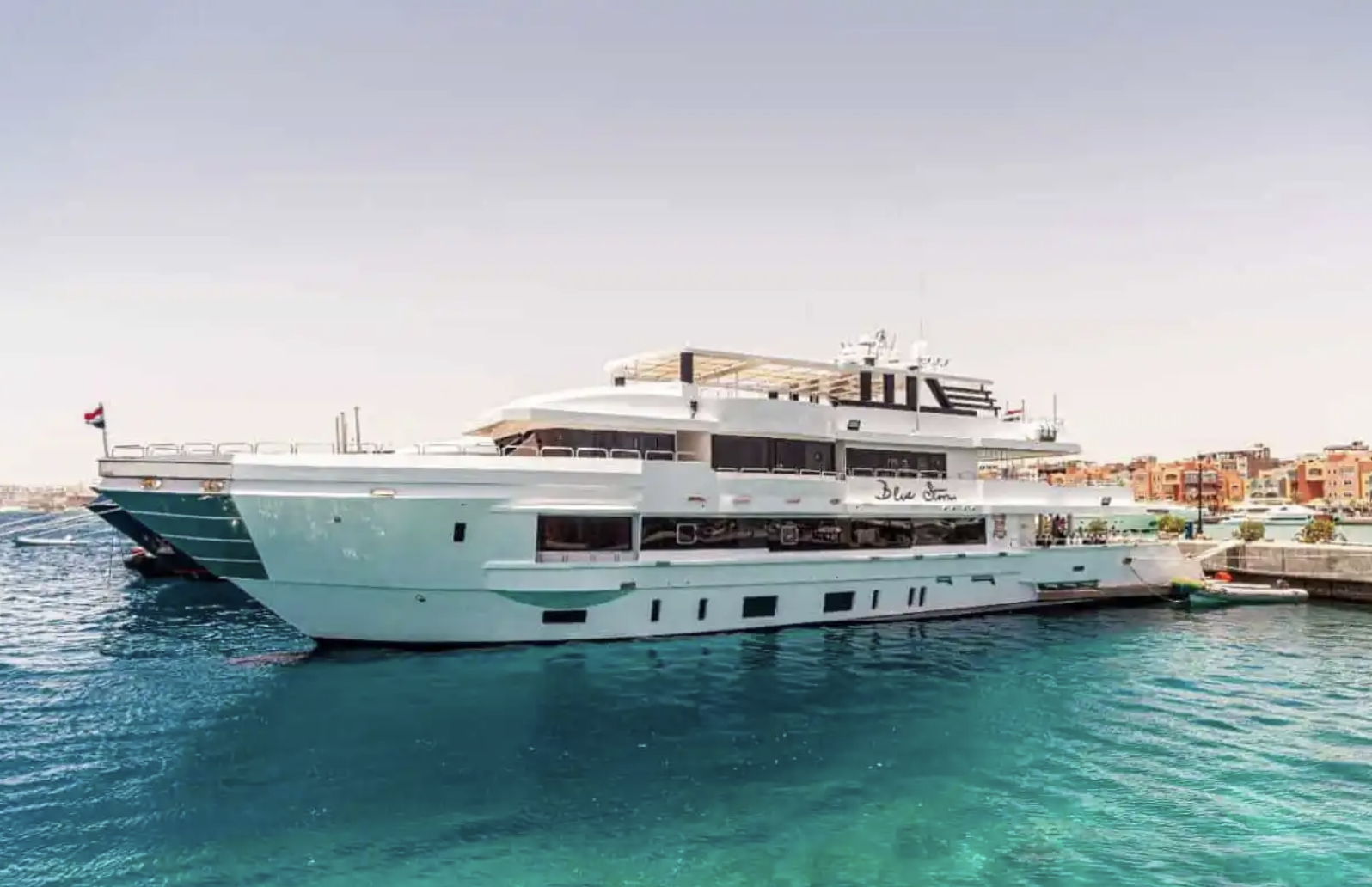 Blue StormEgypt