North - Straits of Tiran (Hurghada - Hurghada)
Aphrodite · Egypt · 8 Days / 7 Nights
About this route
This Egyptian Red Sea liveaboard journey explores the northern dive regions, featuring the iconic Straits of Tiran with its vibrant reefs Jackson, Thomas, Gordon, and Woodhouse. Divers will also visit the biologically rich Ras Mohammed marine park and encounter several historic wrecks including the SS Thistlegorm, Dunraven, and Giannis D. This itinerary offers a diverse range of diving experiences, from spectacular coral gardens to fascinating historical sites.
Regions on this route
Highlights
Abu Nuhas
The reef of Abu Nuhas is home to four significant wrecks, making it a unique site for wreck diving enthusiasts. The area is also rich in vibrant reef ecosystems and diverse marine life, attracting various species of fish and corals.
Dunraven
The Dunraven is a Victorian-era steam and sail-powered vessel that sank in 1876, now resting upside down on the seabed at a depth of around 28 meters. The wreck is heavily encrusted with soft corals and home to a variety of marine life, including schools of fish and moray eels. Divers can explore the propeller and the rudder, and some sections offer accessible penetration into the hull.
- Victorian-era wreck
- Upside-down resting position
- Soft coral growth
- Accessible penetration
Gordon Reef
Gordon Reef, in the Straits of Tiran, is distinguished by its unique circular shape and a shallow plateau. It features diverse coral gardens, a resident anemone city, and the remains of the 'Loullia' wreck. This site is particularly good for observing reef sharks and large pelagic species.
- Circular reef structure
- Anemone city
- Reef shark encounters
Jackson Reef
Jackson Reef is one of the most famous dive sites in the Straits of Tiran, known for its vibrant coral gardens, schools of fish, and frequent pelagic sightings. It features a dramatic wall dive and a plateau that attracts various shark species. The northern part of the reef is home to the wreck of a grounded Cypriot freighter, adding historical interest to its rich marine environment.
- Vibrant coral gardens
- Pelagic sightings
- Dramatic wall dives
- Grounded freighter wreck
Ras Mohammed
The marine park of Ras Mohammed offers an array of dreamlike diving spots. Notable sites like Shark Reef and Yolanda Reef feature dramatic drop-offs and strong currents, creating ideal conditions for pelagic encounters. The reefs are teeming with soft and hard corals, and the vibrant fish life makes it a truly captivating underwater experience.
- Shark Reef
- Yolanda Reef
- Deep walls
- Soft and hard corals
Red Sea
The Red Sea is renowned for its vibrant coral reefs, diverse marine life, and historic wrecks. Its calm, clear waters and consistent warm temperatures make it a top destination for divers of all levels, offering spectacular underwater visibility and abundant pelagic encounters.
Straits Of Tiran
The Straits of Tiran are famous for their exceptional reefs, including Jackson, Thomas, Gordon, and Woodhouse. This area is characterized by strong currents, which attract pelagic fish and ensure a healthy, thriving coral ecosystem. The dive sites offer a mix of wall dives, drift dives, and vibrant coral gardens.
- Jackson Reef
- Thomas Reef
- Gordon Reef
- Woodhouse Reef
- Strong currents
- Pelagic fish
The Giannis D
The Giannis D is part of the 'ship graveyard' at Abu Nuhas reef, lying in three distinct sections. The stern, engine room, and bow sections are accessible for penetration and are heavily colonized by marine life, including glassfish, scorpionfish, and colourful soft corals. The wreck offers a fantastic experience for divers of various certification levels, providing an excellent example of an artificial reef ecosystem.
- Three distinct sections
- Penetration opportunities
- Rich marine colonization
- Artificial reef ecosystem
The Thistlegorm
The SS Thistlegorm, a British WWII freighter, is one of the world's most famous wreck dives. Sunk in 1941, it lies at approximately 30 meters, laden with wartime cargo including motorcycles, trucks, and armaments. Its history and preserved contents offer a unique and compelling dive experience.
- WWII wreck dive
- Cargo holds exploration
- Historical artifacts
The Thomas Reef
Thomas Reef is celebrated for its unique plateau sections and a deep canyon running along its southern side. It is one of the four famous reefs in the Straits of Tiran, known for its exquisite soft coral growth. The reef’s upper section is rich in vibrant corals, often showcasing some of the finest soft coral formations in the Sinai region, making it a visually stunning dive site.
- Unique plateau sections
- Deep canyon feature
- Exquisite soft corals
- Finest coral formations
Woodhouse Reef
Woodhouse Reef, part of the Straits of Tiran, is a long, narrow reef known for its strong currents which make it ideal for drift diving. The reef features stunning wall dives rich in hard and soft corals, with prolific schooling fish populations and occasional pelagic sightings at its deeper sections.
- Drift diving
- Rich coral walls
- Schooling fish
Requirements
- CertificationAdvanced Open Water
- Minimum logged dives30
- ExperienceA minimum of 30 logged dives is required for this trip.
Good to know
- The last dive of the trip requires a minimum 24-hour surface interval before flying.
- Sample itineraries and maps are illustrative; the actual route, dive sites, and logistics may change based on local regulations, guest experience, weather, and the captain's discretion.
- A safety rest of at least 20 hours is required before flying after the last dive.
- The last dive will be on the penultimate day of the trip.
Day-by-day plan
Day 1: Embarkation – Hurghada, Egypt
Guests board the vessel in Hurghada, Egypt with check-in Check-in around 3:00 PM. After a welcome briefing, cabin assignment and dive-equipment check, the crew prepares for departure. No diving is scheduled on the first day; the evening is spent settling in on board before the first dives the following morning.
Day 2: Departure & Orientation Dives – Rocky Island
The morning begins with essential briefings on boat procedures, diving protocols, and safety. Two orientation dives are conducted, including practice with RIBs and SMBs, before the vessel sails towards Rocky Island, known for its vibrant reef ecosystems and potential pelagic encounters. The area often features strong currents and varied underwater topography.
Dive sites: Rocky Island
Day 3: Rocky and Zabargad – Coral Bleaching Data Collection
Today is dedicated to diving around the pristine areas of Rocky Island and Zabargad. Participants will contribute to citizen science by collecting data on coral bleaching patterns and assessing the impact of human activities on the local reef ecosystems. This region is characterized by deep walls and diverse coral formations, making it a key area for marine research.
Dive sites: Rocky Island, Zabargad
Day 4: St John's Reef – Environmental Experimentation
Diving continues at the extensive St John's Reef system, a renowned area with numerous pristine dive sites. Guests will actively participate in gathering data related to coral bleaching and engage in an onboard experiment, observing how elevated water temperatures affect coral health and fish behavior. The reefs here are known for their spectacular hard and soft coral gardens and abundant fish life.
Dive sites: St John's Reef
Day 5: St John's Reef – Coral Resilience Study
A second day is spent exploring the vibrant St John's Reef, an area celebrated for its rich biodiversity and impressive coral formations. The scientific focus continues with activities tailored to collecting data on coral resilience and documenting key reef species that inhabit this diverse underwater environment. Divers can expect to see a wide array of reef fish and potentially larger pelagics.
Dive sites: St John's Reef
Day 6: Fury Shoals – Bleaching Monitoring
The liveaboard travels to the renowned Fury Shoals area for the day's dives, a vast system of interconnected reefs offering diverse dive experiences. Here, participants will further contribute to the trip's scientific objectives by continuing to collect valuable data on coral bleaching. The area is known for its stunning coral formations, including pinnacles, caves, and swim-throughs, often teeming with schooling fish.
Dive sites: Fury Shoals
Day 7: Elphinstone and Marsa Alam – Coral Diversity & Return
The final day of diving takes place in the Marsa Alam zone, potentially including the famous Elphinstone Reef, renowned for its dramatic walls and strong currents that attract pelagic species. Divers will focus on gathering data related to coral diversity before the boat commences its journey back to port, ensuring adequate surface interval before flying. Elphinstone is particularly known for shark encounters.
Dive sites: Elphinstone Reef, Marsa Alam zone
Day 8: Disembarkation – Hurghada
After a final breakfast served onboard, guests disembark by noon. Transfers to the airport are arranged for departure, concluding the trip.
Upcoming departures
All routes of this liveaboard
- Brothers, Safaga Reefs (Port Ghalib - Hurghada) · 7 nights
- Brothers, Safaga (Hurghada - Hurghada) · 7 nights
- North Dolphins (Hurghada - Hurghada) · 7 nights
- Brothers - Daedalus - Elphinstone (Hurghada - Hurghada) · 8D7N
- Brothers - Daedalus - Elphinstone (Port Ghalib → Hurghada) · 8D7N
- Brothers - Daedalus - Elphinstone (Hurghada - Port Ghalib) · 7 nights
- Deep South, St. John (Port Ghalib - Port Ghalib) · 7 nights
- North Classic, Brother Islands (Hurghada - Hurghada) · 7 nights
- Brothers, Safaga Reefs (Port Ghalib - Hurghada) · 7 nights
- North Classic (Hurghada - Hurghada) · 14 nights
- Deep South, St. John (Port Ghalib - Port Ghalib) · 7 nights
- North, Tirah, Dahab (Hurghada - Hurghada) · 7 nights
- North Classic, Brother Islands (Hurghada - Port Ghalib) · 8D7N
- North Classic (Hurghada - Hurghada) · 8 Days / 7 Nights
- The Brothers Island (Port Ghalib - Hurghada) · 8 Days / 7 Nights
- Brothers - Daedalus (Hurghada - Hurghada) · 8 Days / 7 Nights
- Deep South, St. John (Port Ghalib - Port Ghalib) · 8 Days / 7 Nights
- Sataya, Fury Shoals (Port Ghalib - Port Ghalib) · 8 Days / 7 Nights
- St. Johns, Sataya (Port Ghalib - Port Ghalib) · 8 Days / 7 Nights
- Dolphin Trip North (Hurghada - Hurghada) · 8 Days / 7 Nights
- Sataya - Fury Shoals: Dive + Snorkel (Port Ghalib - Port Ghalib) · 8 Days / 7 Nights
- Best of Red Sea 2 Weeks (Hurghada - Hurghada) · 14 nights
- Sataya - Fury Shoals · 7 nights
- Deep South & St John's · 7 nights
- Sataya - Fury Shoals: Dive + Snorkel (Port Ghalib - Port Ghalib) · 7 nights
- Best of Red Sea 2 weeks · 14 nights
- Brothers - Daedalus - Elphinstone · 7 nights
About the vessel
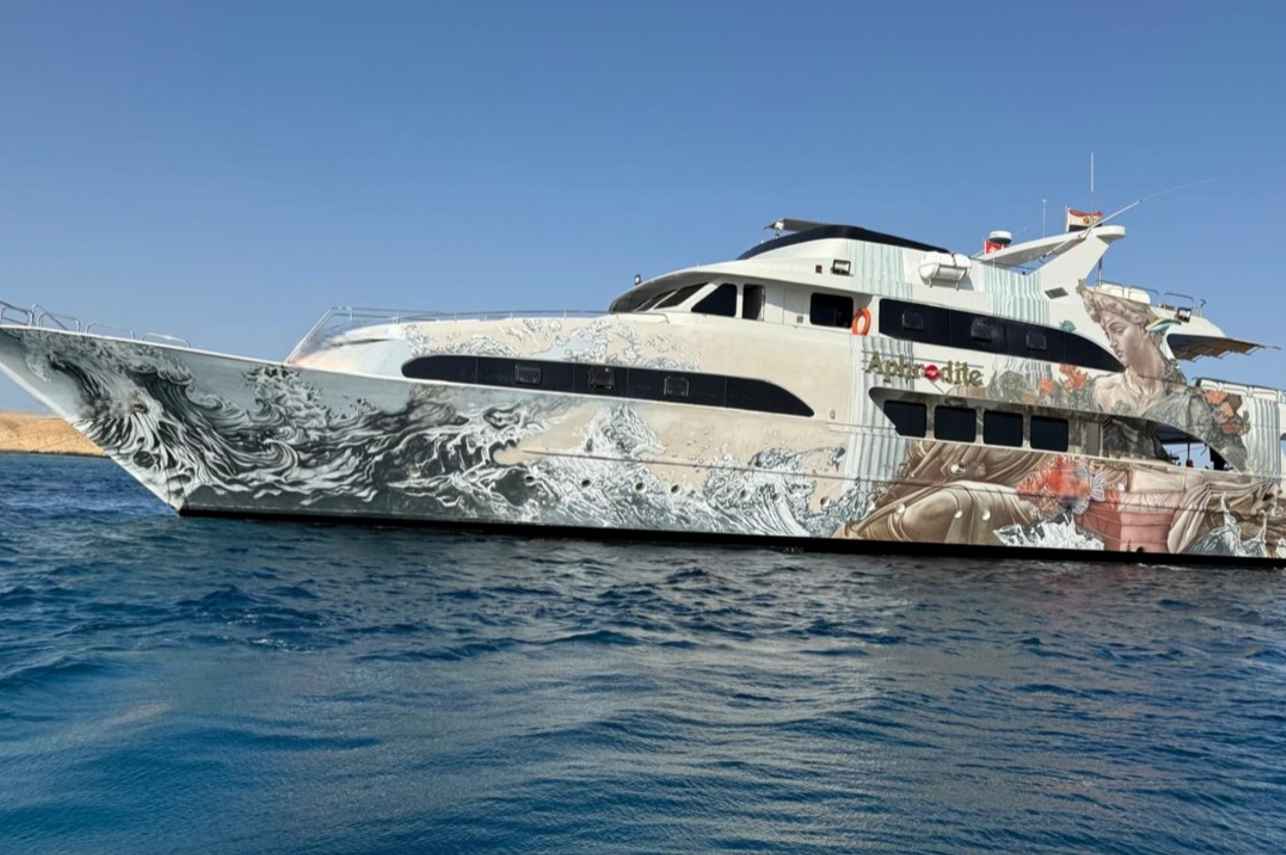 AphroditeEgypt