Violet Sweep in its natural habitat — diving encounters and best destinations

Violet Sweep

Unknown
10-15 years
Not Evaluated

Want to dive with this animal?

The Violet Sweep at a glance

The violet sweep (Scorpis violacea) is an elegant, deep-bodied teleost fish belonging to the family Scorpididae. Instantly recognisable by its distinct diamond-shaped, laterally compressed profile, this species exhibits a striking colouration that shifts with ambient light. Its body displays a shimmering, steely blue-grey to rich violet-blue hue across the dorsal flank, subtly fading to silvery-white along the ventral surfaces. The dorsal and anal fins are tall, pointed, and swept back towards a strongly forked caudal fin, giving the fish a refined, aerodynamic silhouette. Its small, slightly upturned mouth is framed by large, dark eyes adapted to spot minuscule prey in fluctuating midwater light. Scales are finely ctenoid, bestowing a delicate metallic sheen that catches the sunlight as schools twist and pivot in unison across the upper reef zone.

Behaviour & reproduction

Size
Unknown
Weight
Up to 1.5 kg
Lifespan
10-15 years
Status
Not Evaluated

The Violet Sweep, Scorpis violacea, typically forms large schools, often congregating around rocky reefs and submerged structures in coastal waters, displaying a generally diurnal activity pattern as they forage for plankton and small invertebrates. These active shoals are frequently observed moving in unison, exhibiting classic schooling behaviour for protection and feeding efficiency. Reproduction in this species is via broadcast spawning, a common strategy among many marine teleosts where eggs and sperm are released into the water column for external fertilisation. While specific details on mating season and peak spawning periods for Scorpis violacea are not extensively documented across its full range, it is understood to follow environmental cues such as water temperature. The eggs are pelagic, developing externally, with subsequent larval and juvenile stages undertaking oceanic dispersal before settling into benthic habitats. Information regarding precise clutch size, incubation duration, or the age and size at which individuals reach sexual maturity is not widely established in the available scientific literature.
Where to dive with the Violet Sweep: 1 top spots

Diving Tips

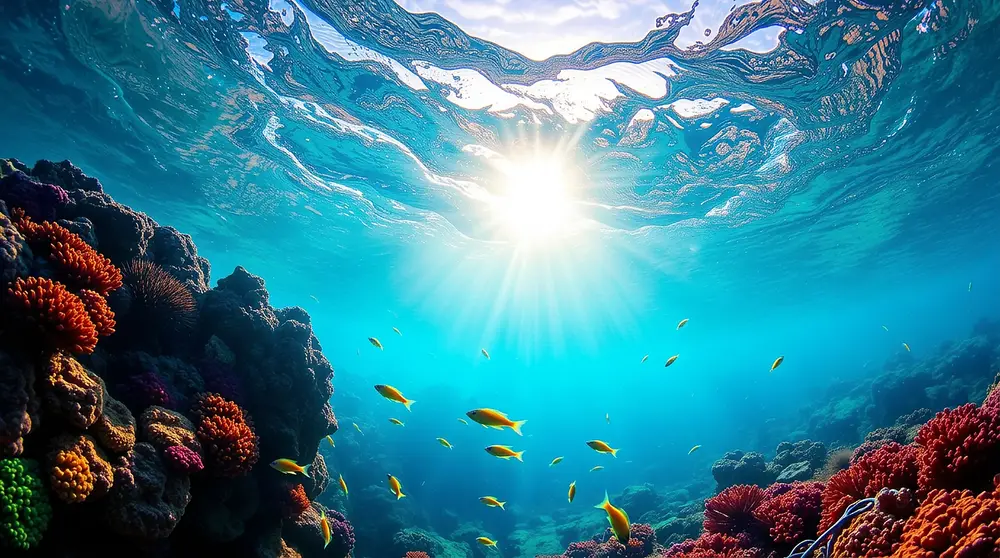
Approaching violet sweeps requires smooth, non-threatening movements and exceptional buoyancy control. Divers should avoid swimming directly into the core of a school; instead, hover neutrally along the reef edge, wall, or boulder slope, allowing the current to bring the swirling mass around you. Because sweeps are easily spooked by sudden exhaust bubbles, adopting calm, measured breathing will encourage them to maintain tight formation. For underwater photographers, a wide-angle or fisheye lens is essential to capture the scale and texture of a sweeping school. Position yourself beneath the shoal and angle your camera upwards towards the surface to capitalise on sunbeams illuminating the violet sheen of their scales. Ambient light combined with subtle, low-power strobe fill helps reveal their true iridescent colours without blowing out the reflective silver tones.

Fun facts about the Violet Sweep

  • Violet sweeps frequently school alongside related species such as silver sweeps and sea sweep, creating multi-species shoals.
  • Their distinct diamond-shaped, swept-back body profile helps them effortlessly navigate powerful surge and tidal currents.
  • The metallic violet sheen across their dorsal surface acts as countershading camouflage against the open oceanic water.
  • They play a vital ecological role by transferring energy from microscopic pelagic zooplankton to large reef predators.

Best time to see the Violet Sweep

The prime season to encounter the violet sweep aligns with the warmer, clearer waters of the temperate and subtropical southwest Pacific. In New South Wales, optimal diving conditions generally run from February to June, when warm currents bring clearer oceanic water and peak marine activity to offshore island sites like Julian Rocks in Byron Bay and the Solitary Islands. Further south in Victoria and Tasmania, the summer and autumn months from December to May offer calmer seas, better underwater visibility, and comfortable water temperatures. In northern New Zealand, including the renowned Poor Knights Islands, the best diving window extends from January to May, when water clarity is at its highest and schools of sweeps amass in dramatic numbers near cavern mouths and sunlit drop-offs.

Where the Violet Sweep lives

The violet sweep inhabits temperate and subtropical rocky reefs and coastal waters down to depths of roughly 30 metres, though they are most frequently encountered in the upper 5 to 15 metres of the water column. They show a clear preference for wave-exposed habitats with high water movement, including offshore pinnacles, sheer drop-offs, headlands, sea caves, and rocky archways adjacent to deep water. The waters this animal calls home are located in the southwest Pacific Ocean, predominantly around south-eastern Australia—from central New South Wales down to Victoria and Tasmania—as well as the oceanic waters surrounding Lord Howe Island, Norfolk Island, the Kermadec Islands, and the north-eastern coast of New Zealand.

What the Violet Sweep eats

The violet sweep is a dedicated pelagic planktivore, consuming a wide variety of small organisms drifting in the water column. Its diet consists predominantly of zooplankton, including calanoid copepods, larval crustaceans, mysids, amphipods, and gelatinous plankton such as salps, larvaceans, and small medusae. They also opportunistically feed on pelagic fish eggs and minuscule invertebrates swept seaward by tidal flows. Foraging occurs almost exclusively during daylight hours, with peak feeding activity taking place during strong incoming tides and around wave-swept headlands where upwellings concentrate planktonic swarms. Sweeps use their large eyes to detect individual prey items before extending their protractile jaws to capture targets with rapid, precise suction movements.

Violet Sweep: frequently asked questions

When is the best time to see Violet Sweep?
The prime season to encounter the violet sweep aligns with the warmer, clearer waters of the temperate and subtropical southwest Pacific. In New South Wales, optimal diving conditions generally run from February to June, when warm currents bring clearer oceanic water and peak marine activity to offshore island
How big does Violet Sweep get?
Violet Sweep: Unknown
Is Violet Sweep dangerous for divers?
Approaching violet sweeps requires smooth, non-threatening movements and exceptional buoyancy control. Divers should avoid swimming directly into the core of a school; instead, hover neutrally along the reef edge, wall, or boulder slope, allowing the current to bring the swirling mass around you. Because sweeps are eas
What is the conservation status of Violet Sweep?
Violet Sweep: Not Evaluated
Plan your trip

Ready to dive with these animals?

Choose a destination or search every available vessel to find the liveaboard that matches the marine life you want to see.