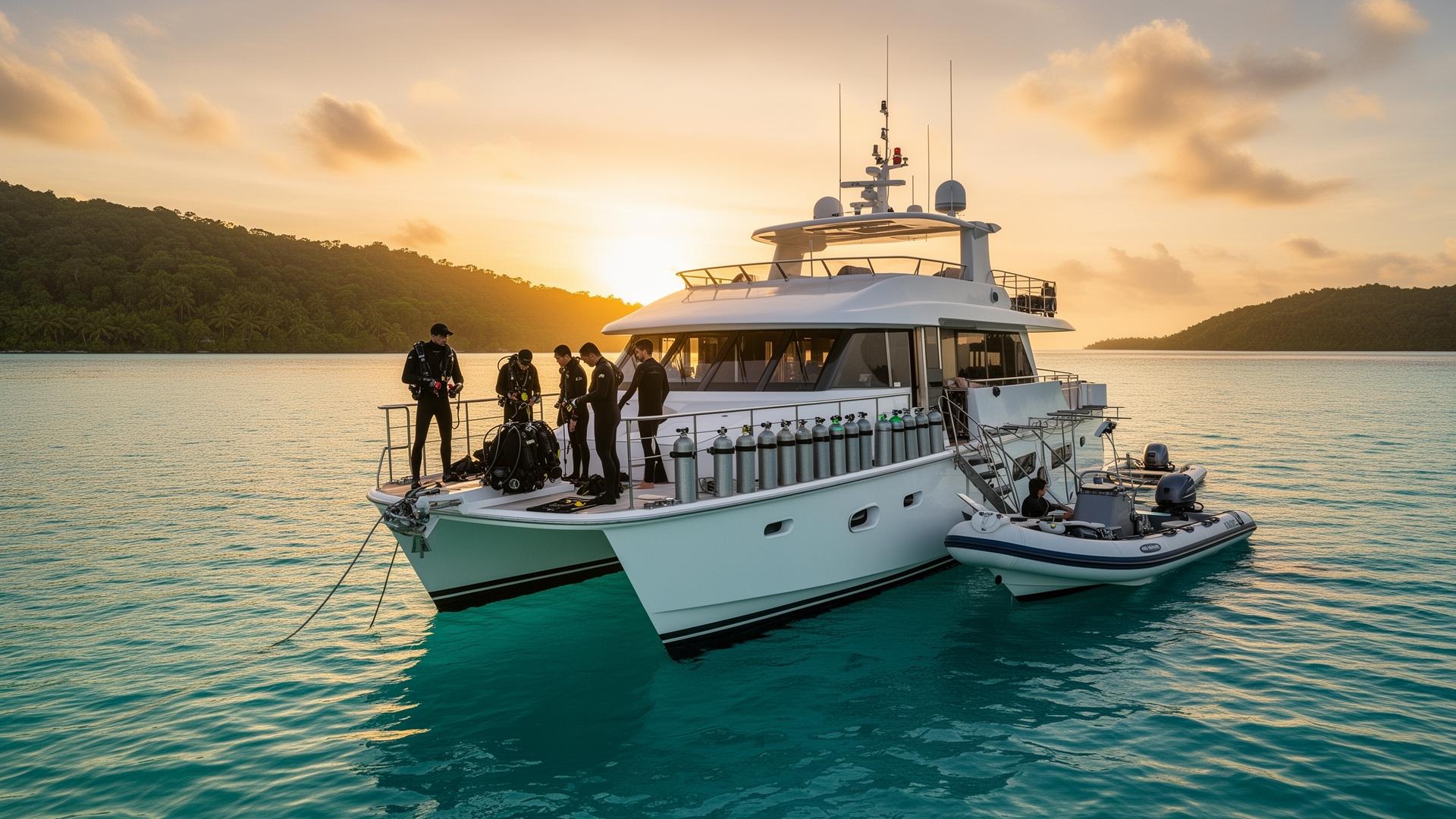
Liveaboard diving in one sentence
A liveaboard is a small dive-focused cruise ship — typically carrying 12 to 30 guests — that takes you to dive sites far from shore. Instead of returning to a hotel each evening, you live on board for the entire trip, with cabins, meals, a dive deck, and a crew dedicated to guiding 3–4 dives per day.
The idea is simple: more time underwater, less time travelling. By sleeping on the water, you reach the first dive site at sunrise and chase pelagic action that shore-based divers miss entirely.
What's included on a liveaboard?
Most liveaboards are all-inclusive once you're on board. A typical package covers your cabin, all meals and snacks, soft drinks, tanks, weights, dive guides, and 3–4 guided dives per day (plus night dives where allowed).
- Private or shared cabin with en-suite bathroom
- All meals (breakfast, lunch, dinner) plus snacks between dives
- Tanks, weights, air fills (Nitrox usually optional)
- 3–4 guided dives per day with experienced divemasters
- Transfers between port and dive sites
- Use of the camera room, sun deck, and lounges
What's typically NOT included?
- International flights to the embarkation port
- Marine park fees and port taxes (often $80–$300)
- Rental gear (BCD, regulator, wetsuit, computer)
- Nitrox certification and fills (where optional)
- Alcoholic drinks (varies by vessel)
- Crew gratuities (usually 8–12% of trip price)
Who is liveaboard diving for?
Liveaboards suit certified divers (Open Water minimum, Advanced recommended) who want maximum bottom time and remote sites. Most operators require 25–50 logged dives for advanced destinations like the Galápagos, Cocos Island, or Socorro.
If you've outgrown two-tank day trips and want pelagic encounters — sharks, mantas, mola-mola, schooling hammerheads — a liveaboard is the most direct route to them.